TL; DR
DAST testet laufende Anwendungen und APIs von außen, so wie es ein Angreifer tut, und deckt dabei die Schwachstellen auf, die erst nach der Bereitstellung der Software auftreten. Sieben Tools – und die Unterschiede, die letztendlich über den Kauf entscheiden, sind nicht diejenigen, mit denen die Verkäufer in den Vordergrund stellen.
- Die Korrelation zwischen Plattformen ist nicht mehr das Unterscheidungsmerkmal. Invicti fügte hinzu ASPM Durch die Übernahme von Kondukto im August 2025 und die seit Jahren bestehende Tool-übergreifende Korrelation von Checkmarx One ist dies nicht mehr zeitgemäß. Vergleiche, die behaupten, ein einzelner Anbieter besitze diese Funktion, sind daher überholt.
- Die Bereitstellungskonfiguration bestimmt, was überhaupt gescannt werden kann. Cloudbasierte Scanner können keine Anwendungen erreichen, die keine Internetverbindung haben. Wenn interne APIs oder abgeschottete Umgebungen relevant sind, ist ein selbstgehosteter Analysator ein Qualifikationskriterium, aber keine bevorzugte Option.
- Wie man es kauft, ist genauso wichtig wie was es findet. Checkmarx bietet DAST nicht als Einzellösung an. Invicti und Escape sind nur auf Anfrage erhältlich. Rapid7 berechnet die Kosten pro Anwendung. Das Preismodell, nicht der beworbene Preis, ist der Grund für die schlechte Skalierbarkeit über ein ganzes Portfolio hinweg.
- Die Ermittlung der Anzahl ist nicht das Ergebnis. Die Ausnutzung von Sicherheitslücken war bei 20 % der Sicherheitsvorfälle im Verizon DBIR 2025 beteiligt, ein Anstieg von 34 % gegenüber dem Vorjahr. Diese Lücke lässt sich durch eine Priorisierung nach Gefährdungsgrad, Authentifizierung und geschäftlicher Kritikalität schließen, nicht durch eine längere Liste.
- API-Abdeckung ist heutzutage Standard. 57 % der Unternehmen berichten von einem API-bezogenen Sicherheitsvorfall in den letzten zwei Jahren. Die Unterstützung von REST, GraphQL und SOAP sowie die Erkennung von Schattenendpunkten unterscheiden einen modernen Scanner von einem Webformular-Crawler.
Warum DAST-Tools im Jahr 2026 unerlässlich sind
Dynamische Anwendungssicherheitstests (DAST) sind zu einem unverzichtbaren Bestandteil jedes ernstzunehmenden Programms für Anwendungssicherheit geworden. Im Gegensatz zur statischen Analyse bewertet DAST Anwendungen von außen, indem es reale Angriffstechniken gegen aktive Webdienste und APIs simuliert, um Laufzeitschwachstellen wie SQL-Injection, Cross-Site-Scripting (XSS), Authentifizierungsfehler und Fehlkonfigurationen aufzudecken, die erst nach der Bereitstellung einer Anwendung sichtbar werden.
Die Zahlen verdeutlichen die Dringlichkeit. Laut dem Verizon-Datenschutzverletzungsbericht 2025Die Ausnutzung von Sicherheitslücken war bei 20 % der Sicherheitsvorfälle beteiligt, ein Anstieg von 34 % im Vergleich zum Vorjahr; sie ist nun der zweithäufigste Weg, den Angreifer nutzen, um sich Zugang zu verschaffen. 57 % der Unternehmen waren in den letzten zwei Jahren von einem API-bezogenen Sicherheitsvorfall betroffen.API-Traffic macht mittlerweile den Großteil aller Webinteraktionen aus. Herkömmliche Scan-Ansätze, die sich nur auf Webformulare konzentrieren, reichen schlichtweg nicht mehr aus.
Das Bedrohungsvolumen nimmt ständig zu. Mehr als 23,000 CVEs wurden offengelegt Allein im ersten Halbjahr 2025 wird ein Anstieg von 16 % gegenüber dem gleichen Zeitraum im Jahr 2024 erwartet, wobei viele Sicherheitslücken mit minimaler Authentifizierung aus der Ferne ausgenutzt werden können. Das Sicherheitsforschungsteam von Xygeni verfolgt diese Entwicklung in Echtzeit. Übersicht über bösartigen Code veröffentlicht wöchentlich neu entdeckte Schadsoftwarepakete auf npm, PyPI, Maven und anderen Plattformen. Im Jahr 2026 können es sich Sicherheits- und AppSec-Teams nicht mehr leisten, vor der Veröffentlichung einen Scan durchzuführen, Hunderte von Ergebnissen zu priorisieren und dann einfach weiterzumachen. Das ist kein Sicherheitsprogramm, das ist reine Show.
Was benötigt wird, sind DAST-Tools, die für kontinuierliches Scannen entwickelt wurden. CI/CD Integration, echte API-Abdeckung und ein Signal, auf das Entwickler tatsächlich reagieren können. Bei der Bewertung von Tools für dynamische Anwendungssicherheitstests lautet die Schlüsselfrage daher: Testet dieses Tool laufende Anwendungen im Kontext oder liefert es lediglich Ergebnisse, die man nicht priorisieren kann?
Kurzvergleich: Die besten DAST-Tools für 2026
Scrollen Sie die Tabelle seitlich, um alle Spalten zu sehen.
| Werkzeug | Testansatz | Einsatz | API-Abdeckung | CI/CD | Priorisierung / ASPM | AnzeigenPreise | Am besten geeignet für |
|---|---|---|---|---|---|---|---|
| Xygeni DAST | Eigenständiger Scanner (xy-dast), integriert sich nativ in Xygeni ASPM | Selbstgehosteter Analysator oder SaaS. Scannt interne Anwendungen ohne eingehenden Zugriff. | Web, SPA, REST, OpenAPI/Swagger, GraphQL, SOAP | Native CLI, Docker, Build-Fehler-Qualitätskontrollen | Priorisierungstrichter immer enthalten. ASPM Korrelation optional | Pro Endpunkt, nicht pro Scan. Unbegrenztes paralleles Scannen. | Mittelständische Teams, die eine eigenständige DAST-Lösung benötigen, die in ihrer eigenen Infrastruktur läuft und sich mit dieser verbindet ASPM wenn gebraucht |
| Invicti | Beweisbasiertes DAST plus IAST, mit ASPM via Kondukto (Übernahme August 2025) | Wolke und on-premise | REST, SOAP, GraphQL (zustandsbehaftet) | Breit | ASPM durch eine erworbene Orchestrierungsschicht über bestehenden Scannern | Angebotsbasiert. Ca. 15 bis 60 US-Dollar pro Jahr für 1 bis 10 Zielpersonen, 60 bis 250 US-Dollar für mittlere Positionen. | Large enterprisemit komplexen Portfolios, Budgets und Personalbeständen |
| Flucht | KI-gestütztes, API-natives Testen von Geschäftslogik (BLST) | Wolke | REST, GraphQL (schema-basiert), SOAP, mit agentenloser API-Erkennung | Breites, inkrementelles Scannen | Priorisierung der Ergebnisse. Keine vollständige ASPM Lernumgebung | Pro Antrag enterpriseKein öffentlicher Preis | API-First- und GraphQL-intensive Teams, die eine tiefgehende Geschäftslogik benötigen. |
| Checkmarx One DAST | DAST-Add-on innerhalb der Checkmarx One-Plattform | Cloud, mit Tunneling zum Zugriff auf interne Anwendungen | REST, SOAP, gRPC | Strong | Plattform ASPM mit Fusion werkzeugübergreifender Korrelation | Angebotspreis. Nicht einzeln erhältlich, erfordert mindestens die Professional-Mitgliedschaft. | EnterpriseSie konsolidieren ihren gesamten AppSec-Stack bei einem einzigen Anbieter. |
| Rapid7 InsightAppSec | Cloud DAST mit Universalübersetzer und Angriffswiedergabe | Nur Wolke | Web plus API (Swagger) | Jenkins, Azure, Jira | Innerhalb des Rapid7 Insight-Ökosystems | Etwa 175 US-Dollar pro App und Monat, Angebot abhängig vom Umfang | Bestehende Rapid7-Kunden mit modernen JavaScript-Apps |
| StackHawk | ZAP-basiert, CI/CD-nativ, Konfiguration als Code | Cloud, Scanner läuft in Ihrem pipeline | REST, GraphQL, SOAP, gRPC | Über 12 Plattformen | Es handelt sich lediglich um Ergebnisse. Keine Korrelation mit SAST, SCA, Geheimnisse oder IaC | Etwa 49 bis 59 US-Dollar pro Teilnehmer und Monat, jährliche Abrechnung. | DevOps-erfahrene, API-intensive Entwicklungsteams |
| ZAP (ehemals OWASP ZAP) | Open-Source-Proxy-Scanner, gesponsert von Checkmarx seit 2024 | Selbstgehostet, Docker | REST, GraphQL über Schema-Importe und Add-ons | Docker und CI, manuelle Einrichtung | Keine. Die Ergebnisse sind eine Rohliste. | Kostenlos, Apache 2.0 | Kleine Teams, Lernprozesse und Basisanalysen mit internen Experten |
Vergleich basierend auf öffentlich dokumentierten Anbieterfunktionen (Stand: September 2026). Bitte prüfen Sie die aktuelle Anbieterdokumentation vor dem Kauf.cisIon.
Worauf Sie bei einem DAST-Tool im Jahr 2026 achten sollten
Bevor wir uns mit den Tools befassen, hier die wichtigsten Merkmale, die ein wirklich nützliches Tool für dynamische Anwendungssicherheitstests von einem überflüssigen Tool unterscheiden. pipeline.
Laufzeit-Schwachstellenerkennung
Ein DAST-Tool muss laufende Anwendungen testen, nicht nur den Code, um Schwachstellen wie SQL-Injection, XSS, fehlerhafte Authentifizierung und serverseitige Fehlkonfigurationen aufzudecken, die sich erst zur Laufzeit manifestieren.
CI/CD Pipeline Integration
DAST sollte kontinuierlich laufen, nicht nur bei der Veröffentlichung. Achten Sie auf CLI-gesteuerte Ausführung, Docker-Unterstützung, Qualitätssicherungsmechanismen, die anfällige Builds blockieren, und native Integrationen mit Ihrer bestehenden Umgebung. pipeline Werkzeuge.
Authentifizierte Anwendungsprüfung
Die meisten realen Anwendungen erfordern loginIhr DAST-Tool sollte formularbasierte Authentifizierung, Bearer-Token, API-Schlüssel, MFA, SSO, OAuth und skriptbasierte Authentifizierungs-Workflows unterstützen, um das zu scannen, was wirklich wichtig ist.
Reale API-Abdeckung
Da APIs mittlerweile den Großteil des Web-Traffics ausmachen, muss ein modernes DAST-Tool neben HTML-Formularen auch REST (OpenAPI/Swagger), GraphQL und SOAP unterstützen. Die API-Erkennung, die auch inoffizielle und undokumentierte Endpunkte aufdeckt, wird zunehmend zu einem entscheidenden Wettbewerbsvorteil.
Risikopriorisierung, nicht nur Volumen
Reine Ergebniszählungen erzeugen nur Rauschen, keine Erkenntnisse. Die besten DAST-Tools wenden Kontextfilter an: Internetverfügbarkeit, Authentifizierungsanforderungen und Geschäftskritikalität, um ausschließlich Schwachstellen aufzudecken, die ein reales, ausnutzbares Risiko im Produktivbetrieb darstellen.
ASPM Korrelation
Die Ergebnisse von DAST-Analysen werden deutlich aussagekräftiger, wenn sie mit Codeanalysen, Open-Source-Abhängigkeiten, Geheimnissen und dem Geschäftskontext korreliert werden. Plattformen, die Laufzeitergebnisse mit Ihrem übrigen Anwendungssicherheitsprogramm verknüpfen, verkürzen die Zeit zwischen Erkennung und Behebung erheblich.
Genaue, umsetzbare Berichterstattung
Jeder Befund sollte Angaben zum Schweregrad, zur CWE-Klassifizierung, zur verwendeten Angriffsnutzlast, zu HTTP-Anfrage-/Antwortbelegen und zu Abhilfemaßnahmen enthalten, nicht nur eine Liste von Endpunkten, die manuell untersucht werden sollen.
Die 7 besten DAST-Tools für 2026
1. Xygeni: Laufzeitsicherheit, die dort ansetzt, wo Angriffe beginnen

Überblick: Xygeni DAST ist ein enterpriseEin dynamischer Scanner der Spitzenklasse, der eigenständig funktioniert: Einfach auf eine Webanwendung oder API verweisen und Ergebnisse erhalten, ohne weitere Komponenten installieren zu müssen. Er lässt sich außerdem nativ in Xygeni integrieren. Application Security Posture Management (ASPM) Plattform, sodass DAST-Ergebnisse auf Wunsch automatisch mit Codeanalysen, Open-Source-Schwachstellen, Gefährdung von Assets und der Erkennung von Geheimnissen korreliert werden. CI/CD Sicherheit und Geschäftskontext in einer einzigen, einheitlichen Ansicht.
Diese Flexibilität ist wichtig, da Laufzeit-Schwachstellen nicht isoliert auftreten. Eine SQL-Injection-Schwachstelle in einer Produktions-API ist weitaus kritischer, wenn sie mit einer öffentlich zugänglichen Ressource ohne Authentifizierungspflicht und einer bekannten Abhängigkeitsschwachstelle verknüpft ist. Im Standalone-Betrieb ermöglicht Xygeni DAST schnelle und präzise dynamische Tests; im Rahmen der Plattform erstellt es automatisch ein vollständiges Risikobild, sodass Teams die Schwachstellen beheben können, die die Produktion tatsächlich beeinträchtigen, anstatt Fehlalarme in voneinander unabhängigen Tools zu verfolgen.
Es wird von angetrieben xy-dast, ein Scanner, der für automatisierte Laufzeittests entwickelt wurde, CI/CD Integration und detaillierte Berichterstattung über Sicherheitslücken, ohne dass eine komplexe Konfiguration oder zusätzliches Sicherheitspersonal erforderlich ist.
Weil der Analysator läuft innerhalb Ihrer eigenen InfrastrukturXygeni DAST kann interne Anwendungen und APIs testen, die niemals mit dem Internet verbunden sind: kein eingehender Zugriff, keine Öffnung Ihrer Umgebung für eine Drittanbieter-Cloud. Da die Abrechnung pro Endpunkt und nicht pro Scan erfolgt, können Teams so viele Scans parallel durchführen, wie ihre Infrastruktur zulässt. Optimierte Scanprofile sorgen für schnelle Scans: In Kundenbewertungen hat Xygeni DAST die Erkennungsleistung vergleichbarer Scanner erreicht oder sogar übertroffen und die Scans in etwa einem Drittel der Zeit abgeschlossen.
So funktioniert Xygeni DAST
Entdecken und Scannen
Der xy-dast-Scanner analysiert laufende Webanwendungen und APIs, durchsucht automatisch Endpunkte und führt dynamische Sicherheitstests gegen die offengelegte Funktionalität durch.
Laufzeit-Schwachstellen erkennen
Identifiziert ausnutzbare Schwachstellen wie SQL-Injection, XSS, Authentifizierungsschwächen, serverseitige Fehler und Sicherheitsfehlkonfigurationen.
Risiko korrelieren in ASPM (bei Verwendung innerhalb der Plattform)
Die in der Xygeni-Plattform verwendeten DAST-Ergebnisse werden automatisch mit Codeanalysen, Open-Source-Schwachstellendaten, Asset-Exponierung und Geschäftskontext korreliert, wodurch ein einheitliches Risikobild für das gesamte Programm entsteht.
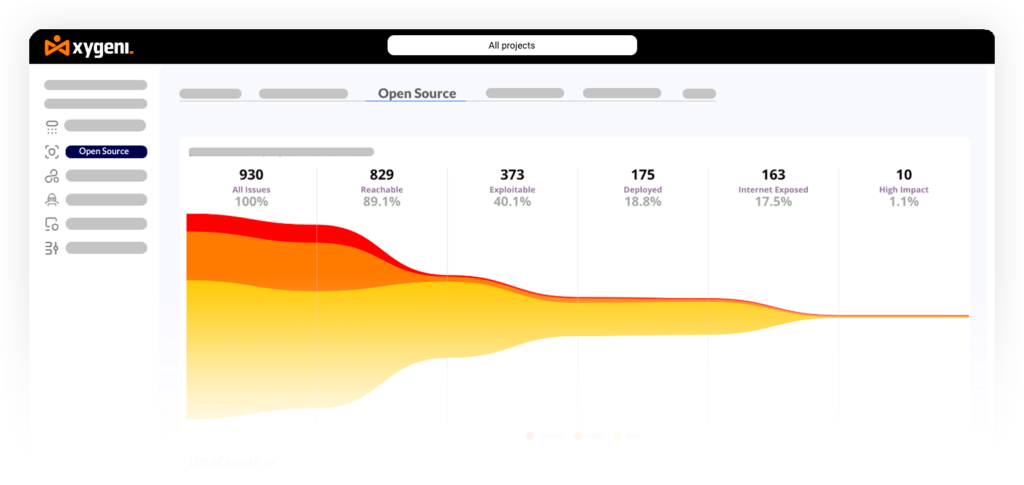
Priorisieren Sie das Wesentliche mit dem Xygeni-Priorisierungstrichter
Die Ergebnisse werden schrittweise durch Kontextfaktoren wie Internetnutzung, Authentifizierung und Geschäftskritikalität gefiltert, wodurch Störfaktoren entfernt werden, sodass sich die Teams nur auf das tatsächliche Produktionsrisiko konzentrieren können.
Schneller reparieren
Die Ergebnisse integrieren sich in CI/CD Workflows mit Qualitätskontrollmechanismen, die Builds abbrechen, wenn definierte Schwellenwerte überschritten werden, ermöglichen eine frühzeitige Fehlerbehebung im Lebenszyklus.
Hauptfunktionen
- CLI-gesteuerte Automatisierung: Dynamische Scans aus Skripten auslösen, pipelines oder Testumgebungen mit einem einzigen Befehl.
- Flexible Scanprofile: Integrierte Profile für traditionelle Webanwendungen, Single-Page-Anwendungen (React, Angular, Vue), REST-APIs (OpenAPI/Swagger), GraphQL und SOAP/WSDL sowie schnelle Smoke-Scans und umfassende Scans mit maximaler Abdeckung.
- Authentifizierte Anwendungstests: Formularauthentifizierung, Bearer-Token, API-Schlüssel, Basisauthentifizierung, benutzerdefinierte Header, JSON-Bodies oder skriptbasierte Workflows.
- CI/CD pipeline Integration: Docker-Images, CLI-Ausführung und Qualitätsprüfungen bei Build-Fehlern.
- ASPM Korrelation: Laufzeitergebnisse verknüpft mit Codeanalyse, Anlageninventarisierung, Geheimnissen und Open-Source-Risiken auf einer einzigen Plattform.
- Läuft innerhalb Ihrer eigenen Infrastruktur: Ein selbstgehosteter Analysator, der interne Anwendungen und APIs ohne Internetverbindung und ohne eingehenden Zugriff auf Ihre Umgebung scannt; ideal für regulierte, abgeschottete und datensouveräne Bereitstellungen.
- Unbegrenztes paralleles ScannenDie Preise werden pro Endpunkt und nicht pro Scan berechnet, sodass Teams die Scans über ihre gesamte Infrastruktur hinweg skalieren können. pipeline so schnell, wie es ihre Infrastruktur zulässt.
- Hochleistungs-Scanprofile: Profile, die auf den jeweiligen Anwendungstyp (Web, SPA, REST, GraphQL, SOAP) und die Suchtiefe (von kurzer Überprüfung bis hin zu umfassender maximaler Abdeckung) abgestimmt sind, ermöglichen eine vollständige Erkennung in einem Bruchteil der Scanzeit.
- Detaillierte Berichterstattung: Schweregrad, CWE-Klassifizierung, Angriffsnutzlast, betroffener Endpunkt, HTTP-Anfrage-/Antwortnachweise und Abhilfehinweise; zuordenbar zu NIST 800-53, SANS25 und anderen Taxonomien.
- Exportierbare Ergebnisse: JSON oder PDF für Automatisierung, Auditierung und SIEM-Integration.
- SaaS bzw on-premise Einsatz: volle Flexibilität, einschließlich abgeschotteter Umgebungen, mit europäischer Datensouveränität.
Pricing: Xygeni DAST ist Preis pro Endpunkt und entwickelt für Teams im mittleren Marktsegmentnicht hinter einem Tor eingeschlossen enterprise-nur Mindestbestellmengen und große Jahresverträge für ältere Scanner. Es läuft eigenständig und verbindet sich mit der umfassenderen Xygeni-Plattform (SAST, SCA, Geheimnisse, IaC, Behälter, CI/CD und ASPMImmer dann, wenn ein Team ein einheitliches Positionsmanagement wünscht. Für konkrete Preisinformationen buchen Sie eine Demo oder fordern Sie einen Proof of Concept (PoC) an.
Einschränkungen
- Als neuerer, ASPMDer integrierte Neueinsteiger Xygeni verfügt noch nicht über die jahrzehntelange Markenbekanntheit oder die Analystenberichtspräsenz der etablierten DAST-Unternehmen – ein Aspekt, den Käufer berücksichtigen sollten, die ihre Auswahl primär auf der Positionierung durch Analysten basieren.
- Für Teams, deren einzige Aufgabe die tiefgreifende, spezialisierte Ausnutzung von API-Geschäftslogik (komplexe BOLA/IDOR-Ketten) ist, wird eine dedizierte API-Sicherheits-Engine in dieser engen Dimension noch weiter gehen.
- Sein größter Vorteil, die Kreuzsignalkorrelation und der Priorisierungstrichter, kommt am besten zur Geltung, wenn er mit der Xygeni-Plattform verbunden ist; im rein eigenständigen Betrieb erhält man zwar schnelle und genaue DAST-Daten, aber nicht die vollständige Korrelationsgeschichte.
Bottom Line: Xygeni DAST ist die richtige Wahl für Sicherheits- und AppSec-Teams, die Laufzeittests benötigen, die eigenständig funktionieren und sich bei Bedarf mit einer umfassenden Anwendungssicherheitsplattform verbinden lassen – und das ohne zusätzliche Kosten. enterprise Preise oder Werkzeuge zum Zusammenfügen. CLI-basierte Automatisierung, nativ ASPM Korrelation und der Priorisierungstrichter bedeuten, dass Teams weniger Zeit mit der Priorisierung von Warnmeldungen verbringen und mehr Zeit damit, das zu beheben, was in der Produktion tatsächlich wichtig ist.
2. Invicti: Beweisbasiertes DAST für Enterprise-Skalierung von Portfolios
Überblick: Invicti (ehemals Netsparker) ist ein enterpriseEine DAST-Plattform der Spitzenklasse, die auf Genauigkeit und Skalierbarkeit ausgelegt ist. Ihre Kernfunktion ist das beweisbasierte Scannen: Sobald der Scanner eine potenzielle Schwachstelle identifiziert, versucht er, diese sicher auszunutzen, um die Existenz des Problems zu bestätigen. Für jeden gefundenen Exploit wird ein Beweis erstellt. Im August 2025 erwarb Invicti ASPM Pionier Kondukto, das die Möglichkeit bietet, zur Laufzeit validierte DAST-Ergebnisse mit Daten aus einer breiten Palette von Sicherheitstools zu korrelieren.
Hauptmerkmale
- Beweisbasiertes Scannen: Bestätigt sicher ausnutzbare Schwachstellen, um falsch-positive Ergebnisse zu reduzieren.
- DAST + IASTEin interaktiver Sensor korreliert Laufzeit- und Codekontext.
- ASPM Ressourcen: Vereinheitlicht, validiert und priorisiert Warnmeldungen im gesamten Stack nach der Übernahme von Kondukto.
- Umfassende Asset-Erkennung: Findet automatisch Webanwendungen, APIs und versteckte Ressourcen.
- CI/CD IntegrationJenkins, GitHub Actions, GitLab CI, Azure DevOps und mehr.
- Compliance-Berichterstattung: PCI DSS-, HIPAA-, SOC 2- und ISO 27001-Vorlagen.
Nachteile
- Enterprise-nur Preisgestaltung, intransparent, ohne kostenloses Angebot oder öffentliche Selbstbedienungs-Testversion.
- Hohe Kosten, die mit der Anzahl der Ziele stark ansteigen und für kleinere Teams oft unerschwinglich sind.
- API- und Geschäftslogik-Tiefe stößt bei API-Spezialisten auf Schwächen.
- ASPM Es handelt sich eher um eine kürzlich erworbene Orchestrierungsschicht als um eine von Grund auf einheitliche Plattform.
- Erfordert spezialisierte Sicherheitsexperten für die Konfiguration und Verwaltung in großem Umfang.
Pricing: auf Kursbasis und enterprise-ausschließlich, ohne öffentliche Preisliste. Daten unabhängiger Käufer (Vendr) beziffern die durchschnittlichen jährlichen Ausgaben auf etwa 21,600 US-Dollar; kleine Portfolios mit 1 bis 10 Zielunternehmen kosten typischerweise 15,000 bis 60,000 US-Dollar pro Jahr, und mittelgroße Implementierungen mit 10 bis 50 Zielunternehmen 60,000 bis 250,000 US-Dollar, vor Kosten für professionelle Dienstleistungen und premium-Unterstützung für Add-ons.
Bottom line: Invicti ist die richtige Wahl für große enterpriseUnternehmen, die hochpräzise, nachweislich verifizierte Scans komplexer Web- und API-Portfolios benötigen und über das entsprechende Budget und Personal verfügen, werden in dieser Liste passende Lösungen finden. Teams, die eine umfassendere API-Abdeckung oder eine leicht zugängliche All-in-One-Plattform wünschen, werden ebenfalls fündig.
3. Escape: KI-gestütztes DAST, entwickelt für moderne APIs
Überblick: Escape ist eine moderne, API-native DAST-Plattform. Ihr Alleinstellungsmerkmal ist die Business Logic Security Testing (BLST)-Engine – eine feedbackgesteuerte Engine, die über die OWASP Top 10-Injection-Schwachstellen hinausgeht und aufzeigt, wie Angreifer moderne Anwendungen tatsächlich kompromittieren: fehlerhafte objektbasierte Autorisierung (BOLA), unsichere direkte Objektverweise (IDOR), Zugriffskontrolllücken und die Manipulation mehrstufiger Workflows. Die agentenlose API-Erkennung deckt Schatten-APIs und unbekannte Endpunkte direkt im Code auf, nicht nur in den bereitgestellten Spezifikationen.
Hauptfunktionen
- Sicherheitstests für Geschäftslogik (BLST): Testet Arbeitsabläufe, Zugriffskontrollen und mehrstufige Prozesse und erkennt BOLA, IDOR und fehlerhafte Zugriffskontrollen, die von älteren Scannern übersehen werden.
- KI-gestützte Exploit-ValidierungJeder Befund wird vor der Veröffentlichung validiert, um die Rate falsch positiver Ergebnisse niedrig zu halten.
- Native API-UnterstützungErstklassige REST-, GraphQL- (schema-fähig) und SOAP-Schnittstellen, entwickelt für API-First-Architekturen.
- CI/CD IntegrationGitHub, GitLab, Jenkins und mehr, mit inkrementeller Scanfunktion.
- Stackspezifische Behebung: Codekorrekturen, die auf Ihr Framework zugeschnitten sind, keine generischen Referenzen.
Nachteile
- Keine All-in-One-AppSec-Plattform; Teams benötigen weiterhin separate Lösungen. SAST, SCAGeheimnisse und IaC Werkzeug.
- Keine öffentliche Preisgestaltung; eine Bewertung erfordert ein Verkaufsgespräch.
- Keine kostenlose Community-Edition oder Selbstbedienungs-Testversion.
- Am besten geeignet für API- und SPA-Tests; breite Portfolios traditioneller Webanwendungen bevorzugen möglicherweise Plattform-Tools.
Pricing: Pro Anwendung und enterprise Preisgestaltung, keine öffentliche Preisliste. Kontaktieren Sie Escape für ein Angebot.
Bottom line: Escape ist die beste Wahl auf dieser Liste für Teams, die über oberflächliche Scans hinausgehen und die von Angreifern tatsächlich ausgenutzte Geschäftslogik testen müssen, vorausgesetzt, sie können es problemlos zusammen mit ihrer übrigen AppSec-Lösung einsetzen.
4. Checkmarx One DAST: Enterprise DAST innerhalb einer Konsolidierungsplattform
Überblick: Checkmarx One DAST wird als Zusatzmodul innerhalb der cloudnativen Plattform Checkmarx One bereitgestellt, die sich auch über SAST, SCA, IaCAPI-Sicherheit, Container- und Lieferkettensicherheit. Es wurde entwickelt für enterprises konsolidieren ihre AppSec-Tools bei einem einzigen Anbieter, mit toolübergreifender Korrelation und Zuordnung von Compliance-Frameworks.
Hauptfunktionen
- Einheitliche PlattformDAST korrelierte mit SAST, SCAund mehr über die Fusion-Korrelation von Checkmarx.
- Live-API-TestsREST, SOAP und gRPC in laufenden Umgebungen.
- Authentifiziertes ScannenBrowser-Recorder mit 2FA-Unterstützung.
- Interne App-Tests: Die integrierte Tunneling-Funktion ermöglicht den Zugriff auf interne Anwendungen ohne Firewall-Änderungen.
- Governance und Compliance: enterprise ASPM und Framework-Mapping.
Nachteile
- Enterprise-nur mit intransparenter, angebotsbasierter Preisgestaltung.
- DAST wird nicht als eigenständige Software verkauft, sondern nur innerhalb von Checkmarx One Professional oder höher.
- Als kostspielig bemängelt wurden, wobei einige Nutzer die Scangeschwindigkeit und die damit verbundenen Schwierigkeiten anführten.
- Für Teams im mittleren Marktsegment nur bedingt geeignet.
Pricing: Die Lizenz wird pro mitwirkendem Entwickler im Abonnement mit modulbasierten Erweiterungen vergeben; es gibt keine öffentliche Preisgestaltung. DAST erfordert ein höherwertiges Plattformpaket.
Bottom Line: Checkmarx One DAST passt für große geregelte enterpriseSie konsolidieren ihren gesamten AppSec-Stack auf einer einzigen Plattform und sind bereit dazu commit zu enterprise Verträge. Mittelständische Teams und solche, die DAST à la carte nutzen möchten, werden es schwer haben, darauf zuzugreifen.
5. Rapid7 InsightAppSec: Cloud DAST für das Rapid7-Ökosystem
Überblick: Rapid7 InsightAppSec ist ein cloudbasiertes DAST-Tool auf der Rapid7 Insight-Plattform. Der Universal Translator normalisiert den Datenverkehr von Single-Page-Anwendungen (React, Angular, Vue) in ein einheitliches Testformat. Mit Attack Replay können Entwickler die Ergebnisse lokal reproduzieren und validieren, ohne einen vollständigen Scan erneut durchführen zu müssen. Es deckt über 95 Schwachstellentypen ab, darunter auch neuere LLM-orientierte Prüfungen.
Hauptfunktionen
- Universeller Übersetzer: Starke Unterstützung moderner JavaScript-SPAs.
- Angriffswiederholung: Ergebnisse ohne vollständigen erneuten Scan reproduzieren und bestätigen.
- Umfassende Schwachstellenabdeckung: Über 95 Typen, mit Compliance-Vorlagen (PCI-DSS, HIPAA, OWASP Top 10).
- CI/CD IntegrationJenkins, Azure Pipelines, Jira und mehr; gleichzeitiges Scannen mehrerer Ziele.
- Ökosystemverknüpfung: Integriert sich mit InsightVM und InsightIDR.
Nachteile
- Die Kosten pro App summieren sich bei einem Portfolio schnell.
- Die Genauigkeit der Erkennung, die Berichtsfunktion und die Integration von Drittanbietern wurden von den Nutzern als Verbesserungspotenzial genannt.
- Den besten Nutzen erzielt man nur innerhalb des umfassenderen Rapid7-Ökosystems.
Pricing: Pro Anwendung, üblicherweise ca. 175 $/App pro Monat, Angebot abhängig vom Umfang. Kostenlose Testversion verfügbar.
Bottom Line: InsightAppSec eignet sich hervorragend für bestehende Rapid7-Kunden und Teams mit modernen JavaScript-Anwendungen, die Wert auf Benutzerfreundlichkeit und die Wiedergabe von Angriffen legen. Als eigenständiger DAST-Kauf sind die Kosten pro Anwendung und die Abhängigkeit vom Ökosystem die Kompromisse.
6. StackHawk: CI/CD-Native DAST für Entwicklungsteams
Überblick: StackHawk stellt Entwickler in den Mittelpunkt. CI/CD-natives DAST-Tool, das auf der OWASP ZAP-Engine basiert. Die Konfiguration befindet sich als Code im Repository und wird dort überprüft. pull requests, Scans laufen in-pipeline Die Ergebnisse liegen innerhalb weniger Minuten vor und jede Analyse liefert einen cURL-basierten Befehl zur Reproduktion. Die HawkAI-Quellcodeanalyse deckt undokumentierte Endpunkte und Spezifikationsabweichungen auf.
Hauptfunktionen
- Als Code konfigurieren: eine stackhawk.yml-Datei, die mit der App versionskontrolliert wird.
- Schnell pipeline scannt: typischerweise Minuten, ideal für Shift-Left-Workflows.
- Umfassende, moderne API-Abdeckung: REST (OpenAPI), GraphQL (Introspektion), SOAP und gRPC.
- Breit CI/CD Unterstützung: Mehr als 12 Plattformen, darunter GitHub Actions, GitLab CI, Jenkins, CircleCI und Azure Pipelines.
- Reproduzierbare Ergebnisse: Validierungsbefehle bei jedem Ergebnis.
Nachteile
- Übernimmt die Fehlalarme der ZAP-Engine und erhöht so den Aufwand für die Triage.
- Mindestbeiträge pro Teilnehmer erhöhen die Einstiegs- und Skalierungskosten.
- Nicht vollständig ASPM Plattform; keine Korrelation mit SAST, SCA, Geheimnisse oder IaC.
- Die YAML-Konfiguration bedeutet für weniger erfahrene Teams zusätzlichen Einrichtungsaufwand.
Pricing: Transparenter als etablierte Anbieter, etwa 49-59 US-Dollar pro Mitwirkendem und Monat (jährliche Abrechnung), mit kostenloser Testphase und sich entwickelnden Self-Service-Stufen.
Bottom Line: StackHawk eignet sich hervorragend für DevOps-erfahrene Entwicklungsteams, die ihre Sicherheit selbst in die Hand nehmen. pipelineDies gilt insbesondere für API-intensive REST-Umgebungen. Teams, die eine Korrelation über das gesamte AppSec-Programm hinweg anstreben, benötigen weiterhin eine zusätzliche Plattformschicht.
7. OWASP ZAP: Die freie Open-Source-Software Standard
Überblick: OWASP ZAP (Zed Attack Proxy) ist ein kostenloses Open-Source-DAST-Tool, das von einem Community-Team gepflegt und nun durch eine Partnerschaft mit Checkmarx unterstützt wird. Es fungiert als Man-in-the-Middle-Proxy mit passivem und aktivem Scanning, wird als offizielles Docker-Image bereitgestellt und bietet einen Basis- und einen vollständigen Scanmodus. CI/CD.
Hauptfunktionen
- Kostenlos und Open SourceKeine Lizenzkosten, mit einer großen, aktiven Community.
- ausziehbar: Skriptfähig in Python, Groovy und JavaScript, mit einem umfangreichen Add-on-Marktplatz.
- CI/CD-bereit: Docker-Images und Basis-/Vollscan-Modi.
- API-UnterstützungREST und GraphQL über Schema-Importe und Add-ons.
Nachteile
- Umfangreiche manuelle Konfiguration und Feinabstimmung erforderlich.
- Probleme mit Schwachstellen in der Geschäftslogik.
- Falsch-positive Ergebnisse erfordern eine manuelle Überprüfung.
- Keine Priorisierung, Korrelation oder ASPMDie Ergebnisse sind eine Rohliste.
- Lässt sich nicht skalieren für enterprise Kontinuierliche Tests ohne großen Entwicklungsaufwand.
Pricing: Frei.
Bottom Line: ZAP ist der ideale Einstieg für kleine Teams, zum Lernen und zur Bestandsaufnahme durch Mitarbeiter mit internem Fachwissen. Die meisten Organisationen stoßen jedoch irgendwann an die Grenzen dieser Plattform und benötigen die Automatisierung, Priorisierung und Korrelation, die eine Plattform wie Xygeni bietet.
Warum Xygeni DAST im Jahr 2026 heraussticht
Alle hier vorgestellten Geräte sind leistungsfähige Scanner und richten sich an unterschiedliche Kundengruppen. Invicti und Checkmarx eignen sich für große Kundengruppen. enterpriseEscape eignet sich für Teams mit hohen Anforderungen an Genauigkeit, Compliance im großen Maßstab und entsprechendem Budget. Es ist die Wahl für API-First-Teams, die umfassende Tests der Geschäftslogik benötigen. StackHawk und Rapid7 sind ideal für DevOps-erfahrene Teams und Teams des Rapid7-Ökosystems. ZAP bleibt die kostenlose Basisversion.
Die Korrelation der Plattformen ist nicht mehr das, was sie unterscheidet. Invicti fügte hinzu ASPM Durch die Übernahme von Kondukto im August 2025 und Checkmarx One, das bereits seit Jahren werkzeugübergreifende Korrelationen anbietet, werden die beiden Anbieter weiterhin unterscheiden. Der Unterschied liegt nach wie vor in der Art des Kaufs und der Plattform.
Checkmarx bietet DAST nicht als eigenständige Software an. Die Posture-Layer von Invicti steuert andere Scanner und ist nicht als eigenständige Plattform konzipiert. Rapid7 und Escape werden über die Cloud bereitgestellt, was bedeutet, dass Anwendungen ohne Internetverbindung nicht gescannt werden können.
Xygeni DAST läuft innerhalb Ihrer eigenen Infrastruktur. Es gibt keinen eingehenden Zugriff und Ihre interne Umgebung wird nicht einer Drittanbieter-Cloud zugänglich gemacht. Dadurch können interne APIs und isolierte Bereitstellungen getestet werden, anstatt außerhalb des Testbereichs zu liegen. Die Lösung wird separat angeboten und pro Endpunkt statt pro Scan oder Anwendung abgerechnet. Bei Bedarf lässt sie sich mit der vollständigen Xygeni-Plattform verbinden, um Korrelationen zu ermöglichen. Diese Kombination aus Einzelkauf, selbstgehosteter Ausführung, europäischer Datensouveränität und nativer Integration bietet Ihnen optimale Bedingungen. ASPM Wenn Sie es wünschen, ist es an anderer Stelle in dieser Liste nicht verfügbar.

Häufig gestellte Fragen
Was ist dynamisches Anwendungssicherheitstesting (DAST)?
DAST Es handelt sich um eine Black-Box-Sicherheitstestmethode, die laufende Webanwendungen und APIs analysiert, um Schwachstellen aus der Perspektive eines Angreifers zu identifizieren, ohne Zugriff auf den Quellcode zu benötigen. Sie simuliert reale Angriffe auf Live-Dienste, um Probleme wie SQL-Injection, XSS, fehlerhafte Authentifizierung und Fehlkonfigurationen aufzudecken, die erst zur Laufzeit auftreten.
Herausforderungen in der Unterschied zwischen DAST und SAST?
SAST Statische Anwendungssicherheitstests (Static Application Security Testing, DAST) analysieren den Quellcode vor der Bereitstellung, um Programmierfehler und bekannte Schwachstellen zu finden. DAST testet laufende Anwendungen, um Schwachstellen aufzudecken, die erst zur Laufzeit auftreten, einschließlich solcher, die sich aus dem Verhalten der Anwendung unter realen Bedingungen ergeben. Die meisten ausgereiften Programme nutzen beide Testverfahren, idealerweise kombiniert auf einer einzigen Plattform.
Welches DAST-Tool lässt sich am besten integrieren mit CI/CD pipelines?
Xygeni DAST und StackHawk bieten beide starke native Funktionen. CI/CD Integration. Der CLI-basierte xy-dast-Scanner von Xygeni, die Docker-Unterstützung und die Qualitätsprüfungen bei Build-Fehlern ermöglichen eine einfache Einbettung in jede beliebige Umgebung. pipeline, mit dem zusätzlichen Vorteil, dass die Ergebnisse über das gesamte AppSec-Programm hinweg korreliert sind.
Können DAST-Tools APIs testen?
Ja. Moderne DAST-Tools unterstützen REST-, GraphQL-, SOAP- und OpenAPI/Swagger-Definitionen. Die API-Abdeckung ist mittlerweile ein entscheidendes Bewertungskriterium: Da APIs den Großteil des Web-Traffics ausmachen und 57 % der Unternehmen in den letzten Jahren einen API-bezogenen Sicherheitsvorfall erlitten haben, ist API-Sicherheitstest nicht mehr optional.
Welches ist im Jahr 2026 das kosteneffektivste DAST-Tool?
OWASP ZAP ist zwar kostenlos, erfordert aber einen erheblichen manuellen Aufwand und ist nicht skalierbar. Unter den kommerziellen Tools ist Xygeni DAST so konzipiert, dass es auch für mittelständische Teams zugänglich ist und nicht hinter einer Bezahlschranke verborgen bleibt. enterpriseNur für große Unternehmen wie Invicti, Checkmarx und Veracode übliche Jahresverträge. Und da es Teil einer einzigen Plattform ist, deckt ein Abonnement neben DAST auch weitere Dienste ab. SAST, SCA, Geheimnisse, IaC und ASPMDie Kosteneffizienz skaliert also mit dem Programm, anstatt pro App für jeden einzelnen Scanner zu bezahlen.
Was ist ASPM Und warum ist das für DAST von Bedeutung?
Application Security Posture Management (ASPM) korreliert Sicherheitsergebnisse aus mehreren Quellen (DAST, SAST, SCA(z. B. Geheimnisscanning und mehr) in eine einheitliche Risikoansicht integriert werden. Wenn DAST integriert wird mit ASPMWie bei Xygeni werden Laufzeit-Schwachstellen im Kontext des Code-Risikos und der Auswirkungen auf das Geschäft priorisiert, wodurch die Zeit zwischen Erkennung und Behebung drastisch verkürzt wird.
Welche Arten von Schwachstellen erkennt DAST?
DAST erkennt Laufzeit-Schwachstellen wie SQL-Injection, XSS, fehlerhafte Authentifizierung, unsichere Sitzungsverwaltung, serverseitige Fehlkonfigurationen, Probleme mit Sicherheitsheadern und – in modernen Tools – auch Schwachstellen in der Geschäftslogik wie BOLA und IDOR. Viele dieser Schwachstellen bleiben bei statischer Analyse verborgen, da sie erst während der Laufzeit der Anwendung sichtbar werden.
Bereit, die Laufzeitsicherheit über Ihr gesamtes System hinweg korreliert zu sehen? SDLC? Kontakt or Fordern Sie einen Proof of Concept an. von Xygeni DAST.