
Tsarin Sakamakon Hasashen Amfani da Amfani (EPSS) yana canza yadda ƙungiyoyin tsaro na zamani ke magance barazanar. A cikin tattaunawar da ke ƙaruwa game da cvss vs epss, canjin a bayyane yake. Duk da cewa CVSS ta nuna tsananin aiki, EPSS ta jawo hankali ga yadda za a iya amfani da ita a zahiri. Wannan bambanci yana da mahimmanci - domin maimakon mayar da martani ga kowace matsala mai tsanani, ƙungiyoyi za su iya mai da hankali kan abin da maharan ke amfani da shi a zahiri. Ta hanyar amfani da maki na EPSS, ƙungiyoyi suna inganta yadda suke sarrafa raunin da ke tattare da su da kuma gyara waɗanda ke haifar da haɗari na gaske.
Kowace shekara, fiye da Sabbin CVEs 20,000 kowace shekara. A bayyane yake cewa ci gaba da bin dukkansu abu ne mai wahala. Ƙungiyoyi da yawa sun ƙare da gajiya, suna ɓatar da sa'o'i suna nazarin batutuwan da ba za su taɓa haifar da hari ba. Wannan yana haifar da ɓata lokaci, jinkirin amsawa, da kuma ƙaruwar jerin ayyuka waɗanda ba a taɓa yin su ba.
Wancan ne epss vs cvss yana da tasiri sosai. EPSS yana canza mayar da hankali daga abin da cikakken mulki zama mai haɗari ga abin da yana yiwuwa za a kai musu hari nan ba da jimawa ba. Sakamakon haka, ƙungiyoyi za su iya yin aiki da sauri, rage ayyukan da ba dole ba, da kuma ɓatar da lokaci wajen gyara abin da ke da muhimmanci.
Mahimman Ma'anar
Menene CVSS?
Tsarin Maki na Rauni na gama gari (CVSS) standardyana kimanta tsananin rauni, yana ba da damar tantance haɗari a sarari da inganci a cikin ƙungiyoyin tsaro na yanar gizo. Sanin CVSS yana taimaka wa masu ruwa da tsaki su fahimci tasirin rauni, da inganta ayyukan tsaro.
Menene EPSS?
EPSS ta annabta yiwuwar maharan za su yi amfani da rauni a cikin kwanaki 30 masu zuwa. Sakamakon yana sabuntawa kowace rana, yana taimaka wa ƙungiyoyi su mai da hankali kan raunin da ke ɗauke da mafi girman haɗari. Maki ya kama daga 0 zuwa 1—maki mafi girma yana nuna babban damar cin zarafi.
EPSS vs CVSS: Manyan Bambance-bambance
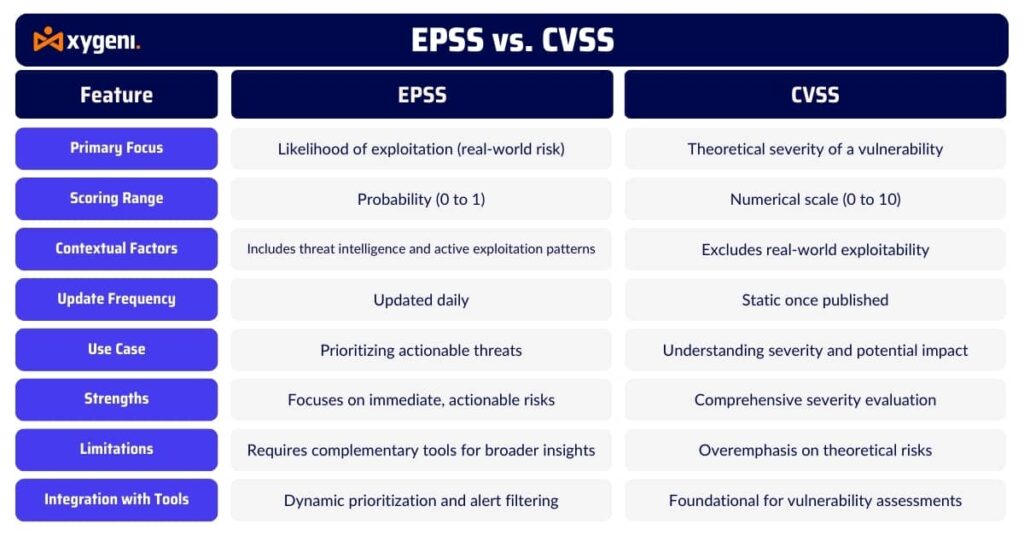
Idan aka kwatanta cvss da epss, bambancin yana cikin abin da kowane maki ya gaya maka:
CVSS Yana mai da hankali kan tsananin yuwuwar na rauni - yadda yake lalata shi iya zama.
EPS yana annabta yiwuwar amfani da shi a cikin ainihin duniya - yadda zai yiwu so a yi niyya.
Duk da cewa CVSS tana la'akari da rikitarwar amfani da na'urar, hulɗar mai amfani, da tasirinta, ba ta yin la'akari da ko masu kai hari suna amfani da raunin da ke tattare da shi ba. EPSS tana cike wannan gibin ta hanyar ƙididdige tsarin barazanar, samuwar lambar amfani, da kuma tsarin kai hari.
Bisa lafazin Binciken EPSS, ƙasa da kashi 2% na raunin da aka sani suna da babban maki na EPSS. Sabanin haka, yawancin matsalolin CVSS masu mahimmanci har yanzu ba a taɓa su da masu aikata laifukan yanar gizo ba. Wannan yana nuna yadda Raunin maki na EPSS taimakawa wajen tace hayaniya, yana bawa ƙungiyoyi damar mai da hankali kan barazanar da ake da ita a yanzu.
Shin EPSS da CVSS za su iya aiki tare?
Hakika—kuma ya kamata su yi.
EPSS da CVSS suna haɗuwa da juna a cikin dabarun kula da rauni mai daidaito:
amfani CVSS don tantancewa yaya mugun rauni zai iya zama.
amfani EPS don tantancewa ta yaya za a yi amfani da shi.
Wannan hanyar mai matakai biyu tana tallafawa tsari mai wayo. Misali:
Rashin rauni tare da babban CVSS + babban EPSS → Gyara shi nan take.
Babban CVSS + ƙaramin EPSS → Ka sa ido sosai, amma ka rage fifiko.
Ƙaramin CVSS + babban EPSS → Bincika; maharan na iya ɗaure shi da wasu kurakurai.
Saboda haka, ƙungiyoyin da ke kwatanta epss da cvss gefe-gefe suna samun fahimtar abin da za a gyara—da kuma lokacin da za a yi hakan.
Fifiko na Gaske tare da EPSS
Don misali, yi tunanin tsarinka yana nuna alamun CVE guda biyu:
CVE-2024-99999
CVSS: 9.8 (Mahimmanci)
EPSS: 0.03 (Ƙarancin amfani)CVE-2024-12345
CVSS: 6.1 (Matsakaici)
EPSS: 0.86 (Babban yuwuwar cin zarafi)
Wanne ya kamata ka fara gyarawa? Yawancin hanyoyin aiki na gargajiya zasu fifita mummunan raunin CVSS. Duk da haka, EPSS yana juya wannan rubutun—kuna aiki akan abin da ake amfani da shi a zahiri, ba wai kawai me ba iya zama mai haɗari.
Wannan canjin yana bawa ƙungiyoyi damar rage tasirin ƙarya, adana lokaci, da kuma inganta saurin gyarawa.
Dalilin da yasa Gudanar da Rauni na Sakamakon EPSS Yana Canza Wasanni
EPSS tana ba da fiye da faci mai wayo—yana ba da damar tsaro a sikelin:
Maki mai ƙarfi: Ana sabunta EPSS kowace rana, yana nuna sabbin bayanan sirri na amfani da bayanai.
scalability: Yana aiki a cikin dubban raunin da ke tattare da shi, yana taimaka wa ƙungiyoyi su daidaita kansu cikin sauri.
Makasudin aiki: An gina shi akan bayanan jama'a da samfuran buɗewa, EPSS ana iya tabbatarwa kuma yana da gaskiya.
Tasirin Siyasa: Kamar yadda aka lura FIRST.org, EPSS ta riga ta fara yin tasiri ga manufofin gyara na matakin ƙasa (misali DHS BOD 19-02).
Bugu da ƙari, kula da raunin maki na EPSS yana taimaka wa masu kare su mayar da hankali kan ƙoƙarinsu a inda ya fi muhimmanci—zuwa ga barazanar da ke haifar da haɗari.
Kana son wuce gona da iri wajen cin kwallaye sannan ka fara gyara matsalolin da suka dace?
Duba cikakken jagorarmu kan yadda ake fifita da kuma magance raunin da ya shafi lafiya yadda ya kamata. Koyi yadda ake mayar da hankali kan aiki—da sauri.
EPSS vs CVSS Ba Ko ɗaya bane - Ko kuma - Ya fi kyau tare
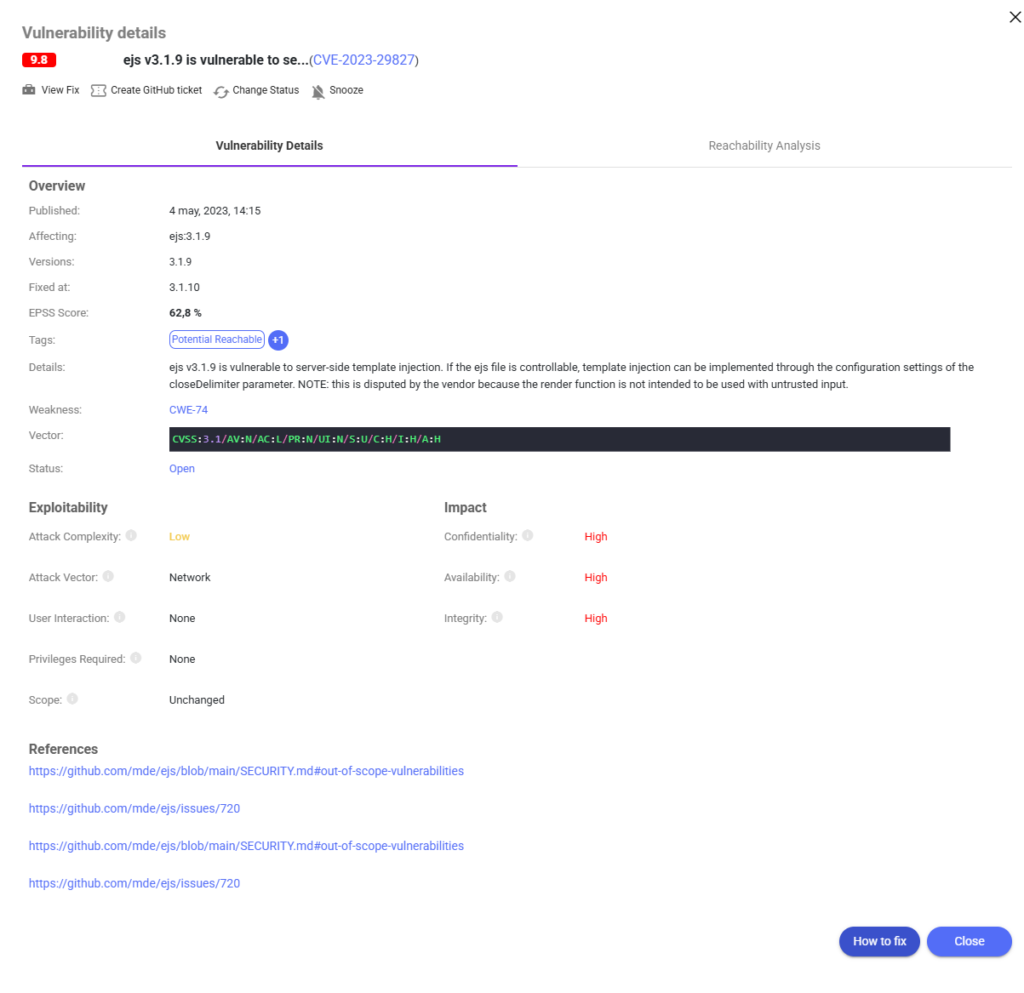
At Xygeni, mun yi imanin cvss vs epss ba yaƙi ba ne—haɗin gwiwa ne. Duk tsarin maki suna ba da ayyuka daban-daban, amma masu mahimmanci iri ɗaya, a cikin kula da rauni. Shi ya sa Xygeni ke amfani da EPSS da CVSS tare don gina cikakken tsarin fifiko wanda ya san mahallin da ke aiki, sauri, kuma mai tasiri.
Ga kowace rauni, Xygeni ya nuna:
Tsananin CVSS don fahimtar tasirin da zai iya haifarwa.
maki EPSS don tantance yuwuwar cin zarafi.
Binciken Isarwa don tabbatar da cewa lambar da aka yi amfani da ita tana aiki.
Bayanan mahallin kamar fahimtar kadarori da mahimmancin kasuwanci.
Bari mu dauka CVE-2023-29827 a matsayin misali. Wannan matsalar allurar samfuri ce ta ɓangaren uwar garken da ke shafar ejs v3.1.9A kan takarda, yana da Sakamakon CVSS na 9.8, yana nuna tsananin tsanani. Amma tare da Maki na EPSS na 62.8%, yana kuma da babban yuwuwar a yi amfani da shi nan ba da jimawa ba.
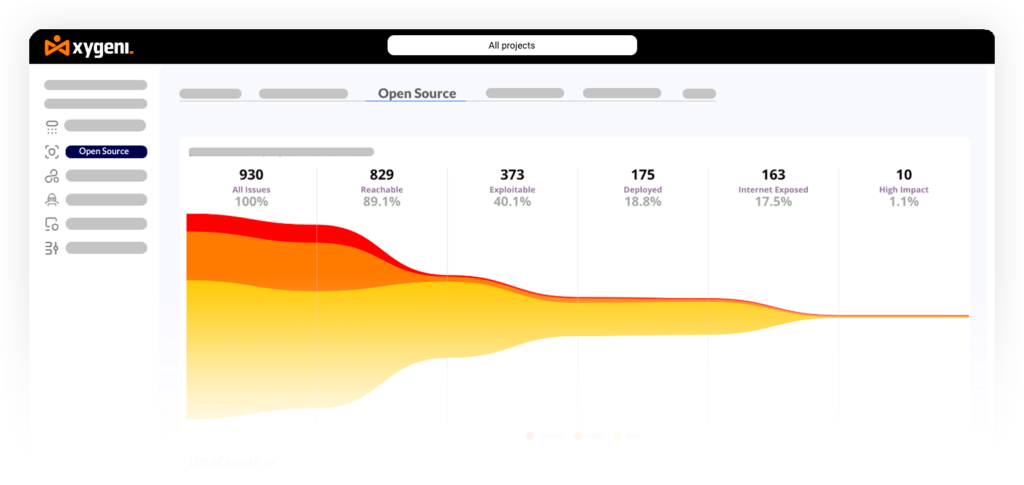
Xygeni yana nuna duk waɗannan bayanai a wuri ɗaya—tsanani, iya amfani, iya isa gare shi, Raunin CWE, da kuma matsayin sigar—don haka ƙungiyoyi za su iya ganin dalilin da ya sa yake da muhimmanci nan take da kuma abin da za a yi a gaba.
Maimakon mayar da martani ga kowace raunin CVSS 9.8, Dandalin Xygeni yana nuna ko:
Ana iya isa gare shi a cikin tushen lambar ku
Yana da sauƙin amfani a cikin daji
Yana haifar da mahimmancin kayan kasuwanci
Wannan hangen nesa mai layi yana taimakawa rage gajiya a faɗake, rage ɓatar da ƙoƙari, da kuma gyara kai tsaye zuwa ga haɗarin da ke da mahimmanci.
Idan aka haɗa maki EPSS da tsananin CVSS da yanayin lokacin aiki, fifikon ya zama mai aiki—ba mai amsawa baXygeni yana mai da hayaniya zuwa fahimta, yana jagorantar tsarocisions tare da haske, ƙungiyoyin DevSecOps suna buƙatar yin sauri kuma su kasance lafiya.