Það er mikilvægara en nokkru sinni fyrr að tryggja öryggi forrita. Árið 2024, yfir 54,000 ný CVE-gildi voru birtar, sem er metfjöldi. Þessi aukning sýnir hversu hratt árásarflöturinn er að vaxa, sérstaklega þar sem nútímaforrit reiða sig meira á opinn kóða og þriðja aðila pakka. Þess vegna sca vs. sast Umræðan er ekki bara tæknileg, heldur stefnumótandi. Í stað þess að velja annað hvort fram yfir hitt nota öryggissinnuð teymi bæði. SAST greinir villur og galla í eigin kóða snemma. SCA fylgist með vandamálum í ósjálfstæðum kerfum áður en þau lenda í framleiðslu. Mismunandi verkfæri, mismunandi lög, en saman brúa þau raunveruleg eyður.
Í þessari handbók greinum við muninn á sast og scahvernig þau vinna hlið við hlið og hvernig Xygeni sameinar þau í einn vettvang sem er hannaður fyrir DevSecOps.
Hvað er SAST?
Static Application Security Testing (SAST) er eins og að hafa viðvörunarkerfi fyrir þinn eigin kóða. Með því að skanna frumkóða, bætakóða og tvíundaskrár, SAST greinir veikleika löngu áður en þeir verða vandamál. Til dæmis vísar það á vandamál eins og SQL innspýtingu eða kross-síðuforskriftir (XSS) á meðan kóðinn er enn í þróun.
Helstu kostir þess SAST:
- Snemma uppgötvunFinnur veikleika snemma og sparar tíma og peninga í viðgerðum síðar.
- Alhliða umfjöllunAthugar allan sérsniðinn kóða vandlega og gætir þess að ekkert sé gleymt.
- Rauntíma endurgjöfLeiðbeinir forriturum við ritun og tryggir betri kóðagæði.
- Umbætur á gæðakóðaEykur öryggi og bætir viðhald.
Modern SAST Tól eru í örri þróun. Til að vera skilvirk verða þau ekki aðeins að greina vandamál eins og SQLi eða XSS, heldur einnig að forgangsraða því sem er í raun hægt að nýta og veita forriturum leiðsögn í rauntíma. Þetta er þar sem tól eins og Xygeni skera sig úr, en við munum fjalla um það nánar hér að neðan.
Hvað er SCA?
Á sama tíma, Greining hugbúnaðarsamsetningar (SCA) snýst allt um að stjórna áhættu í tengslum við þriðja aðila og opinn hugbúnað. Þar sem nútímaforrit reiða sig mikið á opinn hugbúnað — oft allt að 90% —SCA verður mikilvægt til að fylgjast með veikleikum og leyfisvandamálum.
Helstu kostir þess SCA:
- Fíkn stjórnunHeldur efnisskrá hugbúnaðarins (SBOM) uppfært.
- Varnarleysisgreining: Merkir vandamál með gagnagrunnum eins og NDV or OpenSSF.
- Leyfissamræmi: Hjálpar til við að uppfylla kröfur um leyfisveitingar fyrir opna hugbúnað.
- Fyrirbyggjandi viðvaranir: Finnur úrelta íhluti til að forðast falda áhættu.
Með því að laga veikleika í ytri ósjálfstæði, SAST og SCA vinna vel saman að því að veita öflugt forritaöryggi. Einnig samanburður á SCA vs SAST sýnir hvernig þessi verkfæri styðja hvert annað og taka á mismunandi þáttum öryggisáskorana forrita á áhrifaríkan hátt.
SAST vs SCALykilmunur á forritaöryggi
| Aspect | SAST | SCA |
|---|---|---|
| Aðaláhersla | Séreignarkóði | Opinn hugbúnaður og ósjálfstæði þriðja aðila |
| Timing | Best að nota á þróunarstigi | Stöðug eftirfylgni fyrir og eftir dreifingu |
| Tegundir veikleika | Greinir kóðunargalla (t.d. SQL innspýting, XSS) | Greinir þekktar veikleikar í ytri bókasöfnum og pakka |
| Gildissvið | Greinir sérsniðinn kóða sem skrifaður er innanhúss | Skannar allar beinar og tímabundnar ósjálfstæðir þættir í kóðagrunninum |
| Besta notkunartilfelli | Öryggi einkaleyfisforrita | Áhættustjórnun í hugbúnaðaríhlutum frá opnum hugbúnaði og þriðja aðila |
| Áhrif á þróun | Bætir öruggar kóðunaraðferðir með rauntíma endurgjöf | Tryggir fylgni og dregur úr áhættu frá óstaðfestum utanaðkomandi aðilum |
Eins og þessi samanburður sýnir, SAST og SCA þjóna mismunandi en vinna vel saman. Með því að nota þau saman er tryggt að engin eyður séu í öryggisstefnu þinni.
Af hverju þú Þarftu Bæði SAST og SCA
Í stað þess að velja á milli SCA vs SAST, nýta hvort tveggja til að skapa marglaga vörn. Hér er ástæðan:
- Alhliða vernd: SAST nær yfir sérsniðinn kóða, á meðan SCA tryggir ósjálfstæði þriðja aðila.
- Minnkað árásarflöturSaman útrýma þau veikleikum í forritunum þínum.
- SkilvirkniStraumlínulagað vinnuflæði hjálpar til við að leysa veikleika hraðar.
Til að kafa dýpra í smíði öruggra forrita, skoðaðu þessa ítarlegu Leiðbeiningar um örugga kóðun frá OWASP, verðmætt úrræði fyrir sérfræðinga í DevSecOps. Einnig er hægt að skoða þáttinn okkar um SafeDev Talk á SCA vs SAST - Hvernig bæta þau hvort annað upp fyrir sterkara öryggi?
Hvers SAST og SCA Málefni árið 2025: Þörf er á samhengi nútíma öryggis í forritum
Öryggisteymi í dag eru ekki bara að laga villur. Þau eru að vernda mikilvæga hluti. pipelines, áhættustýringu gagnvart opnum hugbúnaðartengdum kerfum og að fylgja vaxandi reglugerðum.
Í byrjun 2025, Yfir 80% af kóðagrunnum innihalda þekkta veikleika í opnum hugbúnaði, samkvæmt skýrslum frá greininni. Og með Gert er ráð fyrir að gervigreindarforritun muni nema 30–50% af nýjum kóða Í sumum fyrirtækjum er að verða erfiðara að fylgjast með því hvað er öruggt og hvað ekki.
Á sama tíma, reglugerðir eins og NIS2, DORA og nýjar reglur frá SEC erum að gera rekjanleika öryggis að nauðsyn, ekki bara að vera fínn að eiga.
Bætið við áberandi árásum á framboðskeðjuna eins og xz Utils or ctx, og það er ljóst: gamla leiðin til að gera AppSec er ekki nóg.
Þess vegna sca og sast eru ekki valfrjáls. Þegar þau eru notuð saman gefa þau teymum innsýn í bæði áhættu sem tengist einkaleyfi og áhættu þriðja aðila. Lykilatriðið núna er að sameina þau í verkflæði sem forritarar nota í raun.
Xygeni: Hið sameinaða SAST og SCA lausn
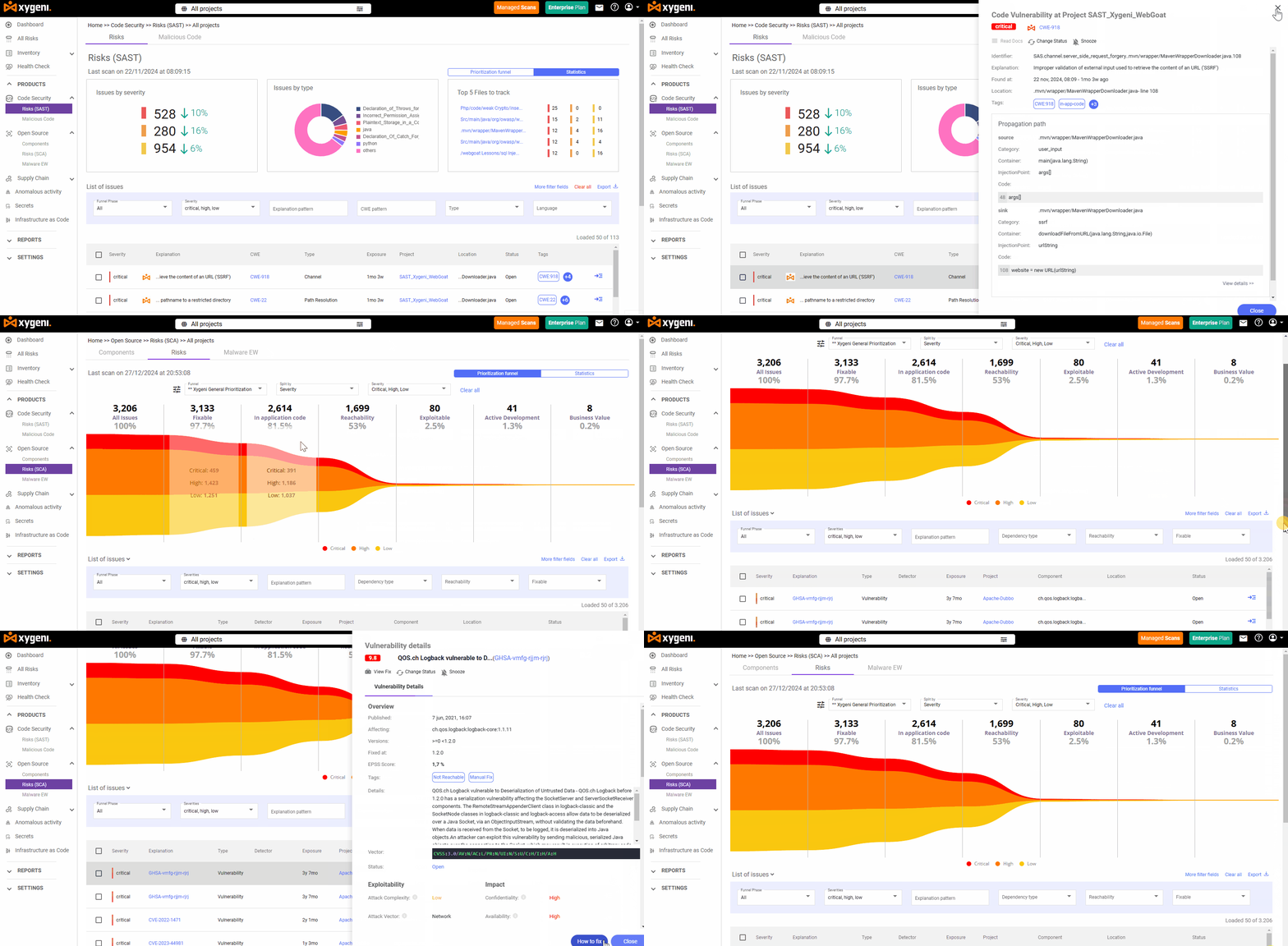
Öryggisteymi eiga oft erfitt með að velja á milli SAST vs SCA, en raunin er sú að hvort tveggja er nauðsynlegt. SAST vs SCA er ekki keppni, heldur samstarf. Þó SAST greinir sérkóða í leit að öryggisgöllum, SCA skannar íhluti frá opnum hugbúnaði og þriðja aðila í leit að þekktum veikleikum.
Xygeni sameinar SAST og SCA í einn sameinaðan vettvang, hannað til að passa inn í DevSecOps vinnuflæði. Þessi aðferð tryggir öryggi í öllu þróunarferlinu, allt frá greiningu á sérsniðnum kóða til stjórnun á áhættu í tengslum við opinn hugbúnað.
Proactive SASTAð tryggja sérkóða frá upphafi
Öryggisprófanir á kyrrstæðum forritum frá Xygeni (SAST) greinir sérkóðann þinn frá þeirri stundu sem hann er skrifaður, skannar frumkóða, bætakóða og tvíundaskrár í leit að alvarlegum öryggisgöllum.
Helstu ógnir sem greindar voru eru meðal annars:
- SQL innspýting, cross-site scripting (XSS) og skipanainnspýting
- Villur í minnisstjórnun eins og yfirflæði í biðminni
- Óörugg auðkenningarrökfræði og gagnavernd
- Falinn eða illgjarn kóði eins og ransomware, njósnaforrit eða bakdyr
En það sem gerir Xygeni öðruvísi er ekki bara greining, heldur forgangsröðun.
Viðmiðunarprófuð nákvæmni
Xeni-SAST var prófað með því að nota opinbera OWASP viðmið, þar sem það náði:
- 100% raunverulegt jákvætt hlutfall í öllum helstu flokkum eins og SQLi og XSS
- A lágt 16.7% falskt jákvætt hlutfall, sem skilar betri árangri en verkfæri eins og CodeQL, Semgrep og SonarQube
- Fullkomin stig á mikilvægum sviðum eins og veikri dulkóðun og óöruggri uppgötvun á vafrakökum
Þessar niðurstöður sýna að Xygeni greinir raunverulegar ógnir og forðast að sóa tíma teymisins í hávaða.
Sjálfvirk lagfæring og CI/CD Sameining
Til að flýta fyrir upplausn er gervigreindarknúið tæki frá Xygeni Sjálfvirk lagfæring:
- Leggur til öruggar kóðabreytingar í rauntíma
- Myndar sjálfkrafa pull requests með samhengisvitundarbreytingum
- Keyrir beint inni í þér CI/CD vinnuflæði án þess að hindra útgáfur
Þetta þýðir að teymið þitt lagar veikleika snemma, áður en þeir fara í framleiðslu, án þess að hægja á þróuninni.
Þróunarvænt að hönnun
- Uppsetning á einni línu CLI
- Full SCM samþætting (GitHub, GitLab, Azure DevOps, Bitbucket, Jenkins)
- Úttak í JSON, SARIF, CSV, Markdown
- Stuðningur við sérsniðnar reglur í YAML
- Innfelldar PR-skýringar og guardrails
Með Xygeni, SAST verður óaðfinnanlegur hluti af öruggri þróunarferli þínum, frá uppgötvun til úrbóta, án núll núnings.
Greindur SCAVerndun á tengslum við opinn hugbúnað
Nútímaforrit reiða sig meira en nokkru sinni fyrr á opinn hugbúnað, en því fylgir áhætta. Nýlegar rannsóknir sýna að 74% af kóðagrunnum innihalda áhættusama opinn hugbúnaðaríhluti, og það 91% af þessum íhlutum eru að minnsta kosti 10 útgáfum á eftir. Án viðeigandi yfirsýnar og stjórnunar gætirðu verið að senda veikleika beint í framleiðslu.
Greining á hugbúnaðarsamsetningu Xygeni (SCA) fer langt út fyrir að skrá CVE-gildi. Það veitir rauntíma, snjallt verndarlag fyrir allt vistkerfi þriðja aðila.
Ítarleg greining umfram CVEs
Xygeni skannar allar ósjálfstæðir tengingar, bæði beinar og ósjálfstæðar, og merkir:
- Þekktar veikleikar með notkun NVD, OSV, GitHub Advisory og fleira
- Úreltir pakkar með vantar plástra
- Óeðlileg eða illgjörn hegðun í uppsetningarforskriftum pakkans
- Typosquatting, ruglingur í tengslum við ósjálfstæðiog óumfangslaus innri pakkar
- Grunsamleg mynstur tengd njósnaforrit, ransomware og bakdyr
Aðgengileiki og nýtingarhæfni: Einbeittu þér að því sem skiptir máli
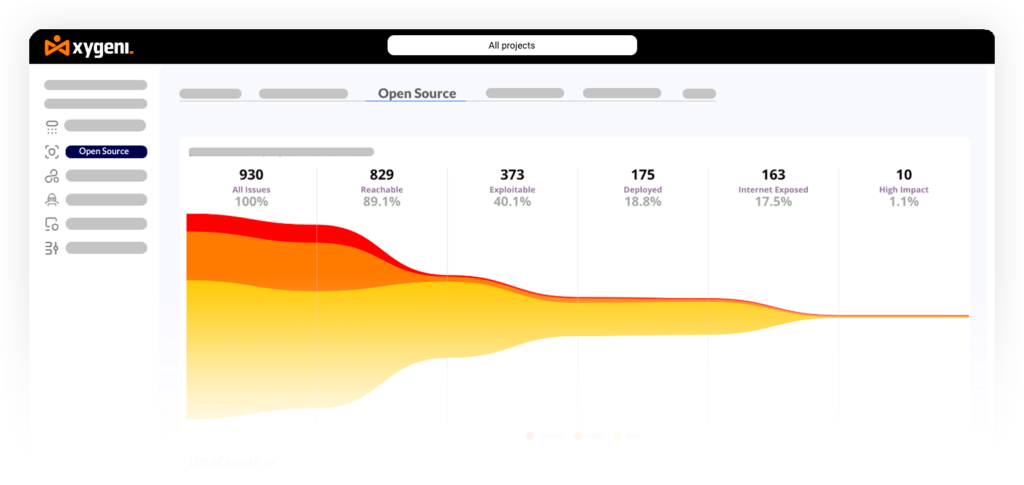
Í stað þess að flæða þig með viðvörunum notar Xygeni Aðgengisgreining til að sýna fram á hvaða veikleikar eru í raun og veru notað í umsókn þinni:
- Fylgist með framkvæmdaslóðum og símtalsmyndum
- Forgangsraðar veikleikum út frá EPSS (Spákerfi fyrir nýting stiga)
- Dregur úr fölskum jákvæðum niðurstöðum um allt að 70%
- Greinir á milli aðgengilegra og ónotaðra kóðaslóða
Þetta gerir teyminu þínu kleift að einbeita sér aðeins að nýtanlegar áhættur, sparar tíma og dregur úr hávaða.
Sjálfvirk úrbætur í CI/CD
Það þarf ekki að vera handvirkt að laga viðkvæmar ósjálfstæðir þættir. Xygeni sjálfvirknivæðir þetta ferli með:
- Tillögur að tafarlausum viðgerðum beint í vinnuflæði þínu
- Sjálfvirk lagfæring í magni: beita mörgum uppfærslum á ósjálfstæði í einni aðgerð
- Sjálfvirkt myndað pull requests með öruggum útgáfum af plástri
- Full CI/CD samþætting fyrir stöðuga vernd
Engin þörf á að leita lengur í gegnum trjáboli eða jonglera útgáfum af viðgerðum, heldur bara hröð og markviss úrbætur þar sem það skiptir máli.
Snemmbúin greining á spilliforritum fyrir OSS
Xygeni skannar stöðugt opinberar skrár (eins og NPM, PyPI, Maven) til að greina:
- Pakkar sýktir af spilliforritum
- Núlldagsógnir
- Grunsamlegar uppsetningarforskriftir
- Hegðun tengd njósnaforritum eða bakdyrum
Ef eitthvað er merkt, Xygeni sóttkví ógnina, varar teymið þitt við og hjálpar jafnvel til við að láta skrásetjarann vita til að koma í veg fyrir frekari útbreiðslu. Þú ert varinn áður en illgjarn pakkar ná til þín. pipelines.
Fullt gagnsæi og samræmi við SBOM
Þarftu að sanna hvað er í kóðanum þínum? Xygeni býr sjálfkrafa til SBOMs í sniðum eins og SPDX og CycloneDXog samþættir Skýrslur um upplýsingagjöf um varnarleysi (VDR) fyrir fullkomna rekjanleika.
- Uppfyllir kröfur EO 14028, NIST SP 800-204D, DORA og FDA
- Fylgist með leyfisáhættu í öllum þáttum
- Virkar í gegnum CLI eða WebUI, að fullu innbyggt í CI þinn pipelines
Þetta tryggir að þú uppfyllir reglugerðarkröfur og heldur um leið framboðskeðjunni þinni öruggri og endurskoðanlega.
SAST vs SCAÍtarlegir öryggiseiginleikar sem aðgreina Xygeni
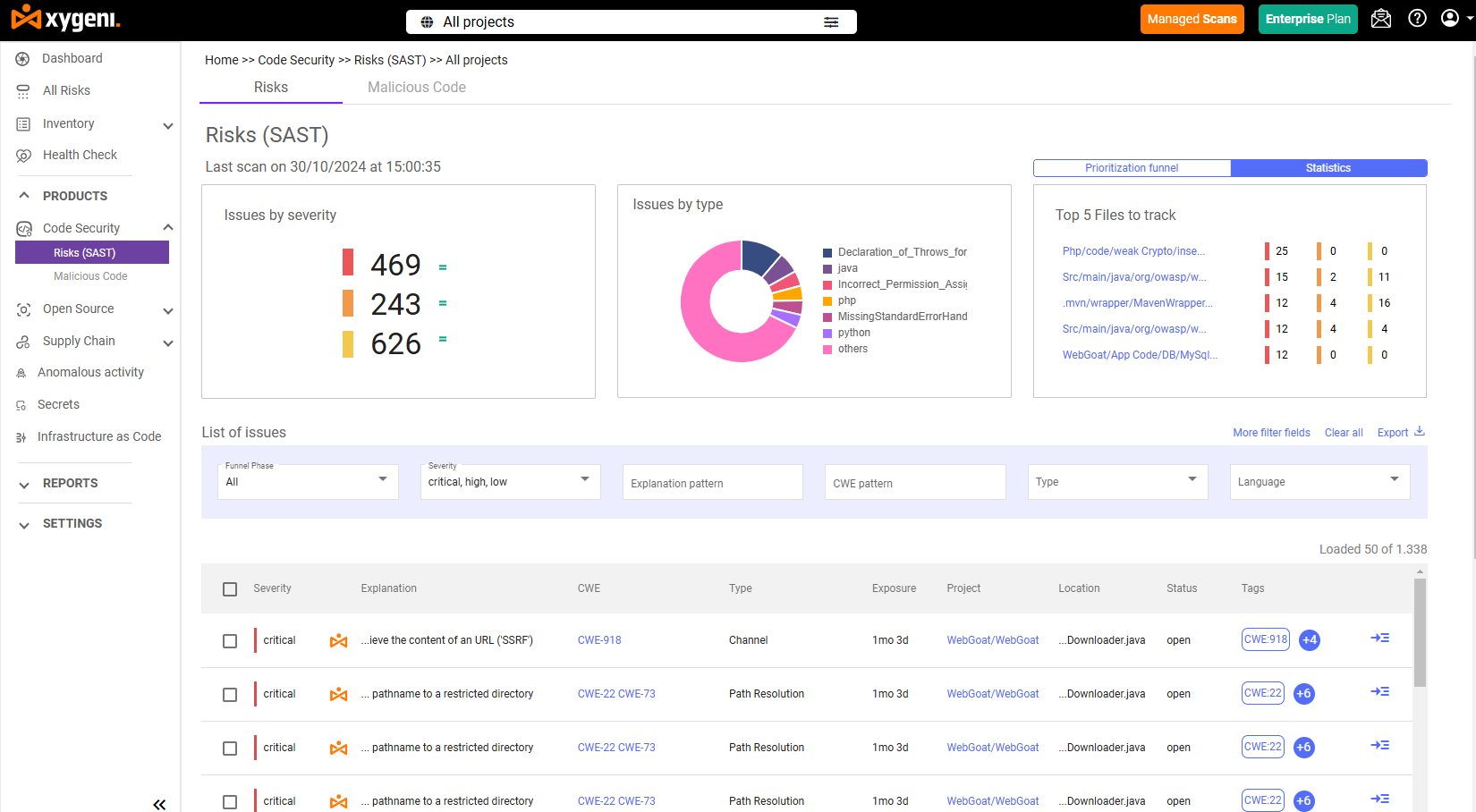
Þegar borið er saman sca vs. sast, það snýst ekki bara um hvað þeir greina, heldur hversu snjallt þeir gera það. Xygeni umbreytir hefðbundnum AppSec verkfærum í sameinað, greint kerfi sem útrýmir hávaða og flýtir fyrir úrbótum.
Hér er hvernig Xygeni's SAST og SCA vinna saman til að skila raunverulegum áhrifum á öryggi:
Nýtingarhæfni og aðgengileiki: Forgangsraðaðu því sem er raunverulegt
Flest öryggisverkfæri flæða teymi með óviðeigandi viðvörunum. Xygeni leysir þetta með innbyggðum greining á nýtingarhæfni og aðgengismælingar:
- SAST Niðurstöður eru síaðar með gagnaflæðisgreiningu til að merkja aðeins galla sem hægt er að nýta sér
- SCA Veikleikar eru flokkaðir eftir því hvort varnarlausi kóðinn sé í raun notaður
- Í bland við EPSS stigagjöf sér liðið þitt fyrst hvað skiptir máli og ekkert annað
Þetta dregur verulega úr þreytu við árvekni og skerðir hávaða.
AutoFix: Úrbætur sem skrifa sig sjálfar
Xygeni eykur öryggi með því að útrýma handvirkum lagfæringum:
- Sjálfvirk lagfæring knúin með gervigreind býr til pull requests fyrir bæði SAST og SCA málefni
- Uppfærslur eru í samræmi við bestu starfsvenjur og miðaðar við raunverulegt vandamál
- Sjálfvirk lagfæring í magni beitir mörgum leiðréttingum í einu flæði
- Allar breytingar eru CI/CD-tilbúið og samþykkt af forritara
Að laga veikleika verður óaðfinnanlegur hluti af þróunarferlinu - ekki hindrun.
Snemmbúin greining á spilliforritum í ósjálfstæðum kerfum
Þar sem illgjarn opinn hugbúnaður fjölgar um meira en 300% á milli ára, Greining á spilliforritum er nú nauðsynleg in SCA verkfæri.
Xygeni skannar opinberar skrár í rauntíma (NPM, PyPI, Maven) til að greina:
- Innsláttarvilla, ruglingur um tengsl og grunsamleg forskrift
- Bakdyr, njósnaforrit og ransomware í pakka
- Núlldagsógnir áður en þær lenda á þér pipeline
Ef ógn finnst er hún lokuð, sett í sóttkví og rakin, hratt.
Fylgni, SBOMog VDR-diskar: Innbyggðir
Xygeni sjálfvirknivæðir lykilstjórnunarverkefni með hverri byggingu:
- Býr til SBOMí SPDX og CycloneDX sniðum
- Í samræmi við NIST SP 800-204D, DORA, EO 14028 og leiðbeiningar FDA
- Includes Skýrslur um upplýsingagjöf um varnarleysi (VDR) að fylgjast með áhættu með tímanum
- Samþættist við CLI eða vefviðmót, engin aukaverkfæri nauðsynleg
Fylgni er ekki lengur aukaatriði. Það er samfellt, gagnsætt og tilbúið til endurskoðunar.
Einn pallur, einn flæði
Ólíkt sundurlausum verkfærum býður Xygeni upp á:
- Sameinaðar niðurstöður fyrir SAST og SCA í einu dashboard
- CI/CD guardrails og stefnur sem framfylgja öryggi til vinstri
- Viðvaranir í rauntíma með leiðbeiningum um úrbætur í samhengi
- Full rekjanleiki frá viðkvæmum stöðum commit til að leysa úr lagfæringu
Hvort sem þú ert að tryggja sérkóða eða OSS framboðskeðjuna þína, þá nær Xygeni yfir allt, með minni núningi, færri viðvörunum og hraðari niðurstöðum.
Öryggi er ekki bara verkfæri. Það er stjórnun.
Öryggi forrita snýst ekki bara um að greina veikleika. Reyndar snýst það líka um að vita hver ber áhættuna, hver lagar hana og hvernig þessar aðgerðir samræmast innri öryggisstefnu þinni.
Þegar stofnunin þín vex, Sýnileiki einn og sér dugar ekki tilÞú þarft rekjanleika. Það þýðir:
- Hver bætti við viðkvæmu ósjálfstæðinu?
- Hver ber ábyrgð á viðgerðinni?
- Eru úrbæturnar í samræmi við öryggisstefnu ykkar?
Þetta er þar sem rétt verkfæri og stjórnun koma saman. Þegar þú samþættir SAST og SCA verkfæri inn í vinnuflæði þín á réttan hátt, þá finna þeir ekki bara vandamál. Í staðinn hjálpa þeir til við að framfylgja öryggisreglum, úthluta ábyrgð og flýta fyrir viðgerðum með skýrum, sjálfvirkum ferlum.
Þar að auki, í stórum stíl, verður stjórnun límið milli uppgötvunar og úrbóta. Án hennar safnarðu bara viðvörunum. Með henni grípurðu til raunverulegra aðgerða.
Þess vegna Xygeni býður upp á stefnumiðaða þjónustu guardrails, sérsniðnar teymisverkefni og fullur rekjanleiki í gegnum öruggan hugbúnaðarþróunarferil þinnÞú getur séð hver olli áhættu, hver ber ábyrgð á lagfæringunni og hvort breytingin uppfyllir stjórnunarlíkan þitt.
Í stuttu máli, öryggi stoppar ekki við uppgötvun. Það verður aðeins árangursríkt þegar kerfið þitt auðveldar rétta aðilanum að bregðast hratt við.
Tilbúinn/n að tryggja þróunarvinnuflæðið þitt með réttu verkfærunum?
Skoðaðu lista okkar sem sérfræðingar hafa valið til að finna bestu lausnirnar fyrir teymið þitt:
- Topp 10 greiningar á hugbúnaðarsamsetningu (SCA) Verkfæri fyrir DevSecOps teymi
Uppgötvaðu bestu verkfærin til að stjórna opnum hugbúnaðaríhlutum og vernda hugbúnaðarframboðskeðjuna þína. - Top SAST Verkfæri fyrir DevSecOps teymi
Berðu saman leiðandi verkfæri til að greina kyrrstæðan kóða til að greina veikleika snemma í þróun.
Algengar spurningar um SCA vs SAST
Hver er aðalmunurinn á milli SCA vs SAST?
SAST skoðar einkaleyfiskóða fyrir öryggisgalla, á meðan SCA einbeitir sér að þriðja aðila og opnum hugbúnaði til að bera kennsl á veikleika og leyfisáhættu
Getur SAST og SCA vera notað saman?
Já, nota SAST og SCA saman veitir fullkomið öryggi með því að ná yfir bæði einkaleyfisverndaðan kóða og kóða frá þriðja aðila, sem lágmarkar heildaráhættu.
Hvaða tegundir af veikleikum gera SAST uppgötva?
SAST finnur kóðavandamál, eins og SQL innspýtingu, biðminni yfirflæði og cross-site scripting (XSS), áður en forritið er sett upp.
Af hverju er SCA Mikilvægt fyrir öryggi opins hugbúnaðar?
SCA hjálpar teymum að stjórna áhættu í ósjálfstæði þriðja aðila, eins og gömlum bókasöfnum, þekktum öryggismálum og leyfisvandamálum.
Hvort er betra: SAST or SCA?
Hvorugt er árangursríkt eitt og sér. SAST og SCA vinna saman að því að veita alhliða öryggi fyrir bæði sérsniðinn og ytri kóða
Hvað er Xygeni og hvernig samþættist það SAST og SCA?
Xygeni sameinar SAST og SCA á einn vettvang, sem gerir stjórnun á veikleikum hraðari, snjallari og skilvirkari í öllum þróunarferlinu.