
Welcome to the July edition of the Xygeni Malicious Code Digest. This month, our security research team confirmed over 780 malicious packages across npm, PyPI, and OpenVSX (the VS Code extension marketplace), tracked across five weekly digests.
July was defined by three converging trends: sustained, high-volume version-flooding campaigns designed to outlast takedowns; a sharp escalation in attacks targeting AI tooling, MCP servers, and agentic workflows; and coordinated dependency-confusion campaigns against both enterprise namespaces and crypto/DeFi ecosystems.
I roto i ngā kaupapa rongonui i tuhia i tēnei marama:
bingo-aion PyPI resurfaced twice, flooding the registry with well over 150 versions across two bursts (July 13 and July 21), confirming this is an ongoing operation, not a one-off.zevairouterbecame July’s largest single-package campaign: over 65 versions across npm, published continuously from July 25–28.gcli-control, the Windows RAT we profiled in detail that routes its C2 through npoint.io, escalated from version 0.1.0 to 0.13.0 across three separate weeks.@szc-ft/mcp-szcd-client, the package behind PūkengaLeak, our writeup on a credential decryptor delivered through a bundled MCP skill, was confirmed July 2.- The week of July 7 brought the month’s heaviest AI-tooling targeting:
mcp-server-pg,anthropic-toolkit,openai-agents-helpers,ollama-helpers, a@langgraphjs/toolkit, impersonating MCP, Anthropic, OpenAI, Ollama, and LangGraph. - A 17-package PayPal impersonation cluster hit npm July 27, all at version 28.0.0 within minutes.
@wagni_bot, roughly 60 npm packages impersonating crypto wallet SDKs (Ethereum, Solana, Binance, and more), all published in a single day, July 10.- Over a dozen fake VS Code extensions surfaced on OpenVSX, confirming attackers are expanding beyond package registries into the IDE itself.
The defining pattern of July: attacks increasingly target the AI agents and automated tooling that install packages with no human reviewer in the loop, at a publishing velocity built to outrun manual review.
Below is a summary of what we found. You can see all five weeks’ data disclosed in full detail at the Malicious Code Digest index.
Wiki 5: Neke atu i te 180 Ngā Mōkihi i Kitea
| Te haukori | mōkī | Whakapumautia |
|---|---|---|
| npm | @cryptosrvc/shift-sdk-v4:1.0.77 | Jul 24, 2026 |
| openvsx | cesium/gltf-vscode:0.0.1 | Jul 24, 2026 |
| pīpi | mana-gcli:0.13.0 | Jul 24, 2026 |
| vscode | airtune:1.0.0 | Jul 25, 2026 |
| npm | zevairouter:1.0.109 | Jul 25, 2026 |
| npm | identityauthorizationserv:28.0.0 | Jul 27, 2026 |
| npm | merchantprefsservice-paypal:28.0.0 | Jul 27, 2026 |
| npm | xo-member-components:28.0.0 | Jul 27, 2026 |
| openvsx | technosophos/vscode-helm:0.0.1 | Jul 27, 2026 |
| openvsx | bastienboutonnet/vscode-dbt:0.0.1 | Jul 27, 2026 |
| npm | markscan:1.0.0 | Jul 28, 2026 |
| npm | iphouse:1.0.0 | Jul 28, 2026 |
| npm | akrai-report-new:1.0.0 | Jul 28, 2026 |
| pīpi | vtranalytic:8.0.0 | Jul 28, 2026 |
| npm | greatcall-customers-commandapi:99.0.0 | Jul 29, 2026 |
| npm | blots:2.1.1 | Jul 29, 2026 |
| npm | @ey-china/ey-assistant:1.0.1 | Jul 30, 2026 |
| npm | flydev:0.0.1 | Jul 30, 2026 |
| npm | @qtestorgz/sdk:1.0.0 | Jul 30, 2026 |
Wiki 4: Neke atu i te 165 Ngā Mōkihi i Kitea
| Te haukori | mōkī | Whakapumautia |
|---|---|---|
| npm | javas-crypto:2.0.4 | Jul 17, 2026 |
| npm | clover-codelab-utu-mamao-kapua:99.9.9 | Jul 17, 2026 |
| npm | pūtea-muri-i-te-tauhokohoko:99.0.0 | Jul 19, 2026 |
| npm | twilio-kore tūmau:99.99.99 | Jul 21, 2026 |
| npm | pokapū tuku:1.0.1 | Jul 21, 2026 |
| npm | @offa/offa-uwk:999.0.0 | Jul 21, 2026 |
| npm | hōputu-rā-ngā-utils-xz:1.0.1 | Jul 21, 2026 |
| pīpi | bingo-ai:6.2.241 | Jul 21, 2026 |
| npm | @bpa-ā-roto/bpa-utils:99.99.99 | Jul 22, 2026 |
| npm | n8n-pūnga-pwn:1.0.1 | Jul 22, 2026 |
| pīpi | mana-gcli:0.1.0 | Jul 22, 2026 |
| npm | uniswap-sdk-v4:1.0.0 | Jul 23, 2026 |
| npm | wagmi-tauhohe:1.0.0 | Jul 23, 2026 |
| npm | ethers-security:1.0.0 | Jul 23, 2026 |
| pīpi | mana-gcli:0.12.0 | Jul 24, 2026 |
| npm | datefmt-pro:1.0.1 | Jul 24, 2026 |
| npm | @daylightqc/date-fmt-lite:1.0.0 | Jul 24, 2026 |
Wiki 3: Neke atu i te 145 Ngā Mōkihi i Kitea
| Te haukori | mōkī | Whakapumautia |
|---|---|---|
| npm | tere-taiao:1.0.0 | Jul 11, 2026 |
| pīpi | marama-uv:0.0.25 | Jul 12, 2026 |
| npm | google-caja-bower:1000.800.20 | Jul 13, 2026 |
| npm | mōkihi-ngoikore:99.9.14 | Jul 13, 2026 |
| pīpi | bingo-ai:6.2.109 | Jul 13, 2026 |
| npm | te whakamahi pepeke:99.9.9 | Jul 13, 2026 |
| npm | mōkihi-matua-amdocs:11.11.11 | Jul 14, 2026 |
| npm | kete-arb:1.0.0 | Jul 14, 2026 |
| npm | solana-key-utils:1.0.0 | Jul 14, 2026 |
| npm | axios-test-one:1.18.9 | Jul 15, 2026 |
| pīpi | plungerhacker:2.0.1 | Jul 15, 2026 |
| pīpi | te tohunga-raupapa:0.7.8 | Jul 16, 2026 |
| pīpi | pylogora:0.7.8 | Jul 16, 2026 |
| npm | @across-toolkit/eslint-config:99.0.0 | Jul 17, 2026 |
| npm | validpilot-mcp:1.4.0 | Jul 17, 2026 |
| npm | nyxora:26.7.17 | Jul 17, 2026 |
Wiki 2: Neke atu i te 200 Ngā Mōkihi i Kitea
| Te haukori | mōkī | Whakapumautia |
|---|---|---|
| pīpi | waea tukatuka:5.2.7 | Jul 4, 2026 |
| npm | pūnga-neon:0.3.0 | Jul 4, 2026 |
| npm | kaihoko-kore-mōrahi:1.0.336 | Jul 6, 2026 |
| vscode | anga tautoko-Android-vs:0.0.1 | Jul 6, 2026 |
| npm | mcp-server-pg:1.0.0 | Jul 7, 2026 |
| npm | kete-utauta-ā-tangata:1.3.1 | Jul 7, 2026 |
| npm | openai-agents-helpers:1.3.3 | Jul 7, 2026 |
| npm | debugcli:4.4.1 | Jul 7, 2026 |
| npm | hello244a:1.0.38 | Jul 7, 2026 |
| npm | whatitiri-rony:99.9.9 | Jul 8, 2026 |
| pīpi | marama-uv:0.0.5 | Jul 9, 2026 |
| npm | es6-whakaū:2.0.0 | Jul 9, 2026 |
| npm | n8n-pūnga-mcputils:0.1.4 | Jul 9, 2026 |
| npm | @wagni_bot/hyperliquid-sdk:1.0.0 | Jul 10, 2026 |
| npm | @wagni_bot/metemask-sdk:1.0.0 | Jul 10, 2026 |
| npm | @wagni_bot/pumpfun-sdk:1.0.0 | Jul 10, 2026 |
| npm | @wagni_bot/binance-sdk:1.0.0 | Jul 10, 2026 |
| npm | @wagni_bot/ethereum-wallet:1.0.0 | Jul 10, 2026 |
| npm | whakamātautau-d3do:99.9.9 | Jul 10, 2026 |
| npm | kaihoko-pihikete-kiritaki:99.9.6 | Jul 10, 2026 |
Wiki 1: Neke atu i te 90 Ngā Mōkihi i Kitea
| Te haukori | mōkī | Whakapumautia |
|---|---|---|
| npm | ngā kōwae-karu:999.1.2 | Jul 1, 2026 |
| npm | @szc-ft/mcp-szcd-kiritaki:0.39.0 | Jul 2, 2026 |
| npm | pp-tauhohe-v5:30.0.2 | Jul 1, 2026 |
| npm | ngā whetū:0.5.1 | Jul 1, 2026 |
| npm | rā-fns-māmā:1.0.9 | Jul 2, 2026 |
| npm | @easypayment/medusa-paypal:0.7.6 | Jul 2, 2026 |
| npm | dl-pp-latm:80.4.2 | Jul 2, 2026 |
| npm | @sudoughnym/enviro-demo:99.99.99 | Jul 1, 2026 |
| npm | kaihoko-kore-mōrahi:1.0.316 | Jul 2, 2026 |
| npm | kanga-ecto-d3ab00:1.0.0 | Jul 3, 2026 |
| npm | @checkrhq/whakatau-api-kiritaki:0.0.2 | Jul 3, 2026 |
From Version Storms to AI Impersonation: What July’s Supply Chain Attacks Reveal
The campaigns above aren’t edge cases, they’re the baseline now. Version-flooding storms, coordinated impersonation drops, and AI-tooling lookalikes are hitting real teams in real SDLCs every week, often with no human in the loop between publication and install.
Xygeni's te kimi i ngā pūmanawa kino a supply chain security platform gives organizations the visibility to catch malicious dependencies before they execute on a developer machine, enter a build system, or reach production. Coverage spans npm, PyPI, OpenVSX, and beyond, monitoring for suspicious publishing patterns, namespace abuse, typosquatting, and AI-native attack techniques as they emerge.
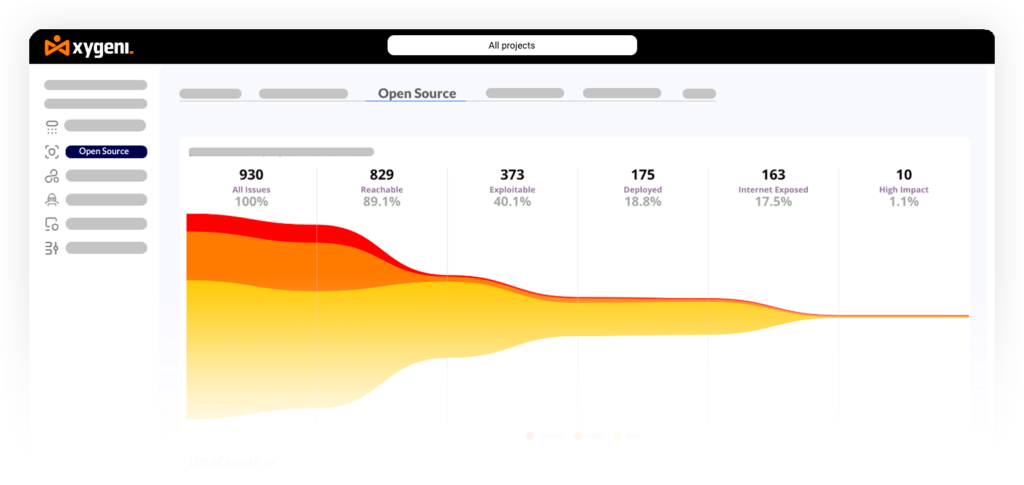
Ka whakatauhia aunoatia ia kitenga e te āheinga ki te whakamahi, te āheinga ki te toro atu, me te pānga ki te pakihi, kia arotahi ai tō rōpū ki ngā mea e tika ana kia whakatikahia, kaua ki ngā mea haruru.
Tūhurahia ia mōkihi kino me ngā kaupapa kua whakamanahia e te Rōpū Haumarutanga Xygeni i roto i te Whakarāpopototanga Waehere Kino.
Kia haumaru. Kia tere. Kia mau ki te mana whakahaere me Xygeni.