


Introduksjon
Ocuco OWASP Software Assurance Maturity Model (SAMM) gir et strukturert rammeverk for å vurdere og forbedre modenheten til programvaresikkerhet. Det hjelper organisasjoner med å implementere beste praksis gjennom hele programvareutviklingssyklusen (SDLC) samtidig som balansere sikkerhetsinnsats med forretningsmål.
Xygeni akselererer adopsjonen av SAMM ved å integrere:
- ASPM (Application Security Posture Management)
- SCA (Analyse av programvaresammensetning)
- CI/CD Trygghet
- IaC Security (Infrastruktur som kode)
- SAST (Statisk sikkerhetstesting av applikasjoner)
- Build Security
- Secrets Management
- Anomali Deteksjon
Disse funksjonene gir trusseldeteksjon i sanntid, automatisert håndheving av retningslinjer og risikobasert prioritering, noe som sikrer kontinuerlig sikkerhet på tvers av programvareutvikling, distribusjon og drift.
Dette dokumentet beskriver hvordan Xygeni støtter organisasjoner i å oppnå SAMM-modenhet, automatisere sikkerhetskontroller, kontrollere samsvar og redusere risiko på tvers av SDLC.
OWASP SAMM-oversikt
De fem forretningsfunksjonene til SAMM
OWASP SAMM er strukturert i fem forretningsfunksjoner, som hver representerer et kritisk aspekt ved programvaresikkerhet. Disse funksjonene fungerer som søyler for at organisasjoner skal kunne vurdere, forbedre og modne sine sikkerhetspraksiser på tvers av programvareutviklingslivssyklus (SDLC).
Governance
Styring etablerer sikkerhetsstrategier, retningslinjer, samsvarsrammeverk og utdanningsinitiativer for å sikre en strukturert og målbar tilnærming til programvaresikkerhet. Det inkluderer:
- Strategi og målinger – Definere sikkerhetsmål, måle effektivitet og tilpasse innsatsen til forretningsmål.
- Retningslinjer og samsvar – Sikre overholdelse av interne sikkerhetsregler og eksterne regulatoriske krav.
- Utdanning og veiledning – Øke sikkerhetsbevisstheten og tilby strukturert opplæring på tvers av team.
Design
Designfunksjonen fokuserer på trusselidentifisering, sikker arkitektur og definering av sikkerhetskrav tidlig i SDLC for å forhindre sårbarheter før de oppstår. Det inkluderer:
- Trusselvurdering – Evaluering av sikkerhetsrisikoer knyttet til applikasjoner og deres miljøer.
- Sikkerhetskrav – Definere sikkerhetsforventninger for programvare og tredjepartsleverandører.
- Sikker arkitektur – Etablering av robuste programvarearkitekturer og sikre teknologistyringspraksiser.
Gjennomføring
Implementeringen sikrer at sikkerhetskontroller er innebygd i prosesser for bygging, utrulling og feilhåndteringDenne funksjonen vektlegger automatisering og sikker programvaresammensetning for å redusere sikkerhetsrisikoer. Det inkluderer:
- Sikker bygging – Håndheving av sikkerhetskontroller i CI/CD pipelines, administrere avhengigheter og forhindre usikre kodeutgivelser.
- Sikker distribusjon – Beskyttelse av applikasjonsintegritet under utrulling og sikring av beste praksis for hemmelig administrasjon.
- Defekthåndtering – Systematisk identifisering, sporing og utbedring av sikkerhetsfeil.
Verifisering
Verifisering bekrefter at sikkerhetskontrollene er riktig implementert og effektiv. Denne funksjonen dekker sikkerhetstestingsmetoder, inkludert:
- Kravdrevet testing – Sikre at sikkerhetskontrollene oppfyller spesifiserte sikkerhetskrav.
- Sikkerhetstesting – Gjennomføre automatiserte og manuelle sikkerhetsvurderinger for å oppdage sårbarheter.
Drift
Driftsfunksjonen sørger for kontinuerlig overvåking, hendelsesrespons og driftssikkerhetsstyring å opprettholde programvaresikkerhet gjennom hele livssyklusen. Det inkluderer:
- Hendelsesstyring – Oppdage, reagere på og redusere sikkerhetshendelser.
- Miljøledelse – Sikring av sky- og infrastrukturkonfigurasjoner for å minimere angrepseksponering.
- Operasjonell risikostyring – Etablering av kontinuerlig overvåking og risikoprioritering for proaktiv sikkerhet.
Forståelse av SAMM-modenhetsnivåer
OWASP SAMM definerer modenhetsnivåer (0-3) for hver sikkerhetspraksis, slik at organisasjoner gradvis kan forbedre sikkerhetsstillingen sin. Nivåene varierer fra ad hoc eller ikke-eksisterende praksis (Nivå 0) til fullt optimaliserte og kontinuerlig forbedrende sikkerhetstiltak (Nivå 3).
Ved å samkjøre med SAMMs forretningsfunksjoner og modenhetsnivåer kan organisasjoner måle sin nåværende sikkerhetstilstand, definere tydelige forbedringsplaner og implementere strukturerte sikkerhetsforbedringer.
Xygenis tilpasning til SAMM Business Functions
Xygeni justerer seg med OWASP SAMMs fem forretningsfunksjoner ved å automatisere sikkerhetshåndhevelse, muliggjøre datadrevet risikoprioritering, og styrking hendelseshåndtering og styring.
- Styresett: ASPM Forbedrer risikosynlighet, håndheving av retningslinjer og samsvarsstyring, som sikrer organisasjoner spore sikkerhetsytelse og håndheve retningslinjer effektivt.
- Design: Dynamisk trusselvurdering og risikoprioritering fokusere utbedringsarbeidet på sårbarheter basert på utnyttbarhet, tilgjengelighet og forretningsmessig innvirkning.
- Gjennomføring:
- SCA, CI/CD Sikkerhet, og SAST integrer sikkerhet i programvarebygg og -distribusjoner, og sørg for tidlig oppdagelse av sårbarheter.
- Build Security gir programvareattestasjoner for integritetsvalidering.
- Hemmelighetsoppdagelse beskytter legitimasjon tvers CI/CD pipelines og infrastrukturkonfigurasjoner.
- Verifikasjon:
- Sikkerhetsporter håndheve Go/No-Go decisioner, og sikrer samsvar med sikkerhetsreglene før utrulling.
- CI/CD Sikkerhet fremtvinger herding av infrastruktur, Redusere feilkonfigurasjoner og konfigurasjonsavvik.
- ASPM Inventar sikrer at sikkerhetsverktøy brukes konsekvent på tvers av pipelines.
- Operasjoner: Avviksdeteksjon og beskyttelse mot kodemanipulering gi sanntids hendelsesovervåking, sikre rask respons på sikkerhetstrusler og uautoriserte modifikasjoner.
Diagrammet nedenfor fremhever sikkerhetspraksisene som Xygeni kan støtte.
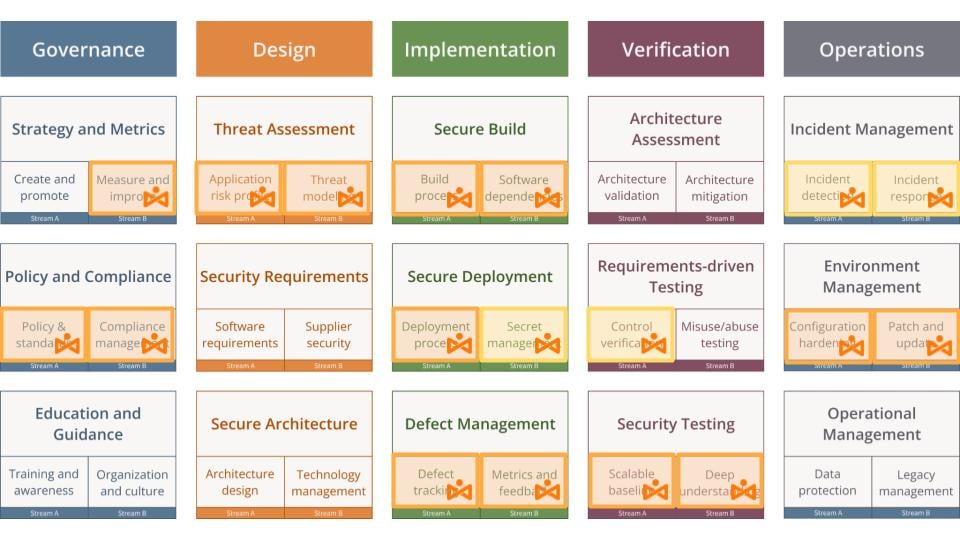
De følgende avsnittene gir en detaljert oversikt over hvordan Xygeni støtter alle SAMM-forretningsfunksjoner, som hjelper organisasjoner fremme sikkerhetsmodenheten sin og opprettholde sikre programvareutviklingspraksiser.
Governance
Xygeni styrker sikkerhetsstyringen ved å tilby innsikt i risikotrender, automatisering av håndheving av retningslinjer og integrering av sikkerhetsbevissthet i utviklingsarbeidsflyter. Gjennom Strategi og målinger, policy og samsvar, og opplæring og veiledning, Xygeni sørger for at organisasjoner kan spore, håndheve og kontinuerlig forbedre sikkerhetstilstanden sin.
Strategi og målinger
Å forstå sikkerhetstrender og måle effektiviteten av utbedringer er avgjørende for samkjøre sikkerhetsinnsatsen med forretningsmålXygenis Application Security Posture Management (ASPM) gir en sentralisert oversikt over sikkerhetsrisikoer, slik at organisasjoner kan spore sårbarhetstrender, vurdere effektiviteten av utbedringer og måle sikkerhetsforbedringer over tid.
Xygeni analyserer eksponeringsvindu, og bestemmer hvor lenge sårbarheter forblir åpne før de løses. Sikkerhetsteam kan optimalisere responstider, forbedre strategier for risikoredusering og håndheve tjenestenivåavtaler for sikkerhetsrettinger ved å identifisere forsinkelser i utbedringen. dashboards gir sanntids-KPI-er, som gir fullstendig innsikt i sikkerhetsprogramytelse og gjør det mulig for ledere å gjøre datadrevet decisioner for å forbedre sikkerhetsstillingen.
Retningslinjer og samsvar
Automatisering av samsvar på tvers av utvikling, bygging og distribusjon pipelines er avgjørende for styring. Xygeni automatiserer håndheving av retningslinjer, integrering sikkerhetsrammeverk som NIST, CISog OpenSSF inn SDLC prosesser.
Sikkerhetspolicyer er håndheves direkte innenfor CI/CD pipelines, forhindrer ikke-kompatible bygg og distribusjoner fra å fortsette. Samsvarssporing gir sanntidsinnsikt i overholdelse av retningslinjer, slik at organisasjoner kan identifisere og utbedre mangler før de blir til risikoer. Ved å bruke risikobasert håndheving, Xygeni prioriterer brudd med høy innvirkning samtidig som støy fra avvik fra retningslinjer med lavere risiko reduseres, og sikkerhetsteamene fokuserer på det som virkelig betyr noe.
Utdanning og veiledning
Bygge en sikkerhet først-kultur krever at sikkerhetsinnsikt er tilgjengelig og handlingsdyktig innenfor utviklingsarbeidsflyter. Xygeni tilbyr sikkerhetsveiledning i sanntid, og hjelper team med å ta i bruk beste praksis uten å forstyrre produktiviteten.
Kontekstualiserte anbefalinger for utbedring sikrer utviklere forstår og fikser sårbarheter effektivt, noe som reduserer frem-og-tilbake-samtaler mellom sikkerhets- og ingeniørteam. For å forhindre innsiderisiko og håndheve sikkerhetsansvar, Xygeni sporer bidragsyterroller og håndhever tilgang med færrest privilegier, og sørger for at sensitive operasjoner er begrenset til autoriserte brukere.
- Full risikooversikt med sanntidssikkerhet dashboards og eksponeringssporing.
- Automatisert håndheving av samsvar innenfor CI/CD for å forhindre brudd på retningslinjene.
- Innebygd sikkerhetsbevissthet gjennom kontekstuell utbedring og kontroller med minste privilegier.
Design
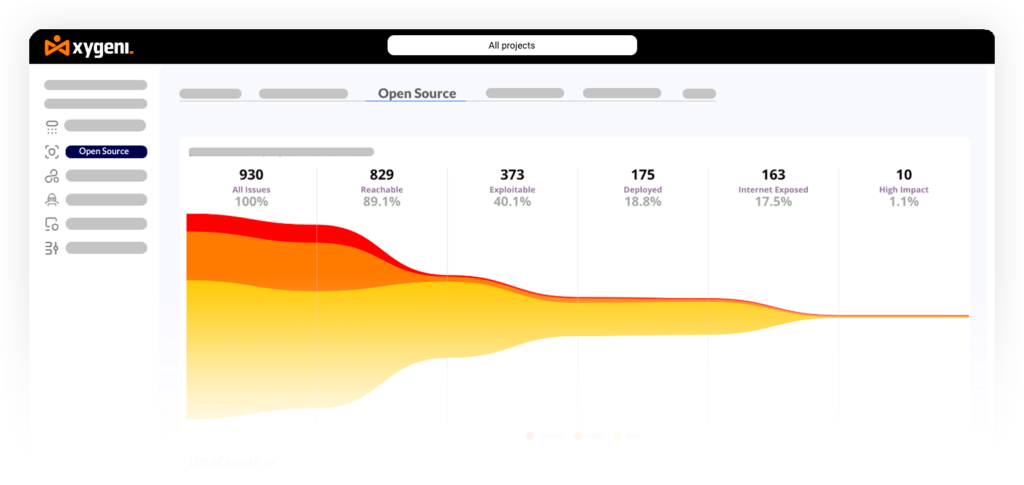
Xygeni forbedrer trusselvurdering ved å aktivere strukturert risikovurdering, automatisert prioritering og kontinuerlig overvåking. Ved å utnytte ASPMs prioriteringstrakter, tilgjengelighetsanalyse og utnyttelsespoengsum, kan organisasjoner systematisk identifisere, vurdere og håndtere sikkerhetsrisikoer, så decisIoner er datadrevne og i samsvar med forretningsmål.
Strukturert risikoidentifikasjon og synlighet
Praktisk trusselvurdering begynner med å forstå risikolandskapXygeni tilbyr sanntidsinnsikt i sårbarheter å klassifisere risikoer basert på deres alvorlighetsgrad, utnyttbarhet og innvirkningSikkerhetsteam kan spore og overvåke risikoeksponering gjennom automatisert sikkerhet dashboards, og sørger for at ledelsen har tydelig innsikt i potensielle trusler i hele programvareforsyningskjeden.
Ved å etablere en sentralisert oversikt over sikkerhetsrisikoer, kan organisasjoner måle effektiviteten til sikkerhetsprogrammer og sørge for at utbedringsarbeidet adressere sårbarheter med høy prioritetDenne strukturerte tilnærmingen lar teamene gå utover ad hoc risikostyring og ta i bruk en systematisk, skalerbar trusselvurderingsprosess.
Automatisert prioritering og tilgjengelighetsanalyse
Etter hvert som sikkerhetsprogrammene modnes, trenger organisasjoner a standardrammeverk for risikostyring prioritere reelle trusler fremfor teoretiske sårbarheter. Xygeni automatiserer denne prosessen ved å implementere tilpassbare prioriteringstrakter som filtrerer sårbarheter basert på forretningsmessig innvirkning, samsvarsrelevans og utnyttbarhet.
Reachability-analyse sørger for at sårbarheter er prioritert basert på om de faktisk kan utnyttes i organisasjonens spesifikke miljøI stedet for å behandle alle sikkerhetsproblemer likt, Xygeni fokuserer utbedring på sårbarheter som utgjør den største risikoen i den virkelige verden, reduserer årvåkenhetstretthet og muliggjør målrettede sikkerhetstiltak.
I tillegg utnyttbarhetspoeng forbedrer risikovurderingen ved å evaluere hvor sannsynlig en sårbarhet vil bli brukt i angrep i den virkelige verden. Sikkerhetsteam kan fordele ressurser mer effektivt og håndtere kritiske risikoer før angripere kan utnytte dem.
Kontinuerlig optimalisering og adaptiv risikostyring
En kraftig strategi for trusselvurdering utvikler seg i takt med organisasjonens risikolandskap. Xygeni muliggjør kontinuerlig forbedring av prioriteringstrakter, slik at sikkerhetsteam kan tilpasse risikoposisjonen sin etter hvert som nye trusler dukker opp.
Historiske sikkerhetsmålinger og utbedringstrender utnyttes til å finjustere strategier for risikoreduksjon, og verdipapirinvesteringene gir avkastning målbare forbedringer. Over tid, policydrevet håndheving justerer sikkerheten decisioner med forretningsrisikotoleranse mens sikkerhetskontrollene fortsatt gjelder proaktiv snarere enn reaktiv.
- Intelligent risikoprioritering fokuserer på sårbarheter med reell innvirkning.
- Kontinuerlig trusselvurdering integrerer utnyttbarhet, tilgjengelighet og forretningspåvirkning.
- Veiledning for automatisert risikovurdering og utbedring effektivisere sikkerhetencisioneproduksjon.
Gjennomføring
Sikker bygging
Xygeni styrker sikre byggepraksiser ved å integrere automatiserte sikkerhetskontroller og avhengighetshåndtering og ved å bygge integritetsvalidering direkte inn i CI/CD pipelines. Gjennom Analyse av programvarekomposisjon (SCA), Statisk sikkerhetstesting av applikasjoner (SAST), Hemmelighetshåndtering, og Build Security, Xygeni sørger for at Hvert bygg følger en repeterbar, policydrevet og verifiserbar sikkerhetsprosess. I tillegg CI/CD sikkerhetsvalideringsgarantier at viktige sikkerhetsverktøy brukes konsekvent på tvers av pipeline, redusere risikoeksponering.
Konsistens og repeterbarhet i byggeprosessen
En sikker byggeprosess krever standardisering, automatisering og kontinuerlig valideringXygeni håndhever standardiserte byggepolicyer gjennom CI/CD sikkerhetsvalidering, noe som tvinger alle bygg til å gjelde nødvendige sikkerhetsverktøy, som for eksempel SAST, SCAog skanning av hemmeligheter før du fortsetter.
Xygeni etablerer build attestations for å bekrefte programvareintegritet, validere programvarens opprinnelse og forhindre tuklede eller ubekreftede gjenstander fra å komme videre gjennom pipeline. Ved å legge inn beste sikkerhetspraksis i byggeprosessen, organisasjoner oppnår konsistens og repeterbarhet, redusere menneskelige feil og forbedre den generelle programvarekvaliteten.
Automatisering av sikkerhetskontroller i bygget Pipeline
Sikkerhetsautomatisering er viktig for å oppdage og utbedre problemer risikoer tidlig under utvikling. Xygeni integrerer SAST å oppdage sårbarheter i kode før distribusjon, og håndterer sikkerhetsproblemer så tidlig som mulig. I tillegg, Skanning av hemmeligheter forhindrer utilsiktet eksponering av legitimasjon ved kontinuerlig å analysere kildekode, konfigurasjonsfiler og byggelogger.
CI/CD sikkerhetsvalidering sikrer at byggemiljøer og verktøy følger beste praksis for sikkerhet, begrense unødvendig tilgang og pålegge politikk med minst privilegierXygeni eliminerer sikkerhetsflaskehalser samtidig som den opprettholder høy utviklingshastighet ved å automatisere sikkerhetskontroller i pipeline.
Forhindre sikkerhetsfeil i å nå produksjonen
Uverifiserte eller usikre artefakter må aldri nå produksjon. Xygeni håndhever sikkerhetsporter det automatisk mislykkede bygg som inneholder kritiske sårbarheter, eksponerte hemmeligheter eller brudd på samsvarVed å integrere sikkerhet direkte i CI/CD, bare sikre og kompatible artefakter gå videre til utplassering.
Xygeni integrerer deteksjon av skadelig programvare i byggeprosessen for å beskytte byggeintegriteten ytterligere, identifisere uautoriserte modifikasjoner, angrep i forsyningskjeden eller mistenkelig aktivitet i CI/CD arbeidsflytOrganisasjoner reduserer risikoer ved å forhindre at sikkerhetsfeil kommer inn i produksjonen. før de eskalerer til trusler fra den virkelige verden.
Administrere programvareavhengigheter med sikkerhetskontroller
Moderne applikasjoner er sterkt avhengige av tredjeparts- og åpen kildekode-avhengigheter, Noe som gjør avhengighetssikkerhet et kritisk aspekt ved sikre byggXygeni muliggjør automatisert risikostyring i forsyningskjeden for programvare, kontinuerlig sporing, validering og overvåking av alle avhengigheter.
Programvare materialliste (SBOMs) gi organisasjoner fullstendig innsikt i programvarekomponenter, hjelper sikkerhetsteam identifisere utdaterte avhengigheter, lisensbrudd og potensielle risikoerSanntidsovervåking oppdager ondsinnede pakker, uautoriserte modifikasjoner og sårbarheter, noe som reduserer eksponeringen for angrep i forsyningskjeden.
Automatisering av avhengighetssikkerhetsvalidering
Ikke alle sårbarheter krever umiddelbar utbedring. Xygenis SCA med tilgjengelighetsanalyse sørger for at sikkerhetsteamene prioriterer bare sårbarheter som utgjør en reell trussel mot applikasjonenI stedet for å overvelde team med varsler, Xygeni automatiserer risikovurdering, noe som muliggjør smartere utformingcisionproduksjon.
Å vedlikeholde streng sikkerhetshygiene, Xygeni håndhever automatiserte sikkerhetspolicyer Det flagg og blokker risikable avhengigheter under byggeprosessen, og forhindrer at usikre komponenter blir introdusert.
Sikkerhetsporter og utbedring av avhengigheter
Til forhindre risikoer i forsyningskjeden, Xygeni-redskaper sikkerhetsporter som blokkerer bygg som inneholder ikke-godkjente avhengigheter eller sårbarheter med høy risikoAutomatiserte utbedringsarbeidsflyter effektiviserer avhengighetsoppdateringer, og søk sikkerhetsrettinger uten å forstyrre utviklingen.
Ved å analysere avhengigheter for bakdører, skjult skadelig programvare eller mistenkelig oppførsel, Xygeni gjelder nulltillitssikkerhetsprinsipper til tredjepartskode, noe som reduserer sannsynligheten for kompromiss i forsyningskjeden.
- Standardhåndheving av sikkerhet sørger for at alle bygg følger policydrevne sikkerhetskontroller.
- Bygg attestering og avhengighetsvalidering forhindre tuklede eller sårbare artefakter.
- Skanning av hemmeligheter og deteksjon av skadelig programvare beskytte integriteten i programvarens forsyningskjede.
Sikker distribusjon
Xygeni sørger for sikre, policydrevne implementeringer ved å automatisere sikkerhetsverifisering, samsvarskontroller og oppdagelse av uautoriserte endringer. Ved å integrere CI/CD Sikkerhet, infrastruktur-som-kode (IaC) Sikkerhet og avviksdeteksjon, Xygeni forhindrer feilkonfigurasjoner, uautoriserte modifikasjoner og eksponering av legitimasjon, sørge for at Bare verifiserte og sikre applikasjoner kommer i produksjon.
Automatisering av distribusjonssikkerhet og håndheving av samsvar
En sikker utrullingsprosess krever kontinuerlig sikkerhetsvalidering på hvert trinn av CI/CDXygeni integrerer sikkerhetsverifiseringsmekanismer innenfor pipelines, og sørger for at alle utplasseringer overholde sikkerhetspolicyer og beste praksis i bransjen.
Distribusjonskonfigurasjoner er automatisk validert mot forhåndsdefinerte sikkerhetspolicyer, og forhindrer feilkonfigurasjoner som kan introdusere sårbarheter. CI/CD sikkerhetsvalidering sikrer at viktige sikkerhetskontroller –SAST, SCA, skanning av hemmeligheter og håndheving av samsvar– brukes konsekvent på tvers av alle utplasseringsfaser, eliminerer sikkerhetsblindsoner.
Xygeni validerer IaC maler og distribusjonsskript for å beskytte skymiljøer og infrastrukturkonfigurasjoner, og sikre at all infrastruktur er sikkert klargjort og overholder sikkerhetsgrunnlinjer for hele organisasjonenSikkerhetsporter sørger for automatisert håndheving, blokkerer distribusjoner som inneholder høyrisikosårbarheter, brudd på retningslinjer eller feilkonfigurasjoner, sikre at bare sikre artefakter når produksjon.
Verifisere implementeringsintegritet og oppdage uautoriserte endringer
Xygeni implementerer distribusjonsattester for å sikre at bare pålitelig og umanipulert programvare settes i produksjon. Disse attesteringene bekrefter opprinnelse og integritet av programvareartefakter, hindrer innføring av ubekreftede komponenter eller kompromittert kode inn i levende miljøer.
Xygeni overvåker kontinuerlig utrullingsprosesser for å oppdage uautoriserte modifikasjoner, identifisere unormale endringer i pipeline konfigurasjoner, infrastrukturinnstillinger og distribusjonsarbeidsflyterDenne proaktive avviksdeteksjonsfunksjonen reduserer risikoen for innsidetrusler, feilkonfigurasjoner og angrep i forsyningskjeden, og forhindrer at uautoriserte endringer påvirker produksjonsmiljøer.
CI/CD arbeidsflyter spores kontinuerlig for avvik fra sikkerhetspolicyer, sørge for at hver utrulling følger autoriserte og sikre prosesserHvis det oppdages avvik, flagger Xygeni problemet og gir detaljert sikkerhetsinnsikt og automatiserte anbefalinger for begrensninger for å gjenopprette samsvar.
Forhindre avsløring av hemmeligheter i distribusjon Pipelines
Sensitive legitimasjonsopplysninger som f.eks. API-nøkler, tilgangstokener og krypteringshemmeligheter må forbli beskyttet under hele utplasseringen. Xygeni forbedrer hemmeligheter sikkerhet ved å oppdage og redusere legitimasjonslekkasjer i distribusjonsmiljøer før de kan utnyttes.
Xygeni-skanninger filer, pipelines, konfigurasjonsskript og miljøvariabler for innebygde hemmeligheter, og forhindrer utilsiktet eksponering på tvers av SCM, CI/CD arbeidsflyter og infrastrukturkonfigurasjoner. SCM historikkrevisjoner lar sikkerhetsteam identifisere tidligere commithemmeligheter som forblir tilgjengelige, noe som sikrer at eldre påloggingsinformasjon håndteres på en tilstrekkelig måte.
Xygeni validerer oppdagede hemmeligheter for å prioritere utbedringsarbeid, og skiller mellom aktive og inaktive legitimasjonsopplysningerSikkerhetsteam kan raskt begrense reelle risikoer ved å fokusere på gyldige, utnyttbare hemmeligheter i stedet for å jage falske positiver.
Om en gyldig hemmelighet er avslørt, Xygeni muliggjør automatisert utbedring by:
- Utløser sikkerhet playbooks som tilbakekaller, roterer eller utfører tilpassede begrensningshandlinger, og sikrer at kompromitterte legitimasjonsdetaljer nøytraliseres.
- Blokkering av distribusjoner som inneholder eksponerte hemmeligheter, og forhindrer at kompromitterte applikasjoner blir lansert i produksjon.
- Tilbyr detaljerte revisjonslogger av oppdagede hemmeligheter og utbedringstiltak, og sikre samsvar med sikkerhetspolicyer og regulatoriske krav.
- Automatisert sikkerhetsvalidering sikrer kompatible distribusjoner i CI/CD.
- Infrastruktur-som-kode (IaC) skanning forhindrer feilkonfigurasjoner før produksjon.
- Oppdagelse av anomali i sanntid flagger uautoriserte endringer og sikkerhetsavvik.
Defekthåndtering
Xygeni forbedrer feilhåndtering by automatisere sporing av sikkerhetsproblemer, prioritere sårbarheter basert på faktisk risiko og integrere utbedringsarbeidsflyter. Ved å utnytte Application Security Posture Management (ASPM), Prioriteringstrakter, og CI/CD Trygghet, organisasjoner kan identifisere, kategorisere og løse sikkerhetsfeil effektivt, noe som reduserer eksponering for utnyttbare risikoer og brudd på samsvar.
Sporing og håndtering av sikkerhetsfeil
Et fragmentert syn på sikkerhetsproblemer kan føre til oversett sårbarheter, inkonsekvent utbedring og ineffektiv risikostyringXygeni tilbyr en sentralisert oversikt over sikkerhetsfeil, som konsoliderer funn fra SAST, SCA, IaC securityog CI/CD sikkerhetsskanninger inn i en enkelt grensesnitt for risikostyring.
By korrelere sikkerhetsproblemer på tvers av flere kilder, Xygeni sørger for at sikkerhetsteamene får fullstendig innsikt i applikasjonsrisikoer, unngå dupliserte varsler eller oversikt over kritiske feilFeil er kategorisert basert på forretningspåvirkning, utnyttbarhet og teknisk alvorlighetsgrad, slik at organisasjoner kan prioritere meningsfulle løsninger mens reduserer våkenhetstretthet.
Xygeni forenkler problemlivssyklushåndtering for å effektivisere utbedringsarbeidet. Det gjør det mulig for team å spore, tilordne og løse feil. internt eller via eksterne billettsystemer som Jira og meldingsplattformer som Slack. Dette sikrer sikkerhetsproblemer håndteres på riktig måte innenfor eksisterende utviklingsarbeidsflyter, forbedrer koordineringen mellom sikkerhets- og ingeniørteam.
Automatisert prioritering og risikobasert feilhåndtering
Uten strukturert prioritering risikerer sikkerhetsteam å bli overveldet av varsler som ikke representerer umiddelbare trusler. Xygeni håndterer dette ved å integrere Prioriteringstrakter, slik at organisasjoner kan filtrere sikkerhetsfeil basert på reelle risikofaktorer slik som tilgjengelighet, utnyttbarhet og forretningsmessig innvirkning.
Ved å sikre det Sårbarheter som aktivt kan utnyttes i produksjonsmiljøer tas tak i førstXygeni hjelper sikkerhetsteam fokuser på de mest kritiske truslene samtidig som man nedprioriterer problemer med minimal eller ingen reell risiko. automatisert håndhevelse av politikk sikrer videre at distribusjoner blokkeres hvis det ikke er løst kritiske feil blir oppdaget, forhindre at høyrisikosårbarheter når produksjon.
Effektivisering av utbedring og kontinuerlig forbedring
Effektiv utbedring av sikkerhetsfeil krever sømløs integrasjon med utviklerarbeidsflyter og automatisering for å redusere manuell innsatsXygeni akselererer løsning av sikkerhetsfeil ved å integrere handlingsrettet sikkerhetsveiledning direkte i CI/CD pipelines, som sikrer at utviklere mottar kontekstuelle utbedringsanbefalinger uten å forstyrre arbeidsflytene deres.
For å eliminere repeterende manuelle oppgaver, Xygeni automatiserer utbedringshandlinger, utløser strategibaserte rettelser for vanlige sårbarheterDette reduserer tiden og innsatsen som kreves for å håndtere sikkerhetsproblemer, slik at teamene kan fokus på komplekse trusler med stor innvirkning.
Xygeni sporer også effektiviteten av utbedringer, og måler tid til reparasjon og generelle trender for risikoreduksjonDette gjør det mulig for organisasjoner å kontinuerlig forbedre sikkerhetstilstanden sin, identifisere flaskehalser i prosessene og forbedre responstidene, og sørger for at sikkerhetsfeil er styrt proaktivt snarere enn reaktivt.
- Sentralisert sporing av sikkerhetsproblemer eliminerer fragmentering i sårbarhetshåndtering.
- Prioriteringstrakter Sørg for at teamene fokuserer på utnyttbare risikoer med stor innvirkning.
- Automatiserte utbedringsarbeidsflyter akselerere løsning av sikkerhetsfeil.
Verifisering
Xygeni styrker verifiseringsprosesser ved å bygge inn Kravdrevet testing og Sikkerhetstesting inn i utviklingsarbeidsflyter. Ved å automatisere sikkerhetshåndhevelse i CI/CDVed å prioritere sårbarheter basert på risiko og integrere sikkerhetsvalidering i alle trinn, sørger Xygeni for at sikkerhet blir en integrert del av programvareleveransen snarere enn et kontrollpunkt i siste liten.
Kravdrevet testing
Sikkerhetstester må være definert og systematisk anvendt på tvers av alle utviklingsstadier. Xygeni sørger for at sikkerhetskravene er automatisk håndhevet ved å integrere sjekker i CI/CD pipelines. Hvert bygg gjennomgår validering gjennom statisk applikasjonssikkerhetstesting (SAST) for kodesårbarheter, analyse av programvaresammensetning (SCA) for avhengighetsrisikoer, skanning av hemmeligheter for å forhindre eksponering av legitimasjon og infrastruktur-som-kode (IaC) sikkerhetskontroller for konfigurasjonsvalidering.
Sikkerhetsporter fungerer som håndhevingsmekanismer, og blokkerer automatisk bygg hvis sikkerhetstester mangler eller ikke oppfyller forhåndsdefinerte retningslinjer. sporer testdekning på tvers av applikasjoner, som sikrer at alle komponenter kontinuerlig valideres mot sikkerhetskrav. Hvis det oppdages hull, mottar organisasjoner automatiserte anbefalinger for å lukke dem. Ved å sørge for at sikkerhetstester alltid brukes, fjerner Xygeni inkonsekvenser og forhindrer at upestet programvare når produksjon.
Skalerbar grunnlinje for sikkerhetstesting
Automatisert sikkerhetstesting må være konsistent og skalerbar for å holde tritt med raske utviklingssykluser. Xygeni integrerer automatiserte sikkerhetsskanninger i alle faser av CI/CD, noe som sikrer at sårbarheter oppdages så tidlig som mulig. Sikkerhetsvalidering utløses på all kode commit, bygging og distribusjon, og overvåker kontinuerlig applikasjonenes sikkerhetsstatus. Sikkerhetsporter blokkerer distribusjonen hvis det oppdages kritiske sårbarheter, feilkonfigurasjoner eller brudd på samsvar.
Xygeni forhindrer også sikkerhetsregresjoner ved automatisk sporing av reparerte sårbarheter og sørge for at de ikke dukker opp igjen i fremtidige versjoner. Denne regresjonstestingen sikrer at sikkerhetsforbedringene opprettholdes over tid. Ved å bygge inn sikkerhetstesting direkte i CI/CD, Xygeni eliminerer manuelle flaskehalser og sørger for at sikkerhetsvalidering skjer uten å forstyrre utviklingen.
Dyp forståelse og risikobasert prioritering
Ikke alle sårbarheter utgjør samme risikonivå. Xygeni forbedrer sikkerhetstesting ved å fokusere på risikobasert prioritering, noe som sikrer at komponenter med stor innvirkning granskes grundigere. Sikkerhetsskanninger berikes med vurderinger av forretningsmessige konsekvenser, hjelpe team med å fokusere på utnyttbare og tilgjengelige sårbarheter som er relevante for applikasjonen.
Prioritering er dynamisk og forbedres kontinuerlig etter hvert som trusler utvikler seg. Hvis en utnyttelse dukker opp i naturen eller en sårbarhet blir mer kritisk, justeres prioriteten automatisk, noe som utløser umiddelbar fornyelse og sikkerhetshåndhevelseDenne risikobevisste tilnærmingen lar sikkerhetsteam fordele ressurser der det er nødvendig, og balansere automatisert testing med målrettede manuelle gjennomganger.
Integrert sikkerhetstesting i utviklingsarbeidsflyter
Sikkerhetstesting må integreres sømløst med utviklerarbeidsflyter for å være effektiv. Xygeni sørger for at oppdagede sårbarheter kan tildelt utviklere via integrasjoner med billettsystemer som Jira og meldingsplattformer som SlackSikkerhetsfunn er direkte knyttet til utbedringsarbeidsflyter, slik at teamene kan handle ut fra dem før utplassering.
- CI/CD-integrerte sikkerhetsporter håndheve samsvar før koden når produksjon.
- Automatisert og risikodrevet sikkerhetstesting oppdager sårbarheter tidlig.
- Kontinuerlig sikkerhetsvalidering forhindrer regresjoner og forbedrer testeffektiviteten.
Drift
Xygeni styrker driftssikkerhet ved å aktivere sanntidsdeteksjon av anomali, sikker infrastrukturadministrasjon og automatisert sårbarhetsutbedring. Gjennom hendelses- og miljøhåndteringXygeni sørger for at sikkerhetshendelser oppdages og reduseres raskt, samtidig som applikasjonsmiljøene holdes herdede og oppdaterte.
Hendelsesstyring
Sikkerhetshendelser går ofte uoppdaget hen over lengre tid, noe som gjør at angripere kan utnytte sårbarheter og forårsake skade. Xygeni reduserer denne risikoen betydelig ved å integrere anomalideteksjon og beskyttelse mot kodemanipulering, sikre tidlig identifisering av sikkerhetstrusler og uautoriserte modifikasjoner.
Hendelsesdeteksjon er forsterket av Xygenis sanntidsovervåking av programvareutviklingsmiljøer, identifisering mistenkelige aktiviteter i CI/CD pipelines, kildekodelagre og distribuerte applikasjonerAnomalideteksjon analyserer kontinuerlig atferd innenfor SCM, CI/CDog produksjonsmiljøer, flagging uautoriserte tilgangsforsøk, uvanlige filendringer og avvik fra standard aktivitetsmønstreDenne proaktive tilnærmingen reduserer oppholdstiden, slik at organisasjoner kan oppdage sikkerhetshendelser før de eskalerer.
Deteksjon av kodemanipulering sikrer at applikasjonsintegriteten forblir intakt ved å overvåke uautoriserte endringer i kildekode, byggeartefakter og distribusjonsskriptHvis en angriper forsøker å endre applikasjonslogikk eller introdusere ondsinnede nyttelaster, varsler Xygeni sikkerhetsteam umiddelbart. Organisasjoner får full innsikt i forsøk på utnyttelse, slik at de kan reagere før angripere klarer å distribuere kompromittert programvare.
Xygeni tilbyr automatiserte arbeidsflyter og integrasjoner med sikkerhetsorkestreringsverktøy for hendelsesrespons. Sikkerhetsteam kan koble oppdagede trusler til hendelsesresponsplattformer, og sikrer strukturert håndtering av hendelser gjennom playbooks, automatiserte inneslutningstiltak og rettsmedisinsk analyse. Av effektivisering av deteksjon og responsXygeni gjør det mulig for organisasjoner å begrense trusler raskt og minimere driftsmessig påvirkning.
- Oppdagelse av anomali i sanntid minimerer oppholdstiden for hendelsen.
- Beskyttelse mot kodemanipulering forhindrer uautoriserte modifikasjoner.
- Automatiserte arbeidsflyter for respons effektivisere hendelsesinnsamling og gjenoppretting.
Miljøledelse
Sikring av driftsmiljøer krever konsekvent håndheving av herdede konfigurasjoner og rask utbedring av sårbarheter. Xygeni sørger for at CI/CD pipelinehåndhever sikkerhetsgrunnlinjer på tvers av all infrastruktur og utviklingsmiljøer, noe som reduserer eksponeringen for feilkonfigurasjoner og utdatert programvare.
Konfigurasjonsherding er automatisert gjennom CI/CD sikkerhetsvalidering, og sørger for at alle infrastrukturkomponenter, inkludert byggemiljøer, skykonfigurasjoner og kjøretidsavhengigheter, overholder beste praksis for sikkerhetXygeni overvåker kontinuerlig infrastruktur-som-kode (IaC) maler, distribusjonsskript og sikkerhetspolicyer for å oppdage avvik fra etablerte grunnlinjer. Eventuelle feilkonfigurasjoner flagges som sikkerhetsfeil, noe som forhindrer at usikre konfigurasjoner når produksjon.
Oppdatering og oppdatering akselereres gjennom automatiserte utbedringsmuligheter, og sørger for at sårbarheter i applikasjonsavhengigheter og infrastrukturkomponenter blir adressert i tide. Xygeni integrerer risikobasert prioritering inn i sårbarhetshåndtering, og sørge for at kritiske sikkerhetsoppdateringer og -oppdateringer installeres førstOrganisasjoner kan automatisere utbedringsarbeidsflyter, koble sikkerhetsfeil til problemsporingssystemer og håndheve samsvar med oppdateringer innenfor CI/CD pipelines.
- CI/CD-drevet konfigurasjonsherding sikrer sikre infrastrukturgrunnlinjer.
- Automatisert oppdatering og utbedring akselerere løsning av sårbarheter.
- Kontinuerlig overvåking av samsvar holder miljøene sikre og oppdaterte.
Konklusjon
Xygeni forenkler SAMM-implementering ved å integrere automatisert sikkerhetshåndhevelse, risikobasert prioritering og kontinuerlig overvåking inn programvareutviklingslivssyklus (SDLC). Ved å legge inn sikkerhetskontroller innen styring, design, implementering, verifisering og drift, kan organisasjoner systematisk forbedre sikkerhetsstillingen sin uten å forstyrre utviklingshastigheten.
Ved å implementere SAMM med Xygeni, organisasjoner oppnår:
- Kontinuerlig risikosporing og automatisering av samsvar gjennom sanntidssynlighet, håndheving av retningslinjer og sikkerhetsstyring.
- Strategisk risikoprioritering og trusselvurdering med dynamisk risikoscoring, utnyttbarhetsanalyse og målrettede utbedringsarbeidsflyter.
- Automatisert sikkerhetshåndhevelse på tvers av bygg og distribusjoner, noe som sikrer sikre artefaktattestasjoner, avhengighetsvalidering og CI/CD sikkerhetsintegrasjon.
- Robust sikkerhetsvalidering og sanntidsverifisering gjennom sikkerhetsporter, automatisert sikkerhetstesting og ASPM-drevet håndheving av samsvar.
- Proaktiv hendelseshåndtering og infrastruktursikkerhet, som utnytter sanntidsdeteksjon av anomali, beskyttelse mot kodemanipulering og automatiserte arbeidsflyter for utbedring.
Med automatisert risikoprioritering, sikkerhetsdrevet håndheving og integrert overvåking, Xygeni gjør det mulig for organisasjoner å effektivisere SAMM-adopsjonen og sørg for Programvaresikkerhetsmodenhet skaleres effektivt i takt med forretningsvekst.
Organisasjoner oppnår umiddelbare forbedringer innen styring, sikkerhetstesting, automatisering av samsvar og risikoredusering, reduserer eksponering for angrep på programvareforsyningskjeden, feilkonfigurasjoner og operasjonelle trusler med Xygeni.
SAMM-adopsjon blir strømlinjeformet, målbar og skalerbar, slik at sikkerhets- og utviklingsteam kan forbedre sikkerhetsmodenheten uten å bremse innovasjon.