



Uygulama güvenliğinin sağlanması hiç bu kadar kritik olmamıştı. Ağustos 2024 itibarıyla, dünya genelindeki internet kullanıcıları 52,000 yeni Yaygın BT Güvenlik Açığı ve Riski keşfetti.CVE'lerBu, rekor kıran 2023 yılına kıyasla keskin bir artışı yansıtıyor. 29,000 CVE bildirildi tek bir yılda. Bu bağlamda, karşılaştırma SAST DAST ile karşılaştırma, bu giderek artan tehditlerle nasıl başa çıkılacağını anlamak için çok önemlidir. Ne olduğunu bilmek... SAST DAST ve diğer güvenlik açıklarına karşı koruma yöntemleri, uygulamalarını güvence altına almak isteyen kuruluşlar için kritik öneme sahiptir. Bu makale, DAST ve diğer güvenlik açıklarına karşı koruma yöntemlerini inceliyor. SAST, benzersiz faydaları ve nedenleri SAST Modern uygulama güvenliği için en üstün seçenektir.
Nedir? SAST Peki ya DAST? Temel Kavramları Anlamak
Nedir? SASTve Neden Önemli?
Statik Uygulama Güvenlik Testi (SAST(DAST), kaynak kodunu, bayt kodunu veya ikili dosyaları tarayarak güvenlik açıklarını belirleyen bir beyaz kutu test tekniğidir. Çalışan uygulamaları test eden DAST'ın aksine, SAST Kodun dağıtımdan önce analizini yaparak sorunları erken aşamada tespit eder. Ne olduğunu anlamak SAST DAST, kuruluşların bilinçli kararlar almasına yardımcı olur.cisUygulamalarının güvenliğini etkili bir şekilde sağlamaya yönelik düşünceler.
SAST SQL enjeksiyonu, arabellek taşması ve siteler arası komut dosyası çalıştırma gibi kritik güvenlik açıklarını belirlemede özellikle etkilidir.XSS). Entegre ederek SAST içine CI/CD pipelineBu sayede geliştiriciler gerçek zamanlı geri bildirim alabilir ve güvenlik açıklarının üretime geçme olasılığı azalır.
Değeri SAST Geliştirme aşamasına entegre edildiğinde etkisi daha da artar, çünkü Kuruluşların %37'si bunu zaten yapıyor.Bu erken entegrasyon, güvenliği geliştirme iş akışlarıyla uyumlu hale getirerek, düzeltmeyi hızlandıran ve güvenli kodlama uygulamalarını teşvik eden gerçek zamanlı geri bildirim sağlar.
Temel Özellikler SAST:
- Proaktif Tespit: Uygulamalar dağıtılmadan önce güvenlik açıklarını bulur.
- Entegrasyon Dostu: İçine gömülür CI/CD pipelineGeliştiricilere gerçek zamanlı geri bildirim sağlıyor.
- Uygun Maliyetli: Kodlama sırasında güvenlik açıklarını gidermek, dağıtım sonrasında bunları düzeltmekten çok daha ucuzdur.
DAST nedir ve nasıl çalışır?
Kıyasla SAST, Dinamik Uygulama Güvenliği Testi (DAST), uygulamaları çalışma durumlarında değerlendirir. Bu kara kutu test yöntemi, kimlik doğrulama hataları veya yanlış yapılandırılmış API'ler gibi güvenlik açıklarını ortaya çıkarmak için harici saldırıları simüle eder. Neyi göz önünde bulundurursak... SAST ve DAST, DAST'ın çalışma zamanı odaklı yaklaşımı tamamlayıcı niteliktedir. SASTerken aşama güvenliği, ancak SAST Genellikle daha büyük maliyet ve zaman tasarrufu sağlar.
DAST'ın Başlıca Özellikleri:
- Çalışma Zamanı Testi: Gerçek dünya saldırı senaryolarını simüle eder.
- Kara Kutu Yaklaşımı: Kaynak koduna erişim olmadan çalışır.
- Çalışma Zamanı Risklerine Odaklanın: Ortama özgü yanlış yapılandırmalardan kaynaklanan sorunları tespit eder.
Çalışma zamanı güvenlik açıklarını belirlemek için değerli olsa da, DAST'ın özellikle erken aşama güvenlik açısından önemli sınırlamaları vardır.
SAST DAST ile Karşılaştırma: Temel Farklar Açıklandı
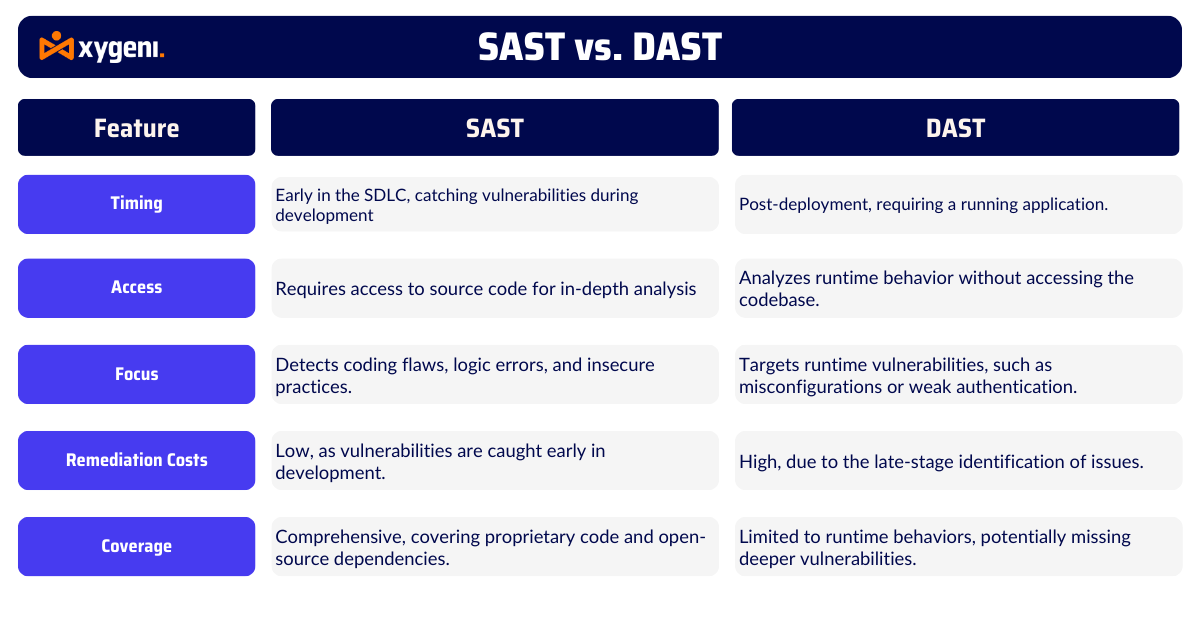
Ne olduğunu anlamak için SAST DAST ve diğer araçları karşılaştırırken, zamanlama, erişim ve ele aldıkları güvenlik açıkları açısından nasıl farklılık gösterdiklerini incelemek önemlidir. Bu farklılıklar, kuruluşların uygulama güvenliği ihtiyaçları için doğru aracı seçmelerine yardımcı olabilir.
Zamanlama
Arasındaki büyük farklardan biri TARİH vs SAST Yazılım geliştirme sürecinde kullanıldıkları zamandır. SAST DAST, kodlama ve geliştirme aşamalarında, yani erken dönemde kullanılır. Genellikle "sol tarafa kaydırma" olarak adlandırılan bu yaklaşım, geliştiricilerin uygulama dağıtılmadan önce güvenlik açıklarını yakalamasına yardımcı olur. Erken tespit, daha hızlı düzeltmeler ve daha düşük maliyetler anlamına gelir. Buna karşılık, DAST daha sonra, genellikle uygulama test veya üretim ortamında çalıştıktan sonra kullanılır. DAST, uygulamanın gerçek dünya saldırılarına nasıl yanıt verdiğini test edebilse de, bu aşamada sorunları bulmak ve düzeltmek genellikle daha zaman alıcı ve pahalıdır.
giriş
Bir diğer önemli fark TARİH vs SAST Bu araçlar uygulamaya işte bu şekilde erişiyor. SAST Kaynak koduna, bayt koduna veya ikili dosyalara erişime ihtiyaç duyar. Bu "beyaz kutu" yaklaşımı, uygulamanın iç yapısına derinlemesine inmesini sağlar. Öte yandan, DAST bir "kara kutu" test aracıdır. Koda erişim gerektirmez ve bunun yerine uygulamayı dışarıdan test ederek, bir saldırganın onunla nasıl etkileşime girebileceğini simüle eder. Bu, çalışma zamanı testleri için yararlı olsa da, DAST daha derin kod seviyesindeki sorunları gözden kaçırabilir. SAST Yakalamak için tasarlanmıştır.
Analiz metodu
Yol SAST DAST analiz uygulamalarına kıyasla onları diğerlerinden ayıran bir diğer özellik de budur. SAST Uygulamanın iç mantığına ve yapısına bakarak, çalışma zamanında hemen sorun yaratmasalar bile kodlama hatalarını tespit eder. DAST ise uygulamanın canlıyken nasıl davrandığına odaklanarak, yanlış yapılandırmalar veya bozuk kimlik doğrulama gibi çalışma zamanı güvenlik açıklarını belirler. Her iki yaklaşım da değerlidir, ancak SAST Sorunlar büyümeden önce kusurları tespit etmede daha iyidir.
İyileştirme Maliyeti
Geliştirme aşamasında güvenlik sorunlarını gidermek, dağıtımdan sonra gidermekten çok daha ucuzdur; bu nedenle birçok kuruluş bu yönteme güvenmektedir. SASTGüvenlik açıklarını erken aşamada ele alarak, ekipler sürecin ilerleyen aşamalarında maliyetli gecikmelerden ve yeniden çalışmalardan kaçınabilirler. DAST, çalışma zamanı testleri için etkili olsa da, genellikle uygulama yayına girdikten sonra sorunlar bulur; bu da düzeltmeleri daha aksatıcı ve pahalı hale getirir.
Kapsam
SAST Geniş kapsamlı tarama özelliği sunan bu ürün, yalnızca tescilli kodları değil, aynı zamanda açık kaynak bağımlılıkları Tüm uygulama yığını genelindeki güvenlik açıklarını ortaya çıkarmak için kullanılır. Buna karşılık, DAST yalnızca çalışma zamanı davranışlarına odaklanır. Bu, güvenlik açıklarına yol açabilecek daha derin, kod düzeyindeki sorunları gözden kaçırabileceği anlamına gelir. Güvenlik açıklarını kapsamlı bir şekilde ele almak isteyen kuruluşlar için, SAST esastır.
SCA vs SASTUygulama Güvenliğinde Temel Farklılıklar
Eşsiz güçlü yönlerini keşfedin SCA hem de SAST ve uygulamalarınızın güvenliğini sağlamak için nasıl birlikte çalıştıklarını öğrenin.
Neden Şimdi SAST Uygulama Güvenliği İçin Daha İyi Bir Seçenek
Şimdi aralarındaki farkları özetlediğimize göre... SAST DAST'a kıyasla, bunun açıkça görüldüğü ortada. SAST Çoğu kuruluş için daha iyidir. Proaktif yaklaşımı, güvenlik açıklarının erken tespitini ve çözümünü sağlayarak zaman kazandırır ve maliyetleri önemli ölçüde azaltır.
Ek olarak, açık kaynaklı yazılımlardaki güvenlik açıklarının artmasıyla birlikte, SAST Bu durum daha da kritik hale geliyor. Açık kaynaklı bileşenler yaygın olarak kullanılıyor, ancak birçoğu güncelliğini yitirmiş veya bakımı yetersiz. SAST Bu, tescilli kodla birlikte bu bağımlılıkları da tarayarak uygulamalarınız için güvenli bir temel sağlar.
DAST vs SASTModern Tehditlere Uyum Sağlama
Uygulama güvenliği pazarının hızlı büyümesi, DAST gibi proaktif araçların benimsenmesinin aciliyetini yansıtmaktadır. SASTAçık kaynaklı yazılımlardaki güvenlik açıkları arttıkça, SAST Tehditleri erken aşamada ele alarak kuruluşların NIS2 gibi düzenleyici çerçevelere uyum sağlamasına yardımcı olur. DORA.
Xygeni'nin nasıl SAST Çözüm, Uygulama Güvenliğini Güçlendiriyor
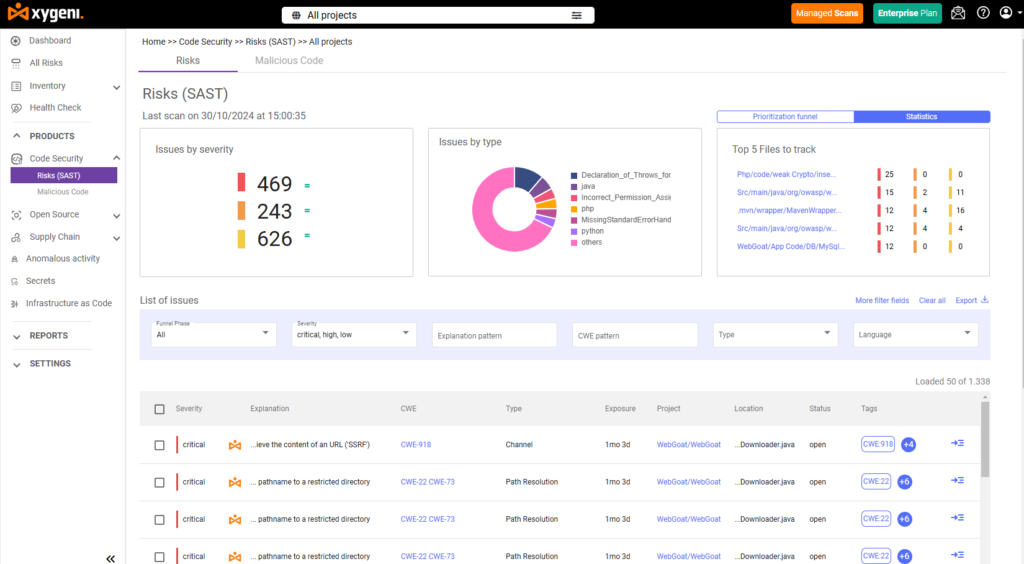
Modern uygulamaların artan karmaşıklığına çözüm bulmak için, Xygeni'nin SAST çözüm Sağlam ve esnek bir yaklaşım sunar. Sorunsuz bir şekilde entegre olacak şekilde tasarlanmıştır. CI/CD pipelineXygeni, geliştiricilere gerçek zamanlı geri bildirim sağlayarak güvenlik açıklarının erken aşamada tespit edilip çözülmesini sağlar.
Xygeni'nin Başlıca Özellikleri SAST Çözüm:
- Kapsamlı Tarama: Tescilli ve açık kaynak kodlu yazılımlardaki kodlama hatalarını, mantık kusurlarını ve güvenlik açıklarını tespit eder.
- Gerçek Zamanlı Geri Bildirim: Güvenliği doğrudan geliştirme iş akışına entegre ederek düzeltme sürecini hızlandırır.
- Açık Kaynak Koruması: Üçüncü taraf kütüphanelerden kaynaklanabilecek riskleri gidermek için bağımlılıkları tarar.
- Gelişmiş Kod Kalitesi: Güvenli kodlama uygulamalarını teşvik ederek, bakım kolaylığını artırır.
Klinik SAST Proaktif Güvenlik için
Tartışmasında SAST vs DAST, SAST Uygulama güvenliği için daha iyi ve daha proaktif bir seçenek olarak öne çıkıyor. Kullanarak SAST Geliştirme sürecinde, güvenlik açıklarının erken tespit edilip düzeltilmesine yardımcı olarak uygulamaların güvenliğini sağlamayı daha ucuz ve kolay hale getirir. Xygeni ile SAST Bu çözüm sayesinde kuruluşlar yazılımlarını koruyabilir ve artan güvenlik tehditlerinin önüne geçebilirler.
Temas etmek Bugün Xygeni'nin uygulamalarınızı koddan dağıtıma kadar nasıl güvence altına alabileceğini görün.