Pourquoi Software Supply Chain Security Les enjeux en 2026
Software Supply Chain Security (SSCS) n'est plus une préoccupation de niche pour les grandes entreprises enterpriseC’est donc une priorité absolue pour toute équipe qui conçoit, déploie ou dépend de logiciels. Et en 2026, les chiffres sont incontournables.
L'implication de tiers dans les violations de données a doublé pour atteindre 30 % en 2025.Il s'agit de la plus forte augmentation annuelle jamais enregistrée dans le rapport DBIR de Verizon. Les détections de logiciels malveillants open source ont bondi de 73 % en 2025 par rapport à 2024, le volume de paquets malveillants sur npm ayant plus que doublé pour atteindre plus de 10 800. Plus de 454 600 nouveaux paquets malveillants open source ont été identifiés rien qu'en 2025 (soit une hausse de 75 % sur un an), portant le total cumulé sur npm, PyPI, Maven, NuGet et Hugging Face à plus de 1.2 million. Enfin, lorsqu'une faille de sécurité survient dans la chaîne d'approvisionnement, IBM estime le coût moyen à 4.91 millions de dollars, avec un cycle de vie moyen de 267 jours, le plus long de tous les vecteurs d'attaque suivis.
Les attaquants ont clairement exposé leur stratégie : plutôt que de s’introduire directement dans les organisations, ils compromettent les outils, les dépendances et l’automatisation sur lesquels les équipes de développement s’appuient quotidiennement. Un seul paquet infecté, une configuration erronée… pipelineou encore, la divulgation d'un secret dans un script de compilation peut se propager simultanément à des centaines d'organisations en aval.
Par conséquent, les équipes ont besoin d'une protection de bout en bout, du code source à l'artefact déployé. Cela implique de sécuriser les dépendances et de gérer SBOMs, durcissement CI/CD pipelines, détectant les secrets et les logiciels malveillants, et surveillant en permanence les anomalies sur l'ensemble du réseau SDLC.
Comparaison rapide : Top Software Supply Chain Security Outils pour 2026
| Outil | SDLC Territoire desservi | SBOM Génération | CI/CD Sécurité | Politique en tant que code | Modèle de prix | Idéal pour |
|---|---|---|---|---|---|---|
| Xygéni | Intégrale (code vers cloud) | Oui — CycloneDX, SPDX | Indigène - pipeline numérisation + guardrails | Oui — XyFlow (YAML) | À partir de 35 $/mois par contributeur | Équipes ayant besoin d'une pile complète SSCS sur une plateforme unique et unifiée |
| Snyk | SCA, SAST, conteneurs, IaC | Enterprise niveau uniquement | Partiel — non pipeline guardrails | Non | À partir de 25 $/utilisateur/mois (min. 5 utilisateurs) | Des équipes axées sur les développeurs et centrées sur l'analyse des logiciels libres et des conteneurs |
| Aïkido | SCA, SAST, conteneurs, CSPM | Oui — génération en un clic | Limité — pas de profondeur CI/CD balayage | Non | À partir de 350 $/mois (10 utilisateurs) | Équipes GitHub natives de petite et moyenne taille souhaitant une intégration rapide |
| Cycode | SCM, pipelines, secrets, SBOM dérive | Partiel — SBOM surveillance de la dérive | Oui - CI/CD observabilité et gouvernance d'accès | Non | Enterprise / coutume | Enterprise équipes ayant besoin SCM visibilité et CI/CD accès à la gouvernance |
| Ancre | Images de conteneurs, SBOMapplication des politiques | Oui — axé sur les conteneurs | Partielle — contrôles de stratégie de conteneur uniquement | Oui — politiques relatives aux conteneurs | Libre (OSS) / Enterprise (Douane) | Des équipes sécurisent les charges de travail conteneurisées grâce à l'application de politiques |
Que rechercher dans un Software Supply Chain Security Outil en 2026
Les meilleurs SSCS Les plateformes partagent une caractéristique essentielle : elles font plus que scanner du code. Elles aident les équipes à appliquer les politiques et à surveiller pipelineet neutraliser les menaces avant qu'elles n'atteignent la production. Voici les capacités essentielles à évaluer.
SBOM Génération et validation
Recherchez la création et la validation automatiques de SBOMNous utilisons les formats CycloneDX ou SPDX à chaque compilation. Cela garantit la transparence, la traçabilité et la conformité aux référentiels tels que SLSA et NIST SSDF.
SCA avec priorisation basée sur l'exploitabilité
L'outil doit détecter les vulnérabilités connues, les dépendances obsolètes et les risques liés aux licences, et aller au-delà des scores CVSS en appliquant l'EPSS, l'analyse d'accessibilité et les signaux contextuels. Sachant que 95 % des vulnérabilités se trouvent dans des dépendances transitives, la profondeur d'analyse est essentielle.
CI/CD Pipeline Security
Votre pipeline est une surface d'attaque. L'outil doit analyser pipeline configurer, détecter les erreurs de configuration et appliquer guardrails sur GitHub Actions, GitLab CI, Jenkins, Azure DevOps et bien plus encore, et ne vous contentez pas de signaler les problèmes après coup.
Secrets et détection de logiciels malveillants
La détection en temps réel est impérative. L'outil doit intercepter les secrets codés en dur, le code obscurci, les charges utiles de logiciels malveillants et les paquets infectés par des chevaux de Troie avant leur exécution, et ce, dans les dépôts, les conteneurs et les scripts de compilation.
Intégrité du bâtiment et provenance des artefacts
Savoir que votre code est propre à commit Le temps ne suffit pas. Les meilleures plateformes retracent l'origine de chaque artefact, appliquent une signature cryptographique et vérifient qu'aucune modification non autorisée n'est intervenue lors du processus de compilation, conformément aux exigences SLSA et de traçabilité complète. Il s'agit d'une exigence de plus en plus contraignante. enterprise clients et secteurs réglementés.
Généré par l'IA Code Security
Avec l'utilisation croissante d'assistants de codage IA par les équipes de développement, le code généré par l'IA représente une nouvelle surface d'attaque encore trop souvent négligée. Il est donc essentiel de privilégier les plateformes capables d'identifier et d'évaluer les composants écrits par l'IA — en détectant les vulnérabilités, les violations de politiques et les schémas à risque introduits par des outils comme Copilot et Cursor — et pas seulement le code écrit par des humains.
Politique en tant que code
Les politiques de sécurité sont plus efficaces lorsqu'elles sont traitées comme du code. Elles sont basées sur YAML. guardrails vous permettent de définir, d'appliquer et de contrôler les règles dans toutes les succursales, pipelineet des environnements à grande échelle.
Automatisation de la conformité
Les principales plateformes prennent en charge OWASP, SLSA, NIST SP 800-204D, OpenSSF Tableau de bord et CIS Des indicateurs de performance, réduisant ainsi le travail manuel lié aux audits de conformité et aux rapports réglementaires.
Intégration fluide
Tout outil sérieux doit s'intégrer à vos flux de travail existants (GitHub, GitLab, Jenkins, Bitbucket, Azure DevOps) sans ajouter d'étapes manuelles ni perturber la vitesse de développement.
Mieux Software Supply Chain Security Outils pour 2026
1. Xygeni : Pile complète Software Supply Chain Security Du code au cloud
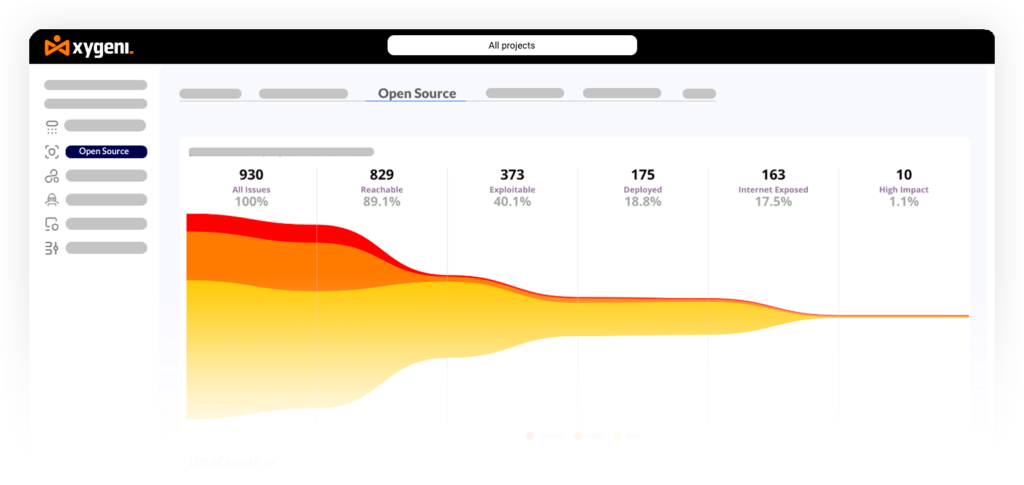
Aperçu : Xygeni est un système complet Software Supply Chain Security plateforme qui protège chaque étape du SDLC, du code source et des dépendances open source à CI/CD pipelineIl permet de créer des artefacts, des conteneurs et une infrastructure. Il combine des fonctionnalités en temps réel. SCA, SBOM génération, CI/CD Sécurité, détection des secrets et des logiciels malveillants, surveillance des anomalies et intégrité des bâtiments sur une plateforme unique et unifiée.
Par conséquent, Xygeni couvre toutes les capacités définies dans le GigaOm Radar pour Software Supply Chain SecurityIl prend en charge l'application automatisée des politiques, la gestion des politiques sous forme de code via XyFlow (YAML) et une visibilité complète sur des systèmes complexes. CI/CD pipelines, sans obliger les équipes à gérer un ensemble disparate d'outils déconnectés.
Alors que la plupart des plateformes nécessitent des produits distincts pour SCA, pipeline securityXygeni offre nativement des fonctionnalités de détection des secrets et de conformité, avec des résultats corrélés dans leur contexte grâce à son système d'exploitation. ASPM une couche permettant aux équipes de sécurité et d'ingénierie de se concentrer sur les risques qui comptent réellement.
Fonctionnalités clés
SBOM & SCA: Génère et valide automatiquement SBOMConçoit des fichiers aux formats CycloneDX et SPDX. Détecte le typosquatting, les conflits de dépendances et les risques liés aux licences. Va au-delà des CVE en intégrant l'accessibilité, le score EPSS et le contexte d'impact métier, réduisant ainsi le bruit de 90 %. Inclut une analyse des risques de remédiation et la génération automatique de demandes de correction.
CI/CD Sécurité : Scans pipeline Configurations, scripts de compilation et définitions de tâches CI pour les erreurs de configuration. Applique les 10 principales vulnérabilités OWASP. CI/CD Contrôles, MFA et protection des branches sur GitHub Actions, GitLab, Jenkins, Azure DevOps, CircleCI et plus encore.
Secrets et détection de logiciels malveillants : Détecte les secrets dans les fichiers, pipelineGère les certificats, les conteneurs, les dépôts et l'historique Git, avec révocation automatique et intégration des hooks Git. Combine la détection de logiciels malveillants en temps réel, l'analyse des paquets et la surveillance du registre pour bloquer les shells inversés, les téléchargements malveillants et les menaces zero-day avant qu'elles n'atteignent la production.
Intégrité du bâtiment et provenance des artefacts : Assure la traçabilité de l'origine des artefacts, applique une signature cryptographique et vérifie l'absence de modifications non autorisées de la version. Prend en charge : SLSA provenance et des attestations complètes et personnalisées.
Guardrails et la politique en tant que code : Des règles YAML personnalisées bloquent les builds risqués ou déclenchent des alertes en cas de secrets, de logiciels malveillants, de tâches non conformes ou de violations de politiques, appliquées à l'ensemble du système. pipeline et de l'environnement.
Automatisation de la conformité : Collecte automatisée des preuves et préparation continue aux audits. Application des normes OWASP, SLSA, NIST SP 800-204D. CIS Repères, OpenSSF Tableau de bord et DORA.
Intégrations: GitHub, GitLab, Bitbucket, Jenkins, Azure DevOps, CircleCI, Travis CI, API REST, webhooks, Jira et les problèmes GitHub.
Qu'est-ce qui rend Xygeni différent ?
pont SSCS Les plateformes couvrent bien une ou deux couches. Xygeni couvre l'intégralité de la chaîne d'approvisionnement (des dépendances open source et du code propriétaire jusqu'à la livraison). CI/CD pipeline(s, créer des artefacts, des conteneurs et une infrastructure) sur une plateforme unifiée. ASPM Cette couche met en corrélation les résultats de chaque scanner pour obtenir une vue d'ensemble des risques priorisés, éliminant ainsi le bruit des alertes lié à la gestion d'outils déconnectés. Et avec la sécurité IA (AI-SPM + Shield), Xygeni est la seule plateforme de cette liste qui sécurise également les ressources d'IA, les modèles, les agents et les serveurs MCP, qui sont désormais au cœur du développement logiciel moderne.
(I.e. Prix
À partir de 35 $/mois par contributeur pour la plateforme tout-en-un complète. Comprend SBOM génération, SCA, SAST, CI/CD sécurité, secrets et détection de logiciels malveillants, IaC numérisation, protection des conteneurs et ASPM, sans limites cachées ni frais par fonctionnalité. Des formules flexibles sont disponibles pour les startups via enterprise.
En résumé : Xygeni est le choix idéal pour les équipes de sécurité et d'ingénierie qui ont besoin d'une protection complète de leur chaîne d'approvisionnement logicielle sans avoir à gérer plusieurs outils cloisonnés. Sa combinaison de fonctionnalités natives CI/CD guardrails, application des politiques en tant que code, ASPM La corrélation et l'automatisation complète de la conformité en font la solution la plus complète. SSCS plateforme sur cette liste.
2. Snok
Marché
Snyk est avant tout un développeur Software Supply Chain Security outil. De plus, il prend en charge plusieurs langues et s'intègre directement aux environnements de développement. CI/CD pipelines et plateformes de contrôle de source. Il est d'ailleurs largement adopté pour l'analyse des dépendances et conteneurs open source.
Fonctionnalités clés
- accompagne SCA, sécurité des conteneurs, SAST et IaC balayage
- S'intègre à GitHub, GitLab, Docker, Bitbucket et VS Code
- Offre une hiérarchisation des risques basée sur l'accessibilité et des PR générés automatiquement
- Connu pour sa convivialité et sa solide expérience de développeur
- Couramment utilisé pour la sécurité de décalage vers la gauche et les correctifs automatisés dans les flux de travail des développeurs
Inconvénients
- Selon GigaOm, Snyk manque de maturité dans CI/CD application et ASPM capacités.
- Aucune politique sous forme de code ou guardrails pour la sécurité pipeline exécution.
- SBOM génération, CI/CD La visibilité et la priorisation fondée sur les risques nécessitent Enterprise étage.
- Le prix augmente rapidement avec la taille de l'équipe en raison de la facturation par utilisateur — pas de forfait. SSCS plan disponible.
(I.e. Prix:
- Snyk's SSCS les fonctionnalités couvrent plusieurs produits (SCA, Conteneur, AppRisk), chacun vendu séparément.
- Les plans d'équipe commencent à 25 $/mois par développeur (minimum 5).
SBOM, CI/CD la visibilité et la priorisation basée sur les risques ne sont que dans le Enterprise étage. - Non groupé SSCS le plan est disponiblee. Un devis personnalisé est requis pour une couverture complète.
3. Aïkido

Marché
Aikido est une plateforme native GitHub conçue pour les développeurs qui souhaitent une sécurité simple et tout-en-un dashboard. De plus, il combine SCA, SBOM, SAST, CSPM et analyse de conteneurs dans un seul outil. Il est ainsi reconnu pour sa rapidité d'intégration et son automatisation intuitive.
Fonctionnalités clés
- Un clic SBOM génération et numérisation open source
- Analyse de code statique avec suggestions de correctifs basées sur l'IA
- Inclut la gestion de base de la posture du cloud et la sécurité d'exécution des conteneurs
- Détecte les logiciels malveillants à l'aide du moteur de Phylum
- Reconnu dans le GigaOm Radar comme une solution innovante axée sur la simplicité du développeur
Inconvénients
- Idéal pour GitHub — prise en charge limitée des autres SCMs et pipeline les plates-formes.
- GigaOm indique qu'il ne prend pas encore en charge les données profondes CI/CD numérisation ou enterprise-application de la politique de niveau supérieur.
- Manque d'options de personnalisation avancées pour les cadres de conformité.
- Support pour enterprise CI/CD Les politiques sont limitées, même pour les forfaits payants.
(I.e. Prix:
- L'Aïkido offre une plan gratuit pour les dépôts GitHub publics.
- Les plans d'équipe commencent à 350 $/mois pour 10 utilisateurs.
- SSCS des fonctionnalités comme SBOM et l'analyse des logiciels malveillants sont inclus, mais la prise en charge deenterprise CI/CD les politiques sont limitées.
- Actuellement, il n'existe pas de service dédié SSCS forfait. Les prix augmentent avec la taille de l'équipe et l'utilisation de la plateforme.
4. Cycode

Marché
Cycode offre une visibilité et un contrôle sur le code source et CI/CD environnements. De plus, il surveille les secrets, les autorisations des utilisateurs et SBOM dériver à travers pipelines. Sa force réside avant tout dans CI/CD observabilité et gouvernance des accès.
Fonctionnalités clés
- Suivi des modifications du référentiel, pipeline audits d'activité et d'autorisation en temps réel
- Identifie les informations d'identification exposées et les erreurs de configuration
- Prend en charge les flux de travail de conformité et la vérification des artefacts
- Utilise l'IA pour détecter les éléments inhabituels CI/CD comportements
- Mis en avant dans le rapport GigaOm comme un outil mature pour CI/CD intégrité
Inconvénients
- Soutien limité aux logiciels libres SCA et aucun tri des vulnérabilités basé sur l'accessibilité.
- N'inclut pas les options de personnalisation SBOM options d'application ou de politiques riches en termes de code.
- Enterprise- Tarification uniquement — pas de formule gratuite ni de plan public.
- Peut s'avérer complexe à configurer pour les petites équipes aux capacités plus simples. pipelines.
💲 Tarification
Cycode propose des tarifs personnalisables adaptés à Software Supply Chain Security Besoins:
- Enterprise-niveau seulement tarification ; aucun niveau gratuit disponible.
- Le coût du plan est basé sur nombre de référentiels, pipeline intégrations et volumes d'analyse.
- Ajoute de la valeur grâce à SBOM alertes de dérive, détection secrète et CI/CD visibilité.
- Nécessite devis personnalisé pour définir une couverture complète, le coût augmente généralement avec l'échelle et la complexité
5. Ancre

Marché
Anchore se concentre sur la sécurité des images de conteneurs. Il analyse les images Docker et OCI à la recherche de vulnérabilités et applique des contrôles de politique pendant l'exécution. CI/CD processus. Il est souvent utilisé dans les environnements réglementés où la confiance des conteneurs est une priorité.
Fonctionnalités clés
- Effectue une analyse CVE approfondie des images de conteneurs
- Prend en charge les politiques de sécurité personnalisées dans CI pipelines
- S'intègre aux registres Kubernetes, GitOps et OCI
- Connu dans le radar GigaOm pour ses excellentes performances en matière d'application de la politique relative aux conteneurs
Inconvénients
- Ne supporte pas SBOM validation ou code source SCA — La couverture est limitée aux conteneurs.
- Aucune visibilité sur pipeline configurations ou CI/CD erreurs de configuration au-delà des portes des conteneurs.
- Des outils supplémentaires sont nécessaires pour la détection des secrets, l'analyse des dépendances et la couverture de la chaîne d'approvisionnement au-delà des conteneurs.
- Enterprise Certaines fonctionnalités nécessitent un devis personnalisé et ne font l'objet d'aucun tarif public.
(I.e. Prix:
Anchore propose les deux open-source et enterprise des plans:
- Niveau gratuit via Anchore Engine et les outils CLI Syft/Grype
- Ancre Enterprise inclut SBOM numérisation, application des politiques et CI/CD l'intégration
- Le prix dépend de taille du registre des conteneurs, fréquence de balayage et besoins de conformité
- Aucun prix public n'est disponible ; un devis personnalisé est requis pour le plein SSCS couverture
Software Supply Chain Security Meilleures pratiques pour 2026
Choisir la bonne plateforme n'est qu'une partie de la solution. Voici six bonnes pratiques éprouvées que les équipes de sécurité et d'ingénierie modernes devraient intégrer à leurs processus. SDLC.
1. Automatisez SBOM Génération sur chaque build
Générez automatiquement une nomenclature logicielle à chaque compilation à l'aide de CycloneDX ou SPDX. Automatisation SBOM La validation dans l'intégration continue empêche la propagation d'artefacts non sécurisés et vous fournit les régulateurs de traçabilité et enterprise Les clients l'exigent de plus en plus.
2. Analyser les dépendances avec Reachability et EPSS
Ne vous fiez pas uniquement aux scores CVSS. Utilisez l'EPSS, l'analyse d'accessibilité et les signaux contextuels pour identifier les vulnérabilités réellement exploitables. Avec 86 % des bases de code commerciales contenant des vulnérabilités open source et une base de code moyenne incluant désormais 911 composants, la priorisation fait toute la différence.
3. Endurcissez votre CI/CD Pipeline
Votre CI/CD pipeline est une cible d'attaque prioritaire. Appliquez les 10 principales recommandations de l'OWASP. CI/CD contrôles de sécurité, application du moindre privilège, détection pipeline dérive et ajouter une politique guardrailsConsidérez chaque fichier de flux de travail, chaque exécuteur et chaque script de construction comme faisant partie de votre surface d'attaque.
4. Détectez les secrets et les logiciels malveillants à un stade précoce
Scanner commitLes conteneurs et les scripts de compilation doivent être analysés en continu, et pas seulement lors de la mise en production. Les identifiants codés en dur, les paquets typosquattés, les shells inversés et les téléchargements suspects figurent parmi les points d'entrée les plus exploités dans les attaques modernes contre la chaîne d'approvisionnement.
5. Appliquer la politique en tant que code
basé sur YAML guardrails permet d'étendre les règles de sécurité à différents environnements et prend en charge l'audit de conformité. Les politiques appliquées dans le pipeline Détecter les infractions avant qu'elles n'atteignent la production, et non après.
6. Surveiller les anomalies et les modèles d'accès
Les attaquants se déplacent latéralement à l'intérieur pipelineaprès avoir obtenu l'accès initial. Surveillez les adresses IP inconnues qui clonent des dépôts, les changements soudains d'autorisations, les actions non planifiées pipeline Modifications et comportements inhabituels lors de la compilation. La détection comportementale constitue le dernier recours lorsque tout le reste semble correct.
Pourquoi Xygeni est le choix le plus judicieux pour Software Supply Chain Security en 2026.
Chaque outil de cette liste répond à une dimension concrète de la sécurité de la chaîne d'approvisionnement. Snyk bénéficie d'une forte adoption par les développeurs pour SCAAikido facilite l'intégration des équipes utilisant GitHub. Cycode offre une expertise approfondie. pipeline L'observabilité est un point fort d'Anchore, notamment en matière d'application des politiques relatives aux conteneurs. Cependant, aucune de ces solutions ne garantit à elle seule la sécurité de l'intégralité de la chaîne d'approvisionnement, et en 2026, une couverture partielle représente un handicap.
Xygéni est la seule plateforme de cette liste qui protège nativement chaque couche : dépendances open source, code propriétaire, CI/CD pipelineCréez des artefacts, des conteneurs, une infrastructure et des ressources d'IA sur une plateforme unique et unifiée. Fini la prolifération d'outils. Fini les angles morts. Fini la nécessité de concilier des résultats provenant de sources disparates. dashboards.
Son moteur de politiques en tant que code applique des règles de sécurité personnalisées à tous les niveaux. pipeline et son environnement. ASPM couche corrèle les résultats de SBOM, SCA, secrets, logiciels malveillants et détection d'anomalies dans une vue unique et priorisée des risques, éliminant ainsi le bruit qui rend la sécurité traditionnelle de la chaîne d'approvisionnement si coûteuse sur le plan opérationnel. Et avec la sécurité par IA (AI-SPM + Shield), Xygeni est le seul outil ici qui gère également les modèles, les agents et les serveurs MCP désormais intégrés dans les flux de travail de développement modernes.
À 35 $/mois par contributeur (sans limites cachées, sans frais par fonctionnalité et sans enterprise(- avec un système de contrôle d'accès uniquement) c'est également l'option plateforme complète la plus rentable de cette liste.
Si vous avez besoin de sécuriser l'intégralité de votre chaîne d'approvisionnement logicielle sans avoir à gérer une multitude d'outils disparates, Xygeni est le point de départ idéal.
Explorez les Xygeni Software Supply Chain Security Plateforme complète
Questions fréquemment posées
Qu'est-ce que le software supply chain security?
Software supply chain security (SSCS) désigne les pratiques et les outils utilisés pour protéger chaque composant impliqué dans la création et la livraison de logiciels, le code source, les dépendances open source, les builds pipelines, CI/CD Il aborde les risques liés aux systèmes, aux conteneurs et aux artefacts de déploiement, non seulement à votre propre code, mais aussi à tout ce dont votre logiciel dépend.
Pourquoi software supply chain security devenir crucial en 2026 ?
L'implication de tiers dans les violations de données a doublé pour atteindre 30 % en 2025, soit la plus forte augmentation annuelle jamais enregistrée dans le rapport DBIR de Verizon. Parallèlement, les détections de logiciels malveillants open source ont bondi de 73 % sur un an, et il faut en moyenne 267 jours pour détecter et contenir une violation de la chaîne d'approvisionnement. Les attaquants ont pénétré les systèmes indirectement via des dépendances de confiance. pipelinec'est leur stratégie principale.
Comment le modèle de politique en tant que code améliore-t-il la sécurité de la chaîne d'approvisionnement ?
Le modèle Policy-as-code permet aux équipes de définir des règles de sécurité en YAML ou dans des formats similaires et de les appliquer automatiquement. pipelineLes équipes, les succursales et les environnements permettent d'étendre la gouvernance de la sécurité aux grandes équipes et aux environnements complexes. CI/CD des configurations qui permettent de réaliser des audits, de reproduire les processus et de réduire considérablement la dépendance à la vérification manuelle.