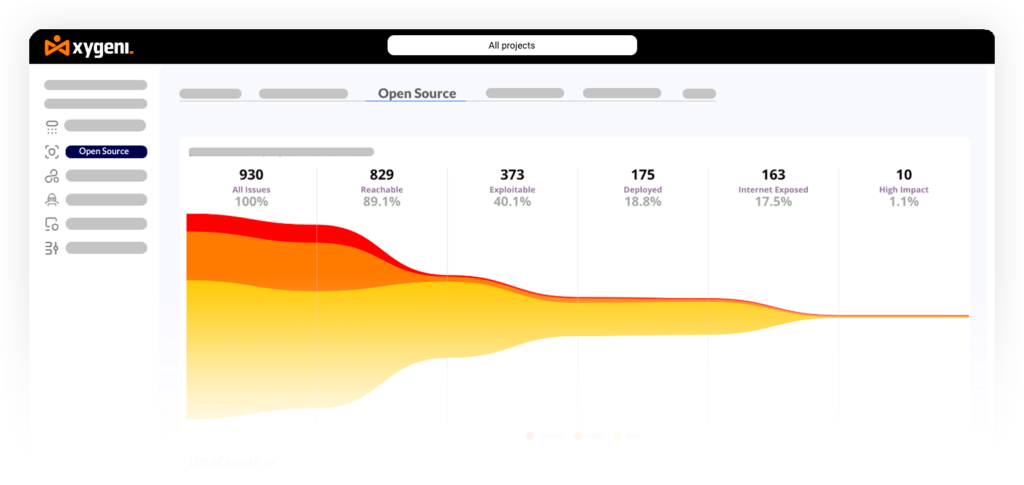
A maioria das plataformas de segurança de aplicativos (AppSec) abrange os mesmos quatro aspectos: análise estática, verificação de dependências, segredos e IaCO que os diferencia em 2026 é O que acontece após a detecção?: se as descobertas são classificadas por explorabilidade real em vez de CVSS bruto, se as correções chegam como pull requestse se a plataforma está detectando os ativos de IA que agora estão entrando em seu SDLC de todo.
Xygeni é a nossa escolha para equipes que desejam todo o ciclo de vida em uma única plataforma, sem custos por usuário. Snyk é ideal para equipes lideradas por desenvolvedores que desejam uma configuração rápida, enquanto Veracode e Fortify são adequados para ambientes regulamentados. enterprisePara organizações com necessidades complexas de análise estática, o Cycode é ideal para governança centralizada, enquanto o Checkmarx é adequado para grandes empresas com equipes dedicadas à segurança de aplicativos (AppSec).
A classificação abaixo explica as vantagens e desvantagens de cada opção.
As melhores ferramentas de segurança de aplicativos protegem seu código. CI/CD pipelineNeste guia de 2026, comparamos as principais plataformas de segurança de aplicativos (AppSec) e destacamos as vantagens de cada uma, para que você possa escolher a ferramenta certa para o seu fluxo de trabalho sem se perder em meio a tantas informações irrelevantes.
As ferramentas de segurança de aplicativos atuais fazem mais do que simplesmente escanear. Elas se integram ao seu IDE, fluxos de trabalho Git e CI/CD pipelinePara identificar riscos reais precocemente e ajudar a corrigi-los antes que cheguem à produção. De SAST e SCA para detecção de segredos, IaC digitalização e CI/CD Em termos de monitoramento, as melhores plataformas reduzem a fadiga de alertas com uma priorização mais inteligente em toda a rede. SDLC.
Em 2026, as melhores ferramentas de segurança de aplicativos também deverão abordar os riscos introduzidos pela IA. Com 40% do código gerado por IA contendo vulnerabilidades de segurança e os LLMs sendo usados como armas para implantar malware em agentes autônomos, as plataformas de segurança de aplicativos que não abrangem ativos de IA, servidores MCP e assistentes de codificação de IA deixam uma lacuna crítica sem solução.
Neste guia, detalhamos os recursos indispensáveis em ferramentas modernas de segurança de aplicativos e comparamos as principais plataformas para 2026.
Melhores ferramentas de segurança de aplicativos (2026)
Como nos classificamos
- Cobertura em todo o SDLC (SAST, SCA, segredos, IaC, CI/CD, segurança de IA)
- Sinais de priorização (acessibilidade, explorabilidade, EPSS, contexto do caminho de ataque)
- Cobertura de segurança de IA (AI-SPM, proteção de servidor MCP, pontuação de risco LLM)
- Fluxo de trabalho de remediação (correções baseadas em PR, automação, UX do desenvolvedor)
- Escalabilidade e operabilidade (configuração, profundidade de integração, controle de ruído)
Tabela de comparação rápida
Comparação rápida das melhores ferramentas de segurança de aplicativos por abrangência, priorização e finalidade de cada plataforma.
| ferramenta | Global | Segurança AI | Explorabilidade e priorização | Correção automática | Segurança de CI/CD | Conformidade | Mais Adequada Para |
|---|---|---|---|---|---|---|---|
| Xygeni | SAST, SCA, Segredos, IaC, CI/CD, IA-SPM, Risco de IA | ✅ AI-SPM, avaliação de risco por IA, Shield — era completa da IA SDLC cobertura | ✅ EPSS + Acessibilidade + contexto do caminho de ataque | ✅ Fluxos de trabalho de correção automática com IA + remediação | ✅ Pipeline + proteções de repositório | NIS2, DORA, Lei de IA da UE, NIST AI RMF, ISO/IEC 42001 | Equipes que precisam de uma solução completa de segurança de aplicativos (AppSec) com IA, priorização real e sem preços por usuário. |
| Snyk | SAST, SCA, IaC, Segredos (modular) | ❌ Não | ⚠️ Limitado (menos orientado ao contexto) | ⚠️ Parcial (depende do produto) | ⚠️ Básico (principalmente integrações) | SOC 2, ISO 27001 | Equipes de desenvolvimento que desejam configuração rápida e ampla cobertura de varredura. |
| Jit | SAST, SCA, IaC, Segredos, CI/CD cheques | ❌ Não | ❌ Sem acessibilidade/EPSS por padrão | ❌ Limitado (remediação mais manual) | ⚠️ Apenas verificação de postura | SOC 2, ISO 27001 | Equipes que desejam integrar verificações modulares de segurança de aplicativos (AppSec) aos fluxos de trabalho do Git. |
| veracode | SAST, SCA | ❌ Não | ❌ Limitado (contexto de menor explorabilidade) | ⚠️ Parcial (Correção do Veracode) | ❌ Sem serviço dedicado CI/CD segurança | PCI DSS, HIPAA, SOC 2 | Enterprises focado no tradicional SAST/SCA com relatórios de conformidade |
| Ciclocódigo | SAST, SCA, IaC, Segredos, CI/CD | ❌ Não | ❌ Sem priorização de EPSS/acessibilidade | ❌ Sem correção automática baseada em PR | ✅ Governança + monitoramento | SOC 2, ISO 27001, GDPR | Equipes de segurança priorizam visibilidade centralizada do código à nuvem. |
| Fortificar (OpenText) | SAST, SCA | ❌ Não | ❌ Limitado (apenas com base na gravidade) | ⚠️ Parcial (os fluxos de trabalho variam) | ❌ Sem serviço dedicado CI/CD segurança | PCI DSS, HIPAA, NIST | Organizações altamente regulamentadas que necessitam de uma análise estática aprofundada. |
| check-marx | SAST, SCA, IaCSegredos | ❌ Não | ❌ Sem EPSS/acessibilidade por padrão | ❌ Limitado (menos automatizado) | ⚠️ Parcial (depende da configuração) | PCI DSS, HIPAA, SOC 2 | Organizações de grande porte com equipes dedicadas à segurança de aplicativos e necessidades complexas de personalização. |
1. Ferramentas de segurança de aplicativos Xygeni
Melhores ferramentas de segurança de aplicativos para DevSecOps
Ideal para: Equipes que precisam de reforço completo SDLC Cobertura completa (desde segurança de aplicativos clássica até segurança de IA) em uma única plataforma, sem preços por usuário e sem proliferação de ferramentas.
A plataforma All-in-One AppSec da Xygeni é a solução de segurança de aplicativos mais completa disponível em 2026. Desenvolvida para equipes modernas de DevSecOps, ela combina SAST, SCA, Detecção de Segredos, IaC digitalização, CI/CD Segurança e, de forma exclusiva, uma camada completa de segurança com IA, tudo em uma única plataforma, sem proliferação de ferramentas e sem preços por usuário.
Ao contrário das ferramentas tradicionais de segurança de aplicativos que se concentram apenas na detecção, o Xygeni oferece proteção em tempo real, correções automatizadas e o AutoFix com inteligência artificial, ajudando as equipes a identificar problemas precocemente e a lançar produtos com segurança, sem atrasar os desenvolvedores.
Principais Recursos:
- SAST: Testes avançados de segurança estática de aplicações com regras personalizadas e integração profunda com IDEs e PRs. Detecta padrões de código inseguros e malware por meio de análise estática. O AutoFix, com inteligência artificial, sugere ou cria automaticamente patches de código seguros, ajudando as equipes a escreverem código mais seguro com mais rapidez.
- SCA: Vai além da detecção básica de vulnerabilidades, utilizando análise de acessibilidade e priorização baseada em EPSS. Analisa dependências diretas e transitivas, classifica as ameaças por explorabilidade e bloqueia malware oculto em pacotes de código aberto. Garante a conformidade com as licenças e cria pull requests automaticamente para correção rápida.
- Detecção de segredos: Detecta segredos embutidos no código antes que cheguem à produção. Analisa o Git. commits, filiais e histórico em tempo real, com pre-commit bloqueio, alertas ao vivo e rastreabilidade total para dados confidenciais, como chaves de API e tokens.
- IaC Security: Analisa arquivos Terraform, Helm e Kubernetes em busca de configurações incorretas, como permissões excessivas ou criptografia ausente. Os problemas são detectados e corrigidos precocemente por meio de recursos nativos. CI/CD integração.
- CI/CD Segurança: Monitors DevOps pipelineA detecção de anomalias identifica ameaças ativas — atividades suspeitas no Git, scripts maliciosos e uso indevido de privilégios. Ela mantém os ambientes seguros mesmo contra novas ameaças.
- Segurança da IA (2026): Além da segurança de aplicativos tradicional, o Xygeni agora inclui o AI-SPM, um inventário em tempo real de todos os seus ativos de IA. SDLC (modelos, conjuntos de dados, agentes, servidores MCP, assistentes de codificação de IA) com uma lista de materiais de IA (AI-BOM) pronta para auditoria. Shield O agente de endpoint bloqueia dependências maliciosas usando veredictos MEW (Malware Early Warning) antes mesmo da existência de assinaturas e aplica listas de permissões de modelos aprovados e MCP aprovados em todas as máquinas de desenvolvedores. A avaliação de risco abrange o OWASP Top 10 para aplicativos LLM, aplicativos agenic (2026) e servidores MCP.
Por que escolher a Xygeni?
- Detecção antecipada exclusiva de malware: A única plataforma AppSec que oferece varredura de malware em tempo real e baseada em comportamento em componentes de código aberto e CI/CD fluxos de trabalho, antes mesmo de existirem assinaturas.
- Camada de segurança completa com IA: AI-SPM, avaliação de risco por IA e Shield A aplicação de medidas nos endpoints cobre a superfície de ataque que todas as outras ferramentas desta lista deixam sem cobertura.
- Priorização mais inteligente: A análise de acessibilidade, as pontuações EPSS e o contexto de negócios significam que você deve corrigir primeiro o que importa, e não o que tem a pontuação mais alta em uma escala de gravidade bruta.
- Experiência centrada no desenvolvedor: Nativo CI/CD integrações, pull request Análise e sugestões de correção automática personalizadas para o seu ambiente.
- Defesa proativa da cadeia de suprimentos: Detecta e bloqueia ataques à cadeia de suprimentos (typosquatting, confusão de dependências, vulnerabilidades zero-day) antes que cheguem à produção.
- Amplie, não substitua: A IA da Xygeni se aplica às descobertas de seus dados existentes. SAST, SCAe scanners de terceiros, para que você obtenha um sinal melhor sem precisar remover as ferramentas existentes.
Conformidade: NIS2, DORA, Lei de IA da UE, NIST AI RMF, ISO/IEC 42001. Hospedado na UE, com on-premisee opções de implantação isoladas da internet.
Reconhecimento: Nomeada Empresa Promissora em Application Security Posture Management Eleita Empresa Promissora em 2026 e Empresa em Destaque em Segurança de Aplicações GenAI 2026 pelo Global InfoSec Awards (Revista Cyber Defense).
Preços: Começa em US$ 33/mês para a plataforma completa tudo-em-um, SAST, SCA, CI/CD Segurança, Detecção de Segredos, IaC SecurityInclui verificação de contêineres. Repositórios ilimitados, colaboradores ilimitados, sem preços por usuário, sem surpresas.
2. Ferramentas de segurança de aplicativos Snyk
Ferramentas de segurança de aplicativos para equipes de desenvolvimento
Cobertura de segurança de aplicativos: SAST, SCA, IaC Security, Detecção de Segredos, CI/CD Total
Ideal para: Equipes de desenvolvimento que desejam configuração rápida e ampla cobertura de varredura em toda a pilha principal de segurança de aplicativos.
A Snyk oferece um conjunto de ferramentas de segurança de aplicativos voltado para desenvolvedores, projetado para detectar vulnerabilidades logo no início do desenvolvimento. SDLCAbrange análise estática de código, verificação de riscos em código aberto, IaC digitalização e detecção de segredos. Embora seja popular pela facilidade de uso e CI/CD Na integração, as equipes frequentemente enfrentam limitações relacionadas ao gerenciamento de alertas, priorização e fragmentação de ferramentas em grande escala.
Principais Recursos:
- SAST (Código Snyk): Análise estática em IDEs e CI pipelines, embora falte sinais de priorização mais profundos ou regras personalizáveis para casos de uso avançados.
- SCA (Snyk Código Aberto): Detecta vulnerabilidades em componentes de terceiros e sugere correções, mas não avalia a acessibilidade ou a explorabilidade.
- IaC Security: Identifica problemas de configuração em arquivos Terraform e Kubernetes, com suporte mínimo para ambientes multicloud complexos.
- Detecção de segredos: Depende de integrações de terceiros, como Nightfall ou GitGuardian, o que adiciona etapas de configuração e fragmenta a visibilidade.
- CI/CD Segurança: Básico pipeline O monitoramento, a detecção de anomalias em tempo real e a proteção contra ameaças internas são limitados.
Limitações:
- Sem cobertura de segurança de IA
- Ruído de alerta elevado devido à falta de filtragem de alcance ou pontuação EPSS.
- Sem verificação integrada de malware ou verificação de integridade de pacotes.
- Ferramentas fragmentadas — segredos, IaC e SCA tratados separadamente
- Preços modulares: cada funcionalidade requer uma licença separada.
Preço: O plano para equipes inclui 200 testes por mês; a cobertura completa requer a compra de cada produto separadamente. Não há transparência de preços; é necessário um orçamento personalizado. enterprise usar.
3. Ferramentas de segurança de aplicativos Jit
Ferramentas modulares de segurança de aplicações para equipes nativas do Git
Cobertura de segurança de aplicativos: SAST, SCA, IaC Security, Detecção de Segredos, CI/CD Total
Ideal para: Equipes que desejam verificações modulares de segurança de aplicativos (AppSec) integradas diretamente aos fluxos de trabalho do Git com o mínimo de atrito.
O Jit fornece um conjunto modular de ferramentas de segurança de aplicativos que se integram ao desenvolvimento. pipelinecom baixa sobrecarga de configuração. Abrange testes essenciais de segurança de aplicativos em toda a plataforma. SAST, SCA, IaC, detecção de segredos e CI/CD verificações de postura. As equipes podem se ver gerenciando a segurança de forma mais manual devido à limitada profundidade e priorização das ações corretivas.
Principais Recursos:
- SAST: Feedback de análise estática baseado em Git; carece de insights avançados como detecção de malware ou contexto de tempo de execução.
- SCA: Realiza buscas por CVEs conhecidas, mas não oferece pontuação de acessibilidade nem filtragem de explorabilidade.
- IaC Security: Verifica configurações incorretas comuns; requer ajustes para enterpriseambientes de nível avançado.
- Detecção de segredos: Digitalização em tempo real, mas carece de pre-commit aplicação de medidas ou análise do histórico do Git.
- CI/CD Segurança: Bandeiras pipeline Riscos como MFA fraco ou falhas na proteção de ramificações; ausência de detecção de anomalias em tempo de execução.
Limitações:
- Sem cobertura de segurança de IA
- Sem priorização baseada na explorabilidade (sem EPSS, sem alcançabilidade)
- Sem correção automática baseada em PR — a correção é feita principalmente de forma manual.
- Para automação completa e controles avançados, é necessário um orçamento personalizado.
Preço: Para acesso a todos os recursos, é necessário um preço personalizado. A precificação por usuário e a cobrança anual podem representar desafios de escalabilidade para equipes em crescimento.
4. Ferramentas de segurança de aplicativos Veracode

Enterprise SAST e SCA
Cobertura de segurança de aplicativos: SAST, SCA
Ideal para: Enterprises focado na análise estática tradicional e SCA com rigorosos requisitos de relatórios de conformidade.
A Veracode é uma empresa estabelecida. enterprisePlataforma de nível - para testes de segurança de aplicativos. No entanto, omite diversas funcionalidades agora consideradas básicas em segurança de aplicativos moderna: IaC digitalização, detecção de segredos, CI/CD pipeline securitye cobertura de segurança de IA. As equipes de segurança geralmente precisam complementar o Veracode com ferramentas adicionais para obter proteção completa.
Principais Recursos:
- SAST: Análise estática profunda de código em todas as linguagens suportadas com CI/CD Integração de fluxo de trabalho.
- SCA: Identifica vulnerabilidades conhecidas e problemas de licenciamento em componentes de terceiros e de código aberto.
- Correção do Veracode: Mecanismo de correção com tecnologia de IA que sugere patches de código seguros.
- Gerenciamento de políticas e relatórios de conformidade: Conformidade pronta para auditoria dashboardcom aplicação de políticas personalizadas.
Limitações:
- Não IaC or CI/CD segurança; não é possível analisar Terraform, Helm ou Kubernetes
- Sem detecção de segredos
- Sem cobertura de segurança de IA
- Sem métricas EPSS ou de acessibilidade, listas CVE planas sem contexto de explorabilidade.
- Sem detecção de malware ou ameaças à cadeia de suprimentos
- IDE limitado e pull request integração
Preço: Valor mediano do contrato $ 18,633 / ano Com base nos dados de compra do cliente. Sem plano único. SCA Devem ser adquiridos separadamente. Todos os planos requerem orçamentos personalizados.
5. Ferramentas de segurança de aplicativos Cycode

Plataforma de Visibilidade do Código à Nuvem
Cobertura de segurança de aplicativos: SAST, SCA, IaC Security, Detecção de Segredos, CI/CD Total
Ideal para: As equipes de segurança priorizam a governança centralizada e a visibilidade do código à nuvem em toda a empresa. SDLC.
A Cycode oferece uma plataforma abrangente com o objetivo de unificar a visibilidade e o controle em todo o ciclo de vida do desenvolvimento de software. Apesar de seu extenso conjunto de recursos, ela carece de funcionalidades modernas de priorização baseada em risco e automação, das quais as equipes de desenvolvimento dependem cada vez mais para obter velocidade e qualidade de sinal.
Principais Recursos:
- SAST: Detecta falhas e funções inseguras com CI/CD e integração com o ambiente de desenvolvimento.
- SCA: Analisa dependências diretas e transitivas em busca de CVEs e riscos de licenciamento.
- IaC Security: Audita o Terraform, o Helm e o Kubernetes em busca de configurações incorretas antes da implantação.
- Detecção de segredos: Sinaliza chaves de API e credenciais codificadas diretamente no código, histórico do Git e pipelines.
- CI/CD Segurança: Monitores pipelines para comportamentos de risco, desvios e alterações não autorizadas.
Limitações:
- Sem cobertura de segurança de IA
- Sem priorização baseada na explorabilidade — sem análise de alcançabilidade ou pontuação EPSS.
- Ajustes significativos são necessários para ambientes complexos.
- Sem correção automática baseada em PR — a correção é manual.
- Preços opacos e modulares provavelmente aumentarão com o tamanho da equipe.
Preço: Orçamentos personalizados são necessários. O licenciamento modular de recursos provavelmente aumentará o custo à medida que a cobertura se expandir.
6. Fortify com ferramentas de segurança de aplicativos OpenText

Enterprise Análise Estática
Cobertura de segurança de aplicativos: SAST, SCA
Ideal para: Altamente regulamentado enterprises com práticas de desenvolvimento estáticas que necessitam de ampla cobertura de linguagem e suporte à conformidade.
O Fortify da OpenText oferece soluções tradicionais enterprise- testes de segurança de aplicativos de nível - focados em SAST e SCAÉ conhecido pelo amplo suporte a idiomas e pela conformidade com as regulamentações. No entanto, carece de detecção de segredos. IaC security, CI/CD pipeline proteção e qualquer cobertura de segurança de IA — recursos agora considerados básicos em ambientes DevSecOps modernos.
Principais Recursos:
- SAST (Analisador de código estático): Suporta mais de 25 idiomas com ajuste de regras personalizadas e integração com o sistema de compilação.
- SCA: Avalia dependências de código aberto em busca de vulnerabilidades conhecidas e problemas de licenciamento.
Limitações:
- Sem detecção de segredos ou IaC security
- Não CI/CD pipeline monitoração
- Sem cobertura de segurança de IA
- Sem priorização baseada na explorabilidade — as equipes recebem listas de CVEs padronizadas.
- Ciclos de feedback lentos, especialmente com o Fortify on Demand (FoD)
Preço: Somente orçamentos personalizados. Enterprise Licenciamento direcionado a grandes organizações, frequentemente oferecido em conjunto com serviços de consultoria e auditoria.
7. Ferramentas de segurança de aplicativos Checkmarx

Ampla cobertura de segurança de aplicativos para grandes empresas. Enterprises
Cobertura de segurança de aplicativos: SAST, SCA, IaC, Detecção de Segredos
Ideal para: Organizações de grande porte com equipes dedicadas à segurança de aplicativos (AppSec) que necessitam de ampla cobertura de idiomas e alta personalização.
A Checkmarx oferece um amplo conjunto de ferramentas de teste de segurança de aplicativos com forte cobertura de idiomas e enterprise Apesar de apresentar recursos de conformidade, a plataforma exige um esforço considerável de configuração, é em grande parte modular e carece dos recursos modernos de priorização e automação necessários para equipes DevSecOps ágeis.
Principais Recursos:
- SAST: Analisa mais de 25 linguagens em busca de falhas lógicas, padrões inseguros e segredos embutidos.
- SCA: Avalia dependências de código aberto e pacotes de terceiros para CVEs e riscos de licença.
- IaC Security: Verifica se há erros de configuração nos modelos do Terraform e do Kubernetes.
- Detecção de segredos: Identifica credenciais expostas em bases de código e históricos de versões.
Limitações:
- Sem cobertura de segurança de IA
- Longos períodos de digitalização atrasam o feedback do desenvolvedor.
- Curva de aprendizado acentuada — a configuração requer conhecimento em segurança de aplicativos.
- Interfaces desconexas em toda a área SAST, SCA e IaC módulos
- Sem correção automática ou remediação baseada em PR — as correções são em grande parte manuais.
- Sem priorização baseada em risco — sem pontuações EPSS ou análise de acessibilidade.
- A detecção de segredos carece de pre-commit digitalização ou Git hooks
- Caro em grande escala — o preço modular aumenta rapidamente.
Preço: EnterprisePreços por nível; os valores relatados para implantações variam de US$ 75,000 a US$ 150,000 por ano. Não há um plano único — a cobertura completa exige a aquisição de vários módulos.
Recursos essenciais a serem considerados em ferramentas de segurança de aplicativos
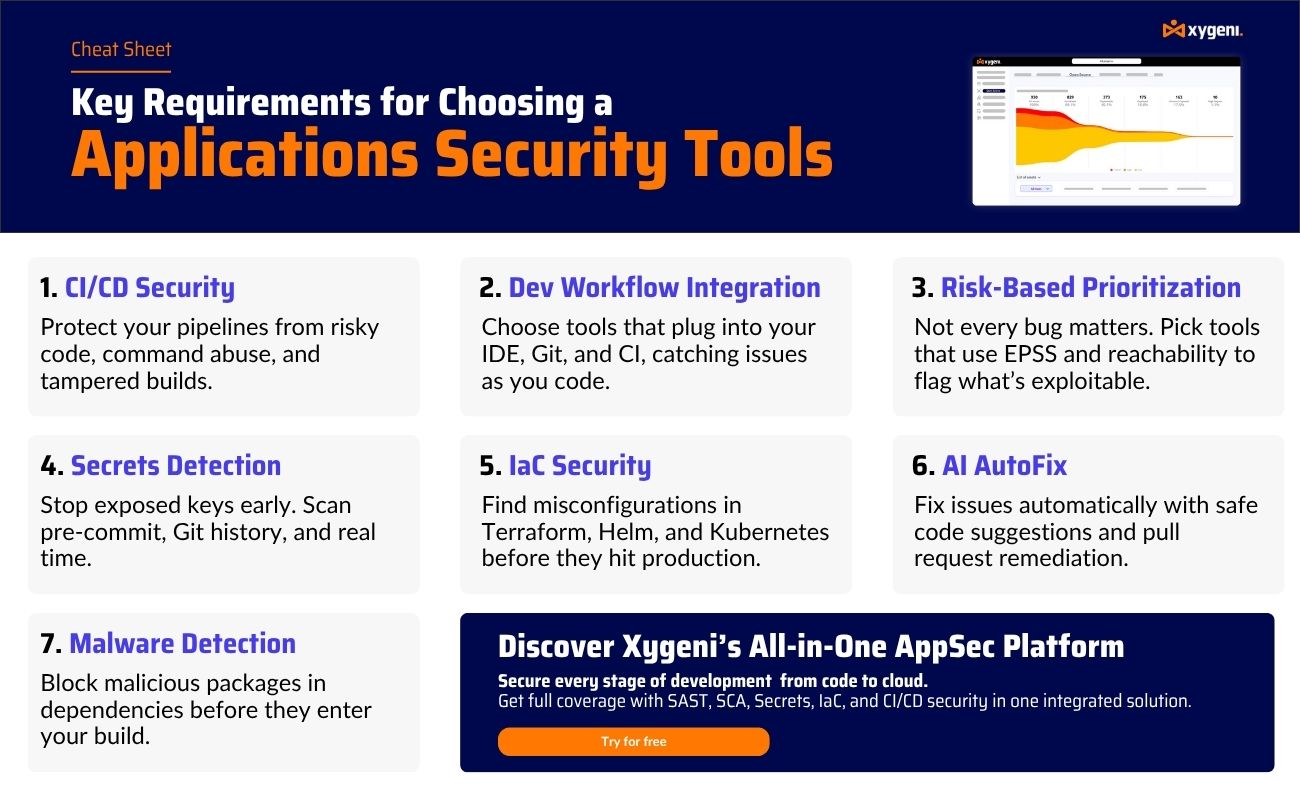
Escolher as ferramentas de segurança de aplicativos certas não se resume a cumprir requisitos mínimos, mas sim a encontrar soluções que reduzam os riscos reais, apoiem o fluxo de trabalho dos desenvolvedores e lidem com as ameaças à medida que ocorrem. As melhores ferramentas de segurança de aplicativos compartilham estas funcionalidades essenciais:
1. CI/CD Segurança e Pipeline pós-colheita
Os ataques agora visam fluxos e automação do GitOps, não apenas a produção. Suas ferramentas de teste de segurança de aplicativos devem monitorar CI/CD pipelines para anomalias, comandos arriscados e builds adulterados, rastreando alterações entre branches, commits e colaboradores em tempo real.
2. Integração em todo o SDLC
A segurança é mais eficaz quando faz parte do ritmo de desenvolvimento. Escolha ferramentas que se integrem ao seu IDE, fluxos de trabalho Git e CI. pipelineAssim, os problemas são detectados durante a codificação, e não após o lançamento.
3. Priorização que corresponde à explorabilidade
Não basta detectar todas as vulnerabilidades. Ferramentas que aplicam análise de acessibilidade e pontuação EPSS ajudam a priorizar com base no que realmente pode ser explorado — economizando tempo e reduzindo o volume desnecessário de alertas.
4. Detecção de segredos desde o início
Segredos embutidos no código continuam sendo um dos riscos mais comuns e prejudiciais. Ferramentas eficazes de segurança de aplicativos detectam segredos antes que o código seja enviado, por meio de pre-commit hooks, verificação do histórico do Git e alertas em tempo real.
5. Infraestrutura como código (IaC) Segurança
IaC Configurações incorretas passam despercebidas com frequência. Sua plataforma deve analisar os modelos do Terraform, Kubernetes e Helm diretamente no processo de desenvolvimento, destacando permissões de risco ou controles ausentes logo no início.
6. Correção automática com inteligência artificial
Ferramentas com AutoFix baseado em IA fornecem pull request Soluções de correção e sugestões de código seguro, ajudando as equipes a desenvolver com segurança sem alterar sua forma de trabalhar.
7. Detecção de ameaças de malware e dependência
Os atacantes estão cada vez mais escondendo malware em dependências. Procure plataformas que verifiquem registros públicos, detectem padrões maliciosos e bloqueiem pacotes suspeitos antes que eles cheguem às suas compilações — idealmente antes mesmo de existirem assinaturas.
8. Cobertura de segurança de IA
Em 2026, as melhores ferramentas de segurança de aplicativos também deverão proteger a IA presente em seu sistema. SDLCIsso significa inventariar ativos de IA (modelos, agentes, servidores MCP), avaliar seu risco de acordo com o OWASP LLM e o MCP Top 10 e aplicar políticas no ponto de acesso do desenvolvedor. Atualmente, apenas a Xygeni oferece isso como parte de sua plataforma principal.
A IA mudou o jogo. Suas ferramentas de segurança de aplicativos também deveriam.
As equipes de desenvolvimento modernas não podem mais confiar em práticas de segurança obsoletas. As ferramentas de segurança de aplicativos atuais devem proteger todo o ciclo de vida (desde o primeiro nível de desenvolvimento). commit para produção) sem atrasar os desenvolvedores.
Nem todas as ferramentas de segurança de aplicativos (AppSec) são iguais. Algumas detectam problemas, mas sobrecarregam as equipes com ruído. Outras não identificam o que é realmente arriscado. E, em 2026, a maioria ainda não tem resposta para o risco introduzido pela IA, a superfície de ataque que cresce mais rapidamente no mundo. SDLC.
É aqui que a Xygeni faz uma clara diferença. Ela reúne SAST, SCA, Detecção de Segredos, IaC Security, CI/CD monitoramento e a única camada de segurança com IA integrada do mercado, tudo em uma plataforma única. Ela não apenas encontra vulnerabilidades, mas também mostra o que é explorável, como corrigir rapidamente e bloqueia ameaças no endpoint do desenvolvedor antes mesmo que cheguem à produção.
Com AutoFix com inteligência artificial, análise de alcance, pontuação baseada em EPSS e tecnologia de ponta completa da era da IA. SDLC Com sua ampla cobertura, o Xygeni é a melhor ferramenta de segurança de aplicativos para equipes que precisam de proteção completa em 2026, sem a proliferação de ferramentas, preços por usuário ou sobrecarga de alertas das plataformas legadas.
Isenção de responsabilidade: O preço é indicativo e baseado em informações publicamente disponíveis. Para cotações precisas e atualizadas, entre em contato diretamente com o fornecedor.
Perguntas Frequentes
O que são ferramentas de segurança de aplicativos?
As ferramentas de segurança de aplicações são plataformas que identificam, priorizam e ajudam a remediar vulnerabilidades de segurança em código, dependências, infraestrutura e CI/CD pipelines, integrados diretamente no ciclo de vida de desenvolvimento de software para detectar problemas antes que cheguem à produção.
Qual é a melhor ferramenta de segurança de aplicativos em 2026?
Para equipes que precisam de total disponibilidade SDLC Com cobertura e priorização real, o Xygeni é a opção mais completa, combinando SAST, SCA, Detecção de Segredos, IaC, CI/CD Segurança e segurança com IA em uma única plataforma, sem custos por usuário. Para equipes focadas em desenvolvimento que buscam uma configuração rápida, o Snyk é uma alternativa amplamente utilizada.
As ferramentas de segurança de aplicativos abrangem código gerado por IA?
A maioria das ferramentas tradicionais não faz isso. Atualmente, a Xygeni é a única plataforma que combina a varredura clássica de segurança de aplicativos (AppSec) com segurança dedicada por IA, abrangendo riscos de código gerado por IA, vulnerabilidades de servidores MCP, injeção imediata e inventário de ativos de IA por meio do AI-SPM.
Qual o preço das ferramentas de segurança de aplicações?
Os modelos de preços variam mais do que as funcionalidades. A maioria. enterprise As plataformas utilizam orçamentos personalizados com licenciamento modular, de forma que o preço de tabela cobre um módulo e a cobertura completa implica a aquisição de vários módulos. A precificação por usuário é comum e se torna o custo dominante à medida que a equipe cresce, razão pela qual a verdadeira questão não é o preço de tabela, mas sim o que acontece com ele quando se adicionam vinte desenvolvedores. O Xygeni tem um preço inicial de US$ 33/mês para a plataforma completa, com repositórios e colaboradores ilimitados. Enterprise As plataformas desta categoria normalmente custam entre cinco e seis dígitos anualmente para grandes implantações.
Qual é a diferença entre SAST e SCA?
SAST Analisa o código escrito pela sua equipe, procurando por padrões inseguros, como falhas de injeção, desserialização insegura ou erros de lógica embutidos no código. SCA Analisa o código importado pela sua equipe, verificando as dependências de código aberto em busca de vulnerabilidades conhecidas, conflitos de licença e, cada vez mais, pacotes maliciosos. Elas respondem a perguntas diferentes e nenhuma substitui a outra. Na prática, a maior parte de uma aplicação moderna consiste em dependências, portanto... SCA geralmente revela mais descobertas enquanto SAST revela aquelas que ninguém mais poderia ter encontrado para você.
Preciso de uma ferramenta separada para segurança de IA?
Não necessariamente, e há bons argumentos contra isso. Risco da IA no SDLC Não se trata tanto de um domínio separado, mas sim de um novo conjunto de ativos dentro do que você já possui: modelos, agentes, servidores MCP, prompts e assistentes de codificação com IA, todos residem em seus repositórios junto com tudo o mais. Executá-los por meio de uma ferramenta separada gera uma segunda fila com sua própria escala de severidade, que é exatamente a fragmentação da qual as equipes de segurança de aplicativos passaram os últimos cinco anos tentando escapar. A questão mais útil é se sua plataforma atual consegue visualizar esses ativos e se as descobertas relacionadas a eles são priorizadas na mesma lista que as descobertas sobre seu código e dependências.