build-artifacts-management-tools-artifact-software-development

Build Artifacts Management Tools: Secure Your CI/CD

Why Build Artifacts Matter to Developers

If you’ve ever dealt with failed builds, version mismatches, or missing 依賴, you know how critical artifacts are in artifact software development. From binaries to deployment packages, build artifacts are the foundation of modern software delivery pipelines. But managing these artifacts effectively is a challenge, especially as projects scale. This is where build artifacts management tools come in.

They help developers organize, secure, and trace artifacts through every stage of the software lifecycle, making it easier to meet deadlines and collaborate on project management artifacts like documentation and compliance records.

Xygeni 安全術語表

Software artifacts are the files or outputs developers create during the software development process. When you build, test, or package your code, you produce artifacts like compiled programs, Docker images, or configuration files. These artifacts are important because teams use them to deploy applications, share with teammates, or run software outside the development environment. Simply put, they are the results of your work as a developer.

Common Threats to Build Artifacts in CI/CD Pipelines

Managing artifacts in CI/CD pipelines brings several risks that can disrupt workflows and weaken security. These risks don’t just affect the quality of your software—they can also create unnecessary headaches for development teams. Let’s take a look at the key challenges developers face:

  • Tampering During Builds:
    有時 attackers modify artifacts during the build process, adding malicious code that stays unnoticed until it’s deployed. When this happens, the damage often spreads before teams can take action.

  • Dependency Poisoning:
    Malicious versions of popular libraries are often uploaded to public repositories 点讚 NPM or Maven的. If these libraries are included in your pipeline, they can introduce vulnerabilities and compromise your artifacts.

  • Artifact Misconfigurations:
    Common mistakes, such as leaving API keys exposed in 碼頭工人 images or using default credentials in Helm charts, create easy entry points for unauthorized access or data leaks.

  • 缺乏可追溯性:
    Without tools to track where artifacts come from or how they were created, it becomes harder to investigate issues or answer questions during audits. This lack of visibility can slow down resolutions and create more confusion.

What Developers Need in Build Artifacts Management Tools

To handle these challenges, developers need tools that are simple to use but effective in addressing risks. The right build artifacts management tool should include these features:

  • 版本追蹤:
    Record every version of your artifacts, so it’s easier to roll back changes or debug problems when something goes wrong.

  • 安全功能:
    Spot unusual changes, control who can access artifacts, and protect them from being tampered with during storage or transfer.

  • CI/CD 整合化:
    Work well with tools like 詹金斯, GitLab, or GitHub Actions, so pipelines stay efficient and straightforward to manage.

  • 對成長的支持:
    Manage more artifacts as your projects expand without causing delays or performance issues.

  • 合規支援:
    Automatically create records to meet security standards like SOC 2 or 多拉, saving time during audits and reviews.

How Build Artifacts Management Tools Help Protect Your Software

Good artifact management tools don’t just keep things organized—they also protect your pipeline from security threats. Here’s how they help:

  • 訪問控制:
    Restrict who can upload, edit, or download artifacts. This reduces the risk of mistakes or harmful changes.

  • Provenance Tracking:
    Connect each artifact to its build process, so you always know where it came from and how it was made.

  • 異常檢測:
    Identify unexpected changes, like differences in file size or metadata, which can signal tampering. Early detection lets teams fix problems faster.

  • Secure Storage and Transfer:
    Use encryption to keep artifacts safe, even if other parts of the system are compromised.

例如, Xygeni takes artifact protection further by generating tamper-proof SLSA (Supply-chain Levels for Software Artifacts) records. These records not only track each artifact’s history but also make it easier to meet compliance standard滋味 in-toto.

By addressing these risks, tools like Xygeni Build Security give developers more control over their pipelines while reducing the risk of unexpected problems. With smarter tools, teams can focus on building great software instead of worrying about vulnerabilities.

Want to Learn More About CI/CD 安全?

查看我們的指南 Build Security Essentials: Strengthening Your Software from the Ground Up for practical tips and insights on protecting your build pipeline and keeping your software secure.

Xygeni Secure Artifact Software Development

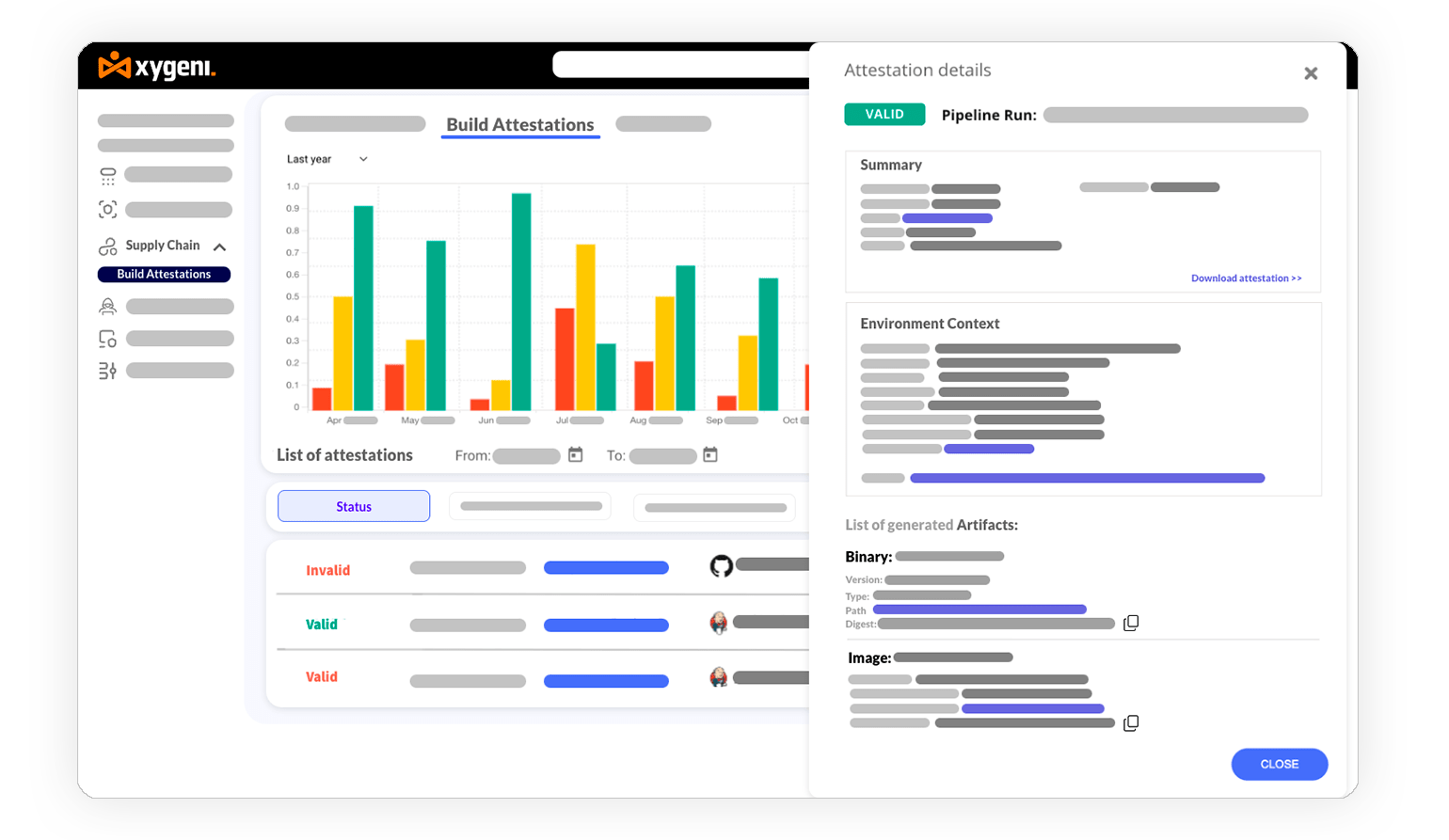
現代軟體 pipelines face increasing risks, but the Xygeni Build Security 解決方案 steps in to provide reliable protection for your artifacts and CI/CD processes. By focusing on Build Security, this solution ensures every artifact is traceable, verified, and protected from tampering. A key part of this is the creation, storage, and verification of 完全證明, which provide a transparent record of your build process.

這是怎麼回事 Xygeni Build Security 解決方案 helps safeguard your pipeline:

  • Generate In-Toto Attestations Easily:
    Adding just one line to your CI/CD pipeline allows you to automatically collect evidence from every step of your build process. This feature simplifies compliance and adds a new layer of traceability in artifact software development.

  • Verify Artifacts in Real-Time:
    Xygeni verifies every artifact immediately, including source code, configuration files, and reports, using signature checks. Unlike traditional build artifacts management tools, Xygeni adds real-time security validation, stopping tampering before it can progress further.

  • Stop Compromised Artifacts Before Deployment:
    Security gates in the pipeline block tampered artifacts during delivery or deployment, a critical feature in artifact software development. This approach protects your production environment from potential security risks.

  • Centralize Attestation Records:
    Xygeni uses sigstore Rekor and in-toto Archivista to provide a transparent and tamper-proof registry for managing attestations. This registry supports secure workflows in artifact software development, giving teams confidence in their pipeline’s integrity.

这 Xygeni Build Security Solution helps teams confidently manage their artifacts by protecting them at every stage of the pipeline. It automates the generation and verification of 完全證明, complies with industry standards like SLSA, and keeps vulnerabilities out of your builds.

Developers Need Smarter Build Artifacts Management Tools

As pipelines grow in complexity, it’s clear that build artifacts management tools have evolved into much more than storage solutions. They now play a critical role in protecting your software from modern threats. The Xygeni Build Security 解決方案 透過整合脫穎而出 完全證明 進入你的 CI/CD workflow, giving you traceable, tamper-proof artifacts and a safer pipeline.

By combining advanced security features with easy integration, this solution helps developers focus on delivering great software without worrying about compromised builds or compliance headaches. Smarter artifact management starts with protecting what you build.

準備好保護你的 pipeline? 試試 Xygeni Build Security Solution for Free!

sca-tools-software-composition-analysis-tools
優先處理、補救並保護您的軟體風險
註冊免費帳號。
不需要信用卡。

確保您的軟體開發和交付安全

使用 Xygeni 產品套件