Tá sé níos tábhachtaí ná riamh feidhmchláir a choinneáil slán. In 2024, os a chionn 54,000 CVEanna nua foilsíodh iad, líon taifeadbhriseadh. Léiríonn an borradh seo cé chomh tapa agus atá dromchla an ionsaithe ag fás, go háirithe de réir mar a bhraitheann aipeanna nua-aimseartha níos mó ar chód foinse oscailte agus ar phacáistí tríú páirtí. Sin é an fáth go bhfuil an sca vs sast Ní hamháin go bhfuil an díospóireacht teicniúil, tá sí straitéiseach. In ionad ceann a roghnú thar an gceann eile, úsáideann foirne atá feasach ar shlándáil an dá cheann. SAST gabhann fabhtanna agus lochtanna i do chód féin go luath. SCA rianaíonn siad saincheisteanna i spleáchais sula dtéann siad i dtáirgeadh. Uirlisí difriúla, sraitheanna difriúla, ach le chéile, dúnann siad bearnaí fíor.
Sa treoir seo, déanaimid miondealú ar na difríochtaí idir sast agus sca, conas a oibríonn siad taobh le taobh, agus conas Xiginí aontaíonn sé iad in aon ardán amháin atá tógtha do DevSecOps.
Cád é SAST?
Tástáil Slándála Feidhmchlár Statach (SAST) cosúil le córas rabhaidh luath a bheith agat do do chód dílseánaigh. Trí chód foinse, cód beart, agus comhaid dhénártha a scanadh, SAST Aithníonn sé leochaileachtaí i bhfad sula mbíonn siad ina bhfadhb. Mar shampla, tugann sé aird ar shaincheisteanna cosúil le instealladh SQL nó scripteáil tras-láithreáin (XSS) agus an cód fós á fhorbairt.
Príomhbhuntáistí SAST:
- Brath LuathAimsíonn sé leochaileachtaí go luath, rud a shábhálann am agus airgead ar dheisiúcháin níos déanaí.
- Clúdach CuimsitheachSeiceálann sé an cód saincheaptha go léir go críochnúil, ag cinntiú nach bhfuil aon rud fágtha ar lár.
- Aiseolas Fíor-AmaTreoraíonn sé forbróirí agus iad ag scríobh, ag cinntiú go bhfuil caighdeán an chóid níos fearr.
- Feabhsú Cáilíochta an ChóidFeabhsaíonn sé slándáil agus inchothabháil ag an am céanna.
Nua-Aimseartha SAST Tá uirlisí ag forbairt go gasta. Chun fanacht éifeachtach, ní mór dóibh ní hamháin saincheisteanna cosúil le SQLi nó XSS a bhrath, ach tosaíocht a thabhairt freisin do na rudaí is féidir a shaothrú i ndáiríre agus treoir fhíor-ama a sholáthar d’fhorbróirí. Seo an áit a seasann uirlisí cosúil le Xygeni amach, ach clúdóimid sin go mion thíos.
Cád é SCA?
Idir an dá linn, Anailís ar Chomhdhéanamh Bogearraí (SCA) baineann sé ar fad le rioscaí a bhainistiú i spleáchais tríú páirtí agus foinse oscailte. Le feidhmchláir nua-aimseartha ag brath go mór ar chomhpháirteanna foinse oscailte—go minic suas le 90%—SCA ríthábhachtach chun súil a choinneáil ar leochaileachtaí agus ar shaincheisteanna ceadúnaithe.
Príomhbhuntáistí SCA:
- Bainistíocht SpleáchaisCoinníonn sé do Bhille Ábhar Bogearraí (SBOM) cothrom le dáta.
- Brath LeochaileachtaBrataíonn fadhbanna ag baint úsáide as bunachair shonraí cosúil le NDV or OpenSSF.
- Comhlíonadh Ceadúnais: Cabhraíonn sé le cloí le ceanglais cheadúnaithe foinse oscailte.
- Foláirimh Réamhghníomhacha: Aimsigh comhpháirteanna atá as dáta chun rioscaí folaithe a sheachaint.
Trí leochaileachtaí i spleáchais sheachtracha a shocrú, SAST agus SCA oibríonn siad go maith le chéile chun slándáil láidir feidhmchlár a sholáthar. Chomh maith leis sin, an comparáid idir SCA vs SAST Léiríonn sé seo an chaoi a dtacaíonn na huirlisí seo lena chéile, ag tabhairt aghaidh ar chodanna éagsúla de dhúshláin slándála feidhmchlár go héifeachtach.
SAST vs SCAPríomhdhifríochtaí i Slándáil Feidhmchlár
| Gné | SAST | SCA |
|---|---|---|
| Fócas Bunscoile | Cód foinse dílseánaigh | Spleáchais foinse oscailte agus tríú páirtí |
| Uainiú | Is fearr a chur i bhfeidhm le linn chéim na forbartha | Monatóireacht leanúnach roimh agus tar éis imscartha |
| Cineálacha Leochaileachta | Braitheann lochtanna códaithe (m.sh., instealladh SQL, XSS) | Sainaithníonn sé leochaileachtaí aitheanta i leabharlanna agus i bpacáistí seachtracha |
| Raon feidhme | Déanann anailís ar chód saincheaptha atá scríofa go hinmheánach | Scanann sé gach spleáchas díreach agus trasdultach sa bhunachar cód |
| Cás Úsáide is Fearr | Feidhmchláir dhílseánaigh a dhaingniú | Bainistiú rioscaí i gcomhpháirteanna bogearraí foinse oscailte agus tríú páirtí |
| Tionchar ar Fhorbairt | Feabhsaíonn sé cleachtais chódaithe slána trí aiseolas fíor-ama | Cinntíonn sé comhlíonadh agus laghdaíonn sé rioscaí ó fhoinsí seachtracha neamhfhíoraithe |
Mar a léiríonn an comparáid seo, SAST agus SCA freastal ar dhaoine difriúla ach oibríonn siad go maith le chéile. Cinntíonn siad nach mbeidh aon bhearnaí i do straitéis slándála trí iad a úsáid le chéile.
Cén fáth tú An riachtanas is gá An dá SAST agus SCA
In ionad rogha a dhéanamh idir SCA vs SAST, bain úsáid as an dá rud chun cosaint ilchiseal a chruthú. Seo an fáth:
- Cosaint Chuimsitheach: SAST clúdaíonn sé cód saincheaptha, agus SCA a chosnaíonn spleáchais tríú páirtí.
- Dromchla Ionsaithe LaghdaitheLe chéile, cuireann siad deireadh le spotaí laga i do chuid feidhmchlár.
- ÉifeachtachtCabhraíonn sreafaí oibre sruthlínithe le leochaileachtaí a réiteach níos tapúla.
Chun tumadh níos doimhne a dhéanamh ar fheidhmchláir shlána a thógáil, féach ar an méid seo a leanas Treoir maidir le Cleachtais Chódaithe Slána OWASP, acmhainn luachmhar do ghairmithe DevSecOps. Chomh maith leis sin, is féidir leat féachaint ar ár n-eipeasóid SafeDev Talk ar SCA vs SAST - Conas a chomhlánaíonn siad a chéile le haghaidh slándála níos láidre?
Cén fáth SAST agus SCA Tábhachtach in 2025: Riachtanais Shlándála Feidhmchlár Nua-Aimseartha i gComhthéacs
Ní hamháin go bhfuil foirne slándála ag paistí fabhtanna inniu. Tá siad ag cosaint earraí ríthábhachtacha pipelines, riosca a bhainistiú trasna spleáchais foinse oscailte, agus cloí le rialacháin atá ag fás.
Go luath sa 2025, Tá leochaileachtaí foinse oscailte aitheanta i níos mó ná 80% de bhunachair chód, de réir tuairiscí tionscail. Agus le Meastar go mbeidh códú le cúnamh AI freagrach as 30–50% den chód nua i roinnt eagraíochtaí, tá sé ag éirí níos deacra rianú a dhéanamh ar a bhfuil slán agus a bhfuil nach bhfuil.
Idir an dá linn, rialacháin ar nós NIS2, DORA, agus rialacha nua SEC ag déanamh inrianaitheacht slándála riachtanach, ní hamháin rud deas le bheith agat.
Cuir ionsaithe ardphróifíle ar an slabhra soláthair leis, mar shampla xz Utils or ctx, agus tá sé soiléir: ní leor an seanbhealach chun AppSec a dhéanamh.
Sin é an fáth sca agus sast Níl siad roghnach. Nuair a úsáidtear iad le chéile, tugann siad léargas do fhoirne ar riosca dílseánaigh agus tríú páirtí araon. Is é an rud is tábhachtaí anois ná iad a chomhcheangal i sreabhadh oibre a úsáideann forbróirí i ndáiríre.
Xygeni: An tAontaithe SAST agus SCA réiteach
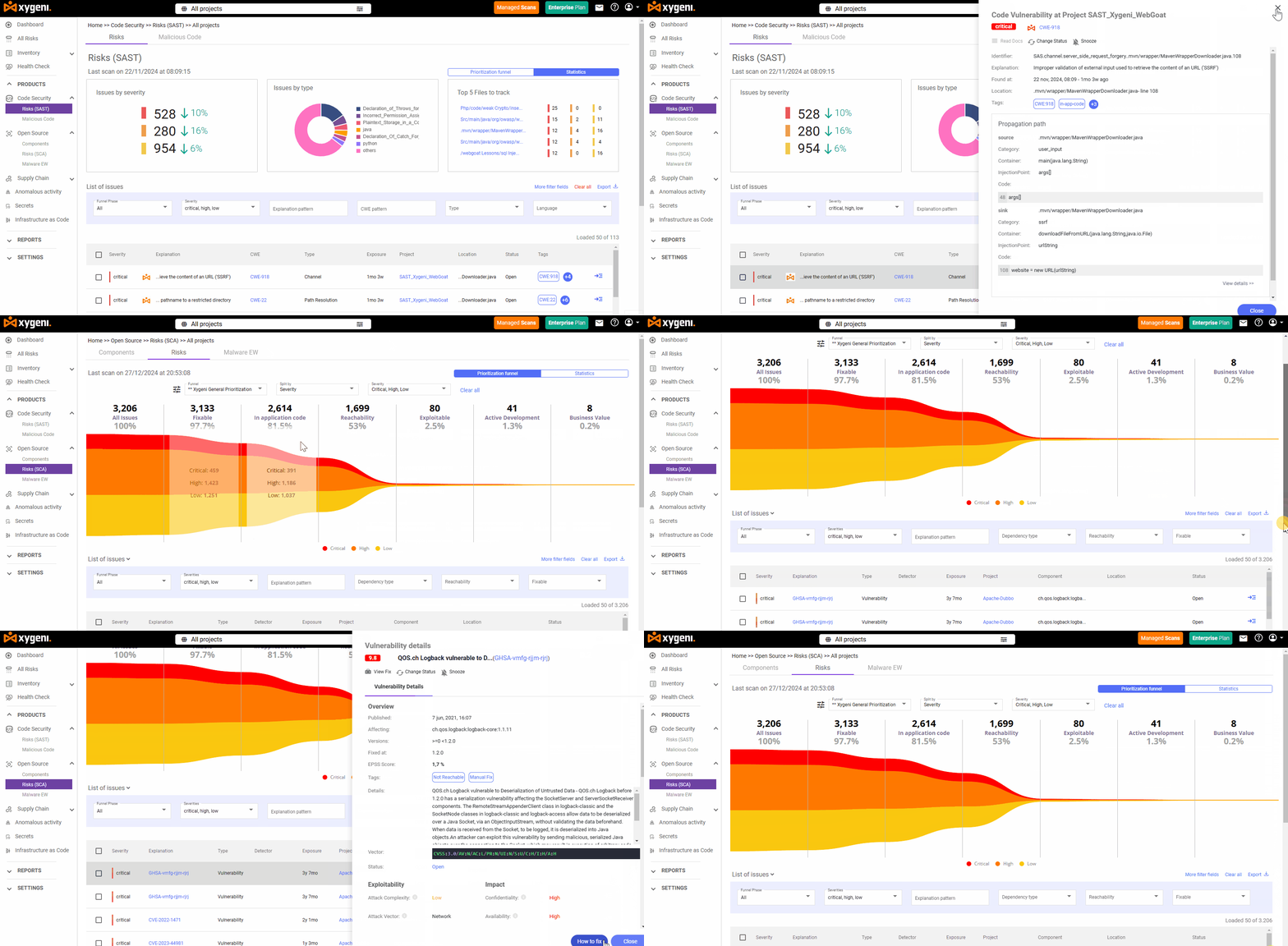
Is minic a bhíonn deacrachtaí ag foirne slándála cinneadh a dhéanamh idir SAST vs SCA, ach is é fírinne an scéil go bhfuil an dá rud riachtanach. SAST vs SCA Ní comórtas é, is comhpháirtíocht é. Cé SAST déanann anailís ar chód dílseánaigh le haghaidh lochtanna slándála, SCA scanann sé comhpháirteanna foinse oscailte agus tríú páirtí le haghaidh leochaileachtaí aitheanta.
Comhcheanglaíonn Xygeni SAST agus SCA i n-aon ardán aontaithe amháin, atá deartha chun luí le sreafaí oibre DevSecOps. Cinntíonn an cur chuige seo slándáil ar fud an phróisis forbartha ar fad, ó chód saincheaptha a anailísiú go rioscaí foinse oscailte a bhainistiú.
Réamhghníomhach SASTCód Dílseánaigh a Shlánú ón Tús
Tástáil Slándála Feidhmchláir Statach Xygeni (SAST) déanann sé anailís ar do chód dílseánaigh ón nóiméad a scríobhtar é, ag scanadh an chóid foinse, an chóid bheart, agus na comhaid dhénártha le haghaidh lochtanna slándála criticiúla.
I measc na bpríomhbhagairtí a braitheadh tá:
- Instealladh SQL, scriptiú tras-láithreáin (XSS), agus instealladh orduithe
- Earráidí bainistíochta cuimhne cosúil le róshreabhadh maoláin
- Loighic fíordheimhnithe neamhshábháilte agus nochtadh sonraí
- Cód doiléir nó mailíseach amhail ransomware, spyware, nó doirse cúil
Ach ní hé an bhrath amháin a fhágann go bhfuil Xygeni difriúil, ach an tosaíocht a thabhairt.
Cruinneas Cruthaithe Tagarmharcála
Xiginí-SAST rinneadh tástáil air ag baint úsáide as an t-oifigeach Tagarmharc OWASP, áit ar baineadh amach:
- Ráta Fíor-Dhearfach 100% i ngach mórchatagóir ar nós SQLi agus XSS
- A Ráta Dearfach Bréagach íseal 16.7%, ag feidhmiú níos fearr ná uirlisí cosúil le CodeQL, Semgrep, agus SonarQube
- Scóir foirfe i réimsí criticiúla cosúil le criptiú lag agus braiteadh fianán neamhshábháilte
Léiríonn na torthaí seo go ngabhann Xygeni bagairtí fíor, agus go seachnaíonn sé am do fhoirne a chur amú ar thorann.
AutoFix agus CI/CD Comhtháthú
Chun an réiteach a bhrostú, tá Xygeni faoi thiomáint ag AI Uath-Cheartú:
- Molann athruithe slána ar chód i bhfíor-am
- Gineann go huathoibríoch pull requests le paistí atá feasach ar chomhthéacs
- Ritheann sé go díreach taobh istigh de do CI/CD sreafaí oibre gan eisiúintí a bhac
Ciallaíonn sé seo go ndéanann do fhoireann leochaileachtaí a shocrú go luath, sula dtagann siad i dtáirgeadh, gan moill a chur ar an bhforbairt.
Dearadh atá cairdiúil don Fhorbróir
- Suiteáil CLI aonlíne
- Iomlán SCM comhtháthú (GitHub, GitLab, Azure DevOps, Bitbucket, Jenkins)
- Aschur i JSON, SARIF, CSV, Markdown
- Tacaíocht rialacha saincheaptha i YAML
- Anótálacha PR inlíne agus guardrails
Le Xygeni, SAST éiríonn sé ina chuid gan uaim de do shaolré forbartha slán, ó bhrath go leigheas, gan aon fhrithchuimilt.
Chliste SCACosaint Spleáchais Foinse Oscailte
Braitheann feidhmchláir nua-aimseartha ar fhoinse oscailte níos mó ná riamh, ach tagann riosca leis sin. Léiríonn staidéir le déanaí go Tá comhpháirteanna foinse oscailte ardriosca i 74% de bhunachair chód, agus sin Tá 91% de na comhpháirteanna sin 10 leagan ar gcúl ar a laghad. Gan infheictheacht agus rialú cuí, d'fhéadfá leochaileachtaí a sheoladh díreach isteach sa táirgeadh.
Anailís ar Chomhdhéanamh Bogearraí Xygeni (SCA) Téann sé i bhfad níos faide ná CVEanna a liostáil. Soláthraíonn sé ciseal cosanta fíor-ama, cliste ar fud d'éiceachórais tríú páirtí.
Brathadóireacht Ardleibhéil Thar CVEanna
Déanann Xygeni scanadh ar gach spleáchas, díreach agus aistreach, agus tugann sé bratach ar:
- Leochaileachtaí aitheanta ag baint úsáide as NVD, OSV, GitHub Advisory agus eile
- Pacáistí atá as dáta le paistí ar iarraidh
- Iompar neamhghnách nó mailíseach i scripteanna suiteála pacáiste
- Taifeadadh, mearbhall spleáchais, agus pacáistí inmheánacha neamh-réimsithe
- Patrúin amhrasacha nasctha le spyware, ransomware, agus doirse cúil
Inrochtaineacht agus Saothrú: Dírigh ar a bhfuil Tábhachtach
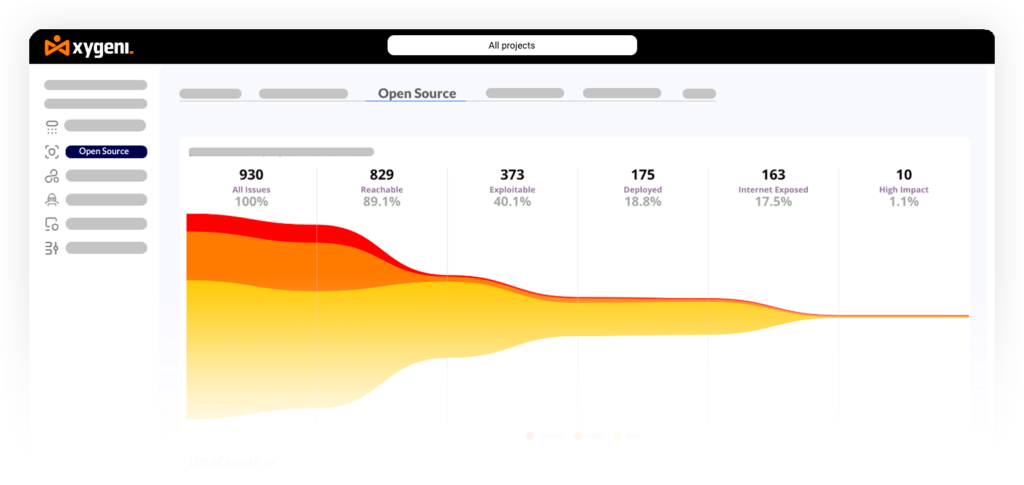
In ionad foláirimh a chur ag tuilte ort, úsáideann Xygeni Anailís Inrochtaineachta chun a thaispeáint cé na leochaileachtaí atá ann i ndáiríre úsáidtear i d’iarratas:
- Rianaíonn sé cosáin fhorghníomhaithe agus graif glaonna
- Tugann sé tús áite do leochaileachtaí bunaithe ar EPSS (Córas Scórála Tuartha Leasa)
- Laghdaíonn sé torthaí dearfacha bréagacha suas le 70%
- Déanann idirdhealú idir cosáin chód inrochtana agus cosáin chód neamhúsáidte
Ligeann sé seo do do fhoireann díriú ar rioscaí inúsáidte, ag sábháil ama agus ag laghdú torainn.
Uath-leigheas i CI/CD
Ní gá go mbeadh sé de láimh spleáchais leochaileacha a shocrú. Uathoibríonn Xygeni an próiseas seo le:
- Moltaí maidir le socruithe meandracha go díreach i do shreabhadh oibre
- Uath-Cheartú Bulc: cuir uasghráduithe spleáchais iolracha i bhfeidhm in aon ghníomh amháin
- Uathghinte pull requests le leaganacha paiste sábháilte
- Iomlán CI/CD comhtháthú le haghaidh cosaint leanúnach
Ní bheidh ort a thuilleadh fiach a dhéanamh trí logaí ná leaganacha paiste a mheascadh, ach leigheas tapa, spriocdhírithe nuair is gá.
Brath Luath ar Mhalartais le haghaidh OSS
Déanann Xygeni scanadh leanúnach ar chláir phoiblí (cosúil le NPM, PyPI, Maven) chun na nithe seo a leanas a bhrath:
- Pacáistí atá ionfhabhtaithe le malware
- Bagairtí nialas-lae
- Scripteanna suiteála amhrasacha
- Iompar a bhaineann le spyware nó doirse cúil
Má tá rud éigin bratach, Xygeni coraintín an bhagairt, foláireamh a thabhairt do d'fhoireann, agus fiú cabhraíonn sé leis an gclárlann fógra a thabhairt chun scaipeadh breise a chosc. Tá tú faoi chosaint sula sroicheann pacáistí mailíseacha do pipelines.
Trédhearcacht Iomlán agus Comhlíonadh SBOM
An gá duit a chruthú cad atá i do chód? Gineann Xygeni go huathoibríoch SBOMs i bhformáidí cosúil le SPDX agus CycloneDX, agus comhtháthaíonn Tuarascálacha Nochtadh Leochaileachta (VDR) le haghaidh inrianaitheacht iomlán.
- Comhlíonann sé ceanglais EO 14028, NIST SP 800-204D, DORA, agus FDA
- Rianaíonn sé rioscaí ceadúnais ar fud na gcomhpháirteanna uile
- Oibríonn sé trí CLI nó WebUI, leabaithe go hiomlán i do CI pipelines
Cinntíonn sé seo go gcomhlíonann tú ionchais rialála agus go gcoinníonn tú do shlabhra soláthair slán agus iniúchta ag an am céanna.
SAST vs SCAGnéithe Slándála Ardleibhéil a Shocraíonn Xygeni Ó Bheith Ar Leith
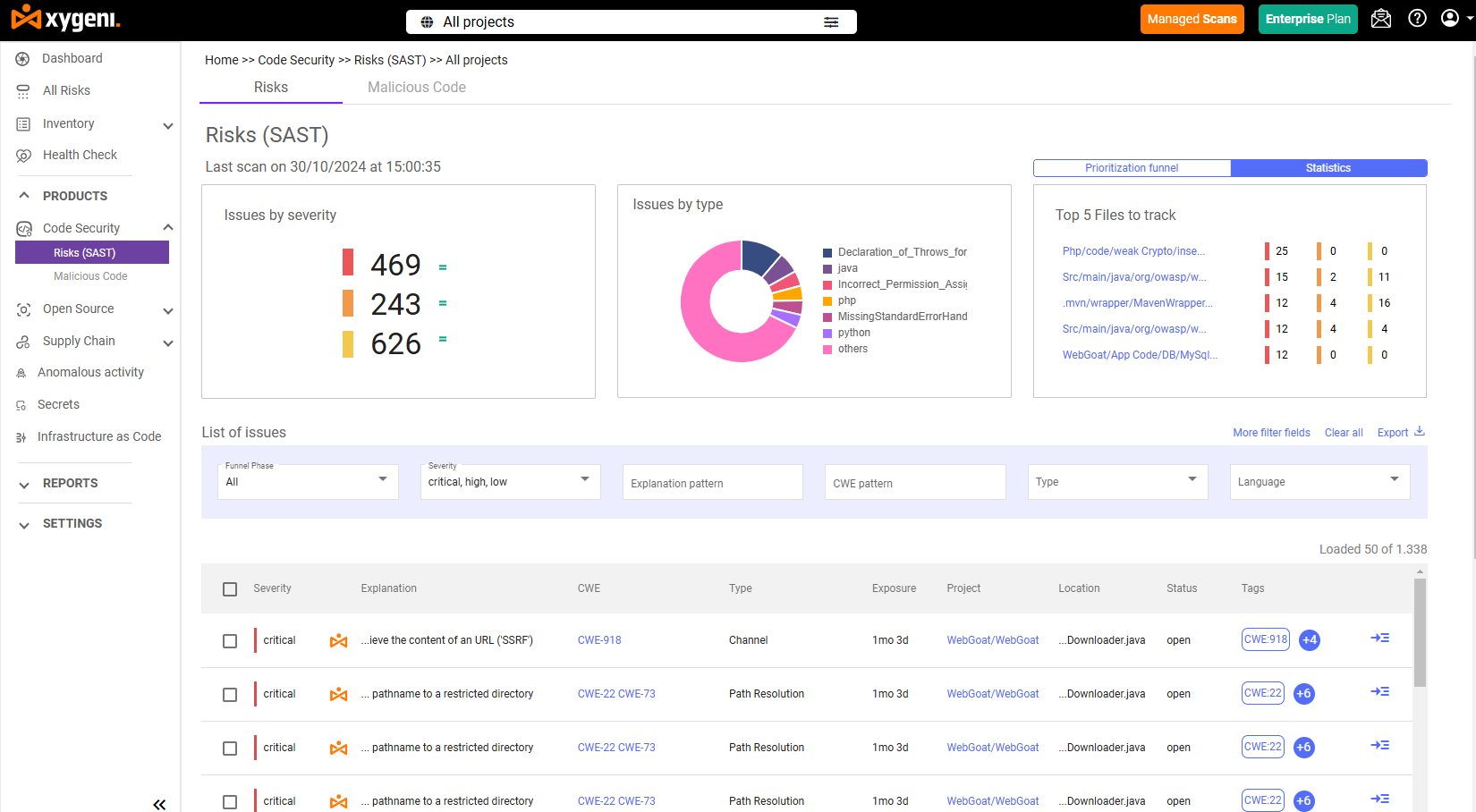
Nuair a dhéantar comparáid sca vs sast, ní hamháin go bhfuil sé faoi na rudaí a bhraithfidh siad, ach faoi cé chomh cliste agus a dhéanann siad é. Claochlaíonn Xygeni uirlisí traidisiúnta AppSec ina chóras aontaithe, cliste a chuireann deireadh le torann agus a luasghéaraíonn an obair cheartúcháin.
Seo an chaoi Xygeni's SAST agus SCA obair le chéile chun tionchar fíor-shlándála a sheachadadh:
Inúsáidteacht agus Inrochtaineacht: Tabhair Tosaíocht don Rud atá Fíor
Cuireann formhór na n-uirlisí slándála foláirimh neamhthábhachtacha ar fhoirne. Réitíonn Xygeni é seo le ionsuite anailís inúsáidteachta agus rianú inrochtaineachta:
- SAST Déantar na torthaí a scagadh trí anailís sreabhadh sonraí chun lochtanna inúsáidte amháin a bhratáil
- SCA Déantar leochaileachtaí a rangú bunaithe ar cibé an bhfuil an cód leochaileach á úsáid i ndáiríre
- I dteannta scóráil EPSS, feiceann do fhoireann cad is tábhachtaí ar dtús, agus rud ar bith eile.
Laghdaíonn sé seo tuirse airdeall go mór agus gearrann sé tríd an torann.
AutoFix: Leigheas a Scríobhann Féin
Luasghéadaíonn Xygeni slándáil trí dheisiúcháin láimhe a dhíchur:
- AutoFix faoi thiomáint AI Gineann pull requests don dá SAST agus SCA saincheisteanna
- Tá paistí ailínithe leis na dea-chleachtais agus dírithe ar an bhfíorfhadhb.
- Uath-Cheartú Bulc cuireann sé roinnt socruithe i bhfeidhm i sreabhadh amháin
- Tá na hathruithe uile CI/CD-réidh agus ceadaithe ag an bhforbróir
Bíonn leochaileachtaí a shocrú ina chuid gan uaim den phróiseas forbartha — ní bacadóir é.
Brath Luath ar Mhalartais i Spleáchais
Le pacáistí foinse oscailte mailíseacha ag ardú os cionn 300% bliain i ndiaidh bliana, tá sé riachtanach anois malware a bhrath in SCA uirlisí.
Déanann Xygeni scanadh ar chláir phoiblí i bhfíor-am (NPM, PyPI, Maven) chun na nithe seo a leanas a bhrath:
- Typosquatting, mearbhall spleáchais, agus scripteanna amhrasacha
- Doirse cúil, spyware, agus ransomware i bpacáistí
- Bagairtí nialas-lae sula mbuaileann siad do pipeline
Má aimsítear bagairt, cuirtear bac uirthi, cuirtear i gcoraintín í, agus rianaítear í, go tapa.
Comhlíonadh, SBOM, agus VDRanna: Tógtha Isteach
Uathoibríonn Xygeni príomhthascanna rialachais le gach tógáil:
- Gineann SBOMi bhformáidí SPDX agus CycloneDX
- Ag teacht le treoirlínte NIST SP 800-204D, DORA, EO 14028, agus FDA
- Áirítear Tuarascálacha Nochtadh Leochaileachta (VDRanna) chun rioscaí a rianú le himeacht ama
- Comhtháthaíonn sé i do CLI nó i do Chomhéadan Gréasáin, níl aon uirlisí breise ag teastáil
Ní smaoineamh iar-dheiridh é comhlíonadh a thuilleadh. Tá sé leanúnach, trédhearcach, agus réidh le haghaidh iniúchta.
Ardán amháin, Sreabhadh amháin
Murab ionann agus uirlisí ilroinnte, seachadann Xygeni:
- Torthaí aontaithe do SAST agus SCA i gceann dashboard
- CI/CD guardrails agus beartais a fhorfheidhmíonn slándáil ar chlé
- Foláirimh fíor-ama le treoir maidir le leigheas comhthéacsúil
- Inrianaitheacht iomlán ó dhaoine leochaileacha commit chun socrú réitithe
Cibé an bhfuil cód dílseánaigh nó do shlabhra soláthair OSS á dhaingniú agat, clúdaíonn Xygeni gach rud, le níos lú frithchuimilte, níos lú foláirimh, agus torthaí níos tapúla.
Ní uirlisí amháin atá i gceist le slándáil. Is rialachas í.
Ní hamháin go bhfuil slándáil feidhmchlár faoi leochaileachtaí a ghabháil. Déanta na fírinne, baineann sé freisin le fios a bheith agat cé leis an riosca, cé a shocraíonn é, agus conas a ailíníonn na gníomhartha sin le do bheartais slándála inmheánacha.
De réir mar a fhásann d’eagraíocht, Ní leor infheictheacht amháin. Teastaíonn inrianaitheacht uait. Ciallaíonn sé sin:
- Cé a chuir an spleáchas leochaileach leis?
- Cé atá freagrach as an deisiú?
- An bhfuil an leigheasú ailínithe le do bheartais slándála?
Seo an áit a dtagann uirlisí agus rialachas cuí le chéile. Nuair a dhéantar comhtháthú SAST agus SCA uirlisí isteach i do shreafaí oibre ar an mbealach ceart, ní hamháin go bhfaighidh siad fadhbanna. Ina áit sin, cabhraíonn siad le rialacha slándála a fhorfheidhmiú, freagracht a shannadh, agus deisiúcháin a bhrostú le sreafaí soiléire, uathoibrithe.
Ina theannta sin, ar scála mór, is é an rialachas an gliú idir braiteadh agus leigheas. Gan é, níl le déanamh agat ach foláirimh a bhailiú. Leis, glacann tú gníomh iarbhír.
Sin é an fáth Cuireann Xygeni seirbhísí bunaithe ar bheartas ar fáil guardrails, sannadh foirne saincheaptha, agus inrianaitheacht iomlán ar fud do shaolré forbartha bogearraí slánIs féidir leat a fheiceáil cé a thug isteach riosca, cé leis an socrú, agus an gcomhlíonann an t-athrú do mhúnla rialachais.
I mbeagán focal, ní stopann an tslándáil ag an mbrath. Ní bhíonn sí éifeachtach ach amháin nuair a fhágann do chóras go bhfuil sé éasca don duine ceart gníomhú go tapa.
Réidh chun do shreabhadh oibre forbartha a dhaingniú leis na huirlisí cearta?
Féach ar ár liostaí atá curtha le chéile ag saineolaithe chun na réitigh is fearr a fháil do do fhoireann:
- Anailís ar Chomhdhéanamh Bogearraí is Fearr 10SCA) Uirlisí do Fhoirne DevSecOps
Faigh amach na huirlisí is fearr chun comhpháirteanna foinse oscailte a bhainistiú agus do shlabhra soláthair bogearraí a chosaint. - barr SAST Uirlisí do Fhoirne DevSecOps
Déan comparáid idir na príomhuirlisí anailíse cód statach chun leochaileachtaí a bhrath go luath sa fhorbairt.
Ceisteanna Coitianta Maidir le SCA vs SAST
Cad é an príomhdhifríocht idir SCA vs SAST?
SAST déanann sé scrúdú ar chód dílseánaigh le haghaidh lochtanna slándála, agus SCA díríonn sé ar chomhpháirteanna tríú páirtí agus foinse oscailte chun leochaileachtaí agus rioscaí ceadúnais a aithint
An féidir SAST agus SCA a úsáid le chéile?
Sea, ag úsáid SAST agus SCA le chéile soláthraíonn sé slándáil iomlán trí chód dílseánaigh agus tríú páirtí araon a chlúdach, rud a íoslaghdaíonn an riosca foriomlán.
Cén cineál leochaileachtaí a dhéanann SAST bhrath?
SAST aimsíonn sé fadhbanna cód, amhail instealladh SQL, róshreabhadh maoláin, agus scriptiú tras-láithreáin (XSS), sula ndéantar an feidhmchlár a imscaradh.
Cén fáth a bhfuil SCA tábhachtach do shlándáil foinse oscailte?
SCA cuidíonn sé le foirne rioscaí a bhainistiú i spleáchais tríú páirtí, amhail seanleabharlanna, saincheisteanna slándála aitheanta, agus fadhbanna ceadúnaithe.
Cé acu is fearr: SAST or SCA?
Níl ceachtar acu éifeachtach leis féin. SAST agus SCA oibriú le chéile chun slándáil chuimsitheach a sholáthar do chód saincheaptha agus seachtrach araon
Cad is Xygeni ann, agus conas a chomhtháthaíonn sé SAST agus SCA?
Aontaíonn Xygeni SAST agus SCA isteach in aon ardán amháin, rud a fhágann go bhfuil bainistíocht leochaileachta níos tapúla, níos cliste agus níos éifeachtaí ar fud shaolré iomlán na forbartha.