



Welcome to the October edition of the Xygeni Malicious Code Digest. This month, our security research team confirmed more than 90 malicious packages across npm, PyPI, and Composer, tracked across five weekly digests.
Two things defined October. Operators kept coming back: the same campaigns returned week after week, often dressed in new names. And pherekano ea ho itšetleha kept escalating, with version numbers climbing from 99.x ho 100.0.0, 100.100.x 'me 999.x, all built to outrank private, internal packages.
Har'a matšolo a hlahelletseng ka ho fetisisa a tlalehiloeng khoeling ena:
- Baileys became a family. Baileys is the WhatsApp Web API library already abused in earlier forks.
cloud-baileyse fihlile1.1.42, its third consecutive month, while copycats multiplied across new scopes:@dcloude/baileys(four versions),@xmiybi/baileys,@ungke/baileys,@kimmcloude/baileys, and variants like@corexium/xbails'me@kxafunc/xbails. - A burst of
100.0.0packages on October 4. It came with internal-sounding names such asai-workshop-radio-lambda,figma-to-apl'meokra-cloud-cdk, e lateloa kekmf-bootstrap'medeposit-limit-feat100.100.xka October 10. - Scoped namespaces impersonated private packages all month. Tsena li kenyeletsa
@inpeek/odata,@galicia-toolkit/*at999.x, and, in the last week,@eforms/forms-api'me@capsense/*. E le 'ngoe@eformsversion even mimicked an internal build tag:2.0.0-SNAPSHOT. pyyiwas the most persistent PyPI operator of the month, with nine versions published between October 12 and October 27.minecraftaccfindershipped six versions in a single day (Mphalane 12).- Names built to look like AI developer tooling kept appearing, joalo ka
checkmate-remediation-assistant'mealexa-cybertron-team-code-review-agent. The AI layer of the toolchain is now a standard ikgakanya.
The defining pattern of October: attackers are not giving up after takedowns. They are republishing, renaming, and rescoping the same payloads, and betting that inflated version numbers will win against internal packages before anyone notices.
Ka tlase ke kakaretso ea seo re se fumaneng. U ka bona lintlha tsohle tsa libeke tse hlano tse senotsoeng ka botlalo ho Lenane la Malicious Code Digest.
Beke ea 5: Liphutheloana tse 14 li sibollotsoe
| Ts'ebetso | sephutheloana | letsatsi |
|---|---|---|
| pypi | pyyi:2.5.1 | October 27, 2026 |
| pypi | pyyi:2.5.2 | October 27, 2026 |
| pypi | pyyi:2.5.3 | October 27, 2026 |
| pypi | pyyi:2.5.4 | October 27, 2026 |
| pypi | pyyi:2.5.5 | October 27, 2026 |
| npm | @eforms/forms-api:2.0.99 | October 29, 2026 |
| npm | @eforms/forms-api:2.0.0-SNAPSHOT | October 29, 2026 |
| npm | @eforms/forms-api:1.99.1 | October 29, 2026 |
| npm | @eforms/forms-api:2.99.1 | October 29, 2026 |
| npm | @capsense/ccx-welcome-page:99.99.99 | October 29, 2026 |
| npm | @capsense/ccx-welcome-page:99.99.100 | October 29, 2026 |
| npm | @capsense/core-ui:99.99.99 | October 29, 2026 |
| npm | @capsense/core-ui:99.99.100 | October 29, 2026 |
Beke ea 4: Liphutheloana tse fetang 10 li fumanoe
| Ts'ebetso | sephutheloana | letsatsi |
|---|---|---|
| npm | rootaccessxvv-bbmarker:1.0.2 | October 18, 2026 |
| npm | @kimmcloude/baileys:1.0.0 | October 18, 2026 |
| pypi | leakdeep:3.0.0 | October 19, 2026 |
| pypi | pyyi:2.5.0 | October 19, 2026 |
| npm | memories-core-web:99.0.0 | October 20, 2026 |
| pypi | pyyi:2.5.1 | October 21, 2026 |
| pypi | pyyi:2.5.2 | October 21, 2026 |
| pypi | pyyi:2.5.3 | October 21, 2026 |
| pypi | pyyi:2.5.4 | October 21, 2026 |
| pypi | pyyi:2.5.5 | October 21, 2026 |
Beke ea 3: Liphutheloana tse fetang 27 li fumanoe
| Ts'ebetso | sephutheloana | letsatsi |
|---|---|---|
| npm | kmf-bootstrap:100.100.100 | October 10, 2026 |
| npm | @dcloude/baileys:0.0.5 | October 10, 2026 |
| npm | @bellachann/techxatz:0.1.2 | October 10, 2026 |
| npm | @corexium/xbails:0.0.7 | October 10, 2026 |
| npm | @ungke/baileys:0.0.1 | October 10, 2026 |
| npm | depositi-moeli-fe:100.100.106 | October 10, 2026 |
| pypi | py2ops:2.3.1 | October 10, 2026 |
| npm | @xmiybi/baileys:5.0.0 | October 11, 2026 |
| npm | reaction-dropzone-v4:99.0.0 | October 11, 2026 |
| pypi | minecraftaccfinder:3.0.0 | October 12, 2026 |
| pypi | pyyi:2.4.2 | October 15, 2026 |
Beke ea 2: Liphutheloana tse 35 li sibollotsoe
| Ts'ebetso | sephutheloana | letsatsi |
|---|---|---|
| npm | eslint-plugin-skywagon-web:100.0.0 | October 4, 2026 |
| npm | @rutxploit-sec/waves-button-poc:1.0.0 | October 4, 2026 |
| npm | ai-workshop-radio-lambda:100.0.0 | October 4, 2026 |
| npm | moemeli oa tlhahlobo ea khoutu ea sehlopha sa alexa-cybertron:100.0.0 | October 4, 2026 |
| moqapi | slimfit/formbase:1.3 | October 4, 2026 |
| pypi | voxeval:0.4.2 | October 4, 2026 |
| npm | li-cloud-bailey:1.1.42 | October 4, 2026 |
| npm | @inpeek/odata:99.99.99 | October 5, 2026 |
| npm | @inpeek/odata-angular:99.99.99 | October 5, 2026 |
| npm | mothusi oa ho lokisa-checkmate:1.0.0 | October 6, 2026 |
| npm | @galicia-toolkit/tag-manager:999.0.5 | October 9, 2026 |
| npm | @tunstock/remact-dom:19.2.0 | October 9, 2026 |
Beke ea 1: Liphutheloana tse 4 li sibollotsoe
| Ts'ebetso | sephutheloana | letsatsi |
|---|---|---|
| npm | @alphaspace/core:99.0.1 | September 26, 2026 |
| npm | @alphaspace/core:99.0.2 | September 26, 2026 |
| npm | @alphaspace/core:99.0.3 | September 26, 2026 |
| npm | lebokose-la-sandbox-le iketselitseng-ka boiketsetso-cf:1.0.0 | September 26, 2026 |
From Baileys to 100.0.0: What October’s Supply Chain Attacks Reveal
The campaigns above show that a takedown is no longer the end of an attack, just a pause before the next name. A WhatsApp library impersonation now spans three months and a growing family of scopes. Dependency-confusion packages keep raising their version numbers to outrank internal namespaces. And PyPI operators republish the same package again and again until something gets through. All of it lands in real SDLCs every week, often pulled in by automated tooling before any human reads the package name.
Xygeni's ho lemoha malware 'me CI/CD le ts'ireletso ea ketane ea phepelo fa mekhatlo ponahalo ea ho tšoara mekhoa e kotsi pele e qala ho sebetsa mochining oa moqapi, ho kena tsamaisong ea kaho, kapa ho fihlela tlhahiso. MEW, Xygeni’s malware engine, detects malicious packages before a signature exists, across npm, PyPI, OpenVSX, and beyond, monitoring for suspicious publishing patterns, namespace abuse, typosquatting, and AI-native attack techniques as they emerge.
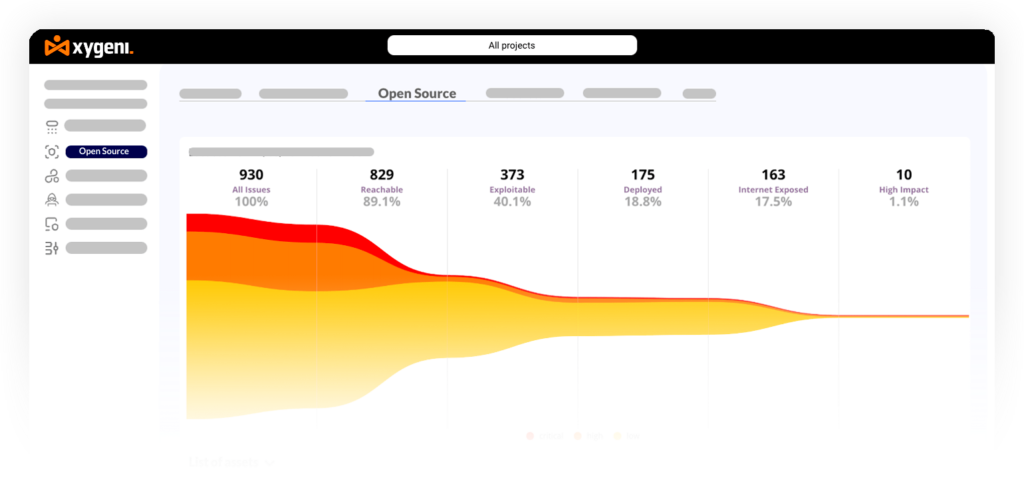
Sephetho se seng le se seng se etelletsoa pele ka boiketsetso ke ho sebelisoa ha sona, ho fihlelleha ha sona, le tšusumetso ea khoebo, kahoo sehlopha sa hau se tsepamisa maikutlo ho seo ehlile se hlokang ho lokisoa, eseng lerata.
Hlahloba sephutheloana se seng le se seng se kotsi le letšolo le netefalitsoeng ke Sehlopha sa Tšireletso sa Xygeni ho Khoutu e mpe ea Molao.
Lula u sireletsehile. Lula u potlakile. Lula u laola Xygeni.