TL; DR
La "evaluación de riesgos de ciberseguridad" abarca tres productos diferentes, y esta lista incluye los tres. Las herramientas de infraestructura evalúan y parchean los sistemas que usted ejecuta. Las herramientas de punto final detectan y responden en las propias máquinas. Las herramientas de software y cadena de suministro evalúan el código, las dependencias, pipelineAhora bien, también están los recursos de IA con los que trabajan tus equipos. Estos clasifican los riesgos de forma diferente, reportan a distintos responsables y no son sustitutos. Decide qué superficie conlleva el riesgo antes de comparar las características.
Las puntuaciones de gravedad dejaron de ser una herramienta útil. Cualquier escáner puede marcar miles de hallazgos como críticos. Lo que cambia los resultados es la priorización según la posibilidad de explotación, la accesibilidad y el impacto en el negocio, de modo que un equipo se centra en los pocos hallazgos que realmente pueden comprometer los sistemas, los datos o las operaciones, en lugar de aquellos que obtienen la puntuación más alta de forma aislada.
La brecha más reciente es aquella que nadie había inventariado. Los modelos, agentes, servidores MCP y asistentes de codificación de IA ahora forman parte de la SDLC y quedan fuera del alcance de las herramientas tradicionales de seguridad de aplicaciones y de endpoints. Un puente MCP con una vulnerabilidad de ejecución remota de código fue desconectado más de 437,000 veces antes de ser ampliamente detectado, y ningún escáner basado en CVE tenía una señal con la que compararlo.
La versión corta de la lista: Xygeni para la cadena de suministro de software y el riesgo de IA, con descubrimiento de activos de IA, priorización de rutas de ataque y aplicación en el punto final del desarrollador. Qualys VMDR y Tenable para la gestión de vulnerabilidades de infraestructura y nube a escala. Aikido para escaneo prioritario para desarrolladores en el interior CI/CD. SentinelOne para protección autónoma de endpoints y recuperación de ransomware. La mayoría de los programas maduros ejecutan más de uno, por eso el extender en lugar de reemplazar La pregunta importa más que cualquier comparación de características individuales.
Las herramientas de evaluación de riesgos de ciberseguridad identifican, analizan y priorizan los riesgos de seguridad en todos los activos de una organización, y luego realizan un seguimiento de si ese riesgo está disminuyendo. Se dividen en tres familias: evaluación de infraestructura y nube, detección y respuesta de endpoints, y evaluación de software y cadena de suministro, incluidos los activos de IA. Las cinco comparadas aquí abarcan las tres, por lo que la primera decisLo que importa es qué superficie conlleva mayor riesgo, no qué herramienta tiene la lista de funciones más extensa.
¿Por qué es tan importante la evaluación de riesgos de seguridad?
Las herramientas de evaluación de riesgos de ciberseguridad ya no son una infraestructura opcional; son un requisito fundamental para cualquier organización que desarrolle, distribuya u opere software. Su función es esencial: identificar, analizar y priorizar los riesgos antes de que se conviertan en incidentes.
El panorama de amenazas ha cambiado drásticamente. Las cadenas de suministro de software son más complejas que nunca, y los atacantes han aprendido a explotar esa complejidad, ocultando malware en paquetes de código abierto ampliamente utilizados, utilizando asistentes de codificación de IA como armas y atacando servidores MCP cuya existencia la mayoría de las herramientas de seguridad ni siquiera detectan. Tan solo entre el cuarto trimestre de 2025 y el primer trimestre de 2026, el robo de credenciales dirigido mediante IA aumentó un 376 %. Un puente MCP comprometido se descargó 437 000 veces antes de ser detectado.
En este entorno, los equipos de seguridad necesitan herramientas que vayan más allá del escaneo tradicional de CVE. Las mejores herramientas de evaluación de riesgos de ciberseguridad actuales ayudan a las organizaciones a identificar vulnerabilidades a lo largo de todo el ciclo de vida del desarrollo de software (incluidos los activos de IA), priorizar la remediación en función de la explotabilidad real en lugar de las puntuaciones de gravedad brutas, y mantener el cumplimiento continuo con marcos como NIS2, DORA y la Ley de IA de la UE.
En este artículo, revisamos las cinco mejores herramientas de evaluación de riesgos de ciberseguridad para 2026, cubriendo sus capacidades principales, casos de uso ideales y lo que hace que cada una destaque, para que tenga la información que necesita para tomar la decisión correcta.cisión para su organización.
4 beneficios de las herramientas de evaluación de riesgos cibernéticos
Actualmente, las organizaciones se enfrentan a un panorama de amenazas en constante evolución que incluye la inyección de malware, ataques a la cadena de suministro de software, exploits dirigidos a IA y vulnerabilidades de día cero. Las herramientas adecuadas de evaluación de riesgos cibernéticos abordan estos desafíos de cuatro maneras concretas:
- Visibilidad de pila completa: Las herramientas modernas proporcionan visibilidad no solo sobre las dependencias del software y las vulnerabilidades de la infraestructura, sino cada vez más sobre los activos de IA: modelos, agentes, servidores MCP y asistentes de codificación de IA que las herramientas tradicionales de seguridad de aplicaciones no inventarian.
- Priorización más inteligente: Las mejores herramientas van más allá de la gravedad bruta de las vulnerabilidades CVE. Priorizan las amenazas en función de su explotabilidad, accesibilidad y rutas de ataque reales, de modo que los equipos de seguridad solucionan los pocos hallazgos que realmente importan, en lugar de miles de alertas de baja importancia.
- Gestión automatizada del cumplimiento normativo y de las vulnerabilidades: Desde el escaneo continuo hasta la elaboración de informes listos para auditoría, las herramientas automatizadas de evaluación de riesgos reducen la carga de trabajo manual necesaria para cumplir con los requisitos reglamentarios como ISO 27001, SOC 2, NIS2, DORA y la Ley de IA de la UE.
- Reducción de falsos positivos: Al contextualizar las alertas con escenarios de ataque reales y filtrarlas según la explotación activa, las herramientas modernas reducen drásticamente el ruido, lo que permite a los equipos centrarse en las amenazas que realmente pueden comprometer los sistemas, los datos o las operaciones.
¿Quieres profundizar más? Mira nuestra charla de SafeDev en Gestión de riesgos para obtener información práctica de los riesgos de seguridad cibernética expertos.
Características esenciales que debe tener su herramienta de evaluación de riesgos de seguridad.
No todas las herramientas automatizadas de evaluación de riesgos están diseñadas para el entorno de amenazas actual. Al evaluar sus opciones, busque estas capacidades:
- Evaluación de riesgos automatizada: Escaneo continuo y automatizado de código, dependencias, infraestructura y recursos de IA, sin necesidad de intervención manual.
- Integración de DevSecOps: Integración nativa con CI/CD pipelineentornos de desarrollo integrados (IDE) y flujos de trabajo de desarrolladores para que la seguridad se aplique donde se escribe el código, no solo en el perímetro.
- Cobertura de activos de IA: A medida que la IA se convierte en parte de todo SDLCSu herramienta debería inventariar y evaluar modelos, agentes, servidores MCP y asistentes de codificación de IA, no solo paquetes y repositorios.
- Inteligencia de amenazas en tiempo real: Detección que se mantiene al día con las técnicas de ataque emergentes, incluidos los veredictos de malware previos a la firma y los nuevos patrones de ataque a la cadena de suministro.
- Priorización de riesgos según la vía de ataque: La capacidad de filtrar los resultados para centrarse en lo que realmente es explotable y fundamental para el negocio, y no solo en lo que obtiene una puntuación alta en la escala CVSS.
- Informes de cumplimiento y auditoría: Mapeo integrado a las normativas y marcos de seguridad (NIS2, DORA, Ley de IA de la UE, ISO 27001, SOC 2) con resultados exportables y listos para auditoría.
- Escalabilidad y facilidad de uso: Una plataforma que se adapta a su ecosistema de software y proporciona una interfaz intuitiva. dashboard que los equipos de seguridad puedan utilizar sin necesidad de conocimientos especializados.
Ahora veamos las cinco herramientas que mejor cumplen con estos criterios en 2026.
| Cobertura de evaluación de riesgos | Seguridad AI | Enfoque de priorización | Cumplimiento | Uso recomendado | |
|---|---|---|---|---|---|
| xygeni | Código, dependencias, pipelines, activos de IA, servidores MCP, agentes, puntos finales de desarrollador | AI-SPM, puntuación de riesgo mediante IA, Shield Aplicación de la ley en los puntos finales: era de la IA en toda regla SDLC cobertura | Embudo de ruta de ataque: explotabilidad, accesibilidad, impacto en el negocio | NIS2, DORA, Ley de IA de la UE, NIST AI RMF, ISO/IEC 42001 | Organizaciones que utilizan o desarrollan IA y que necesitan una cadena de suministro integral y seguridad de IA en una sola plataforma. |
| Qualys VMDR | Dispositivos, aplicaciones, instancias en la nube, infraestructura híbrida | No | Sistema de puntuación basado en IA, en función de la vulnerabilidad y los patrones de ataque. | PCI DSS, HIPAA, CIS | Ancha enterprises gestión de infraestructura heterogénea con necesidades de alta velocidad de parcheo |
| Aikido | Código fuente, dependencias, contenedores, IaCpostura de la nube | No | Enfoque en el impacto en tiempo de ejecución y en función del contexto. | ISO 27001, RGPD, SOC 2 | Equipos centrados en el desarrollador que desean seguridad integrada desde el principio CI/CD |
| Sostenible | Redes, infraestructura en la nube, contenedores, aplicaciones web | No | Priorización predictiva mediante inteligencia de amenazas basada en IA | PCI DSS, HIPAA, CIS, NIST | Equipos de seguridad que necesitan una gestión de vulnerabilidades escalable y nativa de la nube con amplias integraciones. |
| Centinela | Puntos finales, servidores, cargas de trabajo en la nube, dispositivos IoT | Inteligencia artificial conductual para la detección de amenazas y la respuesta autónoma. | Análisis de comportamiento en tiempo real, sin dependencia de firmas. | SOC 2, HIPAA, GDPR | Enterpriseque necesitan protección autónoma de endpoints y recuperación de ransomware |
Las 5 mejores herramientas de evaluación de riesgos de ciberseguridad para 2025

Ideal para: Organizaciones que utilizan o desarrollan software con inteligencia artificial y necesitan seguridad integral en la cadena de suministro con un modelo de confianza cero en el punto final del desarrollador.
Xygeni ha evolucionado significativamente más allá de sus orígenes como escáner de cadena de suministro. Su plataforma 2026 introduce un Zero Trust para la era de la IA. SDLC Este enfoque, estructurado en torno a tres capacidades: Descubrir, Detectar y Aplicar, lo convierte en una de las herramientas de evaluación de riesgos de ciberseguridad más completas para equipos que desarrollan o implementan IA.
- AI-SPM (Descubrir): Xygeni inventaría automáticamente todos los activos de IA en su SDLC (modelos, conjuntos de datos, agentes, servidores MCP y asistentes de codificación de IA) y genera una lista de materiales de IA (AI-BOM) lista para auditoría. El inventario mapea las relaciones entre los activos y los vincula con las obligaciones regulatorias según la Ley de IA de la UE, el Marco de Gestión de Riesgos de IA del NIST y la norma ISO/IEC 42001.
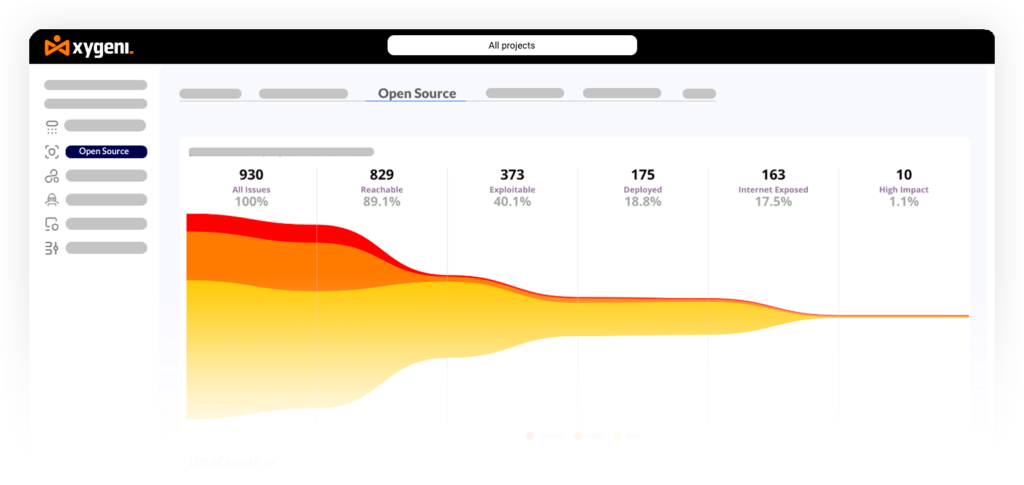
- Seguridad de la IA (Detección): La detección combina el análisis determinista con la comprensión semántica basada en LLM, abarcando el OWASP Top 10 para aplicaciones LLM, el OWASP Top 10 para aplicaciones con agentes (2026) y el OWASP Top 10 para MCP. En lugar de generar miles de alertas, Xygeni aplica un embudo de priorización basado en rutas de ataque reales: de 12 842 hallazgos en un entorno típico, solo 14 (0.1 %) se clasifican como críticos para el negocio. Las categorías de riesgo detectadas incluyen inyección de mensajes, configuraciones MCP inseguras, credenciales LLM codificadas, dependencias de IA mal implementadas y un uso excesivo de agentes.
- Shield (Hacer cumplir): Un agente de punto final ligero que aplica la política de seguridad en cada máquina de desarrollador antes de que se ejecute cualquier programa. Shield Bloquea las dependencias maliciosas mediante veredictos MEW (Malware Early Warning), antes de que las herramientas tradicionales basadas en firmas puedan detectarlas, y aplica una lista de permitidos de modelo aprobado y MCP aprobado. Si se activa una alerta crítica, Shield Puede aislar automáticamente el punto final afectado, conteniendo el incidente antes de que se propague.
- Por qué los datos son importantes: Entre el cuarto trimestre de 2025 y el primer trimestre de 2026, el robo de credenciales mediante IA aumentó un 376 %. Un puente MCP (CVE-2025-6514) se descargó 437 000 veces antes de que se detectara ampliamente la vulnerabilidad de ejecución remota de código que posibilitaba. La arquitectura de Xygeni se diseñó específicamente para solucionar este problema.
- Compliance: NIS2, DORA, Ley de IA de la UE, NIST AI RMF, ISO/IEC 42001. Alojado en la UE, con on-premisey opciones de despliegue aisladas de la red para entornos regulados.
- Reconocimiento: Nombrada empresa destacada en Application Security Posture Management Galardonada con el premio "Empresa Destacada en Seguridad de Aplicaciones GenAI 2026" por los Global InfoSec Awards (Cyber Defense Magazine).
Mejor ajuste: Equipos de seguridad en industrias reguladas, organizaciones con desarrollo activo de IA pipeliney cualquier empresa preocupada por los ataques a la cadena de suministro de software y el riesgo del servidor MCP.

2. Qualys VMDR
Ideal para: Ancha enterprises que necesitan una gestión continua de vulnerabilidades en entornos híbridos on-premises y la infraestructura en la nube.
Qualys VMDR (Gestión, Detección y Respuesta ante Vulnerabilidades) sigue siendo una de las soluciones más utilizadas. herramientas de evaluación de riesgos cibernéticos para la cobertura a nivel de infraestructura. Sus puntos fuertes residen en el descubrimiento automatizado de activos, la priorización de vulnerabilidades basada en IA y la estrecha integración con los flujos de trabajo de gestión de parches.
Capacidades clave: Descubrimiento y mapeo en tiempo real de todos los dispositivos conectados, aplicaciones e instancias en la nube; puntuación de riesgo impulsada por IA basada en la explotabilidad y patrones de ataque del mundo real; orquestación automatizada de parches para reducir ventanas de exposición; escaneo continuo en on-premiseentornos s, en la nube e híbridos.
Mejor ajuste: Equipos de operaciones de TI y seguridad que gestionan infraestructuras extensas y heterogéneas, donde la velocidad de aplicación de parches y la visibilidad de los activos son las principales preocupaciones.
3. Aikido
Ideal para: Equipos de desarrollo que desean que el escaneo de seguridad y cumplimiento de la cadena de suministro esté integrado directamente en CI/CD pipelines.
Aikido es un juego centrado en el desarrollador. herramienta de evaluación de riesgos de seguridad Diseñado para la seguridad de desplazamiento a la izquierda. Se integra con CI/CD optimiza los flujos de trabajo y proporciona una priorización de vulnerabilidades sensible al contexto, centrada en las amenazas de alto impacto en lugar de en el recuento bruto de CVE.
Capacidades clave: Análisis automatizado de código y dependencias; priorización contextual que detecta riesgos con impacto real en tiempo de ejecución; informes de cumplimiento alineados con ISO 27001, GDPR y SOC 2; y orientación práctica y fácil de usar para la corrección de problemas.
Mejor ajuste: Equipos de ingeniería de producto que desean integrar la seguridad en el flujo de trabajo de desarrollo sin necesidad de contar con expertos en seguridad especializados.
4. sostenible
Ideal para: Organizaciones que requieren una evaluación de riesgos continua y nativa de la nube en diversos entornos de TI con sólidas integraciones de SIEM y DevSecOps.
Tenable.io proporciona visibilidad continua y mitigación proactiva de riesgos en toda la infraestructura y las aplicaciones de TI. Su arquitectura nativa de la nube se adapta desde startups hasta grandes empresas. enterpriseLa priorización predictiva utiliza análisis basados en IA para centrar la remediación en las vulnerabilidades más explotables.
Capacidades clave: Supervisión de amenazas en tiempo real con información práctica para reducir la superficie de ataque; priorización predictiva basada en la explotabilidad, el impacto y la inteligencia sobre amenazas en tiempo real; amplias integraciones con plataformas SIEM, herramientas de seguridad en la nube y soluciones de gestión de activos de TI.
Mejor ajuste: Equipos de seguridad que necesitan una plataforma escalable y con gran capacidad de integración para la gestión de vulnerabilidades de infraestructura y desean una visión unificada en la nube y on-premiseactivos de s.
5. Centinela Uno
Ideal para: EnterpriseSe prioriza la protección de los puntos finales con capacidades autónomas de respuesta a amenazas y recuperación ante ransomware.
SentinelOne ofrece detección de amenazas basada en IA, remediación automatizada y capacidades de autorreparación para la seguridad de endpoints y cargas de trabajo. Es especialmente eficaz en entornos donde la velocidad de respuesta y la mínima intervención humana son cruciales.
Capacidades clave: Aprendizaje automático e inteligencia artificial conductual para la detección de amenazas sin depender de métodos basados en firmas; respuesta automatizada en tiempo real (contención, eliminación de archivos, restauración del sistema) sin intervención humana; protección en estaciones de trabajo, servidores, cargas de trabajo en la nube e IoT; tecnología de reversión de ransomware que restaura los archivos cifrados a su estado anterior al ataque.
Mejor ajuste: Enterprise Equipos de operaciones de seguridad que necesitan protección autónoma de los puntos finales y una recuperación rápida ante ataques de ransomware o ataques sin archivos.
Cómo elegir la herramienta de evaluación de riesgos de ciberseguridad adecuada
La herramienta adecuada depende de su principal superficie de riesgo:
- Riesgo en la cadena de suministro de IA y software → Xygeni (la única plataforma con IA-SPM, puntuación de riesgo mediante IA y aplicación de políticas en los puntos finales en un único plano de control)
- Gestión de infraestructura y parches → Qualys VMDR
- El desarrollador es lo primero, CI/CD-seguridad integrada → Aikido
- Gestión de vulnerabilidades escalable y nativa de la nube → Tenible
- Protección de endpoints y respuesta autónoma → SentinelOne
La mayoría de los programas de seguridad maduros utilizan más de uno. El modelo "Extender, no reemplazar" de Xygeni es digno de mención: su IA se aplica a los hallazgos de los existentes. SAST, SCAy escáneres de terceros, lo que reduce la necesidad de desechar y reemplazar las herramientas existentes.
Cómo realizar una evaluación de riesgos de ciberseguridad
Independientemente de la herramienta que elija, el proceso subyacente sigue estos seis pasos:
- Identificar activos y datos: Defina las aplicaciones críticas, los sistemas, los activos de IA y los datos confidenciales que necesitan protección.
- Analizar amenazas y vulnerabilidadesEvaluar las amenazas potenciales: malware, riesgos internos, vulnerabilidades de software, modelos de IA inseguros y exposición de la cadena de suministro.
- Evaluar el impacto y la probabilidad: Determinar el nivel de riesgo en función del impacto potencial de un ataque y la probabilidad realista de que ocurra.
- Priorizar el riesgo: Clasifique las amenazas por gravedad y facilidad de explotación para centrar las medidas correctivas en lo que más importa.
- Mitigar e implementar controlesAplicar medidas de seguridad: parcheo, cifrado, controles de acceso, aplicación de políticas de punto final y gobernanza de IA.
- Supervisar y mejorarEvalúe y perfeccione continuamente su postura de seguridad para adaptarse a las amenazas emergentes y a los cambios normativos.
¿Quieres una guía más detallada? Lee nuestra Evaluación de riesgos de ciberseguridad: guía para desarrolladores para un tutorial paso a paso.
La IA cambió las reglas del juego. Tu herramienta de evaluación de riesgos también debería hacerlo.
Las herramientas de evaluación de riesgos de ciberseguridad son una necesidad, no un lujo. A medida que las amenazas se vuelven más sofisticadas (y a medida que la IA introduce una superficie de ataque completamente nueva dentro de la SDLC Las organizaciones necesitan herramientas que les permitan verlo todo, evaluar lo que realmente importa y hacer cumplir las políticas antes de que se produzcan daños.
Entre las soluciones revisadas aquí, Xygeni destaca como la única plataforma diseñada específicamente para la era de la IA: combina el descubrimiento de activos de IA (AI-SPM), la puntuación de riesgos alineada con OWASP y la aplicación de seguridad de punto final de confianza cero (Shield) en un único plano de control. Para los equipos que utilizan IA para crear software o que integran IA en sus productos, cierra una brecha que ninguna herramienta tradicional de seguridad de aplicaciones o EDR fue diseñada para abordar.
Para garantizar que su cadena de suministro de software esté totalmente protegida, Prueba Xygeni hoy mismo. y experimente la próxima generación de herramientas de evaluación de riesgos de ciberseguridad.
FAQ’s
¿Cuál es la diferencia entre un escáner de vulnerabilidades y una herramienta de evaluación de riesgos?
Un escáner de vulnerabilidades identifica debilidades conocidas (normalmente a través de bases de datos CVE). Una herramienta de evaluación de riesgos va más allá: contextualiza los hallazgos según su explotabilidad, accesibilidad e impacto en el negocio, y cada vez abarca más activos de IA y riesgos en la cadena de suministro que los escáneres no detectan.
¿Las herramientas de evaluación de riesgos de ciberseguridad abarcan la seguridad de la IA?
La mayoría de las herramientas tradicionales no lo hacen. Xygeni es actualmente la única plataforma que incluye una gestión de seguridad de la IA (AI-SPM) dedicada, que abarca modelos, agentes, servidores MCP y asistentes de codificación de IA como parte de su alcance de evaluación de riesgos.
¿Con qué frecuencia se debe realizar una evaluación de riesgos de ciberseguridad?
De forma continua. Las herramientas modernas de evaluación de riesgos funcionan en tiempo real, no trimestral ni anualmente. Las evaluaciones puntuales ya no son suficientes dado el ritmo de los ataques a la cadena de suministro de software y las amenazas dirigidas mediante IA.
¿Qué es una herramienta de evaluación de riesgos de ciberseguridad?
Una herramienta de evaluación de riesgos de ciberseguridad es una plataforma que identifica, analiza y prioriza automáticamente las vulnerabilidades de seguridad en el software, la infraestructura y los activos de IA de una organización, lo que ayuda a los equipos de seguridad a mitigar los riesgos más críticos antes de que sean explotados.
¿Cuánto cuestan las herramientas de evaluación de riesgos de ciberseguridad?
Las herramientas de infraestructura y de punto final suelen tener un precio por activo o por punto final y se cotizan anualmente. Las plataformas de software y de cadena de suministro tienen un precio por repositorio, por desarrollador o por plataforma, con niveles de entrada publicados y negociados. enterprise contratos. Casi nadie en esta categoría publica enterprise Los precios son importantes, así que compare lo que incluyen antes de comparar las tarifas.
¿Puede una sola herramienta evaluar todos nuestros riesgos cibernéticos?
No, y cualquier proveedor que afirme lo contrario está describiendo una hoja de ruta. El objetivo realista es una plataforma por superficie con los resultados correlacionados en una sola vista, por lo que la capacidad de incorporar resultados de las herramientas que ya utiliza es más importante que la amplitud de detección bruta.