Por qué Software Supply Chain Security Asuntos en 2026
Software Supply Chain Security (SSCS) ya no es una preocupación minoritaria para las grandes empresas enterprisePor lo tanto, es una prioridad fundamental para cualquier equipo que desarrolle, distribuya o dependa de software. Y en 2026, las cifras son difíciles de ignorar.
La participación de terceros en las violaciones de seguridad se duplicó hasta alcanzar el 30 % en 2025., el cambio anual más grande en la historia de Verizon DBIR. Las detecciones de malware de código abierto aumentaron un 73 % en 2025 en comparación con 2024, con un volumen de npm que aumentó más del 100 % a más de 10 800 paquetes maliciosos. Se identificaron más de 454 600 nuevos paquetes maliciosos de código abierto solo en 2025 (un aumento del 75 % interanual) lo que eleva el total acumulado en npm, PyPI, Maven, NuGet y Hugging Face a más de 1.2 millones. Y cuando ocurre una brecha en la cadena de suministro, IBM coloca el costo promedio en $4.91 millones, con un ciclo de vida promedio de 267 días, el más largo de cualquier vector de ataque rastreado.
Los atacantes han dejado clara su estrategia: en lugar de penetrar directamente en las organizaciones, comprometen las herramientas, las dependencias y la automatización en las que confían los equipos de desarrollo a diario. Un solo paquete infectado, una configuración incorrecta pipelineo una filtración de Secreto en un script de compilación puede propagarse en cascada a cientos de organizaciones posteriores simultáneamente.
Como resultado, los equipos necesitan protección de extremo a extremo, desde el código fuente hasta el artefacto desplegado. Esto significa asegurar las dependencias, gestionar SBOMs, endurecimiento CI/CD pipelines, detectando Secretos y malware, y monitoreando continuamente anomalías en todo el sistema. SDLC.
Comparación rápida: Top Software Supply Chain Security Herramientas para 2026
| SDLC Global | SBOM Generation | Seguridad en CI/CD | Política como código | Modelo de precios | Uso recomendado | |
|---|---|---|---|---|---|---|
| xygeni | Completo (código a la nube) | Sí — CycloneDX, SPDX | Nativo - pipeline escaneo + guardrails | Sí — XyFlow (YAML) | Desde $35/mes por colaborador | Equipos que necesitan desarrollo full-stack SSCS en una única plataforma unificada |
| snyk | SCA, SAST, contenedores, IaC | Enterprise solo nivel | Parcial — no pipeline guardrails | No | Desde $25/usuario/mes (mínimo 5 usuarios) | Equipos centrados en el desarrollador, enfocados en el código abierto y el escaneo de contenedores. |
| Aikido | SCA, SASTcontenedores, CSPM | Sí, generación de un solo clic | Limitado: no profundo CI/CD exploración | No | Desde $350/mes (10 usuarios) | Equipos pequeños y medianos nativos de GitHub que buscan una incorporación rápida. |
| ciclode | SCM, pipelines, Secretos, SBOM deriva | Parcial — SBOM monitoreo de deriva | Si - CI/CD gobernanza de la observabilidad y el acceso | No | Enterprise / costumbre | Enterprise equipos que necesitan SCM visibilidad y CI/CD Gobernanza de acceso |
| ancla | Imágenes de contenedores, SBOMaplicación de políticas | Sí, centrado en contenedores. | Parcial: solo se aplican restricciones a la política de contenedores. | Sí — políticas de contenedores | Libre (OSS) / Enterprise (personalizado) | Equipos que protegen las cargas de trabajo en contenedores mediante la aplicación de políticas. |
Qué buscar en un Software Supply Chain Security Herramienta en 2026
El mejor SSCS Las plataformas comparten una característica clave: hacen más que escanear código. Ayudan a los equipos a hacer cumplir las políticas y a monitorear pipeliney detener las amenazas antes de que lleguen a producción. Estas son las capacidades esenciales que se deben evaluar.
SBOM Generación y validación
Busque la creación y validación automática de SBOMUtilizamos los formatos CycloneDX o SPDX en cada compilación. Esto garantiza la transparencia, la trazabilidad y el cumplimiento de marcos de trabajo como SLSA y NIST SSDF.
SCA con priorización basada en la explotabilidad
La herramienta debe detectar vulnerabilidades conocidas, dependencias obsoletas y riesgos de licencia, e ir más allá de las puntuaciones CVSS aplicando EPSS, análisis de accesibilidad y señales contextuales. Dado que el 95 % de las vulnerabilidades se encuentran en dependencias transitivas, la profundidad es crucial.
CI/CD Pipeline Security
La pipeline es una superficie de ataque. La herramienta debería escanear pipeline configuraciones, detectar configuraciones incorrectas y hacer cumplir guardrails En GitHub Actions, GitLab CI, Jenkins, Azure DevOps y más, no solo se trata de informar sobre problemas después de que ocurran.
Secretos y detección de malware
La detección en tiempo real es imprescindible. La herramienta debe detectar Secretos codificados, código ofuscado, cargas útiles de malware y paquetes troyanizados antes de que se ejecuten, en repositorios, contenedores y scripts de compilación.
Construir integridad y procedencia de los artefactos
Saber que tu código está limpio en commit El tiempo no es suficiente. Las mejores plataformas rastrean el origen de cada artefacto, aplican firmas criptográficas y verifican que no se hayan producido cambios no autorizados durante el proceso de compilación, en consonancia con SLSA y los requisitos de procedencia in-toto. Este es un requisito cada vez más difícil de cumplir. enterprise clientes e industrias reguladas.
Generado por IA Code Security
Ahora que la mayoría de los equipos de desarrollo utilizan asistentes de codificación con IA, el código generado por IA se ha convertido en una superficie de ataque nueva y poco explorada. Busque plataformas que puedan identificar y evaluar componentes escritos por IA, detectando vulnerabilidades, infracciones de políticas y patrones de riesgo introducidos por herramientas como Copilot y Cursor, y no solo código escrito por humanos.
Política como código
Las políticas de seguridad funcionan mejor cuando se tratan como código. Basadas en YAML. guardrails te permite definir, aplicar y auditar reglas en todas las sucursales, pipeliney entornos a escala.
Automatización del cumplimiento
Las principales plataformas son compatibles con OWASP, SLSA, NIST SP 800-204D, OpenSSF Cuadro de mando y CIS Puntos de referencia que reducen el esfuerzo manual de las auditorías de cumplimiento y la presentación de informes regulatorios.
Integración perfecta
Cualquier herramienta seria debe integrarse con tus flujos de trabajo existentes (GitHub, GitLab, Jenkins, Bitbucket, Azure DevOps) sin añadir pasos manuales ni interrumpir la velocidad de desarrollo.
Superior Software Supply Chain Security Herramientas para 2026
1. Xygeni: Full-Stack Software Supply Chain Security Del código a la nube
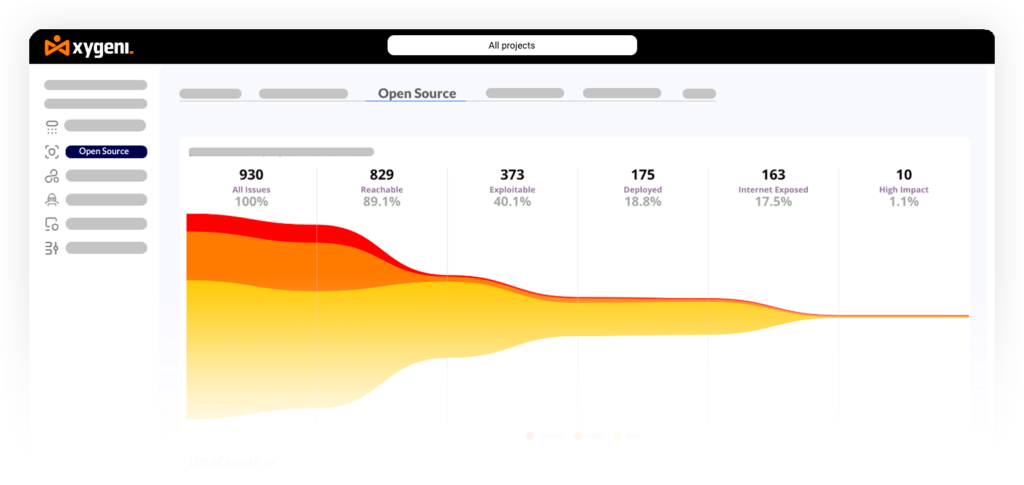
Resumen: Xygeni es un completo Software Supply Chain Security plataforma que protege cada etapa del SDLC, desde el código fuente y las dependencias de código abierto hasta CI/CD pipelines, crea artefactos, contenedores e infraestructura. Combina tiempo real SCA, SBOM Generación, Seguridad en CI/CDDetección de Secretos y malware, monitorización de anomalías e integridad de compilaciones en una única plataforma unificada.
Como resultado, Xygeni cubre todas las capacidades definidas en el radar GigaOm para Software Supply Chain Security. Admite la aplicación automatizada, la política como código a través de XyFlow (YAML) y la visibilidad completa en entornos complejos. CI/CD pipelines, sin que los equipos tengan que gestionar un conjunto heterogéneo de herramientas desconectadas.
Donde la mayoría de las plataformas requieren productos separados para SCA, pipeline security, detección de Secretos y cumplimiento, Xygeni ofrece todo esto de forma nativa, con hallazgos correlacionados en contexto a través de su ASPM una capa, para que los equipos de seguridad e ingeniería puedan centrarse en los riesgos que realmente importan.
Características principales
SBOM & SCA: Genera y valida automáticamente SBOMEn formatos CycloneDX y SPDX. Detecta typosquatting, confusión de dependencias y riesgos de licencia. Va más allá de las vulnerabilidades CVE con accesibilidad, puntuación EPSS y contexto de impacto empresarial, reduciendo el ruido en un 90 %. Incluye análisis de riesgo de remediación y solicitudes de extracción de corrección automatizadas.
Seguridad en CI/CD: Escaneos pipeline Configuraciones, scripts de compilación y definiciones de trabajos de CI para configuraciones incorrectas. Aplica OWASP Top 10. CI/CD Controles, autenticación multifactor y protección de ramas en GitHub Actions, GitLab, Jenkins, Azure DevOps, CircleCI y más.
Secretos y detección de malware: Detecta Secretos en todos los archivos, pipelineRegistra contenedores, repositorios e historial de Git, con revocación automática e integración de hooks de Git. Combina la detección de malware en tiempo real, el análisis de paquetes y la monitorización del registro para bloquear shells inversas, descargas maliciosas y amenazas de día cero antes de que lleguen a producción.
Garantizar la integridad y la procedencia de los artefactos: Rastrea el origen del artefacto, aplica firma criptográfica y verifica que no haya cambios de compilación no autorizados. Admite SLSA provenance y certificaciones personalizadas en su totalidad.
Guardrails y la política como código: Reglas YAML personalizadas que bloquean compilaciones riesgosas o activan alertas en Secretos, malware, trabajos no conformes o violaciones de políticas, aplicadas en todos los pipeline y medio ambiente.
Automatización de cumplimiento: Recopilación automatizada de evidencia y preparación continua para auditorías. Aplica OWASP, SLSA, NIST SP 800-204D, CIS Puntos de referencia, OpenSSF Cuadro de Mando y DORA.
Integraciones: GitHub, GitLab, Bitbucket, Jenkins, Azure DevOps, CircleCI, Travis CI, API REST, webhooks, Jira y GitHub Issues.
¿Qué hace que Xygeni sea diferente?
La mayoría de las SSCS Las plataformas cubren bien una o dos capas. Xygeni cubre toda la cadena de suministro (desde dependencias de código abierto y código propietario hasta CI/CD pipelines, crear artefactos, contenedores e infraestructura) en una única plataforma unificada. ASPM La capa correlaciona los hallazgos de cada escáner en una vista de riesgo priorizada, eliminando el ruido de alertas que proviene de administrar herramientas desconectadas. Y con AI Security (AI-SPM + ShieldXygeni es la única plataforma de esta lista que también protege los activos de IA, los modelos, los agentes y los servidores MCP, que ahora se encuentran en el centro del desarrollo de software moderno.
💲 Precios
Desde $35/mes por colaborador para la plataforma completa todo en uno. Incluye: SBOM Generacion, SCA, SAST, Seguridad en CI/CD, Secretos y detección de malware, IaC escaneo, protección de contenedores y ASPM, sin límites ocultos ni cargos por función. Niveles flexibles disponibles para startups a través de enterprise.
En pocas palabras: Xygeni es la mejor opción para los equipos de seguridad e ingeniería que necesitan protección de extremo a extremo de la cadena de suministro de software sin tener que gestionar múltiples herramientas aisladas. Su combinación de funciones nativas CI/CD guardrails, aplicación de políticas como código, ASPM La correlación y la automatización completa del cumplimiento lo convierten en el más completo. SSCS plataforma en esta lista.
2. Snyk
Resumen
Snyk es un desarrollador primero Software Supply Chain Security herramienta. Además, admite varios idiomas y se integra directamente en entornos de desarrollo. CI/CD pipelines y plataformas de control de código fuente. De hecho, se utiliza ampliamente para escanear dependencias y contenedores de código abierto.
Características principales
- soportes SCA, seguridad de los contenedores, SAST, y IaC exploración
- Se integra con GitHub, GitLab, Docker, Bitbucket y VS Code
- Ofrece priorización de riesgos basada en accesibilidad y relaciones públicas generadas automáticamente
- Conocido por su facilidad de uso y sólida experiencia como desarrollador.
- Se utiliza comúnmente para la seguridad de desplazamiento a la izquierda y correcciones automáticas en flujos de trabajo de desarrolladores.
Desventajas
- Según GigaOm, a Snyk le falta madurez en CI/CD cumplimiento y ASPM capacidades.
- No hay política como código o guardrails Para seguridad pipeline ejecución.
- SBOM Generacion, CI/CD La visibilidad y la priorización basada en riesgos requieren la Enterprise nivel.
- El precio aumenta rápidamente con el tamaño del equipo debido a la facturación por usuario, sin paquetes. SSCS plan disponible.
💲 Precios:
- De Snyk SSCS Las características abarcan múltiples productos (SCA, Contenedor, AppRisk), Cada uno se vende por separado.
- Los planes de equipo comienzan en $25/mes por desarrollador (mínimo 5).
SBOM, CI/CD La visibilidad y la priorización basada en el riesgo solo existen en el Enterprise nivel. - Sin paquete SSCS El plan está disponiblee. Se requiere una cotización personalizada para una cobertura completa.
3. Aikido
Resumen
Aikido es una plataforma nativa de GitHub diseñada para desarrolladores que desean una seguridad simple y todo en uno. dashboard. Además, combina SCA, SBOM, SAST, CSPM y escaneo de contenedores en una sola herramienta. Como resultado, es conocida por su rápida incorporación y automatización intuitiva.
Características principales
- Un click SBOM Generación y escaneo de código abierto
- Análisis de código estático con sugerencias de corrección basadas en IA
- Incluye gestión básica de la postura en la nube y seguridad del tiempo de ejecución del contenedor.
- Detecta malware utilizando el motor de Phylum
- Reconocido en el GigaOm Radar como una solución innovadora centrada en la simplicidad del desarrollador
Desventajas
- Más adecuado para GitHub; soporte limitado para otros SCMs y pipeline plataformas.
- GigaOm señala que aún no admite la conexión profunda. CI/CD escanear o enterprise-aplicación de políticas de grado.
- Carece de opciones de personalización avanzadas para marcos de cumplimiento normativo.
- Apoyo a enterprise CI/CD Las políticas son limitadas incluso en los planes de pago.
💲 Precios:
- El Aikido ofrece una plan gratuito para repositorios públicos de GitHub.
- Los planes de equipo comienzan en $350/mes para 10 usuarios.
- SSCS características como SBOM y el escaneo de malware están incluidos, pero el soporte paraenterprise CI/CD Las políticas son limitadas.
- Actualmente no existe un servicio dedicado SSCS Paquete. El precio aumenta según el tamaño del equipo y el uso de la plataforma.
4. Código cíclico

Resumen
Cycode ofrece visibilidad y control sobre el código fuente y CI/CD entornos. Además, supervisa los secretos, los permisos de usuario y SBOM deriva a través pipelines. Sobre todo, su fuerza reside en CI/CD Observabilidad y gobernanza del acceso.
Características principales
- Realiza un seguimiento de los cambios en el repositorio, pipeline auditorías de actividad y permisos en tiempo real
- Identifica credenciales expuestas y configuraciones incorrectas
- Admite flujos de trabajo de cumplimiento y verificación de artefactos.
- Utiliza IA para detectar situaciones inusuales CI/CD comportamientos
- Destacado en el informe de GigaOm como una herramienta madura para CI/CD integridad
Desventajas
- Soporte limitado para software de código abierto. SCA y sin clasificación de vulnerabilidades basada en la accesibilidad.
- No incluye personalización SBOM opciones de aplicación o políticas avanzadas como código.
- EnterprisePrecios fijos: no hay plan gratuito ni plan público.
- Puede resultar complejo de configurar para equipos más pequeños con configuraciones más sencillas. pipelines.
💲 Precios
Cycode ofrece precios personalizables adaptados a Software Supply Chain Security necesariamente:
- Enterprise-solo nivel Precios; no hay nivel gratuito disponible.
- El costo del plan se basa en número de repositorios, pipeline integraciones, y volúmenes de escaneo.
- Agrega valor a través de SBOM alertas de deriva, detección de Secreto y CI/CD visibilidad.
- Requiere un presupuesto personalizado Para definir la cobertura total, el costo generalmente aumenta con la escala y la complejidad.
5. Ancla

Resumen
Anchore se centra en la seguridad de las imágenes de contenedores. Analiza las imágenes Docker y OCI en busca de vulnerabilidades y aplica comprobaciones de políticas durante... CI/CD proceso. Se utiliza a menudo en entornos regulados donde la confianza del contenedor es una prioridad.
Características principales
- Realiza un escaneo CVE profundo de imágenes de contenedores
- Admite políticas de seguridad personalizadas en CI pipelines
- Se integra con registros Kubernetes, GitOps y OCI
- Conocido en el Radar GigaOm por su sólido desempeño en la aplicación de políticas de contenedores
Desventajas
- No soporta SBOM validación o código fuente SCA — La cobertura se limita a los contenedores.
- No hay visibilidad hacia pipeline configuraciones o CI/CD configuraciones erróneas más allá de las puertas de los contenedores.
- Se requieren herramientas adicionales para la detección de Secretos, el análisis de dependencias y la cobertura de la cadena de suministro más allá de los contenedores.
- Enterprise Para ciertas funciones, se requiere un presupuesto personalizado, ya que no hay precios públicos disponibles.
💲 Precios:
Anchore ofrece ambos De código abierto y enterprise planes:
- Nivel libre a través de Anchore Engine y las herramientas CLI de Syft/Grype
- ancla Enterprise incluye SBOM escaneo, aplicación de políticas y CI/CD de contacto
- El precio depende de tamaño del registro de contenedores, frecuencia de escaneo, y necesidades de cumplimiento
- No hay precios públicos disponibles; presupuesto personalizado es necesario para la totalidad SSCS cobertura
Software Supply Chain Security Mejores prácticas para 2026
Elegir la plataforma adecuada es solo una parte de la ecuación. Aquí hay seis prácticas comprobadas que los equipos modernos de seguridad e ingeniería deberían incorporar en su SDLC.
1. Automatizar SBOM Generación en cada compilación
Genera automáticamente una lista de materiales de software con cada compilación usando CycloneDX o SPDX. Automatización SBOM La validación en CI evita que los artefactos inseguros se muevan hacia abajo y le brinda a los reguladores de trazabilidad y enterprise Los clientes lo exigen cada vez más.
2. Escanear dependencias con accesibilidad y EPSS
Vaya más allá de las puntuaciones CVSS. Aplique EPSS, análisis de accesibilidad y señales contextuales para centrarse en lo que realmente es explotable. Dado que el 86 % de las bases de código comerciales contienen vulnerabilidades de código abierto y que la base de código promedio ahora incluye 911 componentes, la priorización marca la diferencia entre la información relevante y el ruido.
3. Endurece tu CI/CD Pipeline
La CI/CD pipeline es un objetivo de ataque principal. Aplique el OWASP Top 10 Seguridad en CI/CD controles, aplicar el privilegio mínimo, detectar pipeline deriva y añadir política guardrailsTrate cada archivo de flujo de trabajo, ejecutor y script de compilación como parte de su superficie de ataque.
4. Detectar secretos y malware de forma temprana
Escanear commitLos contenedores y los scripts de compilación se ejecutan de forma continua, no solo en el momento del lanzamiento. Las credenciales codificadas, el typosquatting de paquetes, las shells inversas y las descargas sospechosas se encuentran entre los puntos de entrada más explotados en los ataques modernos a la cadena de suministro.
5. Implementar la política como código.
Basado en YAML guardrails permite escalar las reglas de seguridad en diferentes entornos y admite la auditabilidad para el cumplimiento. Las políticas aplicadas en el pipeline Detectar las infracciones antes de que lleguen a producción, no después.
6. Monitorear anomalías y patrones de acceso
Los atacantes se mueven lateralmente hacia adentro. pipelines después de obtener acceso inicial. Esté atento a direcciones IP desconocidas que clonan repositorios, cambios repentinos de permisos, no planificados pipeline ediciones y comportamientos de compilación inusuales. La detección de comportamiento es la última línea de defensa cuando todo lo demás parece correcto.
Por qué Xygeni es la opción más inteligente para Software Supply Chain Security en 2026
Cada herramienta de esta lista aborda una dimensión real de la seguridad de la cadena de suministro. Snyk tiene una fuerte adopción por parte de los desarrolladores para SCAAikido facilita la incorporación de equipos nativos de GitHub. Cycode ofrece una amplia gama de servicios. pipeline Observabilidad. Anchore destaca en la aplicación de las políticas de contenedores. Pero ninguna de ellas garantiza la seguridad de toda la cadena de suministro por sí sola, y en 2026, la cobertura parcial representa un riesgo.
xygeni es la única plataforma en esta lista que protege cada capa de forma nativa: dependencias de código abierto, código propietario, CI/CD pipelineCree artefactos, contenedores, infraestructura y recursos de IA en una única plataforma unificada. Sin dispersión de herramientas. Sin puntos ciegos. Sin conciliar hallazgos desconectados. dashboards.
Su motor de políticas como código aplica reglas de seguridad personalizadas en todos los pipeline y el medio ambiente. Su ASPM La capa correlaciona los hallazgos de SBOM, SCA, Secretos, malware y detección de anomalías en una vista de riesgo priorizada, eliminando el ruido que hace que la seguridad tradicional de la cadena de suministro sea tan costosa operativamente. Y con AI Security (AI-SPM + Shield), Xygeni es la única herramienta aquí que también gobierna los modelos, agentes y servidores MCP que ahora están integrados en los flujos de trabajo de desarrollo modernos.
A $35/mes por colaborador (sin límites ocultos, sin cargos por función y sin enterprise(Solo con acceso restringido) también es la opción de plataforma completa más rentable de esta lista.
Si necesita proteger su cadena de suministro de software de principio a fin sin tener que gestionar un conjunto de herramientas desconectadas, Xygeni es el lugar ideal para empezar.
Explorar el Xygeni Software Supply Chain Security Plataforma
Preguntas frecuentes
¿Qué es software supply chain security?
Software supply chain security (SSCS) se refiere a las prácticas y herramientas utilizadas para proteger cada componente involucrado en la creación y entrega de software, código fuente, dependencias de código abierto, compilación pipelines, CI/CD Sistemas, contenedores y artefactos de despliegue. Aborda los riesgos que surgen no solo de tu propio código, sino de todo aquello de lo que depende tu software.
¿Por qué ha software supply chain security ¿Se volverá crítico en 2026?
La participación de terceros en las brechas se duplicó al 30% en 2025, el mayor cambio anual en la historia del DBIR de Verizon. Al mismo tiempo, las detecciones de paquetes maliciosos de código abierto aumentaron un 73% interanual, y la brecha promedio en la cadena de suministro tarda 267 días en detectarse y contenerse. Los atacantes han ingresado indirectamente a través de dependencias confiables y pipelinees su estrategia principal.
¿Cómo mejora la seguridad de la cadena de suministro el modelo de políticas como código?
La política como código permite a los equipos definir reglas de seguridad en YAML o formatos similares y aplicarlas automáticamente en toda la red. pipelines, sucursales y entornos. Esto amplía la gobernanza de la seguridad a través de grandes equipos y sistemas complejos. CI/CD configuraciones: lo que permite auditarlas, repetirlas y reduce considerablemente la dependencia de la revisión manual.