
Njaga keamanan aplikasi luwih penting tinimbang sadurunge. Ing 2024, liwat 54,000 CVE anyar diterbitake, angka sing mecah rekor. Lonjakan iki nuduhake sepira cepet permukaan serangan saya tambah, utamane amarga aplikasi modern luwih gumantung marang kode sumber terbuka lan paket pihak katelu. Pramila sca vs. sast Debat ora mung teknis, nanging uga strategis. Tinimbang milih salah siji tinimbang liyane, tim sing mikir babagan keamanan nggunakake loro-lorone. SAST nemokake bug lan cacat ing kode sampeyan dhewe luwih awal. SCA nglacak masalah ing dependensi sadurunge mlebu produksi. Piranti sing beda, lapisan sing beda, nanging bebarengan, kabeh nutup kesenjangan sing nyata.
Ing pandhuan iki, kita bakal njlentrehake bedane antarane sast lan sca, kepiye carane kerja bareng, lan kepiye Xygeni nyawijikake dadi siji platform sing digawe kanggo DevSecOps.
Apa SAST?
Pengujian Keamanan Aplikasi Statis (SAST) kaya duwe sistem peringatan dini kanggo kode kepemilikan sampeyan. Kanthi mindhai kode sumber, bytecode, lan binar, SAST ngenali kerentanan adoh sadurunge dadi masalah. Contone, menehi tandha masalah kaya injeksi SQL utawa skrip lintas situs (XSS) nalika kode kasebut isih dikembangake.
Wuku Utama saka SAST:
- Deteksi AwalNemokake kerentanan luwih awal, ngirit wektu lan dhuwit kanggo ndandani mengko.
- Jangkoan KomprehensifMriksa kabeh kode khusus kanthi tliti, mesthekake yen ora ana sing luput.
- Umpan Balik Wektu Nyata: Nuntun para pangembang nalika nulis, njamin kualitas kode sing luwih apik.
- Peningkatan Kualitas Kode: Ningkatake keamanan nalika ningkatake perawatan.
modern SAST Piranti-piranti kasebut saya cepet berkembang. Supaya tetep efektif, piranti-piranti kasebut ora mung kudu ndeteksi masalah kaya SQLi utawa XSS, nanging uga kudu menehi prioritas apa sing sejatine bisa dieksploitasi lan menehi pandhuan wektu nyata kanggo para pangembang. Ing kene piranti kaya Xygeni unggul, nanging kita bakal ngrembug kanthi rinci ing ngisor iki.
Apa SCA?
Kangge, Analisis Komposisi Piranti Lunak (SCA) Iku kabeh babagan ngatur risiko ing dependensi pihak katelu lan sumber terbuka. Kanthi aplikasi modern sing gumantung banget marang komponen sumber terbuka—asring nganti 90%—SCA dadi penting kanggo nglacak kerentanan lan masalah lisensi.
Wuku Utama saka SCA:
- Manajemen Dependensi: Nyimpen Daftar Materi Piranti Lunak sampeyan (SBOM) sing paling anyar.
- Deteksi Kerentanan: Nandhani masalah nggunakake basis data kaya NDV or OpenSSF.
- Kepatuhan Lisensi: Mbantu netepi syarat lisensi sumber terbuka.
- Tandha proaktif: Nemokake komponen sing wis lawas kanggo ngindhari risiko sing didhelikake.
Kanthi ndandani kerentanan ing dependensi eksternal, SAST lan SCA kerja bareng kanthi apik kanggo nyedhiyakake keamanan aplikasi sing kuwat. Uga, perbandingan SCA vs SAST nuduhake kepiye piranti-piranti kasebut ndhukung siji lan sijine, ngatasi macem-macem bagean saka tantangan keamanan aplikasi kanthi efektif.
SAST vs SCA: Bedane Utama ing Keamanan Aplikasi
| aspek | SAST | SCA |
|---|---|---|
| Fokus Utama | Kode sumber kepemilikan | Ketergantungan sumber terbuka lan pihak katelu |
| Wektu | Paling apik digunakake sajrone fase pangembangan | Pemantauan terus-menerus sebelum dan setelah penerapan |
| Jinis-jinis Kerentanan | Ndeteksi cacat kode (contone, injeksi SQL, XSS) | Ngenali kerentanan sing dikenal ing perpustakaan lan paket eksternal |
| Scope | Nganalisis kode khusus sing ditulis dhewe | Mindhai kabeh dependensi langsung lan transitif ing basis kode |
| Best Gunakake Case | Ngamanake aplikasi sing duwe hak milik | Ngatur risiko ing komponen piranti lunak sumber terbuka lan pihak katelu |
| Dampak tumrap Pangembangan | Ningkatake praktik pengkodean sing aman liwat umpan balik wektu nyata | Njamin kepatuhan lan nyuda risiko saka sumber eksternal sing durung diverifikasi |
Kaya sing dituduhake dening perbandingan iki, SAST lan SCA nglayani kanthi beda nanging bisa digunakake bebarengan kanthi apik. Nggunakake bebarengan njamin ora ana celah ing strategi keamanan sampeyan.
Napa Sampeyan kudu loro-lorone SAST lan SCA
Tinimbang milih antarane SCA vs SAST, manfaatake loro-lorone kanggo nggawe pertahanan berlapis-lapis. Iki alesane:
- Perlindhungan Komprehensif: SAST nyakup kode khusus, dene SCA ngamanake dependensi pihak katelu.
- Lumahing Serangan SudaBebarengan, loro-lorone bisa ngilangi kelemahane aplikasi sampeyan.
- efficiencyAlur kerja sing ramping mbantu ngatasi kerentanan luwih cepet.
Kanggo mangerteni luwih jero babagan mbangun aplikasi sing aman, jlentrehake kanthi rinci iki Pandhuan Praktik Pengkodean Aman OWASP, sumber daya sing penting kanggo para profesional DevSecOps. Sampeyan uga bisa ndeleng episode SafeDev Talk ing SCA vs SAST - Kepiye Cara Padha Saling Nglengkapi Kanggo Keamanan Sing Luwih Kuwat?
Apa SAST lan SCA Materi ing taun 2025: Keamanan Aplikasi Modern Butuh Konteks
Tim keamanan saiki ora mung ndandani bug. Dheweke nglindhungi data penting pipelines, ngatur risiko ing antarane dependensi sumber terbuka, lan tetep tundhuk karo peraturan sing saya tambah.
Ing wiwitan 2025, luwih saka 80% basis kode ngemot kerentanan sumber terbuka sing dikenal, miturut laporan industri. Lan karo Pengkodean sing dibantu AI diproyeksikan bakal nyumbang 30–50% saka kode anyar Ing sawetara organisasi, saya angel nglacak endi sing aman lan endi sing ora.
Kangge, peraturan kaya NIS2, DORA, lan aturan SEC anyar nggawe keterlacakan keamanan dadi wajib, ora mung barang sing apik kanggo diduweni.
Tambah serangan rantai pasokan profil dhuwur kaya xz Utils or CTX, lan wis jelas: cara lawas kanggo nindakake AppSec ora cukup.
Mulane sca lan sast ora opsional. Digunakake bebarengan, iki menehi tim visibilitas babagan risiko kepemilikan lan pihak katelu. Kuncine saiki yaiku nggabungake dadi alur kerja sing digunakake para pangembang.
Xygeni: Sing Nyawiji SAST lan SCA solusi
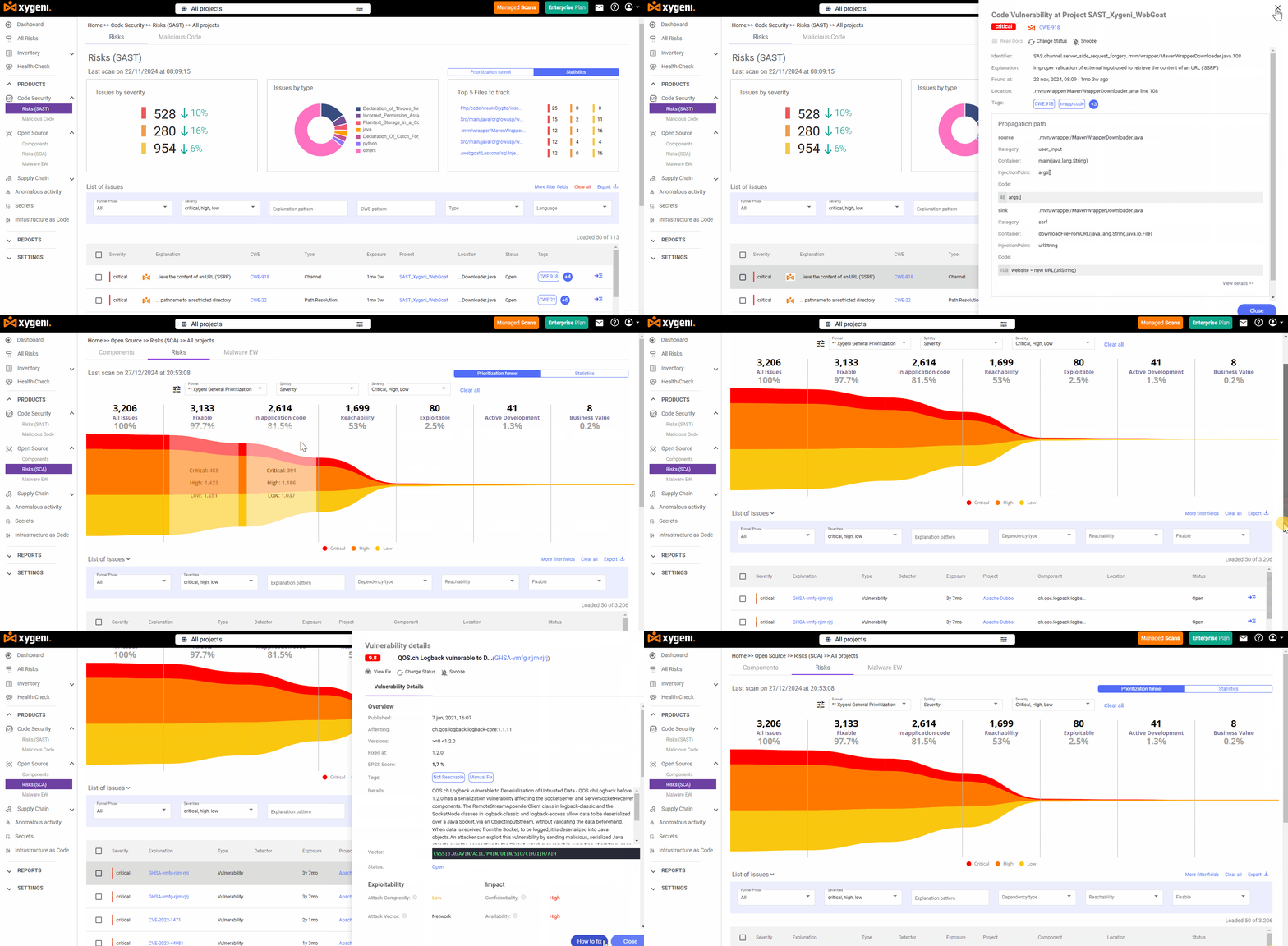
Tim keamanan asring angel mutusake antarane SAST vs SCA, nanging kasunyatane loro-lorone penting. SAST vs SCA dudu kompetisi, nanging kemitraan. Nalika SAST nganalisa kode kepemilikan kanggo cacat keamanan, SCA mindhai komponen sumber terbuka lan pihak katelu kanggo nemokake kerentanan sing dingerteni.
Gabungan Xygeni SAST lan SCA dadi siji platform terpadu, dirancang supaya cocog karo alur kerja DevSecOps. Pendekatan iki njamin keamanan sajrone kabeh proses pangembangan, wiwit saka nganalisis kode khusus nganti ngatur risiko sumber terbuka.
Proaktif SASTNgamanake Kode Hak Milik wiwit Wiwitan
Tes Keamanan Aplikasi Statis Xygeni (SAST) nganalisa kode kepemilikan sampeyan wiwit ditulis, mindhai kode sumber, bytecode, lan binar kanggo cacat keamanan sing kritis.
Ancaman utama sing dideteksi kalebu:
- Injeksi SQL, skrip lintas situs (XSS), lan injeksi perintah
- Kasalahan manajemen memori kaya buffer overflows
- Logika otentikasi sing ora aman lan paparan data
- Kode sing dikaburkan utawa mbebayani kayata ransomware, spyware, utawa backdoors
Nanging sing mbedakake Xygeni dudu mung deteksi, nanging uga prioritas.
Akurasi sing Wis Kabukten dening Tolok Ukur
Xygeni-SAST wis diuji nganggo petugas resmi Tolok Ukur OWASP, ing ngendi iku entuk:
- Tingkat Positif Sejati 100% ing kabeh kategori utama kaya SQLi lan XSS
- A Tingkat Positif Palsu 16.7% endhek, ngluwihi piranti kaya CodeQL, Semgrep, lan SonarQube
- Skor sampurna ing area kritis kaya enkripsi sing ringkih lan deteksi cookie sing ora aman
Asil iki nuduhake yen Xygeni bisa nangkep ancaman nyata, lan ngindhari mbuang-mbuwang wektu tim sampeyan kanggo gangguan.
Ndandani Otomatis lan CI/CD integrasi
Kanggo nyepetake resolusi, Xygeni sing didayani AI Ndandani Otomatis:
- Nyaranake pangowahan kode aman kanthi wektu nyata
- Otomatis ngasilake pull requests nganggo tambalan sing ngerti konteks
- Mlaku langsung ing njero awakmu CI/CD alur kerja tanpa mblokir rilis
Iki tegese tim sampeyan ndandani kerentanan luwih awal, sadurunge mlebu produksi, tanpa ngalangi pangembangan.
Ramah Pangembangan miturut Desain
- Instalasi CLI siji baris
- Full SCM integrasi (GitHub, GitLab, Azure DevOps, Bitbucket, Jenkins)
- Output ing JSON, SARIF, CSV, Markdown
- Dhukungan aturan khusus ing YAML
- Anotasi PR inline lan guardrails
karo Xygeni, SAST dadi bagean sing lancar saka siklus urip pangembangan sing aman, wiwit saka deteksi nganti remediasi, tanpa gesekan.
Cerdas SCANglindungi Ketergantungan Sumber Terbuka
Aplikasi modern luwih gumantung marang sumber terbuka tinimbang sadurunge, nanging ana risiko. Panliten anyar nuduhake yen 74% basis kode ngemot komponen sumber terbuka sing beresiko dhuwur, Lan sing 91% saka komponen kasebut paling ora ketinggalan 10 versi. Tanpa visibilitas lan kontrol sing tepat, sampeyan bisa ngirim kerentanan langsung menyang produksi.
Analisis Komposisi Piranti Lunak Xygeni (SCA) ngluwihi mung ndhaptar CVE. Iki nyedhiyakake lapisan perlindungan cerdas lan wektu nyata ing ekosistem pihak katelu sampeyan.
Deteksi Lanjut Ngluwihi CVE
Xygeni mindhai kabeh dependensi, langsung lan transitif, lan menehi tandha:
- Kerentanan sing dikenal nggunakake NVD, OSV, GitHub Advisory lan liya-liyane
- Paket sing wis kadaluwarsa karo tambalan sing ilang
- Prilaku sing ora normal utawa ala ing skrip instalasi paket
- Ketip, kebingungan katergantungan, Lan paket internal sing ora dilindhungi
- Pola sing dicurigai ana gandhengane karo spyware, ransomware, lan backdoor
Katrampilan lan Eksploitasi: Fokus ing Apa sing Penting
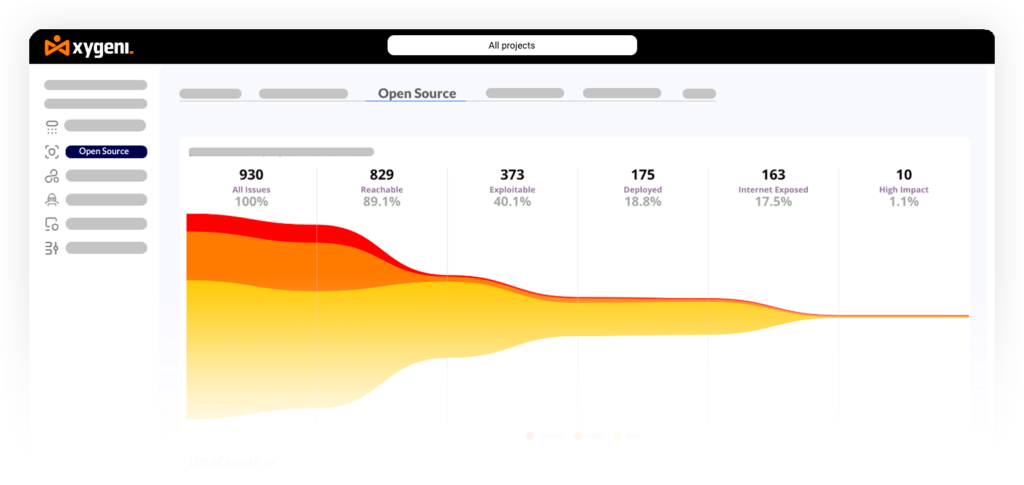
Tinimbang mbanjiri sampeyan nganggo tandha-tandha, Xygeni nggunakake Analisis Keterjangkauan kanggo nuduhake kerentanan endi sing sejatine ana used ing aplikasi sampeyan:
- Nglacak jalur eksekusi lan grafik panggilan
- Ngeprioritasake kerentanan adhedhasar EPSS (Sistem Skor Prediksi Eksploitasi)
- Ngurangi positif palsu nganti 70%
- Mbedakake antarane jalur kode sing bisa digayuh lan sing ora digunakake
Iki ngidini tim sampeyan mung fokus ing risiko sing bisa dieksploitasi, ngirit wektu lan ngurangi gangguan swara.
Remediasi Otomatis ing CI/CD
Ndandani dependensi sing rentan ora kudu manual. Xygeni ngotomatisasi proses iki nganggo:
- Saran ndandani cepet langsung ing alur kerja sampeyan
- Perbaikan Otomatis Massal: ngetrapake pirang-pirang peningkatan dependensi ing siji tumindak
- Digawe kanthi otomatis pull requests nganggo versi patch sing aman
- Full CI/CD integrasi kanggo perlindungan terus-terusan
Ora perlu mburu-buru log utawa ngowahi versi tambalan, mung perlu remediasi sing cepet lan tepat sasaran ing panggonan sing penting.
Deteksi Malware Awal kanggo OSS
Xygeni terus-terusan mindhai registri umum (kayata NPM, PyPI, Maven) kanggo ndeteksi:
- Paket sing kena malware
- Ancaman nol dina
- Skrip instalasi sing mencurigakan
- Prilaku sing ana gandhengane karo spyware utawa backdoors
Yen ana sing ditandhani, Xygeni karantina ancaman kasebut, menehi kabar marang tim sampeyan, lan malah mbantu menehi kabar marang registri kanggo nyegah panyebaran luwih lanjut. Sampeyan dilindhungi sadurunge paket jahat tekan sampeyan pipelines.
Transparansi lan Kepatuhan Penuh karo SBOM
Perlu mbuktekake apa sing ana ing kode sampeyan? Xygeni kanthi otomatis ngasilake SBOMs ing format kaya SPDX lan CycloneDX, lan nggabungake Laporan Pengungkapan Kerentanan (VDR) kanggo keterlacakan sing lengkap.
- Tundhuk karo syarat EO 14028, NIST SP 800-204D, DORA, lan FDA
- Nglacak risiko lisensi ing kabeh komponen
- Bisa digunakake liwat CLI utawa WebUI, wis dipasang kanthi lengkap ing CI sampeyan pipelines
Iki njamin sampeyan nyukupi pangarepan peraturan nalika njaga rantai pasokan sampeyan aman lan bisa diaudit.
SAST vs SCAFitur Keamanan Canggih Sing Mbedakake Xygeni
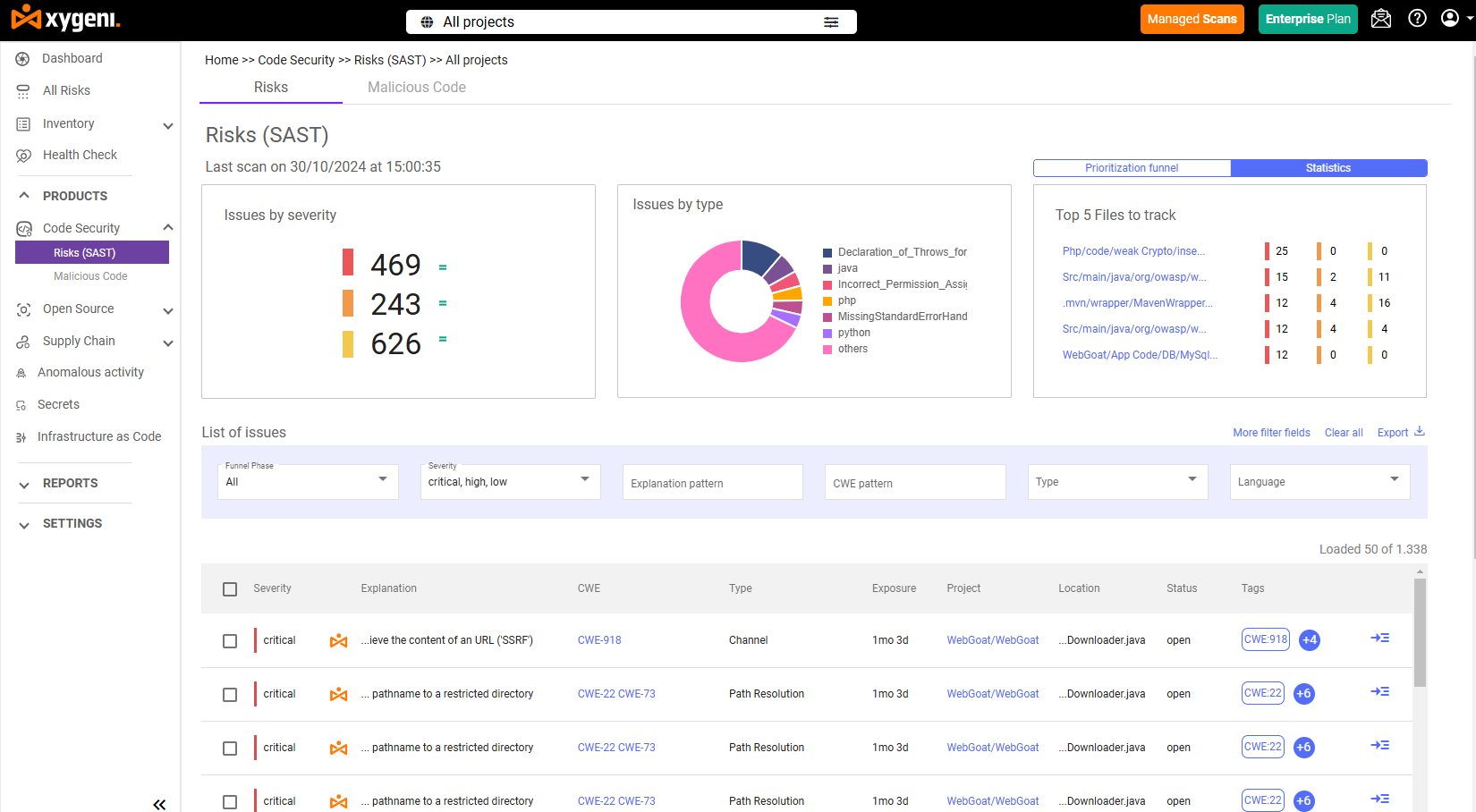
Nalika mbandhingake sca vs. sast, iki ora mung babagan apa sing dideteksi, nanging babagan kepinterane. Xygeni ngowahi piranti AppSec tradisional dadi sistem cerdas sing terpadu sing ngilangi gangguan lan nyepetake remediasi.
Kene carane Xygeni's SAST lan SCA bisa bebarengan kanggo menehi dampak keamanan sing nyata:
Eksploitasi lan Keterjangkauan: Prioritasake Apa sing Nyata
Umume piranti keamanan mbanjiri tim nganggo tandha-tandha sing ora relevan. Xygeni ngatasi iki nganggo fitur bawaan analisis eksploitasi lan pelacakan jangkauan:
- SAST Temuan kasebut disaring nganggo analisis aliran data kanggo nandhani mung cacat sing bisa dieksploitasi
- SCA Kerentanan diurutake adhedhasar apa kode rentan kasebut pancen digunakake
- Digabungake karo penilaian EPSS, tim sampeyan ndeleng apa sing penting dhisik, lan ora ana liyane
Iki nyuda rasa kesel nalika waspada lan ngurangi gangguan swara kanthi dramatis.
AutoFix: Remediasi Sing Nulis Dhewe
Xygeni nyepetake keamanan kanthi ngilangi perbaikan manual:
- AutoFix sing didhukung AI ngasilake pull requests kanggo loro SAST lan SCA masalah
- Patch kasebut selaras karo praktik paling apik lan dicakup menyang masalah sing nyata
- Perbaikan Otomatis Massal ngetrapake pirang-pirang perbaikan ing siji aliran
- Kabeh owah-owahan iku CI/CD-siap lan disetujoni dening pangembang
Ndandani kerentanan dadi bagean sing lancar saka proses pangembangan — dudu dadi pamblokir.
Deteksi Malware Awal ing Ketergantungan
Kanthi paket sumber terbuka sing mbebayani mundhak luwih saka 300% saben taun, Deteksi malware saiki dadi wajib in SCA alat.
Xygeni mindhai registri umum kanthi wektu nyata (NPM, PyPI, Maven) kanggo ndeteksi:
- Salah ketik, kebingungan katergantungan, lan skrip sing mencurigakan
- Backdoors, spyware, lan ransomware ing paket
- Ancaman zero-day sadurunge nyerang sampeyan pipeline
Nèk ana ancaman sing ditemokaké, ancaman kuwi bakal diblokir, dikarantina, lan dilacak kanthi cepet.
Kepatuhan, SBOM, lan VDR: Dipasang Ing
Xygeni ngotomatisasi tugas tata kelola utama saben pembangunan:
- Generate SBOMs ing format SPDX lan CycloneDX
- Selaras karo pedoman NIST SP 800-204D, DORA, EO 14028, lan FDA
- kalebu Laporan Pengungkapan Kerentanan (VDR) kanggo nglacak risiko sajrone wektu
- Integrasi menyang CLI utawa UI Web sampeyan, ora perlu piranti tambahan
Kepatuhan ora maneh dadi perkara sing ora perlu dipikirake maneh. Iku terus-terusan, transparan, lan siap diaudit.
Siji Platform, Siji Aliran
Ora kaya piranti sing wis dipisah-pisah, Xygeni nyedhiyakake:
- Asil terpadu kanggo SAST lan SCA ing siji dashboard
- CI/CD guardrails lan kabijakan sing ngetrapake keamanan shift-left
- Peringatan wektu nyata kanthi pandhuan remediasi kontekstual
- Keterlacakan lengkap saka sing rentan commit kanggo ndandani sing wis dirampungake
Apa sampeyan ngamanake kode kepemilikan utawa rantai pasokan OSS sampeyan, Xygeni nutupi kabeh, kanthi gesekan sing luwih sithik, tandha sing luwih sithik, lan asil sing luwih cepet.
Keamanan Ora Mung Piranti. Nanging Tata Kelola.
Keamanan aplikasi ora mung babagan nyekel kerentanan. Nyatane, iki uga babagan ngerti sapa sing duwe risiko, sapa sing ndandani, lan kepiye tumindak kasebut selaras karo kabijakan keamanan internal sampeyan.
Nalika organisasi sampeyan berkembang, mung visibilitas wae ora bakal cukupSampeyan butuh keterlacakan. Tegese:
- Sapa sing nambahake katergantungan sing rentan?
- Sapa sing tanggung jawab kanggo ndandani?
- Apa remediasi kasebut selaras karo kabijakan keamanan sampeyan?
Ing kene piranti lan tata kelola sing tepat digabungake. Nalika sampeyan ngintegrasi SAST lan SCA pribadi menyang alur kerja sampeyan kanthi cara sing bener, dheweke ora mung nemokake masalah. Nanging, dheweke mbantu ngetrapake aturan keamanan, menehake tanggung jawab, lan nyepetake perbaikan kanthi alur otomatis sing jelas.
Kajaba iku, ing skala gedhe, tata kelola dadi perekat antarane deteksi lan remediasi. Tanpa iku, sampeyan mung ngumpulake tandha-tandha. Kanthi iku, sampeyan njupuk tindakan nyata.
Mulane Xygeni nawakake kebijakan adhedhasar guardrails, tugas tim khusus, lan keterlacakan lengkap ing siklus urip pangembangan piranti lunak sing amanSampeyan bisa ndeleng sapa sing ngenalake risiko, sapa sing duwe perbaikan, lan apa pangowahan kasebut cocog karo model tata kelola sampeyan.
Cekakipun, keamanan ora mandheg ing deteksi. Keamanan mung bakal efektif nalika sistem sampeyan nggampangake wong sing tepat kanggo tumindak kanthi cepet.
Wis siap ngamanake alur kerja pangembangan sampeyan nganggo piranti sing pas?
Jelajahi dhaptar sing dikurator dening ahli kanggo nemokake solusi paling apik kanggo tim sampeyan:
- 10 Analisis Komposisi Piranti Lunak Paling Apik (SCAPiranti kanggo Tim DevSecOps
Temokake piranti paling apik kanggo ngatur komponen sumber terbuka lan nglindhungi rantai pasokan piranti lunak sampeyan. - Top SAST Piranti kanggo Tim DevSecOps
Bandhingake piranti analisis kode statis sing unggul kanggo ndeteksi kerentanan ing awal pangembangan.
FAQ Babagan SCA vs SAST
Apa prabédan utama antarane SCA vs SAST?
SAST mriksa kode kepemilikan kanggo cacat keamanan, dene SCA fokus ing komponen pihak katelu lan sumber terbuka kanggo ngenali kerentanan lan risiko lisensi
bisa SAST lan SCA digunakake bebarengan?
Ya, nggunakake SAST lan SCA bebarengan nyedhiyakake keamanan lengkap kanthi nutupi kode duweke dhewe lan pihak katelu, nyuda risiko sakabèhé.
Apa jinis kerentanan sing ditindakake SAST ndeteksi?
SAST nemokake masalah kode, kaya injeksi SQL, buffer overflows, lan cross-site scripting (XSS), sadurunge aplikasi kasebut disebarake.
Kenapa SCA penting kanggo keamanan sumber terbuka?
SCA mbantu tim ngatur risiko ing dependensi pihak katelu, kaya perpustakaan lawas, masalah keamanan sing dikenal, lan masalah lisensi.
Endi sing luwih apik: SAST or SCA?
Kalorone ora efektif dhewe. SAST lan SCA kerja bareng kanggo nyedhiyakake keamanan sing lengkap kanggo kode khusus lan eksternal
Apa iku Xygeni, lan kepiye carane integrasi SAST lan SCA?
Xygeni nyawiji SAST lan SCA dadi siji platform, nggawe manajemen kerentanan luwih cepet, luwih cerdas, lan luwih efisien ing kabeh siklus urip pangembangan.