

Sistem Pemarkahan Ramalan Eksploitasi (EPSS) sedang mengubah cara pasukan keselamatan moden mengendalikan ancaman. Dalam perbincangan yang semakin meningkat tentang cvss lawan epss, perubahannya jelas. Walaupun CVSS mengetengahkan tahap keterukan, EPSS memberi perhatian kepada eksploitasi dunia sebenar. Perbezaan ini penting—kerana pasukan boleh memberi tumpuan kepada apa yang sebenarnya digunakan oleh penyerang dan bukannya bertindak balas terhadap setiap isu tahap keterukan yang tinggi. Dengan menggunakan pemarkahan EPSS, organisasi menambah baik cara mereka mengurus kerentanan dan membetulkan kelemahan yang menimbulkan risiko sebenar.
Setiap tahun, lebih daripada 20,000 CVE baharu setiap tahun. Sudah tentu, untuk mengikuti kesemuanya adalah sukar. Banyak pasukan akhirnya keletihan, menghabiskan berjam-jam menyemak isu-isu yang mungkin tidak akan membawa kepada serangan. Ini mengakibatkan pembaziran masa, tindak balas yang perlahan, dan senarai tugas yang semakin meningkat yang nampaknya tidak pernah selesai.
Di sinilah epss lawan cvss memberi impak sebenar. EPSS mengalihkan tumpuan daripada apa yang kekuatan berisiko terhadap apa yang kemungkinan besar akan disasarkan tidak lama lagi. Hasilnya, pasukan boleh bertindak lebih pantas, mengurangkan kerja yang tidak perlu dan meluangkan masa untuk memperbaiki perkara yang benar-benar penting.
Konsep kunci
Apakah CVSS?
Sistem Pemarkahan Kerentanan Umum (CVSS) standardMengukur tahap keterukan kerentanan, membolehkan penilaian risiko yang jelas dan cekap merentasi pasukan keselamatan siber. Mengetahui CVSS membantu pihak berkepentingan memahami impak kerentanan, sekali gus menambah baik amalan keselamatan.
Apakah EPSS?
EPSS meramalkan kemungkinan penyerang akan mengeksploitasi kerentanan dalam tempoh 30 hari akan datang. Skor dikemas kini setiap hari, membantu organisasi menumpukan pada kerentanan yang membawa risiko tertinggi. Skor berkisar antara 0 hingga 1—skor yang lebih tinggi menunjukkan peluang eksploitasi yang lebih besar.
EPSS vs CVSS: Perbezaan Utama
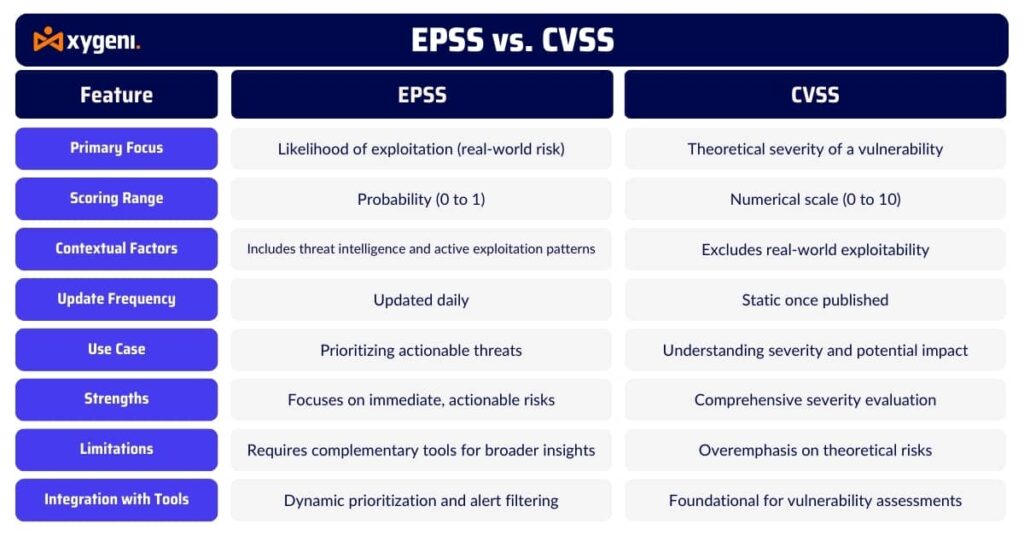
Apabila membandingkan cvss vs epss, perbezaannya terletak pada apa yang diberitahu oleh setiap skor kepada anda:
CVSS memberi tumpuan kepada potensi keterukan tentang kerentanan—betapa merosakkannya boleh menjadi.
EPSS meramalkan kemungkinan eksploitasi di dunia nyata—betapa besar kemungkinannya akan menjadi sasaran.
Walaupun CVSS mempertimbangkan kerumitan eksploitasi, interaksi pengguna dan impak, ia tidak mengambil kira sama ada penyerang secara aktif menggunakan kerentanan tersebut. EPSS mengisi jurang ini dengan mengambil kira telemetri ancaman, ketersediaan kod eksploitasi dan corak serangan.
Menurut Penyelidikan EPSS, kurang daripada 2% kerentanan yang diketahui mempunyai skor EPSS yang tinggi. Sebaliknya, banyak isu CVSS kritikal masih belum disentuh oleh penjenayah siber. Ini menonjolkan bagaimana Kerentanan skor EPSS membantu menapis hingar, membolehkan pasukan memberi tumpuan kepada ancaman semasa yang boleh dipercayai.
Bolehkah EPSS dan CVSS Berfungsi Bersama?
Sudah tentu—dan mereka sepatutnya.
EPSS dan CVSS saling melengkapi dalam strategi pengurusan kerentanan yang seimbang:
Penggunaan CVSS untuk menilai betapa teruknya satu kerentanan mungkin berlaku.
Penggunaan EPSS untuk menilai bagaimana mungkin ia adalah untuk dieksploitasi.
Pendekatan dwi-lapisan ini menyokong triage yang lebih pintar. Contohnya:
Kerentanan dengan CVSS tinggi + EPSS tinggi → Betulkannya dengan segera.
CVSS tinggi + EPSS rendah → Pantau dengan teliti, tetapi kurangkan keutamaan.
CVSS rendah + EPSS tinggi → Siasat; penyerang mungkin mengaitkannya dengan kelemahan lain.
Sehubungan itu, pasukan yang membandingkan epss vs cvss secara bersebelahan memperoleh pandangan yang lebih jelas tentang apa yang perlu diperbaiki—dan bila.
Keutamaan Dunia Sebenar dengan EPSS
Sebagai ilustrasi, bayangkan sistem anda menandakan dua CVE:
CVE-2024 99999-
CVSS: 9.8 (Kritikal)
EPSS: 0.03 (Keboleheksploitasian rendah)CVE-2024 12345-
CVSS: 6.1 (Sederhana)
EPSS: 0.86 (Kemungkinan eksploitasi yang tinggi)
Yang mana satu patut anda betulkan dahulu? Banyak aliran kerja tradisional akan mengutamakan kerentanan CVSS yang kritikal. Walau bagaimanapun, EPSS membalikkan skrip itu—anda bertindak berdasarkan apa yang sebenarnya dieksploitasi, bukan sekadar apa boleh menjadi berbahaya.
Perubahan ini membolehkan pasukan untuk mengurangkan positif palsu, menjimatkan masa dan meningkatkan kelajuan pemulihan.
Mengapa Pengurusan Kerentanan Skor EPSS Merupakan Pengubah Permainan
EPSS menawarkan lebih daripada sekadar penampalan yang lebih pintar—ia membolehkan keselamatan pada skala besar:
Pemarkahan DinamikKemas kini EPSS setiap hari, mencerminkan risikan eksploitasi terkini.
scalabilityIa berfungsi merentasi beribu-ribu kelemahan, membantu pasukan melakukan triage dengan lebih pantas.
ObjektivitiDibina berdasarkan data awam dan model terbuka, EPSS boleh disahkan dan telus.
Kesan Dasar: Seperti yang dinyatakan oleh FIRST.org, EPSS sudah pun mempengaruhi dasar pemulihan peringkat kebangsaan (cth. DHS BOD 19-02).
Tambahan pula, pengurusan kerentanan skor EPSS membantu pembela memfokuskan usaha mereka di tempat yang paling penting—terhadap ancaman yang sebenarnya menimbulkan bahaya.
Ingin melangkaui sekadar pemarkahan dan mula menyelesaikan isu yang betul?
Lihat panduan penuh kami tentang cara mengutamakan dan memulihkan kelemahan dengan berkesan. Ketahui cara menjadikan cerapan sebagai tindakan—dengan lebih pantas.
EPSS vs CVSS Bukan Sama Ada-Atau—Lebih Baik Bersama
At Xygeni, kami percaya cvss vs epss bukanlah satu pertempuran—ia adalah satu perkongsian. Kedua-dua sistem pemarkahan memainkan peranan yang berbeza, namun sama berharganya, dalam pengurusan kerentanan. Itulah sebabnya Xygeni menggunakan EPSS dan CVSS bersama-sama untuk membina model keutamaan yang lengkap dan peka konteks yang praktikal, pantas dan berkesan.
Bagi setiap kelemahan, Xygeni menunjukkan:
Keterukan CVSS untuk memahami potensi impak.
Skor EPSS untuk menilai kemungkinan eksploitasi.
Analisis kebolehcapaian untuk mengesahkan sama ada kod terdedah benar-benar berjalan.
Data kontekstual seperti sensitiviti aset dan kerelevanan perniagaan.
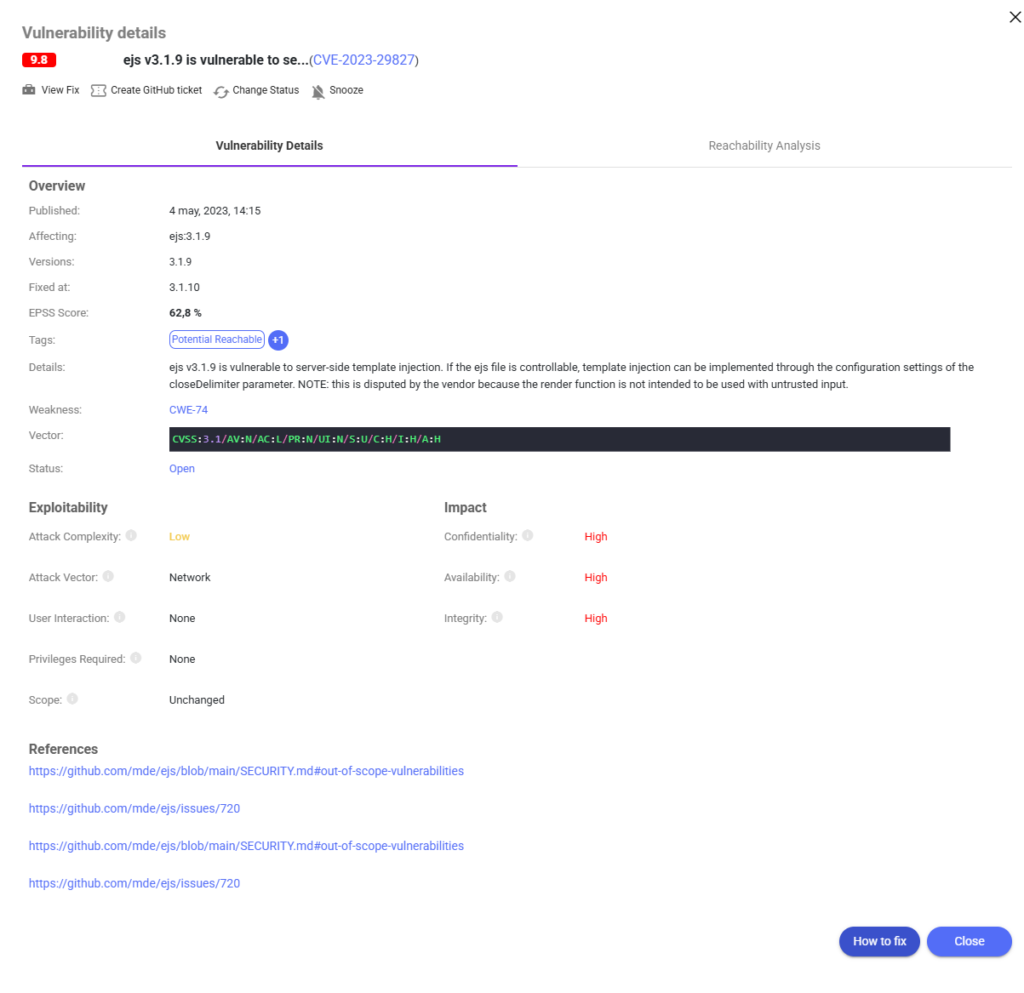
Mari ambil CVE-2023 29827- sebagai contoh. Ini ialah isu suntikan templat bahagian pelayan yang menjejaskan ejs v3.1.9. Di atas kertas, ia mempunyai Skor CVSS 9.8, menunjukkan tahap keterukan yang kritikal. Tetapi dengan Skor EPSS sebanyak 62.8%, ia juga mempunyai kebarangkalian yang tinggi untuk dieksploitasi tidak lama lagi.
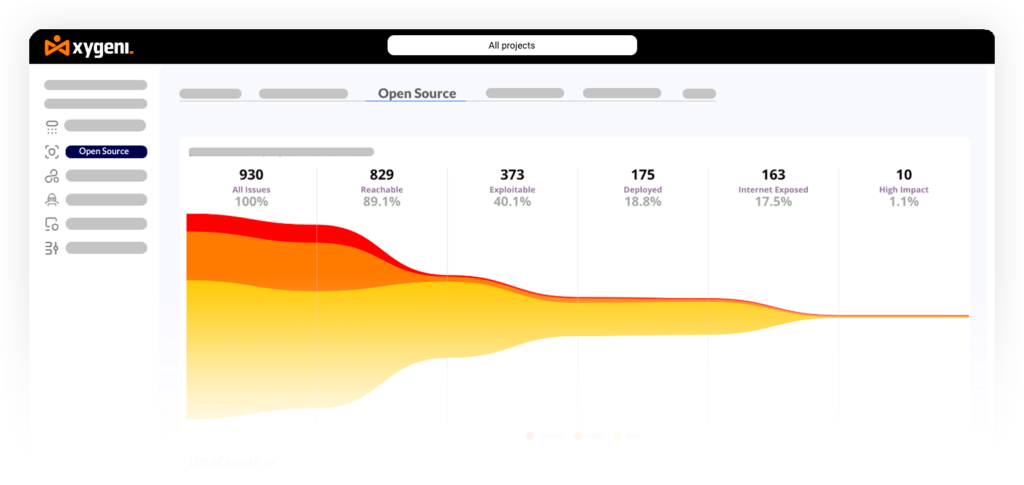
Xygeni memaparkan semua data ini di satu tempat—keparahan, keboleheksploitasian, kebolehcapaian, Kelemahan CWE dan status versi—supaya pasukan dapat melihat serta-merta mengapa ia penting dan apa yang perlu dilakukan seterusnya.
Daripada bertindak balas terhadap setiap kelemahan CVSS 9.8, platform Xygeni menunjukkan sama ada:
Ia boleh dicapai dalam pangkalan kod anda
Ia mempunyai eksploitasi yang tinggi di alam liar
Ia menjejaskan aset kritikal perniagaan
Keterlihatan berlapis ini membantu mengurangkan keletihan berjaga-jaga, meminimumkan usaha yang sia-sia dan mengarahkan pemulihan kepada risiko yang benar-benar penting.
Apabila pemarkahan EPSS digabungkan dengan keterukan CVSS dan konteks masa jalan, keutamaan menjadi proaktif—bukan reaktifXygeni menukar hingar kepada wawasan, membimbing keselamatancispasukan DevSecOps perlu bergerak pantas dan kekal selamat.