

How Laravel 11.30.0 Vulnerabilities Escalate in Misconfigured Apps
The recent Laravel 11.30.0 exploit isn’t just a minor bug, it can lead to full application compromise when paired with common misconfigurations. The root issue lies in how file upload validation can be bypassed, allowing attackers to upload unsafe files despite apparent rules.
Here are practical examples of dangerous misconfigurations:
- ⚠️ APP_DEBUG=true in .env
This setting exposes full stack traces with sensitive debug information. If left active outside of local development, it allows attackers to see routes, exceptions, classes, and more. - ⚠️ Weak or unrotated APP_KEY
A short, predictable, or never-rotated APP_KEY allows attackers to decrypt sessions or forge signed tokens.
⚠️ Routes without authentication middleware
Route::post('/upload', [UploadController::class, 'store']); Without middleware like auth or verification, this route is publicly accessible, making it an easy entry point for exploits. When these weak configurations are present, the Laravel 11.30.0 vulnerabilities become exponentially more dangerous. If you’re running 11.30.0, this is a critical must-patch situation.
Laravel Exploit Patterns in Code: Controllers, Middleware & Routes
Attackers don’t just target framework internals; they exploit developer mistakes too. The Laravel exploit in 11.30.0 can be chained with common code-level issues:
Risky Pattern: Missing Middleware Protection
Route::post('/upload', [UploadController::class, 'store']); ⚠️ No auth or verified middleware, anyone can access this endpoint.
Unsafe File Validation
$request->validate([ 'file' => 'required|file|mimes:jpg,png,pdf' ]); ⚠️ In Laravel 11.30.0, this validation could be bypassed, allowing arbitrary files through.
Controller Omissions
if ($request->file('file')->isValid()) { // Save file } Without validating file type server-side, attackers can exploit the Laravel 11.30.0 exploit to store unwanted files. Combined with insecure middleware and routing, this becomes a full exploit chain.
Composer Dependencies and the Hidden Risk in Open Source Packages
Your composer.json and composer.lock files might be quietly enabling the exploit. Many development teams unintentionally open the door to vulnerabilities by:
- Not pinning Laravel versions tightly (e.g., using ^11.0 instead of a fixed patch version)
- Skipping automated security audits in CI/CD
- Including outdated or poorly maintained third-party packages
Here’s what to look out for:
⚠️ Loose Constraints in composer.json
"require": { "laravel/framework": "^11.0", "some/package": "*" } These allow vulnerable versions (like 11.30.0) to be installed silently on fresh installs or updates.
✅ Explicit composer.lock Check
Open your composer.lock file and verify:
- Laravel version is >= 11.30.1, which includes the security patch
- Third-party packages do not pull older vulnerable versions through transitive dependencies
- Use tools like: composer audit
And CI integrations (e.g., GitHub Actions, GitLab CI) to automatically flag insecure packages and outdated versions.
CI/CD: Pre-Deploy Checklist to Stop the Laravel 11.30.0 Exploit
DevSecOps can’t rely on post-deploy hotfixes. To block the Laravel 11.30.0 exploit before it hits production, your pipeline needs enforceable security checks.
⚠️ Missing Pre-Deploy Controls = High Risk
Here’s a mini-checklist your CI/CD process should enforce before every deploy:
- Ensure APP_DEBUG is disabled in non-development environments
Misconfigured .env files leaking debug info are a direct attack vector. - Rotate and validate strength of APP_KEY
A weak or old key compromises encrypted data like sessions and tokens. - Audit composer.lock and external dependencies
Run composer audit to detect vulnerable libraries, and verify Laravel version is >= 11.30.1. - Scan routes for unprotected endpoints
Ensure all sensitive routes (e.g., uploads, admin panels) are guarded by authentication middleware. - Validate Laravel framework version in CI
Block builds that install laravel/framework versions lower than 11.30.1.
These checks aren’t just best practices; they’re your front line against this and future Laravel exploits.
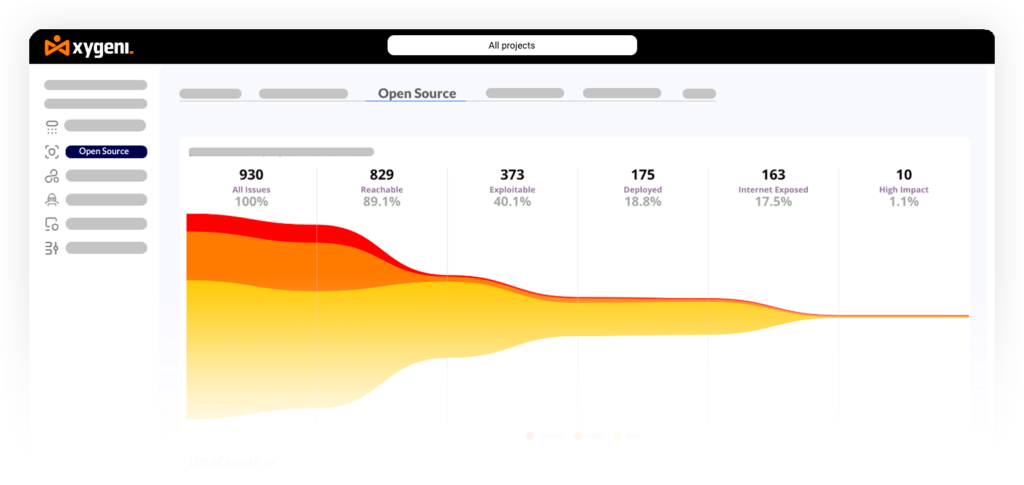
Don’t Just Patch, Trace the Risk with Xygeni
Patching removes the immediate risk, but what about legacy code paths and build artifacts that still contain the flaw? Xygeni helps trace:
- Past builds that included Laravel 11.30.0 vulnerabilities
- Unsafe route definitions or controller bindings
- Unvalidated input chains in routes
- Insecure environment variables in old deployments
With Xygeni, you don’t just block the next Laravel exploit; you track where it might’ve already landed.
Patch to Laravel 11.30.1 and Lock Down Your App
If your app is running Laravel 11.30.0, treat this as critical. The exploit in this version isn’t just a framework bug; it becomes a full compromise vector when combined with weak configs, missing middleware, or outdated dependencies.
To fully close the loop:
- Upgrade to Laravel 11.30.1; this is the patched release.
- Harden your CI/CD with version checks, environment audits, and secure route validation.
- Use tools like Xygeni to trace vulnerable builds, unsafe routes, and legacy configurations that may already be compromised.
Modern AppSec isn’t just about patching code; it’s about securing everything around it: environment, dependencies, delivery pipeline, and developer practices. Patch now. Trace risk. Lock it down.