Every security engineer eventually asks what is a false negative in cyber security and why it poses such a serious risk. A false negative alert happens when a detection system fails to identify a real vulnerability or attack. Unlike false positives, which cause noise, false negatives create blind spots that attackers can exploit without detection.
For example, a scanner might miss a vulnerable dependency because it was hidden inside an indirect library, or a runtime monitor might fail to flag a malicious payload due to insufficient behavioral coverage. In these cases, false negatives in cyber security allow real threats to slip through unnoticed. Therefore, reducing them is vital to protect the integrity of code, pipelines, and production systems.
What Is a False Negative in Cyber Security? #
The false negative alert definition describes a scenario where a security tool incorrectly labels a threat as safe or fails to detect it altogether. According to the NIST Cybersecurity Framework, false negatives are one of the main causes of delayed incident response and data breaches.
When developers ask what is a false negative in cyber security, the answer is simple: it is a missed detection. However, the impact can be complex, because every missed alert increases the attacker’s advantage. In DevSecOps, this often occurs when scanners lack context, focus only on static patterns, or fail to assess runtime exploitability.
Unlike false positive alerts, which generate noise and slow teams down, false negatives hide real vulnerabilities that remain active in production. Both types of errors affect trust in automation, but undetected risks are far more dangerous.
Key Characteristics of False Negative Alert and Why They Occur #
False negatives often appear when detection lacks depth or context. The most common causes include:
- Incomplete scanning: static tools may skip files, containers, or indirect dependencies.
- Limited exploitability data: missing EPSS or CVSS correlation leads to inaccurate results.
- No reachability validation: vulnerabilities that seem irrelevant remain undetected in runtime paths.
- Outdated signatures: old or incomplete rule sets reduce accuracy.
- Pipeline complexity: multi-stage builds or serverless functions hide risky components.
Additionally, the CISA Cybersecurity Best Practices notes that relying only on static scanning increases the likelihood of missed detections. Consequently, integrating context-aware analysis ensures that fewer genuine threats go unnoticed.
How Xygeni Reduces False Negative in Cyber Security #
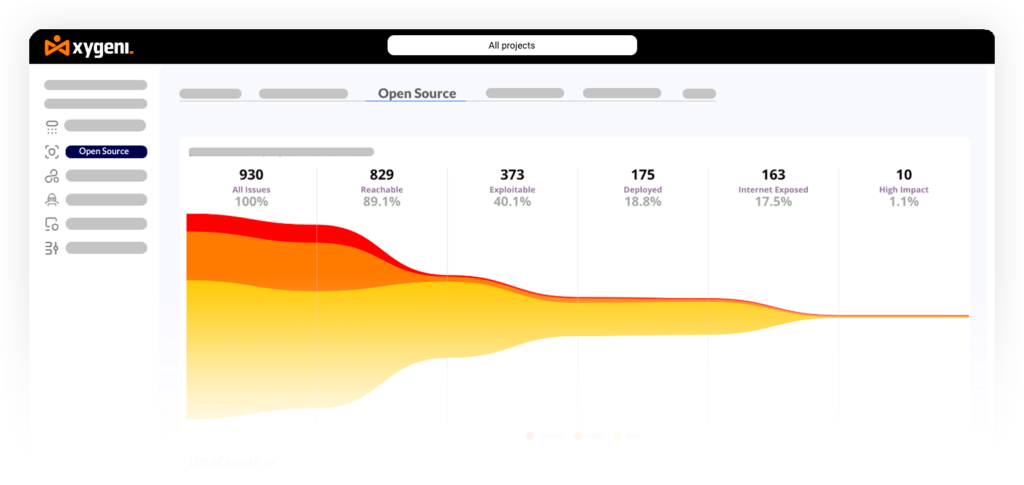
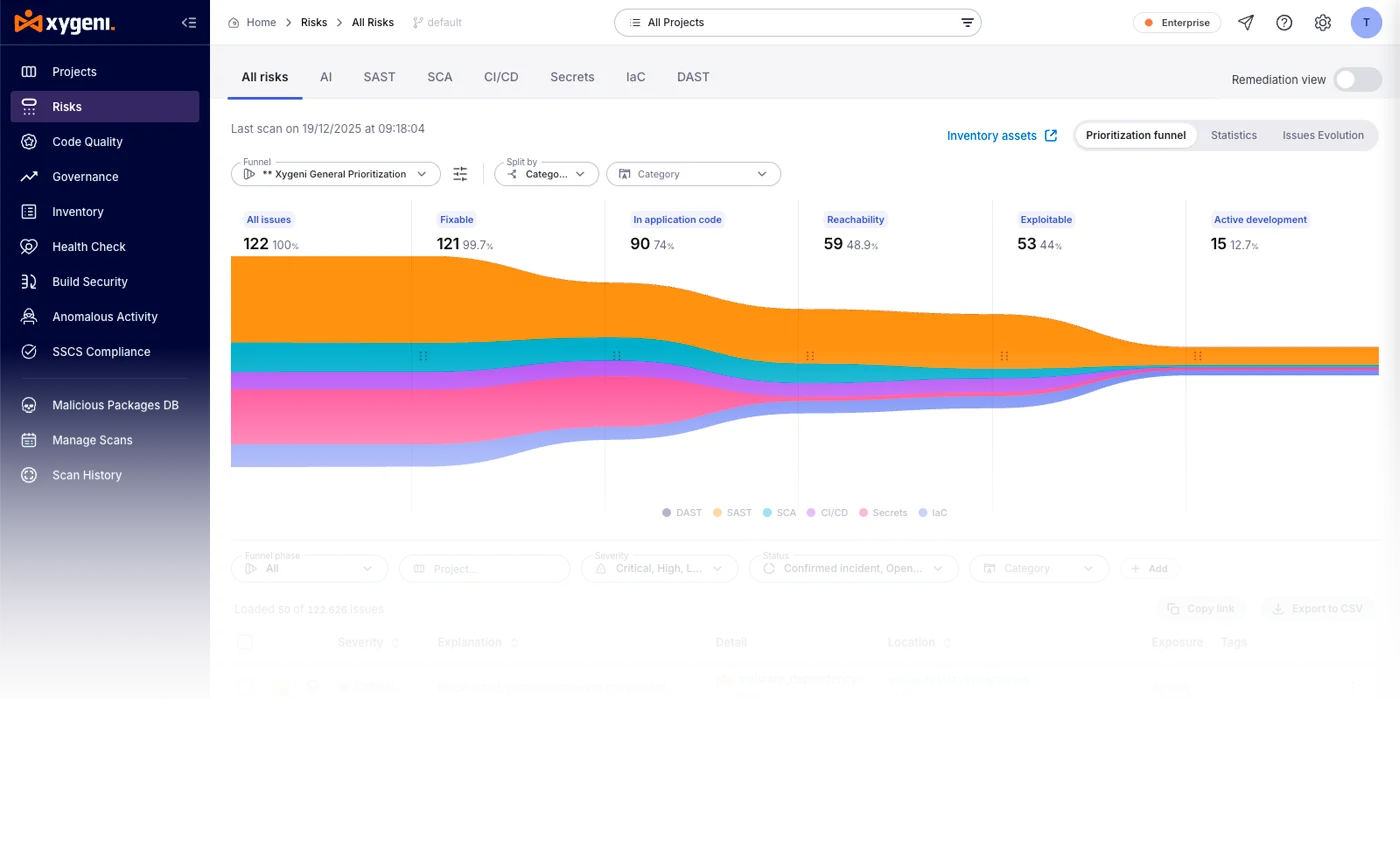
Xygeni’s All-in-One AppSec platform minimizes false negative alerts by combining static, dynamic, and contextual intelligence. It detects what other tools miss, ensuring that every critical vulnerability is identified, validated, and prioritized.
Reachability Analysis: inspects runtime code paths to find vulnerabilities that scanners overlook.
EPSS and CVSS correlation: confirms exploitability likelihood, revealing risks that are both real and reachable.
SAST and SCA integration: connects source code and dependency analysis to close blind spots.
Anomaly Detection: monitors pipelines and repositories for behavior that signals hidden attacks.
By unifying these techniques, Xygeni ensures that fewer false negatives in cyber security escape detection. It provides developers with visibility and confidence that no critical issue remains hidden across their pipelines or applications.
For additional context, read What Is Reachability Analysis to learn how Xygeni identifies exploitable code paths that other scanners miss.
From Blind Spots to Clarity #
False negatives represent unseen risks. Understanding what is a false negative in cyber security and how they arise helps developers and security teams close gaps in visibility.
Ultimately, precise detection depends on combining multiple data sources and validating what truly matters. Xygeni automates this process through reachability analysis, exploitability scoring, and continuous monitoring, transforming blind spots into actionable insight.
Start your free trial and see how Xygeni helps your team detect and fix vulnerabilities that traditional tools overlook.