Security teams keep asking what is Endpoint Detection and Response because the perimeter is not where incidents play out anymore. They play out on machines. On laptops that build code. On servers that run workloads. On virtual machines that keep legacy systems alive. On cloud instances that exist for an hour and then disappear. Endpoint Detection and Response is the capability built for that reality: watch endpoints continuously, detect suspicious behavior, and give responders the ability to act on the affected device, fast. To be clear, EDR is not “antivirus with a nicer dashboard.” Antivirus is largely about known bad artifacts. Endpoint Detection and Response is about activity: what ran, what spawned it, what changed, what it touched, and where it tried to connect. It looks at processes, files, registry changes, memory behavior, user actions, and network patterns. This is why EDR holds up better against modern attacks that avoid dropping obvious malware. And this is also why EDR keeps coming up in DevSecOps conversations. Phishing, credential theft, malicious dependencies, and post-exploitation behavior all leave traces on endpoints. If you want to understand an incident and contain it before it spreads, you need the traces. Basically, it exists to capture them and make them actionable. Keep reading, we will also take a look at Endpoint Detection and Response tools.
How Does it Work? #
Most explanations of Endpoint Detection and Response start with “telemetry,” which is correct, but incomplete unless you add the operational piece: you are collecting evidence so you can make decisions under pressure.
It typically uses endpoint agents to collect data such as process execution, command-line arguments, file and registry changes, memory indicators, and outbound connections. That telemetry is sent to a central platform where it can be stored, correlated, and searched. In other words, you get a timeline, and you get the raw material for an investigation.
Then analytics enter the picture. It evaluates endpoint activity using detection rules, behavioral baselines, and anomaly signals. When activity crosses a threshold, It also generates alerts that include context: what happened first, what followed, which account ran it, which machine was involved, and what the endpoint tried to do next.
The “response” part is where it stops being passive. Endpoint Detection and Response tools commonly support actions such as isolating an endpoint from the network, terminating processes, quarantining files, or triggering playbooks through orchestration systems. That “do something now” capability is what separates Endpoint Detection and Response tools from visibility-only monitoring.
So when someone asks what is Endpoint Detection and Response, in practical terms, the honest answer is not a slogan. It is this: collect endpoint evidence continuously, detect patterns that signal compromise, and provide controls that let you contain the blast radius immediately.
Why Endpoint Detection and Response Matters? #
It matters because attackers have adapted to the assumptions defenders used to rely on. They do not need loud malware if they can steal a token. They do not need an exploit if they can trick a user. They do not need persistence that screams “malware” if they can live off built-in tools. A lot of this activity looks normal until you connect the dots across time and across endpoint events. Endpoint Detection and Response is built to connect those dots.
There is also the operational reality of dwell time. Attackers are often not in a hurry. They get in, map the environment, escalate privileges, and move laterally. It reduces that window by surfacing early indicators and enabling containment before the incident becomes a business outage.
For risk owners, it also matters for documentation and defensibility. You get audit trails, investigation artifacts, and proof of active monitoring. That is useful for compliance, for incident response readiness, and for explaining to leadership what happened and what was done.
This is why security leaders circling back to what EDR is usually end up at the same conclusion: Endpoint Detection and Response is a core control for distributed environments, cloud-connected fleets, and developer-heavy organizations.
Some of its Benefits #
Endpoint Detection and Response delivers value when it changes outcomes, not when it produces more alerts.
One outcome is better detection of behavior that signatures miss. It can catch credential abuse, suspicious process trees, stealthy lateral movement, and fileless techniques that traditional tools often struggle to classify.
Another outcome is speed. Endpoint Detection and Response tools make containment achievable without waiting for a manual, multi-team coordination cycle. Isolation, process termination, and targeted remediation shrink the exposure window, which is often the difference between a contained incident and a broad compromise.
A third outcome is investigation quality. EDR provides the data needed to reconstruct what happened, including timelines and relationships between events. That makes it possible to fix root causes instead of just cleaning up symptoms.
Finally, it integrates well with broader security operations. Many Endpoint Detection and Response tools forward telemetry and alerts into centralized systems for correlation and automation, improving response consistency.
These outcomes explain why EDR keeps showing up as a baseline requirement in mature security programs.
Endpoint Detection and Response Tools in Modern Environments #
Endpoint Detection and Response tools are expected to function across a messy reality: Windows laptops, macOS developer machines, Linux servers, virtual desktops, and cloud workloads. They also have to remain useful when endpoints are outside the office, off-network, and changing constantly.
That is why modern Endpoint Detection and Response tools emphasize consistent policy enforcement and centralized investigation, even when endpoints roam. This matters for DevSecOps teams because build agents and developer devices are attractive targets: they hold credentials, have access to source code, and can reach internal services.
But here is the part many teams gloss over when they discuss about this: EDR is runtime-focused. It is strongest when code is already executing. That makes it critical, but it also means it cannot be the only layer.
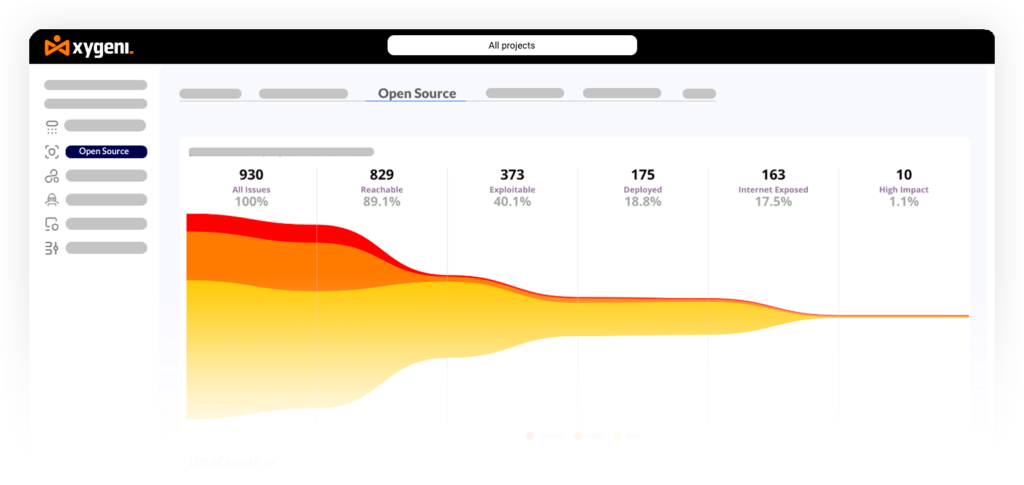
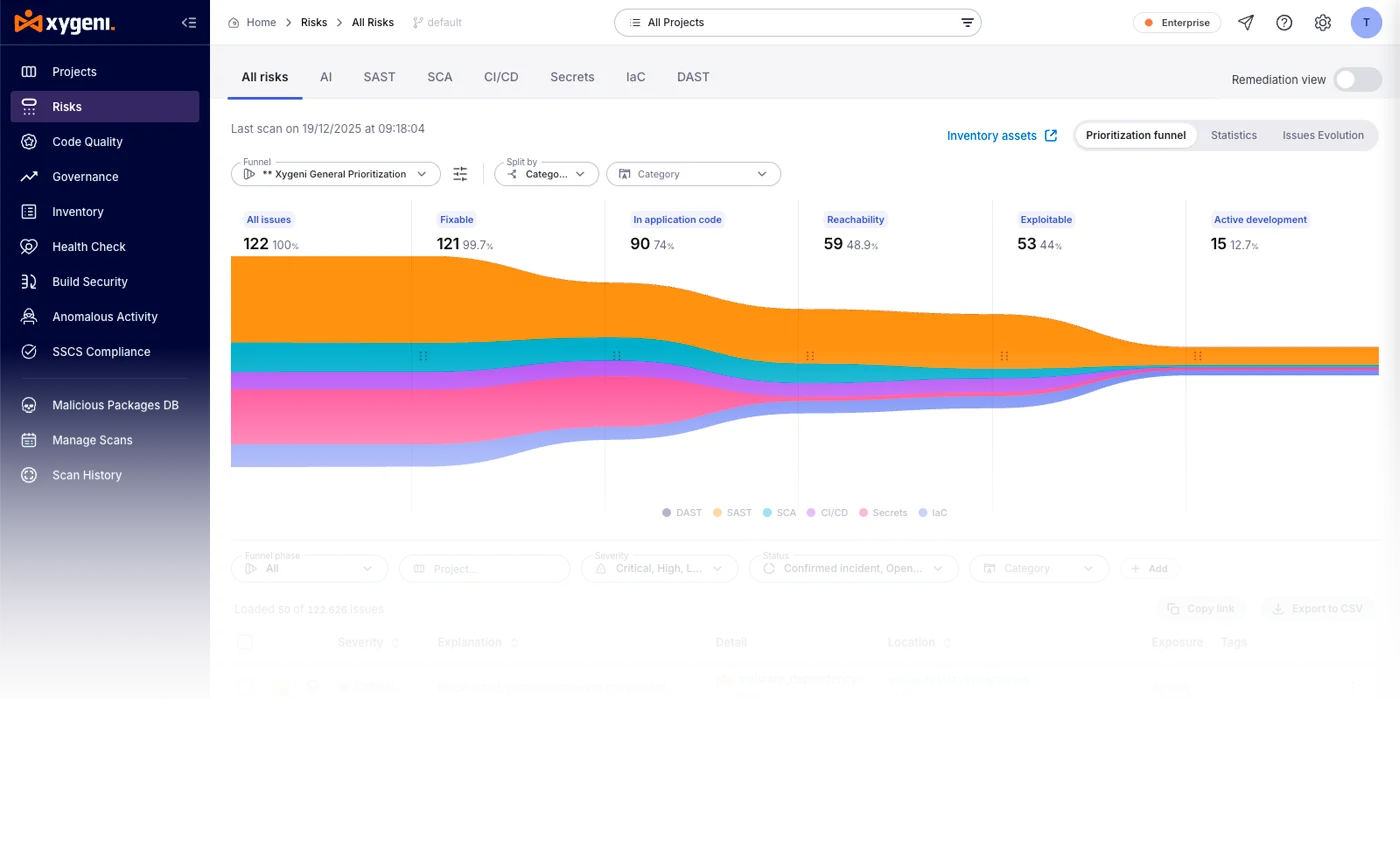
This is where upstream controls change the game. While Endpoint Detection and Response tools watch endpoints at runtime, software supply chain security platforms such as Xygeni focus on stopping malicious or vulnerable components earlier, before they are installed and executed on developer machines or CI runners. Used together, EDR and software supply chain security reduce both the chance of compromise and the impact if something slips through.
Understanding what is Endpoint Detection and Response includes placing it correctly inside defense-in-depth, not treating it as a standalone answer.
Key Features to Look for in 2026 #
Its capabilities evolve because attackers evolve. If you are evaluating Endpoint Detection and Response tools in 2026, look for features that reduce analyst burden while improving fidelity.
Behavioral detection is still the baseline. EDR must detect misuse of legitimate tools and credentials, not only obvious malware execution.
Response automation should be practical, not just promised. Endpoint Detection and Response tools should support isolation and remediation actions that can be triggered reliably when confidence is high.
Coverage must include modern workloads. It needs to protect cloud instances, virtual machines, and ephemeral systems without leaving gaps that attackers can exploit.
Investigation depth is a differentiator. Clear timelines, process trees, and evidence-rich context reduce time-to-triage and help analysts avoid guesswork.
And performance matters. It also must collect meaningful telemetry without turning endpoints into slow, fragile machines.
EDR and Risk Management #
From a risk standpoint, Endpoint Detection and Response supports multiple stages of the risk lifecycle. It helps identify threats in progress, measure scope and impact, and mitigate incidents quickly through containment.
Continuous endpoint monitoring also supports risk monitoring over time. Recurring detections, repeated misconfigurations, and frequent credential misuse patterns become signals that risk owners can act on. If someone asks what is Endpoint Detection and Response in governance terms, it comes down to two things: visibility you can defend, and evidence you can use to prioritize.
And, in Practice… #
EDR deployment is not the finish line. The value comes from operations. Integrate Endpoint Detection and Response into security workflows. Automate response where confidence is high. Tune detections based on incidents and false positives. Train analysts to investigate endpoint timelines and process behavior, because the best Endpoint Detection and Response tools still require human judgment at the final step.
Used correctly, Endpoint Detection and Response tools become force multipliers. Used lazily, they become noise generators.
Endpoint Detection and Response as a Pillar of DevSecOps Security #
Security leaders keep returning to what is Endpoint Detection and Response because the endpoint is where compromise becomes tangible. It provides the visibility and response controls needed to contain threats at the point of execution. Endpoint Detection and Response tools do this by capturing behavior, correlating evidence, and enabling action before an incident escalates.
But it is reactive by nature. It detects behavior that is already happening. That is why it works best when paired with preventive controls upstream. Platforms like Xygeni complement EDR by identifying malicious or vulnerable components before they reach developer machines, CI systems, or production endpoints. Used together, Endpoint Detection and Response tools and software supply chain security provide a layered defense that matches how modern attacks actually propagate.
In short: EDR is indispensable. Treating Endpoint Detection and Response as the only answer is a mistake. The practical approach is layered controls that prevent what you can, and detect and respond to what inevitably gets through.