This is the part of the security story where dashboards stop being comforting. You can buy SIEM. You can deploy EDR. You can ship logs to “somewhere.” And yet, incidents still happen because nobody is watching closely enough, long enough, with enough context to act fast. So, what is Managed Detection and Response in plain terms? It is a security service where an external team continuously monitors your environment, hunts for threats, investigates suspicious activity, and helps contain attacks (often 24/7) using a combination of technology and human analysts. That is the practical answer to what is MDR: detection plus response, delivered as an ongoing operational capability, not as another tool you must operate yourself. If you are evaluating managed detection and response providers, you are usually trying to solve one of these problems: too many alerts, too few skilled analysts, or a lack of confidence that “we will catch it in time.” This is exactly the gap what is Managed Detection and Response is designed to close.
What is MDR trying to achieve? #
Let’s be strict about outcomes. What is MDR not about: adding more telemetry, collecting more logs, or generating more tickets? What is Managed Detection and Response is about shortening the time between “something suspicious happened” and “we acted on it.”
Most definitions converge on the same pillars:
- Continuous monitoring (often described as 24/7)
- Proactive threat hunting
- Investigation by expert analysts
- Guided or active response actions to contain threats
This is why managed detection and response providers are evaluated differently from security software vendors. The buyer is not only buying a platform; they are buying operational execution.
And if you want a clean mental model for leadership, what is MDR is “SOC outcomes as a service,” with accountability for detection quality and response guidance.
Common misconceptions #
During conversations with security teams, the same misunderstandings show up again and again. They lead to poor buying decisions, weak integrations, and unrealistic expectations. So first, let’s kill the misconceptions.
Misconception #1: “We already have tools, so we already have MDR.” #
Indeed! But tools are not a service. An EDR agent installed everywhere does not mean someone is actively investigating attacker behavior across endpoints and identities. A SIEM full of logs does not mean confirmed incidents get contained. This is the core distinction behind what is Managed Detection and Response: it is operational work performed continuously, not only data collection.
Misconception #2: “MDR just forwards alerts.” #
If a vendor’s “MDR” is essentially “we notify you,” you are not really getting what is MDR as most reputable definitions describe it. MDR is expected to include investigation and response support, and often threat hunting, because detection without follow-through is how breaches become headlines.
Misconception #3: “MDR replaces internal security ownership.” #
No. Even the best managed detection and response providers still need you to define escalation paths, business impact, asset criticality, and who is authorized to take disruptive actions. What is MDR is an extension of your capability, not a substitute for governance.
Misconception #4: “All managed detection and response providers are the same.” #
They are not. Some focus heavily on endpoint telemetry, others on SIEM-centric operations, others on identity and cloud. Response authority also varies: some providers can isolate hosts or disable accounts; others only recommend actions. If you are buying based on a brochure, you are not really buying what is Managed Detection and Response, you are buying marketing.
What does MDR actually do during an attack? #
To keep this concrete, here is the typical flow many managed detection and response providers follow:
- Collect signals from endpoints, identity systems, networks, and cloud logs.
- Detect suspicious patterns using analytics, rules, and threat intelligence enrichment.
- Investigate to validate whether it is malicious (or noise).
- Respond by guiding containment steps (or performing them), then helping with remediation and recovery.
That chain (detect → validate → respond) is the operational definition behind what is MDR, and it is why what is Managed Detection and Response is increasingly positioned as a practical answer to SOC staffing constraints.
What data sources does MDR monitor? #
If you want MDR to work, you must feed it meaningful data. What is MDR without telemetry? Mostly promises. In practice, managed detection and response providers monitor a combination of these sources (the mix depends on the provider and your architecture):
Endpoint telemetry (workstations, servers, containers)
Process execution, file changes, persistence attempts, suspicious child processes, credential dumping patterns, and other endpoint behaviors, often through EDR tooling that MDR teams operate.
Network and DNS signals
Outbound connections, unusual destinations, DNS anomalies, lateral movement traces, and command-and-control patterns.
Identity and access logs
Authentication events, impossible travel, unusual token usage, privilege escalation, and risky admin behavior. Some MDR services explicitly cover identity threat detection as part of their monitoring scope.
Cloud control-plane and workload logs
Cloud audit logs (API calls, policy changes), workload activity, and suspicious storage or key management access, because attackers love to pivot into cloud environments once they obtain credentials.
Security logs and centralized event data
Many MDR models rely on a data lake or SIEM-style aggregation to correlate across sources.
The key lesson: the quality of MDR outcomes is heavily dependent on what you integrate. This is why serious buyers ask what is Managed Detection and Response monitoring in our environment, and what is the minimum telemetry required to get value.
MDR vs MSSP vs EDR: where people get confused #
For DevOps teams, this scanning is not about slowing things down. It is about avoiding rework and incidents. One major benefit is early feedback. Developers get immediate Here is a simple way to keep your narrative consistent:
- EDR is primarily a tool category focused on endpoints.
- MSSP often focuses on broader managed security operations, sometimes heavy on monitoring and ticketing.
- What is MDR? A service explicitly centered on detection and response outcomes, typically with threat hunting and analyst-led investigation.
And if someone asks again what is MDR compared to XDR: XDR is commonly described as a technology approach that unifies multiple telemetry sources, while MDR is a service model that may use XDR-like tooling but delivers people and process around it.
How to evaluate Managed Detection and Response providers? #
If you are selecting managed detection and response providers, focus on execution details, not feature lists:
- Who investigates (and what is their analyst coverage model)?
- What response actions can they take, and under what approvals?
- What telemetry sources do they require, and what integrations are native?
- How do they handle threat hunting and validation to reduce false positives?
What is Managed Detection and Response in your organization depends on your environment, your response authority model, and how well the provider integrates into your workflows.
A final note on detection depth and response context #
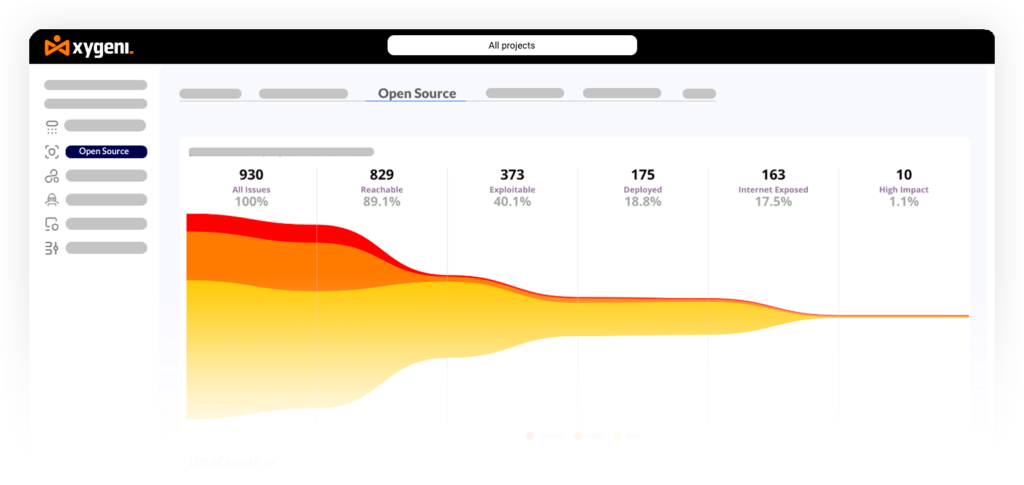
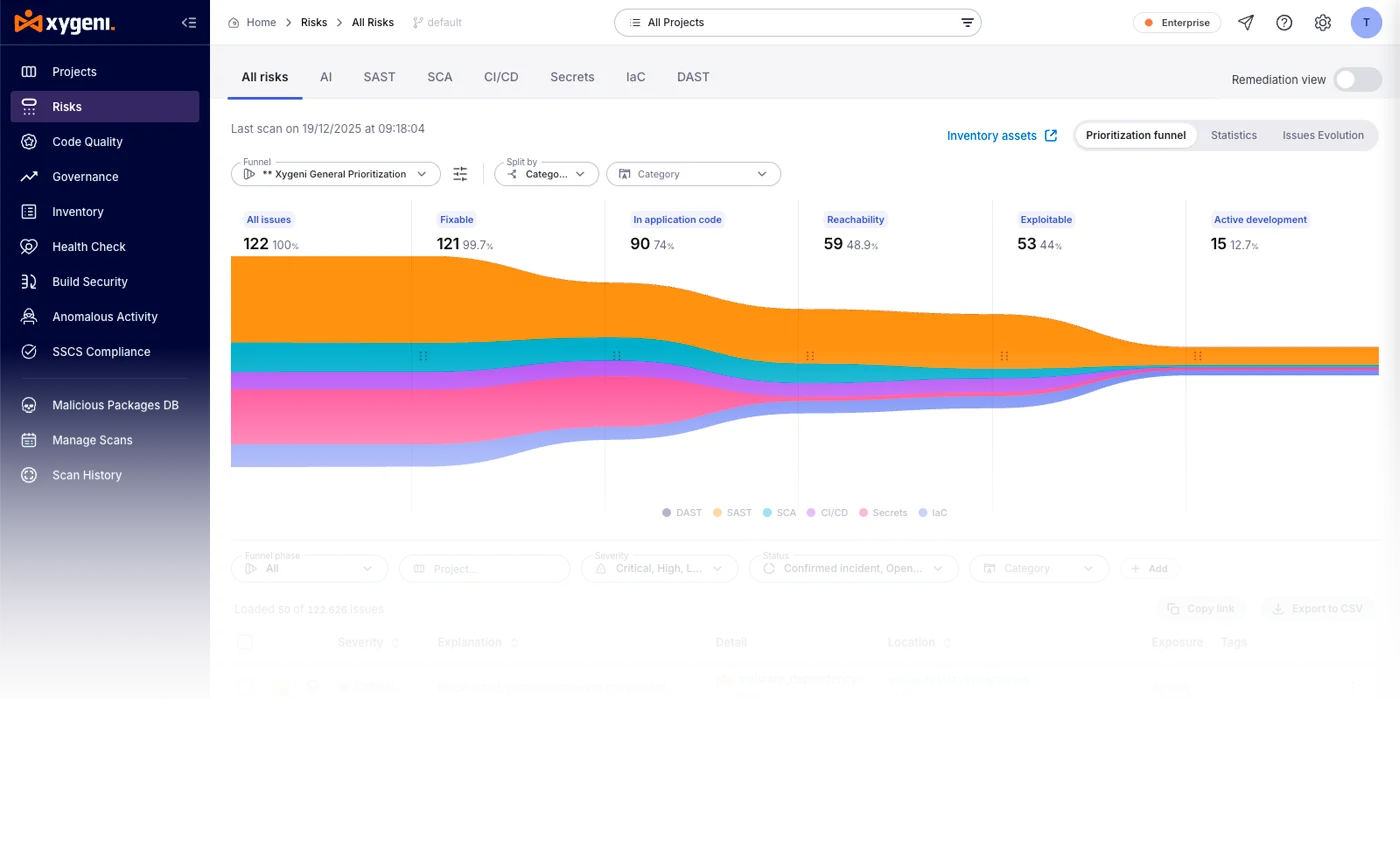
One recurring limitation of many Managed Detection and Response programs is not the lack of alerts, but the lack of high-confidence early signals. MDR teams depend heavily on the quality and timing of the data they receive. When detection happens late, response is already reactive. This is where complementary approaches focused on early behavior analysis and contextual intelligence become relevant. Platforms such as Xygeni focus on detecting malicious behavior as early as possible in the software lifecycle and at runtime, producing higher-fidelity signals that can be consumed by security operations and MDR teams alike.
Used together, early detection capabilities and Managed Detection and Response help reduce dwell time, improve investigation accuracy, and make response actions more decisive, especially in environments where modern attacks blend application abuse, identity compromise, and infrastructure misuse.