CoreAI is the AI brain of the Xygeni platform acting as a continuous AI code security assistant that correlates code, dependencies, pipelines, and posture to identify real risk, prioritize what matters, and drive remediation across your organization.
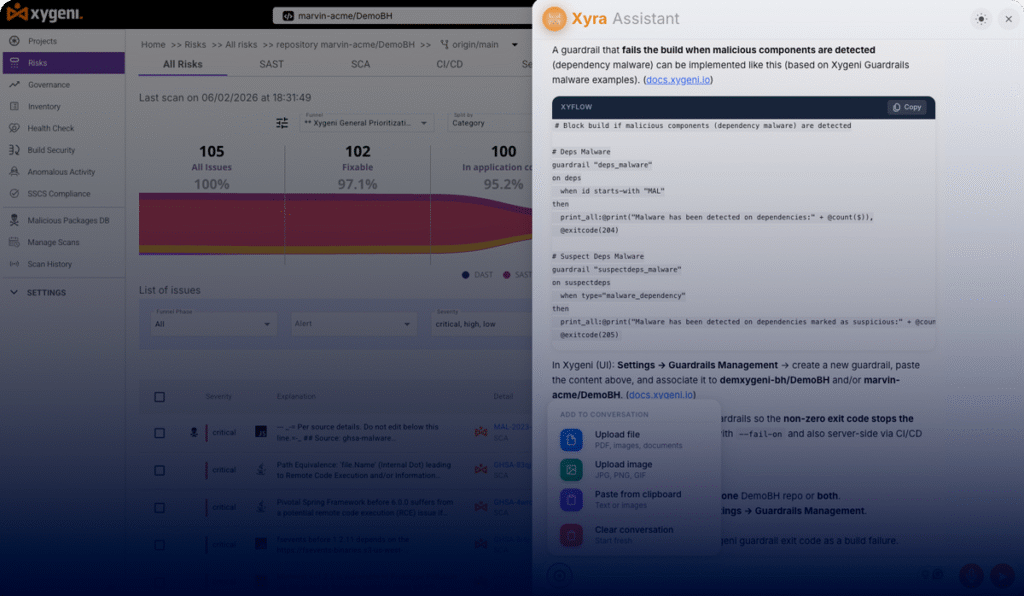
CoreAI continuously turns security signals into prioritized, executable actions, adapting to how your organization works over time. As your central AI code security assistant, Xyra gives teams a clear, intelligent way to control, review, and approve these actions with full context.
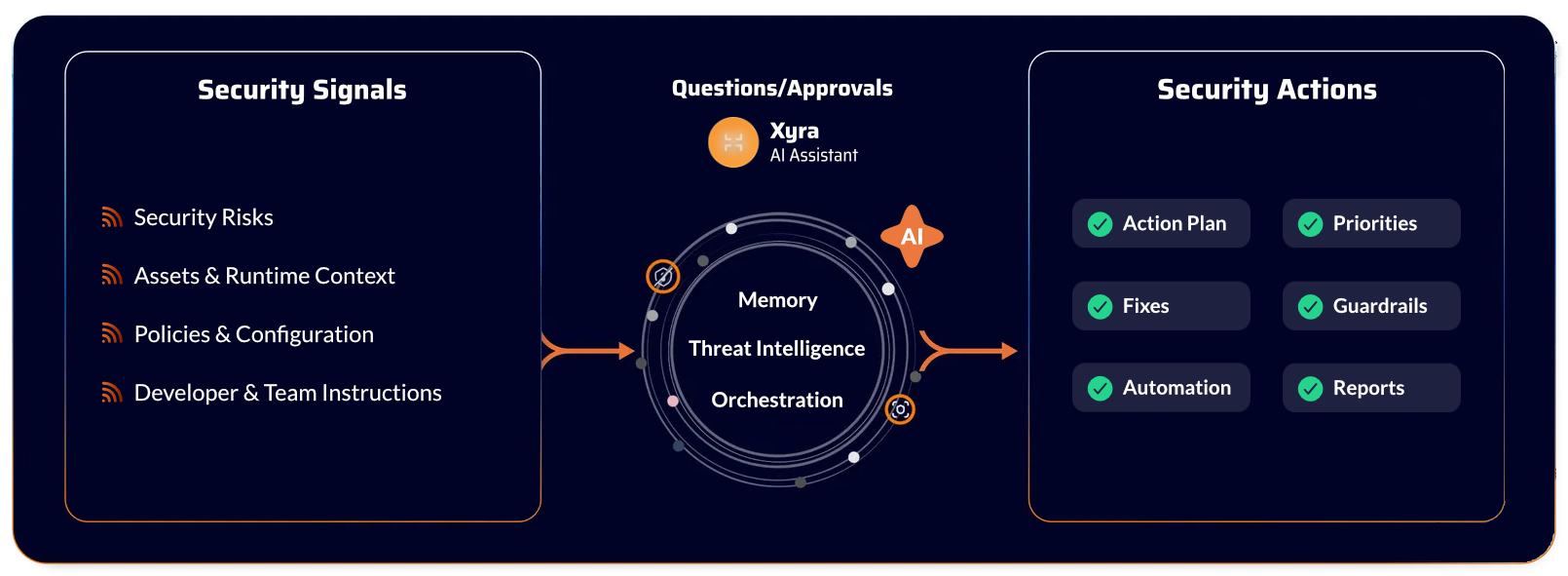
CoreAI connects vulnerabilities, dependencies, pipelines, and applications into a single risk model instead of isolated tool outputs.
Findings are ranked by real exploitability, impact, and business relevance, not just CVSS scores.
Our AI code security assistant produces clear, structured remediation plans for teams, what to fix, how, and in what order.
CoreAI can open pull requests, apply guardrails, update configurations, and coordinate fixes across the platform.
Policies, thresholds, and compliance requirements are enforced automatically across all teams and projects.
CoreAI provides AI-generated explanations, trends, and insights so teams understand not just what is happening, but why.
Risk is not measured once per scan — it is continuously recalculated as code, dependencies, and environments change.
CoreAI learns from how your teams triage, remediate, and prioritize risk, continuously refining recommendations and automation to match your organization’s real-world workflows.
CoreAI operates as a continuous intelligence layer across your security operations, turning signals into prioritized actions. It acts as an AI code security assistant that teams can review, approve, and execute with total confidence.
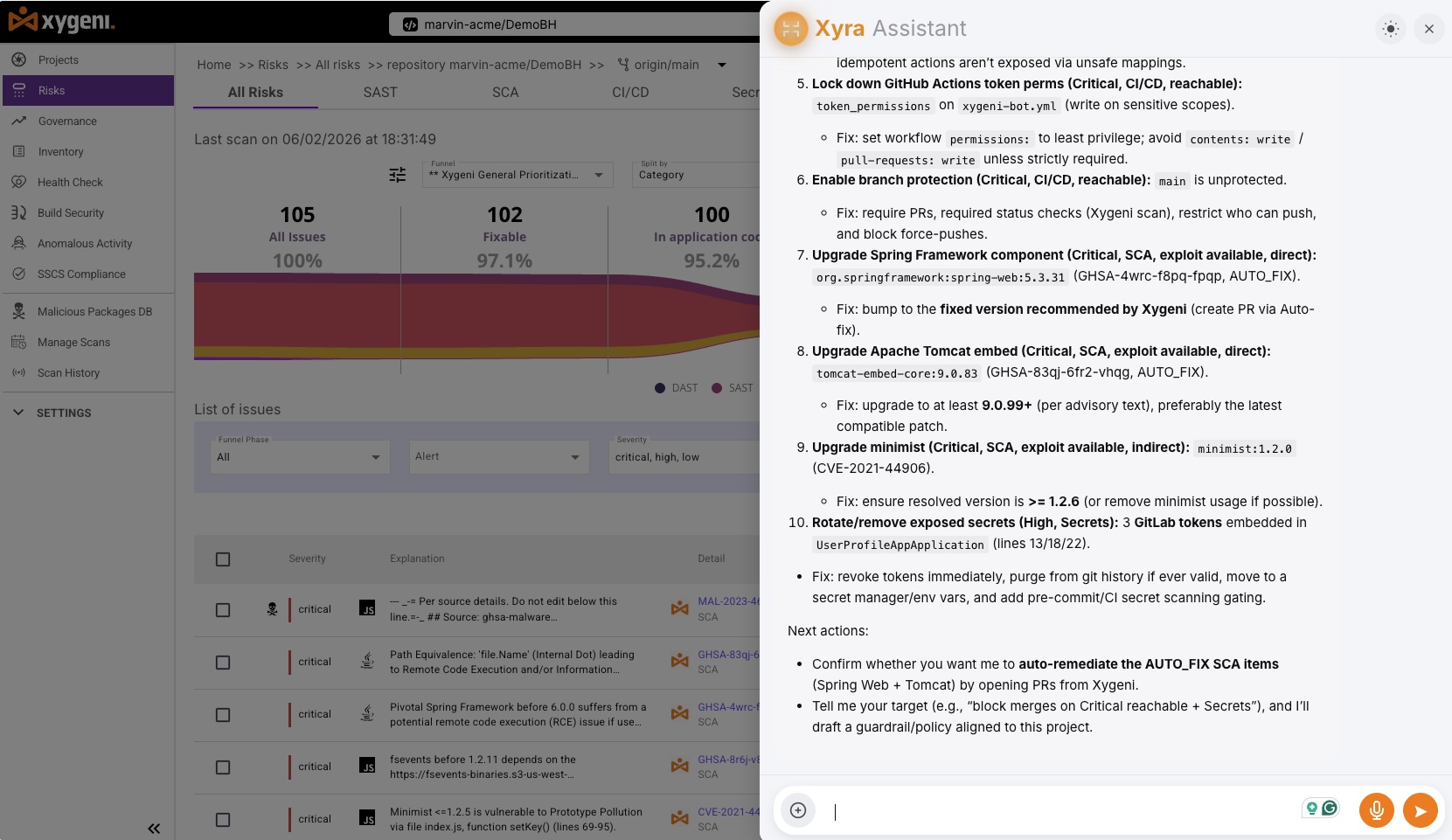
Xyra is the human interface to CoreAI’s reasoning engine. As your dedicated AI code security assistant, Xyra allows DevSecOps teams and security leaders to:
CoreAI learns how your organization works. This memory is isolated per customer and never shared. Over time, CoreAI adapts its recommendations, automation, and prioritization to match your operational reality
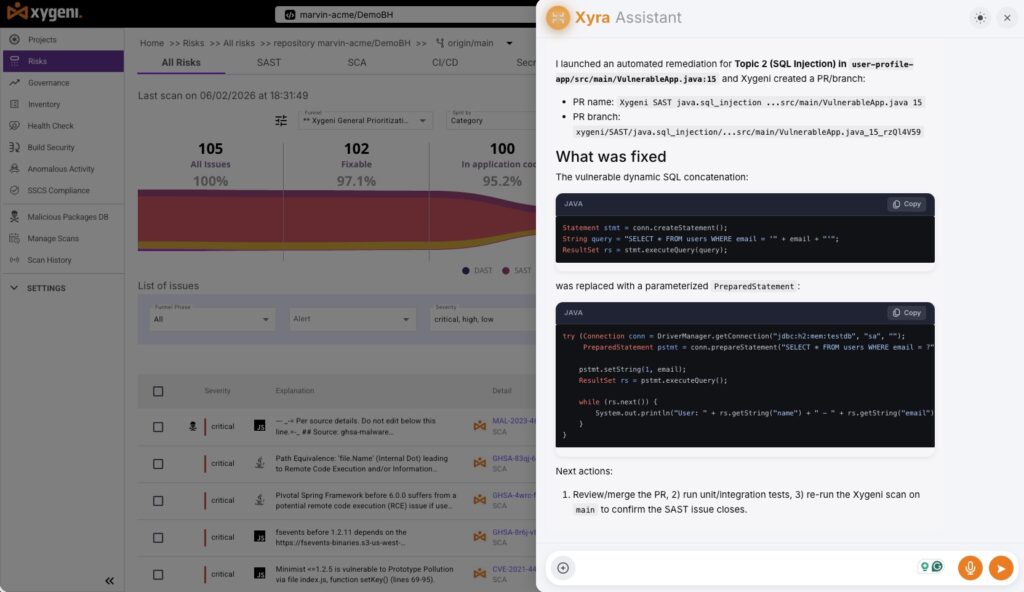
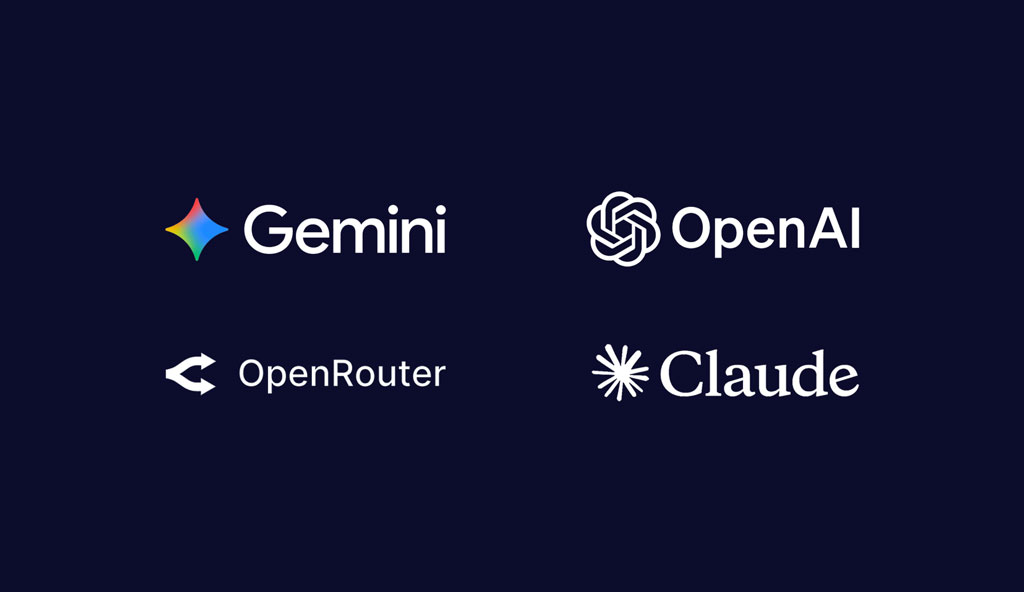
CoreAI supports multiple AI providers, allowing organizations to choose the models. Xygeni handles orchestration, governance, and security — you keep control over the AI layer.:
CoreAI replaces manual triage, spreadsheet risk tracking, and fragmented tools with a single AI-driven control plane for AppSec across:
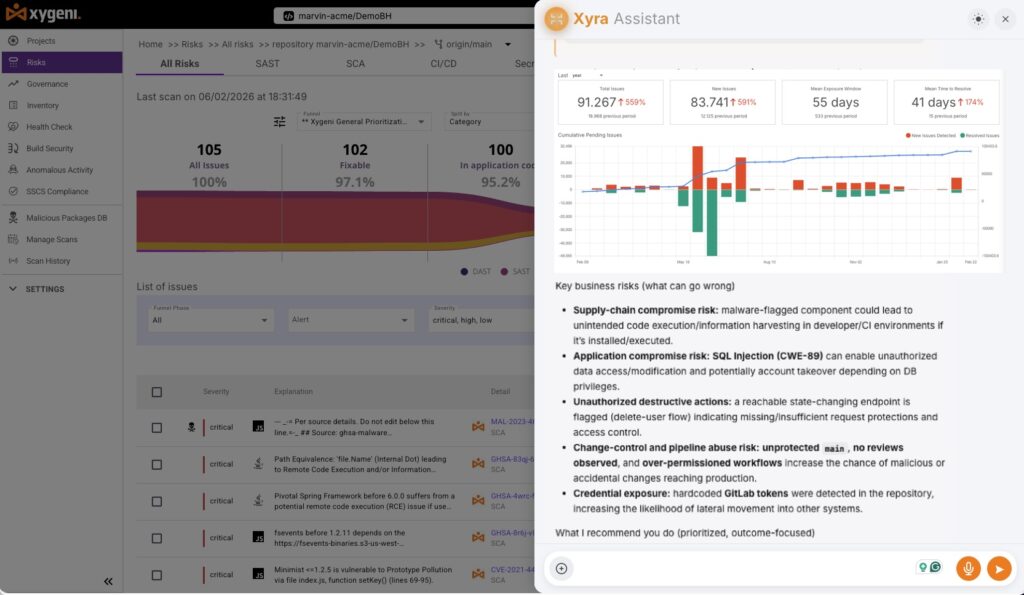
CoreAI generates decisions and action plans, but execution is always in your hands. Through Xyra, your AI code security assistant, users can review, approve, or reject any action. You decide the level of automation.
CoreAI builds organizational memory based on how your teams triage, fix, and prioritize issues. It learns what is acceptable, what usually fails, and what matters most — so its future recommendations and automation become more accurate over time.
CoreAI enriches remediation, prioritization, and risk decisions with your organization’s past behavior. This means fixes, action plans, and recommendations are adapted to how your teams actually work — not generic best practices.
No. All CoreAI memory is isolated per tenant and never shared. Your workflows, priorities, and security decisions remain private to your organization.
CoreAI supports multiple providers, including OpenAI, Google Gemini, Anthropic Claude, Groq, and OpenRouter. You can choose the models that fit your compliance, performance, and governance needs. Some advanced capabilities may depend on the selected model.
Dashboards only show data; rules only fire alerts. Xygeni’s AI code security assistant actually reasons about risk. It adapts to your workflows and orchestrates actions across the platform, turning static data into real operational outcomes.
Discover how Xygeni’s AI-native brain turns security data into action.