

Welcome to the latest edition of the Xygeni Malicious Code Digest (Monthly Edition). Once again, our security team analyzed real package telemetry across public registries to identify what traditional scanners often overlook: malicious code designed to blend into trusted developer workflows.
Over the past few weeks, we confirmed more than 230 malicious packages, primarily across npm, with occasional PyPI cases. However, this month was not only about volume.
Our research team conducted two in-depth investigations into high-impact threats:
A newly uncovered npm-based infostealer campaign capable of credential theft and session hijacking in developer environments.
A malicious fork targeting the Baileys WhatsApp library supply chain, abusing trust in a popular ecosystem component to infiltrate dependency trees.
These were not simple typosquatting attempts. Both cases involved credential abuse techniques and supply chain manipulation designed to impact real CI/CD pipelines and production environments.
Beyond these investigations, recent waves continued to show automation-driven publishing, aggressive version inflation, and internal-tool impersonation patterns, alongside classic tactics such as typosquatting, dependency confusion, and data exfiltration. The objective remains consistent: bypass trust heuristics and quietly compromise developer systems before detection.
This monthly update is part of our ongoing malware report, where we publish validated findings, confirm emerging threats, and provide actionable intelligence to help DevSecOps teams stay ahead of supply chain risk.
For full context across every malicious package analyzed this month, explore the complete Malicious Code Digest.
Week 4: Over 30 Packages Discovered
| Ecosystem | Package | Date |
|---|---|---|
| npm | uxproject11:1.0.0 | Feb 23, 2026 |
| npm | opencraw:2026.2.15 | Feb 20, 2026 |
| npm | react-dropzone-truffle:100.21.9 | Feb 23, 2026 |
| npm | drikssy-sdk-test:1.0.8 | Feb 23, 2026 |
| npm | @powpegtest/powpeg:10.2.0 | Feb 23, 2026 |
| npm | eslint-validator:1.0.2 | Feb 23, 2026 |
| npm | selfbot-lofy:1.2.5 | Feb 23, 2026 |
| npm | ng-vzbootstrap:1.0.1 | Feb 23, 2026 |
| npm | ng-vzbootstrap:1.0.2 | Feb 23, 2026 |
| npm | vds-monarch:1.0.4 | Feb 23, 2026 |
Week 3: Over 20 Packages Discovered
| Ecosystem | Package | Date |
|---|---|---|
| npm | ether-lint:5.9.0 | Feb 13, 2026 |
| npm | libjs-cqs:90.9.0 | Feb 13, 2026 |
| npm | collabs-merchants:99.9.12 | Feb 13, 2026 |
| npm | despicable-me:3.0.0 | Feb 13, 2026 |
| npm | envoy1:1.0.9 | Feb 13, 2026 |
| npm | ecosystem_ui:11.0.0 | Feb 13, 2026 |
| npm | envoy1:1.0.10 | Feb 13, 2026 |
| npm | @depro0x/despicable-me:6.0.0 | Feb 13, 2026 |
| openvsx | felix2cn/anti-tools:1.10.141 | Feb 15, 2026 |
| openvsx | felix2cn/anti-tools:1.10.142 | Feb 15, 2026 |
Week 2: Over 130 Packages Discovered
| Ecosystem | Package | Date |
|---|---|---|
| npm | mysqldbstool:1.0.4 | Feb 09, 2026 |
| npm | @acqui-calm-library/acqui-hero-carousel-section:999.99.999 | Feb 09, 2026 |
| npm | ringcentral-google-drive-notification-add-in:2.2.2 | Feb 09, 2026 |
| npm | date-fns-2:1.0.0 | Feb 09, 2026 |
| npm | redux-saga-task-cancel-rce:1.0.0 | Feb 09, 2026 |
| npm | teeseest:1.6.2 | Feb 09, 2026 |
| npm | internal-logger-embaby:9.9.10 | Feb 09, 2026 |
| npm | @xcxcxxx/gsap3:99.10.90 | Feb 09, 2026 |
| npm | bdf-server-clone:1.0.0 | Feb 09, 2026 |
| npm | react-native-kraken-oauth:1.0.1 | Feb 09, 2026 |
Week 1: Over 50 Packages Discovered
| Ecosystem | Package | Date |
|---|---|---|
| npm | monkey-tags:99.9.2 | Feb 05, 2026 |
| npm | mingw-trial:1.0.0 | Feb 05, 2026 |
| npm | syf-api-legacy:1.0.0 | Feb 06, 2026 |
| npm | google-audit-tool:1.0.0 | Jan 30, 2026 |
| npm | idv-script:1.0.1 | Feb 04, 2026 |
| npm | idv-script:1.0.3 | Feb 04, 2026 |
| npm | idv-script:1.0.4 | Feb 04, 2026 |
| npm | @anthropic-field/cli:0.3.1 | Feb 03, 2026 |
| npm | @anthropic-field/cli:0.3.0 | Feb 03, 2026 |
| npm | @anthropic-field/cli:0.2.1 | Feb 03, 2026 |
Secure Your Open Source Dependencies against Vulnerabilities and Malicious Code
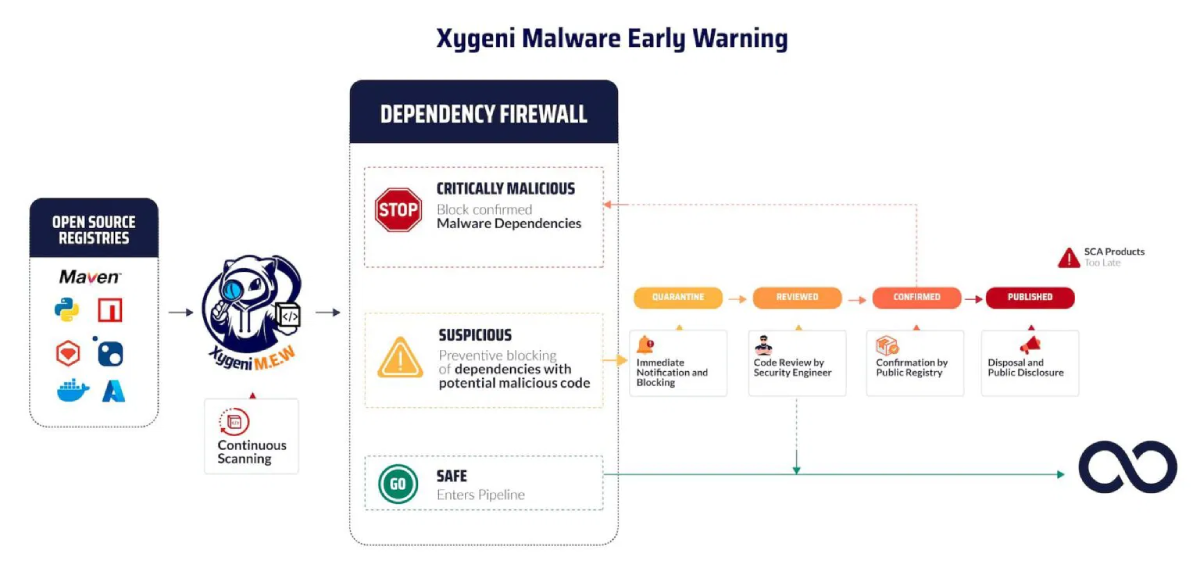
Malware isn’t just a theoretical risk anymore, it’s already hiding in public packages. With Xygeni’s Early Malware Detection, you can reduce exposure by catching threats as soon as they’re published, before they reach your pipeline.
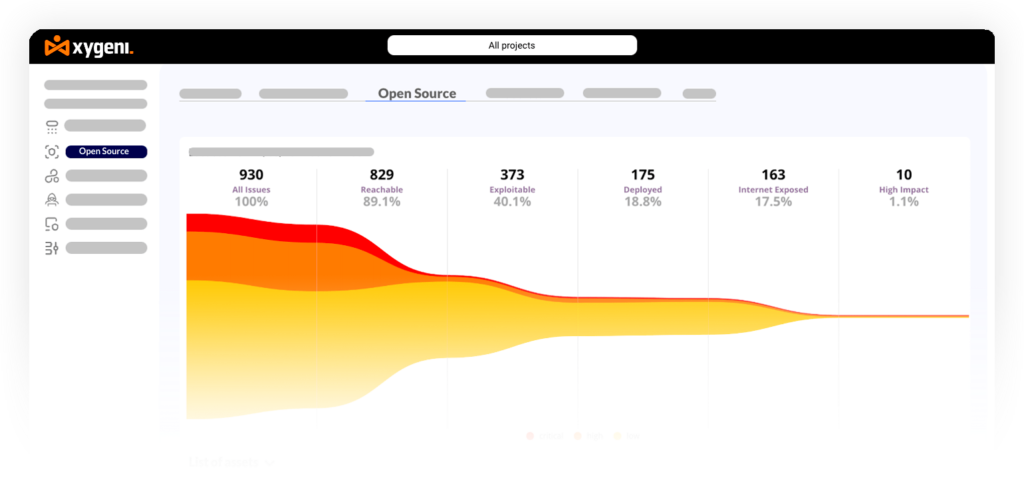
Our real-time scanning and prioritization engine continuously monitors public registries like npm and PyPI. Malicious packages are blocked, flagged, and ranked based on impact, so you know exactly what needs fixing, and when. Whether it’s typosquatting, dependency confusion, or credential stealers, we help your team stay ahead.
If you want full visibility into weekly and monthly findings, check the complete Malicious Code Digest.
Stay secure. Stay fast. Stay in control with Xygeni.