


LiteLLM Supply Chain Attack: How Xygeni Detects, Verifies, and Revokes Secrets
The LiteLLM supply chain attack is a clear example of how modern attacks are evolving. The problem was not only a compromised dependency. The real issue was what attackers could access once inside the pipeline.
Most teams already scan code, dependencies, infrastructure, and CI/CD pipelines. However, that is no longer enough. Detection alone does not reduce risk.
The real challenge starts after exposure:
- Which secrets were leaked
- Which ones are still valid
- How fast they can be revoked
In our previous analysis of the LiteLLM incident, we explained how the attack worked. However, the real impact comes from something else.
It comes from secrets that remain active after the breach.
Detection shows you what happened.
Verification shows you what attackers can actually use.
Why the LiteLLM Supply Chain Attack Was a Secrets Exposure Crisis
At first glance, the LiteLLM supply chain attack looks like a typical dependency compromise. However, if you look a bit deeper, the real issue is not the package itself. It is what that package can access once it runs.
In this case, the payload was not trying to break application logic or trigger obvious failures. Instead, it went after something much more valuable: credentials already sitting in the environment.
For example, the attacker targeted secrets like:
- Cloud provider credentials
- Kubernetes secrets
- SSH keys
.envfiles- API keys and webhook tokens
These are not just config values. They are direct access to infrastructure, services, and data.
This is where the threat model changes. The attacker does not need to exploit a vulnerability or bypass controls. Instead, they use what your system already trusts. If a token works, it works. No exploit required.
As a result, the impact of the attack is not defined by the malicious package itself, but by the secrets it can reach. Even a single exposed credential can open the door to lateral movement, privilege escalation, or data access.
That is why the LiteLLM supply chain attack should not be seen as just another dependency issue. It is better understood as a secrets exposure problem moving at CI/CD speed, where the gap between exposure and exploitation is often very small.
How Xygeni Secrets Security Detects Exposed Secrets Across the SDLC
Secrets exposure can happen at any point in the development lifecycle. For that reason, detection cannot rely on occasional scans. It needs to be continuous and built directly into the way teams work.
Xygeni Secrets Security follows that approach by covering the entire SDLC, from local development to production pipelines. Detection starts early, where it matters most. For example, pre-commit and pre-push checks help stop secrets before they ever reach a repository. At the same time, developers get immediate feedback in their workflow, so fixing issues does not slow them down.
However, secrets rarely stay in just one place. Once introduced, they tend to spread across different layers of the pipeline. That is why Xygeni also scans beyond the developer environment, including:
- Source code and configuration files
- Git history, where older leaks may still exist
- CI/CD pipelines and build artifacts
- Container images and deployment assets
This broader coverage gives teams a much clearer picture of what is actually exposed. Instead of isolated findings, they see how secrets move and persist across the system.
In practice, this means detection is no longer a one-time check. It becomes a continuous control that runs across development and delivery, helping teams catch issues early and reduce the risk before it turns into a real incident.
Why Secrets Verification Matters More Than Detection
Detection is only the starting point.
After an incident like the LiteLLM supply chain attack, teams often end up with a long list of potentially exposed secrets. At first, that may seem like progress. However, not all of those secrets actually represent risk.
The real question is simple:
Which secrets are still valid and exploitable?
Without that answer, teams spend time investigating credentials that no longer work, while active ones remain exposed. As a result, effort goes into noise instead of real risk.
This is where secrets verification becomes critical.
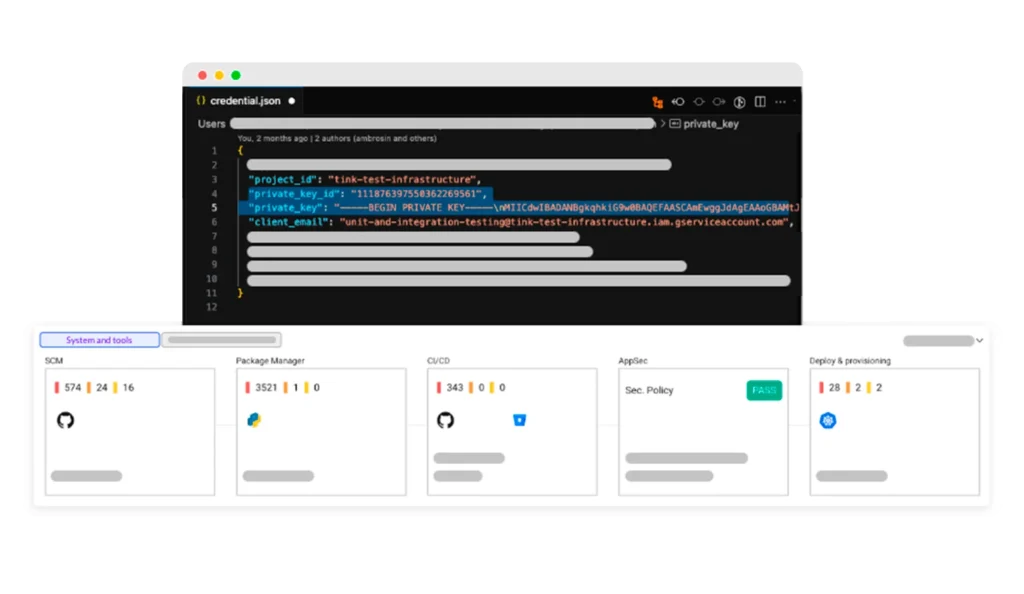
Instead of just listing findings, Xygeni takes the next step and checks what actually matters. It validates credentials in the customer’s own environment, confirms whether they still grant access, and helps prioritize the ones that are still active.
In practice, this changes the workflow completely. Teams stop chasing lists and start focusing on what an attacker could actually use.
Verification turns detection into something much more useful: clear, actionable decisions.
In modern supply chain attacks, the most dangerous secrets are not the ones exposed.
They are the ones that are still valid.
How Xygeni Reduces Blast Radius with Automated Remediation
Once active secrets are identified, the next challenge is reducing exposure time.
In modern supply chain attacks, speed is everything. The longer a credential remains valid, the greater the risk. Therefore, response needs to be immediate and controlled at the same time.
Xygeni Secrets Security helps reduce this window through automated response. For example:
- Immediate revocation for supported credentials
- Automated remediation workflows
- Prebuilt playbooks for common platforms
However, not all secrets should be handled in the same way.
Some can be revoked instantly with minimal impact. Others require controlled rotation to avoid breaking production systems or disrupting services.
For that reason, Xygeni enables teams to:
- Revoke when safe
- Rotate when necessary
- Maintain stability during response
This balance is key. It allows teams to move fast and reduce risk, while still keeping systems stable and avoiding unintended side effects.
A LiteLLM-Style Response Workflow with Xygeni Secrets Security
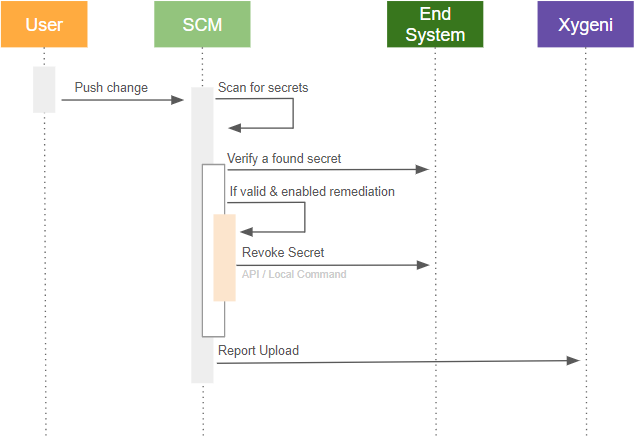
To respond effectively to a LiteLLM-style incident, teams need a structured workflow.
In practice, the process looks like this:
1. Detect
Identify newly exposed secrets across code, Git history, pipelines, and artifacts.
2. Verify
Confirm which credentials are still valid and can actually be used.
3. Prioritize
Focus on exploitable secrets based on context, access, and operational impact.
4. Revoke
Revoke active credentials immediately when safe to reduce exposure time.
5. Rotate
Rotate shared or production credentials carefully to avoid disruption.
6. Monitor
Keep monitoring for re-exposure across the SDLC and response lifecycle.
This approach turns a chaotic incident into a controlled response.
Instead of reacting blindly, teams operate with clear prioritization and fast remediation.
Why Detection Alone Is Not Enough in Modern Supply Chain Attacks
The LiteLLM supply chain attack exposes a clear limitation in how many security teams still operate today.
Detection alone is not enough.
Finding issues is important, but it does not reduce risk by itself. What matters is what happens next.
- Detection without verification creates noise
- Verification without remediation leaves exposure open
- Remediation without early detection comes too late
Each of these gaps slows down response and increases risk.
At the same time, modern supply chain attacks move fast. Credentials can be exposed, validated, and exploited in minutes. Therefore, security needs to operate with the same speed and context.
LiteLLM was not just a compromised package.
It was a secrets problem unfolding at CI/CD speed.
In modern supply chain attacks, the most dangerous secrets are not the ones exposed.
They are the ones that are still valid.
Why Secrets Security Fails Without Context
| Stage | Without Xygeni | With Xygeni Secrets Security |
|---|---|---|
| Detection | Large list of exposed secrets with limited context | Continuous discovery across the SDLC with full visibility |
| Verification | No clarity on which credentials are still active | Real validation of exploitable secrets in your environment |
| Prioritization | Decisions based only on severity or guesswork | Prioritization based on real exploitability and context |
| Remediation | Manual, slow, and error-prone processes | Automated revocation and guided rotation workflows |
| Outcome | Alert fatigue and delayed response to real threats | Fast, controlled reduction of exposure and risk |
Key takeaway: Detection alone creates visibility. However, combining detection, verification, and remediation enables real risk reduction at CI/CD speed.
Final Thoughts
The LiteLLM supply chain attack reinforces a simple but critical reality.
Attackers do not need vulnerabilities when they can access valid credentials.
Secrets provide direct access.
They bypass many traditional controls.
And they allow attackers to move quickly across systems.
For that reason, the goal is no longer just to detect leaks.
About the Author
Fátima Said specializes in developer-first content for AppSec, DevSecOps, and software supply chain security. She turns complex security signals into clear, actionable guidance that helps teams prioritize faster, reduce noise, and ship safer code.