

Regular Expression DoS (ReDoS) is a growing risk within modern application security. As more teams rely on input validation and pattern matching, a poorly designed regex can introduce performance vulnerabilities that attackers can exploit to slow down services or cause outages. In fact, OWASP describes ReDoS as a denial of service attack that exploits the fact that many regex implementations can become extremely slow, sometimes with runtime that grows exponentially with input size.
At the same time, ReDoS attacks are especially dangerous in cloud-native and CI/CD-driven environments, where a single vulnerable regex in an API, gateway, or authentication flow can impact availability at scale. For this reason, teams should treat ReDoS as a real availability risk, not just a niche edge case.
More importantly, these vulnerabilities often remain undetected during development, since traditional approaches focus on syntax rather than execution behavior. As a result, inefficient regex patterns can easily reach production without raising any alerts.
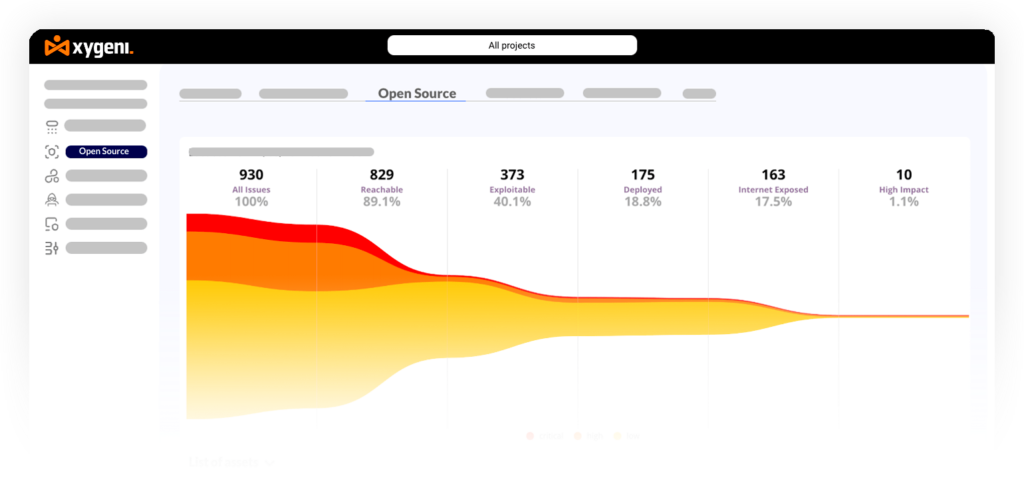
This is where modern AppSec platforms like Xygeni come into play. By embedding security checks directly into development workflows, they help surface these issues earlier and prioritize the risks that are actually reachable and impactful, instead of simply generating more noise.
What Is ReDoS (Regular Expression DoS)?
ReDoS (Regular Expression Denial of Service) is a vulnerability that occurs when a regex pattern causes excessive backtracking, leading to exponential execution time.
In simple terms, a malicious input can force your application to spend an extreme amount of time evaluating a regex, blocking the system and degrading performance.
For example, patterns with nested quantifiers like:
(a+)+can become highly inefficient when processing certain inputs, especially when crafted intentionally by an attacker.
While this may seem like an edge case, it is surprisingly common in real-world applications, particularly in validation logic, form inputs, and API request handling.
How ReDoS Attacks Work
A ReDoS attack does not need advanced exploitation. Instead, it abuses predictable regex engine behavior.
Catastrophic backtracking
The attacker targets a regex that can take multiple matching paths. Then they provide input that forces the engine to explore most or all paths.
Input crafted by attackers
Attackers usually send:
- Long strings with repeated characters.
- Inputs that almost match, then fail at the end.
- Payloads that concentrate on the most ambiguous part of the pattern.
Performance degradation
Because each request can burn CPU, the effect stacks quickly:
- Higher latency across endpoints.
- Thread pool exhaustion.
- Event loop stalls in single-threaded runtimes.
These attacks do not require complex exploits. Instead, they take advantage of inefficient pattern matching, making them difficult to spot if your tooling only checks syntax or known CVEs.

Real-World Impact of ReDoS Vulnerabilities
ReDoS hits the “A” in the CIA triad: availability. It can look like a stability issue, not a security incident, until you connect the dots.
API slowdown
A single endpoint that uses a vulnerable regex can spike CPU during input validation, request routing, or auth checks.
Service outage
Under load, a ReDoS hotspot can make pods restart, degrade autoscaling, and trigger cascading failures.
Resource exhaustion
ReDoS can consume:
- CPU on app nodes.
- Memory due to backtracking state.
- Worker threads that block other requests.
Because ReDoS targets performance rather than data exposure, many teams underestimate its impact. However, availability is a core part of application security, and disruptions can quickly translate into business risk.
Breaking Changes Are the Real Trust Problem
When developers say they do not trust autofix, they often mean one very specific thing: they do not trust it not to break something.
That trust problem is most visible in dependency remediation.
A vulnerable package may have a patched version available, but that does not mean the upgrade is safe. The patched release may remove a method your application uses. It may rename an API. It may tighten a type contract. It may modify behavior in a way that passes unit tests but causes production regressions. In many teams, the actual cost of remediation is not applying the patch. It is investigating the blast radius.
Consider a simple example in Java. A codebase depends on a library where a common method exists in version 1.x but is removed in version 2.x.
Real-World ReDoS Attacks and Security Incidents
ReDoS is not just a theoretical vulnerability. It has been exploited in real-world applications, affecting widely used libraries and production systems.
Here are some notable examples that highlight the impact of inefficient regex patterns:
Moment.js ReDoS Vulnerability
One of the most well-known ReDoS vulnerabilities affected Moment.js, a widely used JavaScript date library.
- A poorly designed regex pattern caused excessive backtracking
- Attackers could trigger high CPU usage with crafted input
- Applications using Moment.js became vulnerable to denial-of-service conditions
This issue demonstrated how even trusted libraries can introduce performance-based vulnerabilities into thousands of applications.
Node.js Validator Library (validator.js)
Another example involved validator.js, commonly used for input validation.
- Certain validation functions relied on inefficient regex
- Malicious inputs could significantly delay execution
- This affected APIs and backend services relying on user input validation
Because validator.js is widely used, the impact extended across multiple applications and services.
Cloudflare Outage (Regex-Based Failure)
A high-profile incident involved Cloudflare, where a faulty regex pattern caused a major outage.
- A regex deployed in production triggered excessive CPU usage
- Systems became unresponsive globally
- Large portions of the internet were temporarily affected
Although not a malicious attack, this incident clearly shows how regex inefficiencies can have real-world consequences at scale.
Why Traditional Security Tools Miss ReDoS
This is the conversion section because it explains the gap most teams feel: scanners run, dashboards fill, and ReDoS still slips through.
Static tools focus on syntax
Many scanners can flag “dangerous regex patterns,” but they often lack confidence about whether the pattern is truly exploitable in your context.
No execution context
ReDoS is about runtime behavior. OWASP notes that many regex implementations can reach extreme situations and work very slowly, sometimes exponentially related to input size.
If a tool never reasons about input shape, match failure conditions, or execution paths, it will miss the risk or drown you in false positives.
No exploitability analysis
A regex can be “theoretically risky” but unreachable in practice. Conversely, a “small” validator in a public endpoint can be a real incident. Without context, teams either ignore alerts or over-fix.
Traditional scanners often fail to detect ReDoS because they do not evaluate how regex behaves at runtime or under malicious input conditions. This is where platforms like Xygeni make a difference by combining analysis with contextual risk evaluation, helping teams understand whether a weakness is actually reachable and impactful.
How to Detect ReDoS Vulnerabilities
You can detect ReDoS with a mix of design discipline and testing. In addition, you want checks that run continuously, not just during a security review.
Secure regex design
Start with patterns that minimize ambiguity. Avoid nested quantifiers and overlapping alternatives.
Fuzzing and testing
Test regex patterns with:
- Very long inputs.
- Near-miss inputs that fail late.
- Repeated tokens designed to trigger backtracking.
Static analysis
Use analysis that flags known risky constructs and patterns aligned with CWE-1333.
Runtime validation
Apply input length limits and timeouts around regex evaluation when possible. OWASP’s Input Validation guidance explicitly warns about ReDoS and highlights the importance of defining minimum and maximum input length.
Advanced AppSec solutions such as Xygeni go beyond pattern detection by analyzing code in workflow context and helping teams focus on the issues that are most likely to matter in real scenarios, which reduces false positives and speeds up remediation.
How to Prevent ReDoS Attacks
Prevention is a combination of safer patterns, safer inputs, and safer runtime choices.
Avoid nested quantifiers
Nested repetition often creates the worst backtracking explosions.
Limit input size
This is the simplest and most reliable mitigation. Set maximum length limits for inputs that pass through regex validation. OWASP highlights length limits as a key part of safe input validation.
Use safe regex engines where possible
When you can choose the engine, prefer one designed to avoid catastrophic backtracking. Google’s RE2 is positioned as a safe alternative to backtracking regex engines.
Validate inputs with layered checks
Do not rely on a single regex for all validation. Combine:
- character allowlists,
- strict length checks,
- and simpler patterns per field.
Preventing ReDoS requires secure coding practices and continuous validation across the development lifecycle, especially as applications scale and dependencies grow.
How Xygeni Helps Detect and Prevent ReDoS
Xygeni helps DevSecOps teams detect and prevent ReDoS vulnerabilities by combining multiple layers of analysis.
Key capabilities include:
- Detection of vulnerable regex patterns during development
- Analysis of data flows and execution paths
- Identification of exploitable vulnerabilities, not just theoretical ones
- Integration into CI/CD pipelines for continuous scanning
- Actionable remediation guidance for developers
Instead of overwhelming teams with alerts, Xygeni prioritizes the vulnerabilities that are actually reachable and impactful.
This allows teams to fix real issues faster, without slowing down development.
Best Practices for DevSecOps Teams
Shift-left security
Make ReDoS checks part of the same routine as code review and unit tests.
Automate scanning
Run checks on every pull request so regex risk does not wait for periodic reviews.
Monitor dependencies
Regex vulnerabilities also appear in dependencies and input parsing libraries, so keep dependency hygiene tight.
Validate inputs continuously
Apply length limits and input rules at the edges, then validate again inside critical services.
By embedding security directly into development workflows, teams can prevent performance-based vulnerabilities like ReDoS before they reach production.
ReDoS Prevention Starts with Shadow-Free Visibility
ReDoS is often overlooked, yet it can have a significant impact on application performance and availability. OWASP frames ReDoS as a denial of service risk rooted in extreme regex runtime behavior.
That means you need more than basic scanning. You need context, prioritization, and automation.
If you treat regex like code that can fail under attacker-controlled input, you will catch ReDoS earlier and ship safer systems. With Xygeni, teams can reduce noise, prioritize real risk, and strengthen AppSec controls inside CI/CD workflows.
Conclusion
ReDoS vulnerabilities are easy to introduce and hard to detect without the right context.
While traditional tools focus on identifying issues, modern AppSec requires understanding which vulnerabilities actually matter.
Therefore, to stay ahead, teams need visibility, prioritization, and automation working together across the development lifecycle.
This is where Xygeni makes a difference. By focusing on exploitable risks, it helps teams detect issues earlier, reduce noise, and secure applications from development to deployment.
Ultimately, building secure software today means going beyond scanning and adopting a contextual, real-time approach to security.
Start building secure, resilient applications with real-time detection and contextual security.
Frequently Asked Questions (FAQ)
What is a ReDoS attack?
A ReDoS (Regular Expression Denial of Service) attack is a type of vulnerability where inefficient regex patterns can be exploited to cause excessive processing time, leading to performance degradation or application crashes.
Why is ReDoS dangerous in modern applications?
ReDoS attacks can impact application availability by consuming CPU resources and slowing down services. In cloud-native environments, this can quickly escalate into system-wide performance issues.
How can developers prevent ReDoS vulnerabilities?
Developers can prevent ReDoS by avoiding complex regex patterns, limiting input size, using safe regex engines, and integrating security checks into CI/CD pipelines.
Can traditional security tools detect ReDoS?
Most traditional tools struggle to detect ReDoS because they do not analyze runtime behavior or exploitability. Advanced AppSec solutions provide better detection by evaluating how code executes in real scenarios.
How does Xygeni help prevent ReDoS attacks?
Xygeni detects vulnerable regex patterns, analyzes execution paths, and prioritizes exploitable risks. It integrates into CI/CD pipelines and provides actionable remediation guidance to developers.

About the Author
Co-Founder & CTO
Fátima Said specializes in developer-first content for AppSec, DevSecOps, and software supply chain security. She turns complex security signals into clear, actionable guidance that helps teams prioritize faster, reduce noise, and ship safer code.