

Xygeni wins two Global InfoSec Awards for GenAI Application Security and Application Security Posture Management (ASPM) and recognizing the company’s work in helping security and engineering teams reduce noise, prioritize real risk, and secure AI-assisted development without slowing delivery. For modern DevSecOps teams, this matters because the market is moving fast toward risk-based ASPM and secure AI-native development, not isolated scanners and disconnected alerts. Gartner has already highlighted both Application Security Posture Management and AI Code Security Assistants as transformational areas in modern AppSec, while also warning that AI-driven development and vibe coding are expanding the attack surface.
These two awards reflect a simple reality. Security teams do not need more dashboards. They need clear context, real prioritization, and production-safe remediation. That is exactly where Xygeni focuses, from code to cloud and from human-written code to AI-generated code.
Why These Two Awards Matter
Winning in both categories is important because it shows that AppSec is no longer split between “traditional application security” and “AI security.” Today, those worlds are connected.
Development teams are shipping faster, using more open source, relying on more CI/CD automation, and increasingly adopting AI coding assistants and agentic workflows. At the same time, security leaders are under pressure to reduce false positives, explain business risk clearly, and automate remediation without breaking production. Gartner describes this shift directly: AI-assisted development introduces new security concerns, while ASPM, reachability analysis, and AI-based remediation are becoming central to streamlining DevSecOps.
That is why these awards fit together so well. One recognizes Xygeni ASPM as the control plane for application risk. The other recognizes DevAI as the preventive layer for securing AI-generated and AI-assisted code before it becomes a production problem.
Why Xygeni Won for GenAI Application Security

The GenAI Application Security award highlights a different, but equally urgent, challenge: how to secure code when AI is now part of the development workflow.
That is where DevAI stands out. Instead of treating AI risk as a separate runtime problem, Xygeni brings security to the point where code is created. The platform combines deep static analysis, exploitability-based prioritization, AI AutoFix, and malware-aware detection to help developers catch and remediate risky patterns early.
This approach is especially relevant now. Gartner states that by 2027, at least 30% of application security exposures will result from vibe coding practices, and by 2026, at least 40% of organizations will default to their application security testing vendors for AI-based auto-remediation of vulnerable code.
Security at the point of code creation
DevAI supports a preventive model. Xygeni’s code security materials explain that the platform performs deep static analysis to detect injection flaws, XSS, memory issues, misconfigurations, and malicious code patterns, while filtering findings through an exploitability-based prioritization funnel so teams focus on what is exploitable, not just what exists.
That is an important distinction. In AI-assisted development, speed is not the main problem. Unreviewed confidence is. Developers can generate code fast, but they still need deterministic validation, security context, and safe fixes.
AI remediation that developers can actually use
Xygeni’s AI AutoFix adds that next layer. It generates context-aware remediation suggestions, replaces risky patterns with safer alternatives, and creates pull requests with fixes aligned to language best practices.
This matters because the future of GenAI Application Security is not just about detection. It is about production-safe remediation. A tool that finds issues but cannot help resolve them inside the workflow adds friction. A tool that can guide safe remediation in context improves both security and developer velocity.
Guardrails for AI-assisted and agentic development
The GenAI story is also broader than code completion. Gartner’s 2025 Hype Cycle for Application Security calls out Model Context Protocol, AI code security assistants, AI runtime defense, and vibe coding as major shifts in AppSec. It also warns that MCP brings new authorization and privacy concerns, and that AI-generated code should not be treated as inherently safe.
That context makes Xygeni’s DevAI positioning especially relevant. The value is not only that it helps developers fix code. The value is that it introduces guardrails where AI-generated output meets real engineering workflows.
Why Xygeni Won for Application Security Posture Management

Application Security Posture Management should do more than collect findings. It should help teams decide what actually matters now.
Xygeni’s ASPM approach is built around that idea. The platform unifies signals across the software delivery lifecycle, including code repositories, dependencies, pipelines, build files, infrastructure as code, and cloud resources, then continuously maps their relationships and posture in context.
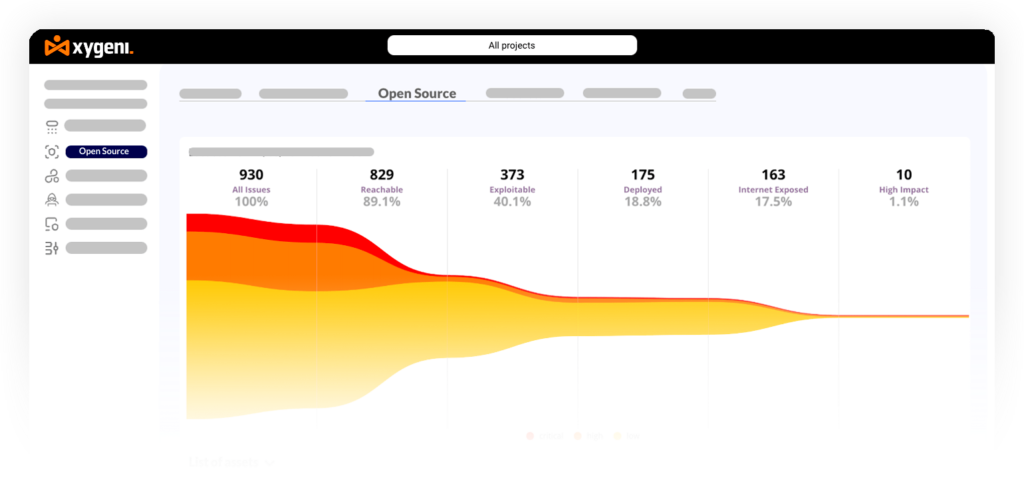
That matters because most teams are still drowning in fragmented alerts. According to Xygeni’s ASPM materials, 48% of organizations receive more than 10,000 alerts per day, and up to 52% of those alerts are false positives. Xygeni addresses that problem with contextual prioritization that considers asset relationships, severity, exploitability, exposure, business impact, and customer-defined criteria, helping reduce unnecessary noise by up to 90%.
A true context layer, not another scanner
Xygeni does not position ASPM as a scanner aggregator. Instead, it builds an inventory and correlation layer across the SDLC. It identifies assets automatically, tracks dependencies and contributors, and gives teams a code-to-cloud view of application risk.
This is exactly where modern ASPM creates value. Gartner defines ASPM as a way to continuously manage application risk by collecting, analyzing, and prioritizing security issues across the software life cycle, helping teams enforce policy and remediate more efficiently.
Dynamic prioritization that reflects real risk
A standout part of Xygeni’s ASPM story is its dynamic prioritization funnel. Customers can define up to eight stages and refine prioritization with factors such as reachability, exploitability, and business-specific criteria. In practice, that means teams can stop reacting to volume and start fixing what is actually reachable, exposed, or operationally important.
That is a strong reason this recognition makes sense. In 2026, the best ASPM platforms are not the ones that show the most data. They are the ones that turn complexity into a short, trusted list of actions.
Better workflows, not more friction
Xygeni’s ASPM also helps close the loop operationally. It integrates third-party security reports, normalizes findings, and centralizes remediation workflows so teams can coordinate faster across different tools and environments.
For security leaders, this translates into something more valuable than visibility alone: better triage, clearer ownership, and measurable posture improvement over time.
A Stronger AppSec Model for 2026
Together, these two awards point to a broader message.
Modern AppSec is moving toward:
- unified context instead of isolated findings
- exploitability-based prioritization instead of severity-only triage
- automated remediation instead of manual backlog growth
- preventive AI security instead of reactive cleanup
- developer-first workflows instead of security bottlenecks
Xygeni’s platform aligns closely with that direction. On the ASPM side, it correlates signals across code, cloud, pipelines, dependencies, and posture. On the GenAI side, it helps teams secure AI-generated and human-written code earlier, with prioritization and remediation built into the workflow.
This is also why the recognition is more than a brand milestone. It reflects where AppSec programs are heading next.
What This Means for Security and Engineering Teams
For CISOs, AppSec leaders, and DevSecOps teams, the takeaway is practical.
If your teams are still switching between scanners, triaging endless duplicate findings, and trying to govern AI-assisted development without clear guardrails, the old model is already under strain.
The next phase of AppSec needs:
- one view of risk across the SDLC
- prioritization based on real exploitability and business context
- automated remediation that fits engineering workflows
- stronger controls for AI-generated and AI-assisted code
- better signal, less noise
That is the space where Xygeni is being recognized.
Final Takeaway
Xygeni wins two Global InfoSec Awards for ASPM and GenAI Application Security because both categories now demand the same thing: security that is contextual, actionable, and built for how software is actually developed today.
ASPM should help teams fix the right risks first.
GenAI Application Security should help teams use AI coding tools without creating blind spots.
Xygeni is building for both.
About the Author
Co-Founder & CTO
Fátima Said specializes in developer-first content for AppSec, DevSecOps, and software supply chain security. She turns complex security signals into clear, actionable guidance that helps teams prioritize faster, reduce noise, and ship safer code.