






Security teams rarely fail because they lack data. More often, they fail because they fix the wrong issues first. That is exactly why Known-Exploit Intelligence, risk based vulnerability management, the Cyber Resilience Act, and the CISA Known Exploited Vulnerabilities Catalog now converge in modern AppSec workflows.
Every week, scanners report hundreds of vulnerabilities. However, attackers exploit only a small subset of them. Consequently, teams that prioritize without exploit context waste time while real threats slip through. Known-Exploit Intelligence closes that gap by surfacing the vulnerabilities attackers actually use, not just the ones that look severe on paper.
What Is Known-Exploit Intelligence
Known-exploit intelligence identifies vulnerabilities that attackers actively exploit in real environments. In other words, it separates theoretical risk from confirmed attack behavior.
Instead of asking whether a vulnerability could be exploited, teams can finally ask:
Is this already being exploited, and does it affect my product?
That distinction matters operationally and, increasingly, legally.
Why Traditional Prioritization Breaks Down
Most teams still rely on static signals to prioritize risk.
Typically, they sort vulnerabilities by:
- CVSS severity
- Scanner confidence
- Package popularity
Although these signals help reduce noise, they miss one critical factor: attacker behavior. As a result, teams often rush to patch high-severity issues that never get exploited while missing lower-severity flaws that attackers actively target.
This gap explains why static prioritization no longer scales.
Why the Cyber Resilience Act Changes the Rules
Under the Cyber Resilience Act, shipping software with known exploitable vulnerabilities becomes a compliance issue, not just a security concern.
The regulation requires that:
- Products with digital elements must not enter the EU market with known exploitable vulnerabilities
- Manufacturers implement vulnerability handling and clearance gates
- Exploitation in real environments carries more weight than theoretical severity
As a result, prioritization shifts from best practice to legal obligation.
This is exactly where exploit intelligence becomes essential.
Cyber Resilience Act
The Cyber Resilience Act is a European Union regulation that sets mandatory cybersecurity requirements for products with digital elements sold in the EU.
In simple terms, it requires manufacturers to design, develop, and maintain software that does not contain known exploitable vulnerabilities at the time of release. Moreover, it obliges companies to monitor vulnerabilities after release and report actively exploited issues within strict timelines.
The regulation entered into force in December 2024. However, full enforcement begins in December 2027. Starting in 2026, companies must report actively exploited vulnerabilities to EU authorities within 24 hours of discovery.
In other words, the Cyber Resilience Act turns vulnerability management from a best practice into a market-access requirement.
Why KEVs Sit at the Center of CRA Compliance
The CISA Known Exploited Vulnerabilities Catalog lists CVEs that attackers already exploit in the wild. This catalog removes ambiguity.
Instead of debating risk, teams can rely on verified exploitation data. Consequently, KEVs become the strongest trigger for remediation SLAs and release blocking.
This approach aligns naturally with risk based vulnerability management, because it focuses effort where real damage occurs.
CVSS, EPSS, and KEVs Serve Different Purposes
Effective prioritization requires understanding how signals differ.
- CVSS shows potential impact
- EPSS estimates the likelihood of exploitation
- The CISA Known Exploited Vulnerabilities Catalog confirms active exploitation
Used alone, each signal misleads. Used together, they provide context. That combination forms the foundation of modern risk based vulnerability management.
How Known-Exploit Intelligence Works in Practice
A practical prioritization model follows a clear sequence:
- Detect vulnerabilities across code and dependencies
- Match findings against the CISA Known Exploited Vulnerabilities Catalog
- Evaluate exploit likelihood using EPSS
- Verify reachability in the application or pipeline
- Apply remediation rules based on exposure and product role
As a result, teams stop treating vulnerability lists as backlogs and start treating them as decisions.
How We Built Known-Exploit Intelligence at Xygeni
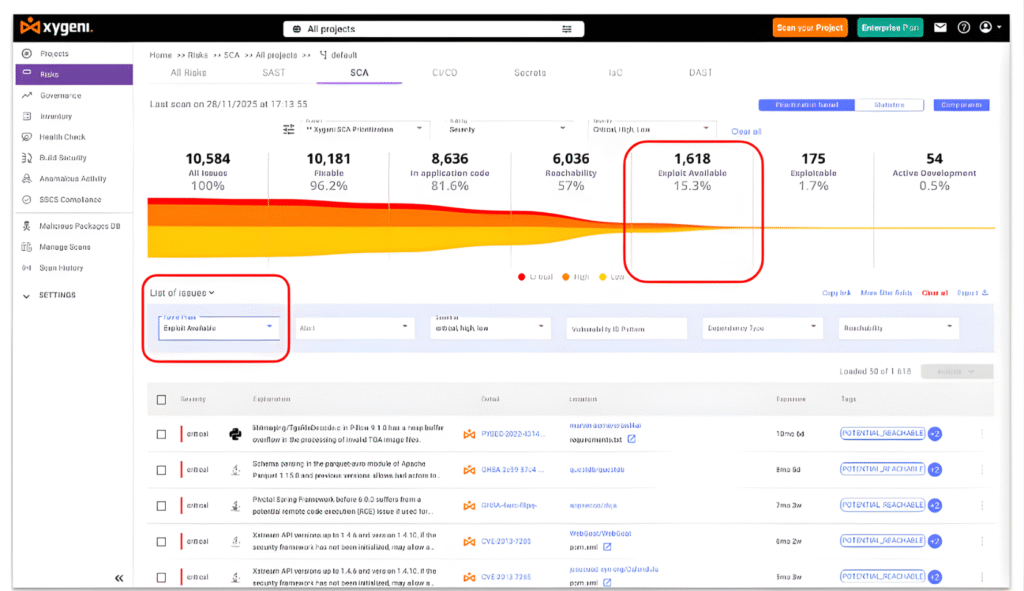
We built this feature after repeatedly seeing teams fix high-CVSS issues while known exploited vulnerabilities reached production. That experience shaped how we designed the system.
With v5.36, Xygeni integrates verified exploit intelligence directly into the prioritization engine.
What happens under the hood
- Xygeni continuously ingests trusted exploit catalogs such as KEV and other public exploit sources
- Each vulnerability receives exploit-presence metadata
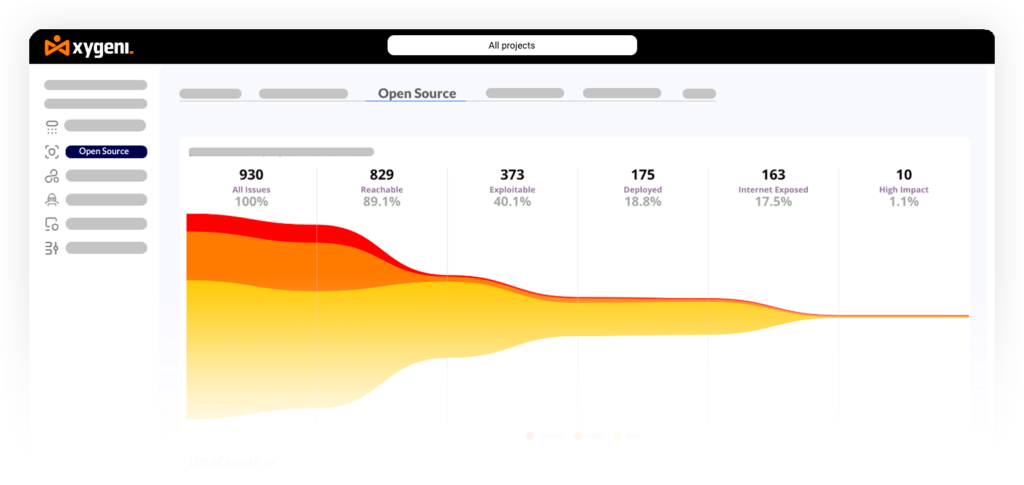
- The prioritization funnel combines:
- Known exploit status
- EPSS probability
- Reachability context
- Code and dependency exposure
The platform computes a composite real-world risk score
Instead of replacing existing signals, this model refines them.
Detection → Exploit Match → Reachability → Fix
This flow drives every decision:
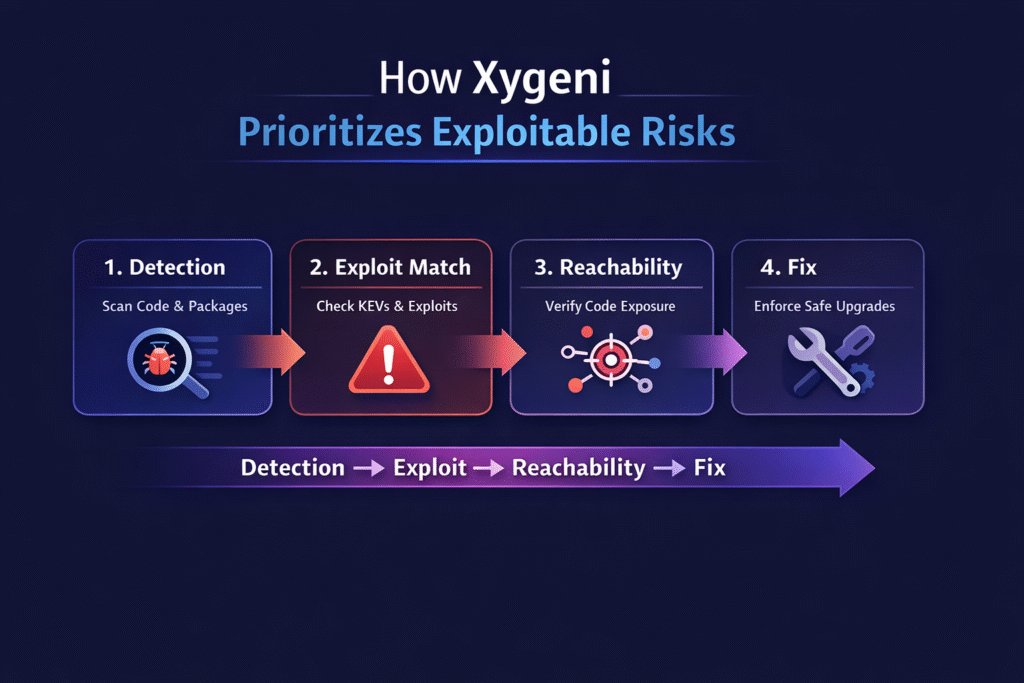
Developers see exploit context directly in pull requests. Pipelines block merges only when reachable code includes known exploited vulnerabilities. Automated remediation proposes safe upgrades immediately.
No meetings. No guesswork. No panic patches.
Why This Matters Beyond Compliance
Although the Cyber Resilience Act triggered this shift, the benefits extend further.
Teams that prioritize using exploit intelligence:
- Reduce alert fatigue
- Shorten remediation time
- Avoid emergency patch cycles
- Ship safer software with confidence
Compliance becomes a side effect of doing security right.
Final Thoughts: CRA Makes Risk Based Management Mandatory
The Cyber Resilience Act formalizes what experienced teams already learned. Not all vulnerabilities matter equally.
The CISA Known Exploited Vulnerabilities Catalog shows what attackers use today. Context and reachability show whether it affects you. Together, they define modern risk based vulnerability management.
Xygeni applies this model continuously, automatically, and where developers already work.
About the Author
Written by Fátima Said, Content Marketing Manager specialized in Application Security at Xygeni Security. She creates developer-focused, research-driven content on AppSec, ASPM, and DevSecOps, translating real-world security challenges into clear, actionable guidance.