





Cybersecurity teams face countless vulnerabilities every day. Figuring out which threats need attention first is critical. That’s where the Common Vulnerability Scoring System (CVSS) comes in. CVSS a risk score framework, assigns a numerical value to vulnerabilities, helping teams prioritize risks effectively. By using tools like a CVSS calculator and exploring what information does CVSS provide, security teams can make faster, smarter decisions to focus on the most critical threats.
For DevSecOps engineers and CISOs, CVSS simplifies risk assessment. It helps focus on the vulnerabilities that matter most. With CVSS, teams can stay ahead of threats and strengthen security.
Understanding CVSS a risk score and its Metrics
The Common Vulnerability Scoring System (CVSS, a risk score framework) provides a globally recognized standard for assessing software vulnerabilities. FIRST (Forum of Incident Response and Security Teams) developed CVSS to create a structured way to measure risk. As FIRST explains in their official specification document, the system gives organizations standardized insights, helping them prioritize vulnerabilities effectively and respond quickly.
As of 2026, most mature security programs are moving from CVSS v3.1 to CVSS v4.0, a revision that reshapes how defenders reason about vulnerability severity and priority. The transition isn’t a simple upgrade, though: NVD now publishes CVSS 4.0 scores alongside CVSS 3.1 for newly published CVEs, but retroactive re-scoring of the full historical database isn’t planned, meaning older CVEs will keep their CVSS 3.1 scores as the primary reference indefinitely. If you’re building or updating a vulnerability management program in 2026, expect to work with both versions side by side for the foreseeable future.
Moreover, CVSS delivers a comprehensive evaluation of software vulnerabilities using a systematic scoring mechanism. It assigns scores ranging from 0 to 10, where higher scores indicate more critical vulnerabilities.
What Information Does CVSS Provide for Risk Management?
The Common Vulnerability Scoring System (CVSS) provides a structured framework for evaluating the severity and impact of vulnerabilities. By breaking down the nature and implications of security flaws, CVSS helps organizations prioritize remediation efforts. The system offers key metrics across three primary dimensions:
Base Metrics: These measure the intrinsic characteristics of a vulnerability that do not change over time or across environments. Key details include:
- Attack Vector (AV): How the vulnerability can be exploited (e.g., remotely or locally).
- Attack Complexity (AC): The difficulty of exploiting the vulnerability.
- Privileges Required (PR): The level of access needed to exploit the vulnerability.
- Impact: Evaluates the consequences to confidentiality, integrity, and availability.
Temporal Metrics: These metrics assess the vulnerability as conditions evolve, such as:
- Exploit Code Maturity: Whether exploit code is publicly available.
- Remediation Level: Availability of fixes or workarounds.
- Report Confidence: The credibility of the reported information.
Environmental Metrics: These tailor the score to an organization’s specific context, reflecting the unique business impact of a vulnerability. Key factors include:
- Modified Impact Metrics: Adjusted based on criticality to specific systems.
- Security Requirements: Importance of confidentiality, integrity, and availability in a given environment.
This information provides cybersecurity teams with actionable insights to understand vulnerabilities in detail, making prioritization more precise. By leveraging tools like a CVSS calculator, teams can translate these metrics into tailored scores that align with organizational risk thresholds.
Using the CVSS Calculator to Prioritize Threats
The CVSS calculator helps turn CVSS scores into actionable insights. Security teams add specific vulnerability details to calculate risk scores that fit their environments. This process ensures they prioritize based on real-world conditions instead of theoretical scenarios.
For example, the CVSS calculator allows teams to explore what information does CVSS provide, such as exploitability, potential impact, and how various mitigating factors influence risk levels. Tools like the National Vulnerability Database’s CVSS v4 calculator simplify this process, helping security professionals analyze vulnerabilities more effectively.
This tailored approach enables organizations to focus on vulnerabilities that pose the biggest risks to critical systems. As explained earlier, teams use tools like the CVSS calculator to explore CVSS, a risk score framework, in more detail. Moreover, it connects technical assessments with strategic decisions, allowing DevSecOps engineers and CISOs to direct resources where they need them the most.
Additionally, combining the CVSS calculator with other tools improves team communication. This approach ensures teams clarify processes and manage vulnerabilities efficiently. By applying CVSS information effectively, organizations strengthen and maintain a more reliable security posture.
Want to learn more about staying ahead of threats in real time?
Download our whitepaper, 'Early Warning: Real-Time Threat Detection and Prioritization,' and discover how to safeguard your software supply chain.
Key Benefits of CVSS a risk score
CVSS, a risk score framework, is not just about assigning numbers to vulnerabilities. It offers meaningful insights that help DevSecOps teams and CISOs make better decisions by exploring what information does CVSS provide and leveraging it for smarter security strategies.
Provides Consistent Risk Assessment with CVSS a Risk Score
To begin with, CVSS uses a standardized scoring method, making it easier for teams to evaluate vulnerabilities consistently. This uniform approach reduces confusion and helps everyone on the team work with the same understanding of risks. As a result, organizations can align their efforts and focus on the most critical issues without wasting time.
Enables Better Decision-Making
In addition, as we mentioned before, CVSS provides detailed insights by breaking down vulnerabilities into base, temporal, and environmental metrics. These insights go beyond just identifying the severity of a threat. They also show how likely it is that the vulnerability will be exploited. With this information, teams can make faster decisions and focus their resources on addressing the most pressing risks.
Improves Communication Across Teams
Moreover, the CVSS numerical scoring system makes it easier to explain vulnerabilities. Security teams can use simple metrics to help non-technical stakeholders, like executives or managers, understand risks. This shared understanding leads to better collaboration, faster decision-making, and more effective responses to threats.
Works Seamlessly with Advanced Tools
Another advantage of CVSS is how well it integrates with other cybersecurity tools. For instance, platforms like Xygeni enhance CVSS by adding real-time exploitability analysis and runtime context. These integrations help refine prioritization, making it even easier for teams to focus on the vulnerabilities that matter most.
Aligns with Industry Standards
Finally, CVSS aligns with global standards and is trusted by organizations worldwide. This widespread adoption makes it simpler for companies to comply with industry best practices and regulatory requirements. Because CVSS is so widely used, security teams can trust it as a reliable tool for managing and prioritizing vulnerabilities.
Limitations of CVSS a risk score
While CVSS is a helpful tool for assessing vulnerabilities, it has some important limits that security teams need to address to improve its use.
Static Scoring Has Limits
First, CVSS relies on static scoring, meaning a vulnerability’s score doesn’t change even as new threats appear. This can cause teams to over-focus on low-risk issues or ignore active threats, leading to wasted time and effort.
No Updates for Changing Threats
Second, CVSS doesn’t adapt to fast-changing threats. For example, a vulnerability may become more dangerous if hackers release a public exploit or if an important system becomes exposed. Without real-time updates, teams can miss urgent threats.
Missing Exploitability Data
In addition, CVSS measures how severe a vulnerability is but doesn’t show how likely it is to be exploited. Tools like EPSS can help by predicting exploitation chances. For instance, a high CVSS score might not need quick action if the exploitability is low, but a moderate score with high exploitability could require immediate attention.
Limited Environmental Customization
Finally, while CVSS allows some adjustments based on an organization’s setup, these adjustments are often skipped or misused. This can lead to scores that don’t fully reflect risks, such as those in public-facing systems that are more exposed than internal tools.
Severity Inflation Is a Growing Problem
This limitation isn’t theoretical. In 2025, 8.3% of all CVEs scored Critical and 31.1% scored High. When close to 40% of all published vulnerabilities carry a “High” or “Critical” label, those bands stop meaningfully differentiating real risk from routine risk, which is exactly why CVSS alone can’t drive prioritization on its own anymore.
By adding tools like EPSS and real-time monitoring, teams can address these gaps and better focus on the most important vulnerabilities.
Overcoming Limitations with Complementary Approaches
To address these limitations, organizations should combine CVSS with other tools and metrics that add dynamic context and exploitability insights. For example:
- EPSS Integration: Enhance CVSS with EPSS to factor in the likelihood of exploitation, ensuring that priority is given to vulnerabilities that present an actual, immediate threat.
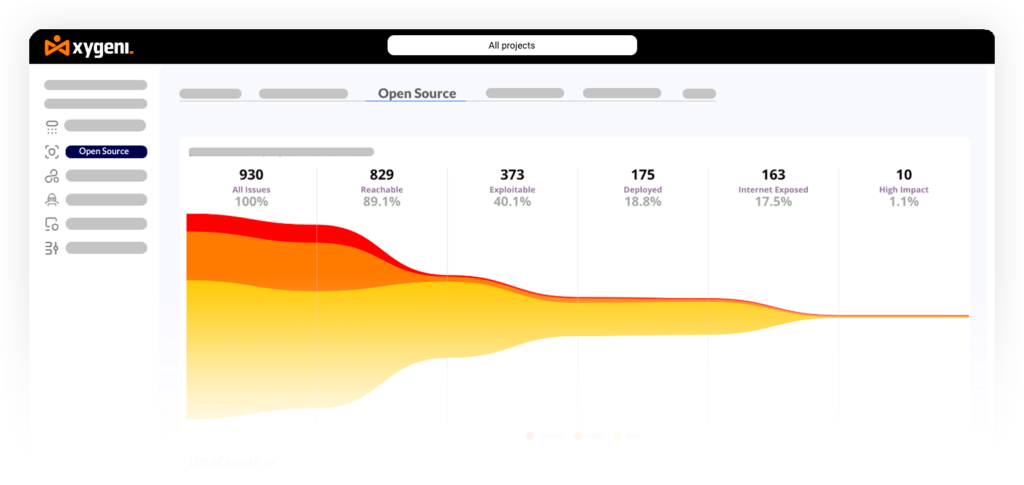
- Reachability Analysis: Use tools to determine whether a vulnerability is accessible within your specific environment, reducing the focus on unreachable risks.
- Runtime Context: Leverage real-time monitoring to assess whether vulnerabilities are actively exploited or affecting live systems.
- KEV Integration: Cross-reference vulnerabilities against CISA’s Known Exploited Vulnerabilities catalog. 884 vulnerabilities were added to KEV during 2025, and 28.96% of them were already being exploited on or before the day they were publicly disclosed. Unlike EPSS’s predictive probability, KEV confirms exploitation has actually been observed, making it one of the strongest non-theoretical signals available for prioritization.
By addressing these limitations and integrating CVSS with additional tools, security teams can make more informed decisions, making sure their efforts are focused on the vulnerabilities that matter most.
CVSS and the EU Cyber Resilience Act (CRA)
CVSS scoring is about to matter for more than internal prioritization. The EU Cyber Resilience Act (Regulation (EU) 2024/2847) requires manufacturers to triage vulnerabilities, remediate them on time, and report active exploitation once they become aware of it. Two dates matter here: the reporting obligation for actively exploited vulnerabilities (Article 14) applies from September 11, 2026, while the broader vulnerability-handling, remediation, and disclosure duties (Article 13 and Annex I) apply from December 11, 2027.
One important clarification: the CRA doesn’t mandate CVSS, EPSS, KEV, or any specific scoring system. It requires timely remediation but leaves the operational measurement up to each manufacturer. That said, a CVSS or EPSS score alone doesn’t start the 24-hour reporting clock, only a factual determination that a vulnerability is being actively exploited against a real target does. In practice, this means organizations selling software in the EU need a documented, consistent scoring and detection process that can reliably distinguish “theoretically severe” from “actively exploited”, exactly the gap CVSS alone leaves open.
If you sell software or hardware with digital elements in the EU, now is the time to build (or audit) your CVSS + EPSS + KEV scoring pipeline, well before the September 2026 deadline arrives.
How Xygeni Enhances CVSS a Risk Score Framework
While CVSS a risk score framework, is a great starting point for evaluating vulnerabilities, Xygeni makes it even better by adding smart insights, better prioritization, and automation. These tools help security teams focus on the most important threats while cutting down on unnecessary alerts that cause fatigue. Teams can also take advantage of what information does CVSS provide to make faster and more informed decisions.
Xygeni combines CVSS with real-world data, like how likely vulnerabilities are to be exploited and what’s happening in real-time. This approach makes it easier for teams to prioritize and quickly respond to real threats.
- Reachability Analysis: Xygeni identifies whether a vulnerability is actively exploitable in your environment. This ensures that security efforts focus on threats with real impact.
- EPSS and CVSS Integration: By combining exploitability data with CVSS insights, Xygeni enables smarter decisions. For instance, as explained in Xygeni’s CVE Scoring Breakdown blog, this integration ensures more accurate prioritization.
- Business Impact Analysis: Xygeni flags vulnerabilities affecting critical assets to align security priorities with business goals. Therefore, teams can focus remediation efforts on what matters most to the organization.
- Runtime Insights: Xygeni adds real-time context, such as active exploitations, making prioritization more actionable and precise.
- Automated Remediation: Xygeni automates patching vulnerabilities as soon as it detects them. This process reduces manual work, speeds up responses, and allows developers to focus on their coding without disruptions.
Xygeni combines CVSS with tools like EPSS and uses automation to simplify vulnerability management. As a result, this clear and focused approach helps DevSecOps engineers and CISOs concentrate on critical tasks, reduce risks, and strengthen security.
Furthermore, Xygeni boosts team communication by offering clear workflows and actionable insights. Together, these features help organizations build stronger security systems and stay ahead of new threats.
With the EU Cyber Resilience Act’s reporting obligations approaching in September 2026, having a documented, automated CVSS and EPSS-based prioritization process isn’t just a best practice anymore, it’s becoming a compliance necessity. Xygeni’s approach to combining CVSS with EPSS and reachability context helps teams build exactly that kind of defensible, audit-ready process ahead of the deadline.
Take Control of Your Vulnerability Management Today
Don’t let vulnerabilities slow you down or put your systems at risk. Instead, use Xygeni’s advanced tools to completely transform how you manage and prioritize threats. By seamlessly combining the power of CVSS with dynamic insights like exploitability and reachability, Xygeni enables your team to focus on what truly matters most.
Ready to take the next step? Explore Xygeni’s vulnerability management solutions and see how we can help you stay ahead of evolving threats. Request a demo today to experience the future of cybersecurity firsthand.

FAQs
What’s the difference between CVSS v3.1 and CVSS v4.0?
CVSS v4.0 introduces new nomenclature to distinguish Base (CVSS-B), Base+Threat (CVSS-BT), Base+Environmental (CVSS-BE), and Base+Threat+Environmental (CVSS-BTE) scores, replaces the old Temporal metric group with a more actionable Threat group, and adds an optional Supplemental Metric Group for extrinsic context like safety impact and automatability. It’s designed to reduce the ambiguity that made CVSS v3.1’s Temporal metrics rarely used in practice.
Do I need to re-score my existing vulnerability backlog under CVSS v4.0?
No. Retroactively re-scoring the full NVD database under CVSS v4.0 isn’t planned, and historical CVEs will retain their CVSS v3.1 scores as the primary reference. Security teams should start consuming CVSS v4.0 scores for newly published CVEs going forward, without re-litigating past prioritization decisions.
Why do so many CVEs score “Critical” or “High”?
In 2025, 8.3% of CVEs scored Critical and 31.1% scored High, meaning nearly 40% of all disclosed vulnerabilities carry a top-tier severity label. This “severity inflation” is precisely why CVSS alone isn’t a sufficient prioritization tool, it doesn’t distinguish a theoretically severe but unreachable flaw from one that’s actively being exploited.
What is KEV, and how does it differ from EPSS?
KEV (Known Exploited Vulnerabilities), maintained by CISA, lists vulnerabilities with confirmed evidence of active exploitation in the wild. EPSS, by contrast, is a probabilistic model estimating the likelihood that a vulnerability will be exploited in the next 30 days. 884 vulnerabilities were added to KEV in 2025, with nearly 29% already under active exploitation before public disclosure. Using KEV and EPSS together gives both a confirmed-threat signal and a forward-looking one.
Is CVSS enough on its own for vulnerability prioritization?
No. Empirical research consistently shows that most vulnerabilities scored “high” or “critical” by CVSS are never actually observed to be exploited. A CVSS-only approach burns engineering time on theoretical risk while genuinely exploited vulnerabilities may go unaddressed. Combining CVSS with EPSS, KEV, and reachability analysis is the current industry-recommended approach.