Your API attack surface grows with every pull request, and most API security tools only see it once it is live and taking traffic. Xygeni discovers every endpoint and its risks in the code, before release.
Available as an Enterprise add-on
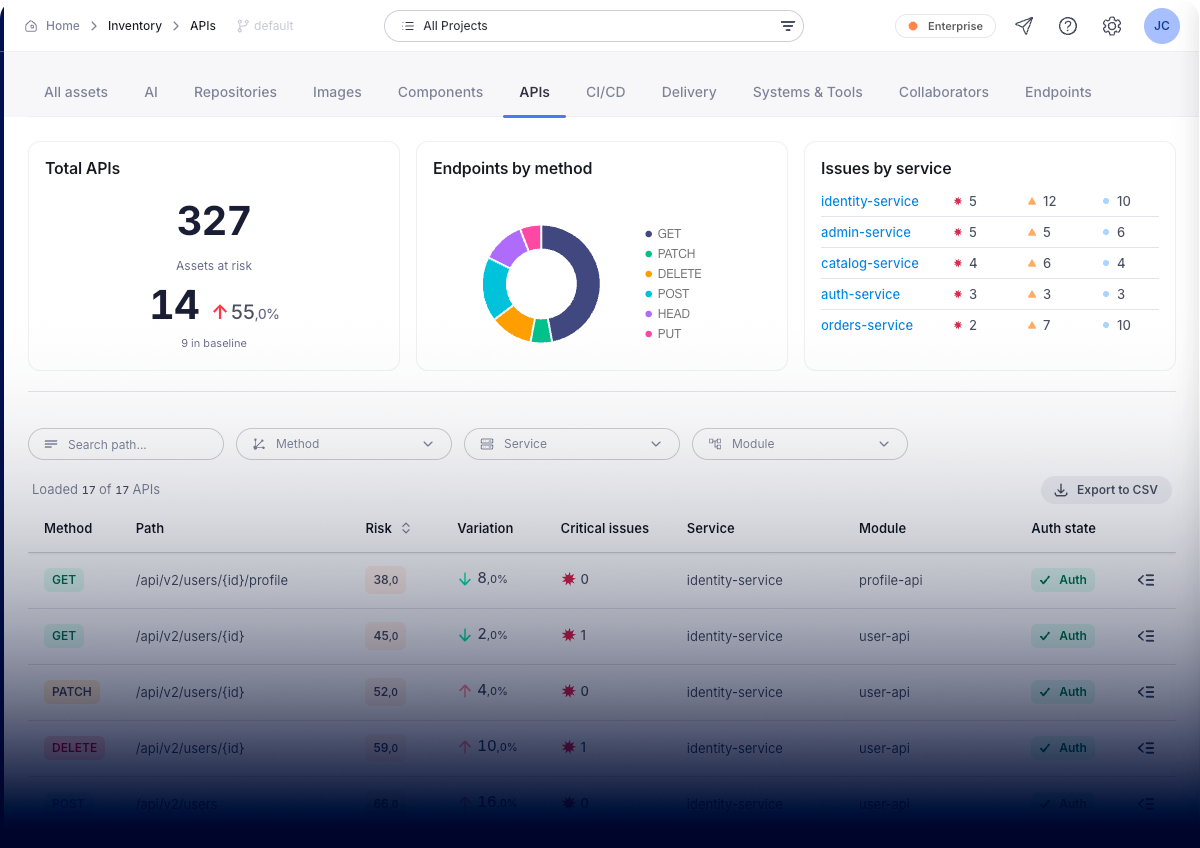
Your API Attack Surface, Mapped and Ranked.
Xygeni builds your API inventory from application source code and from your API specifications, including OpenAPI and Swagger, so you see the full surface: the endpoints your teams documented, and the ones nobody did.
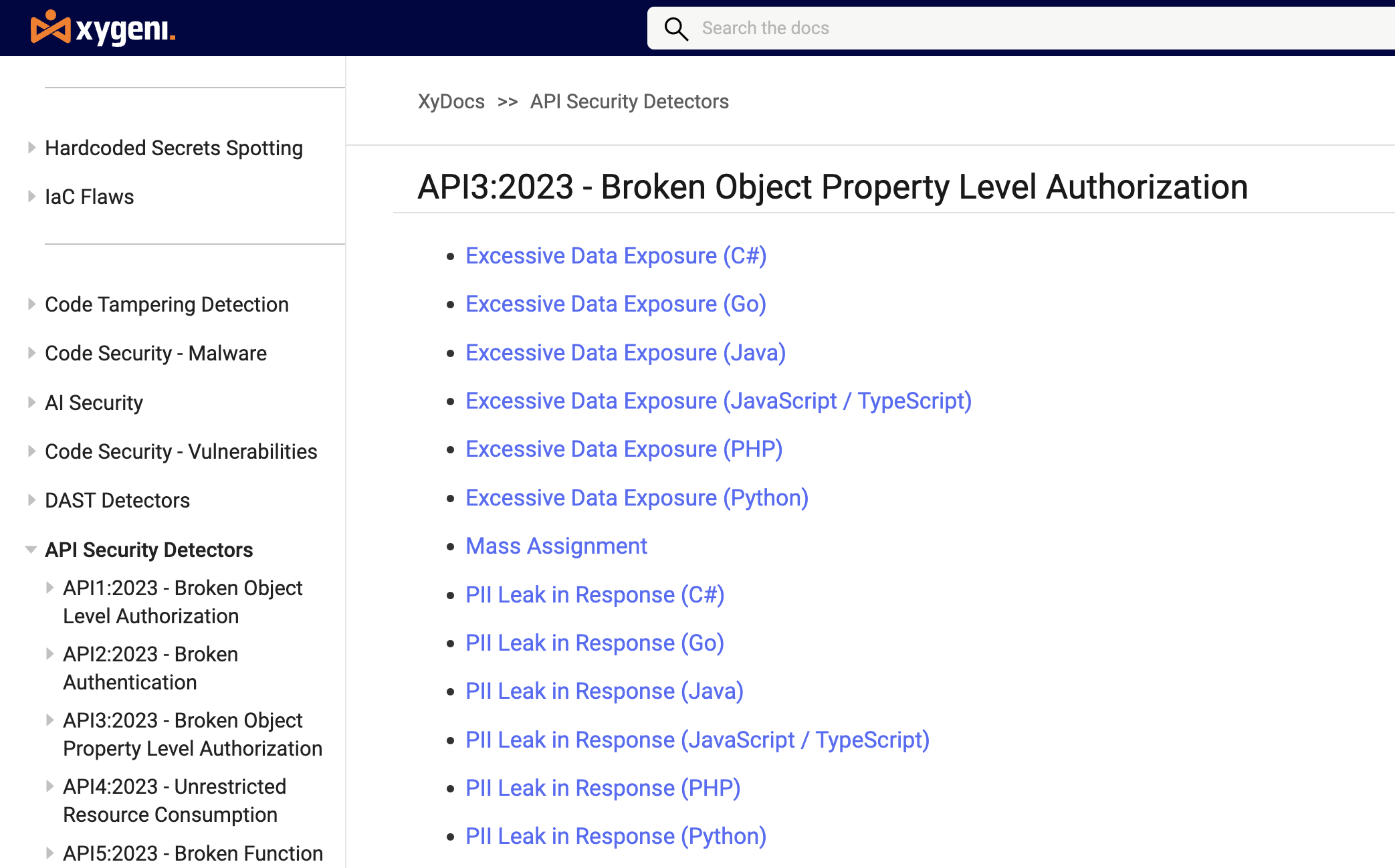
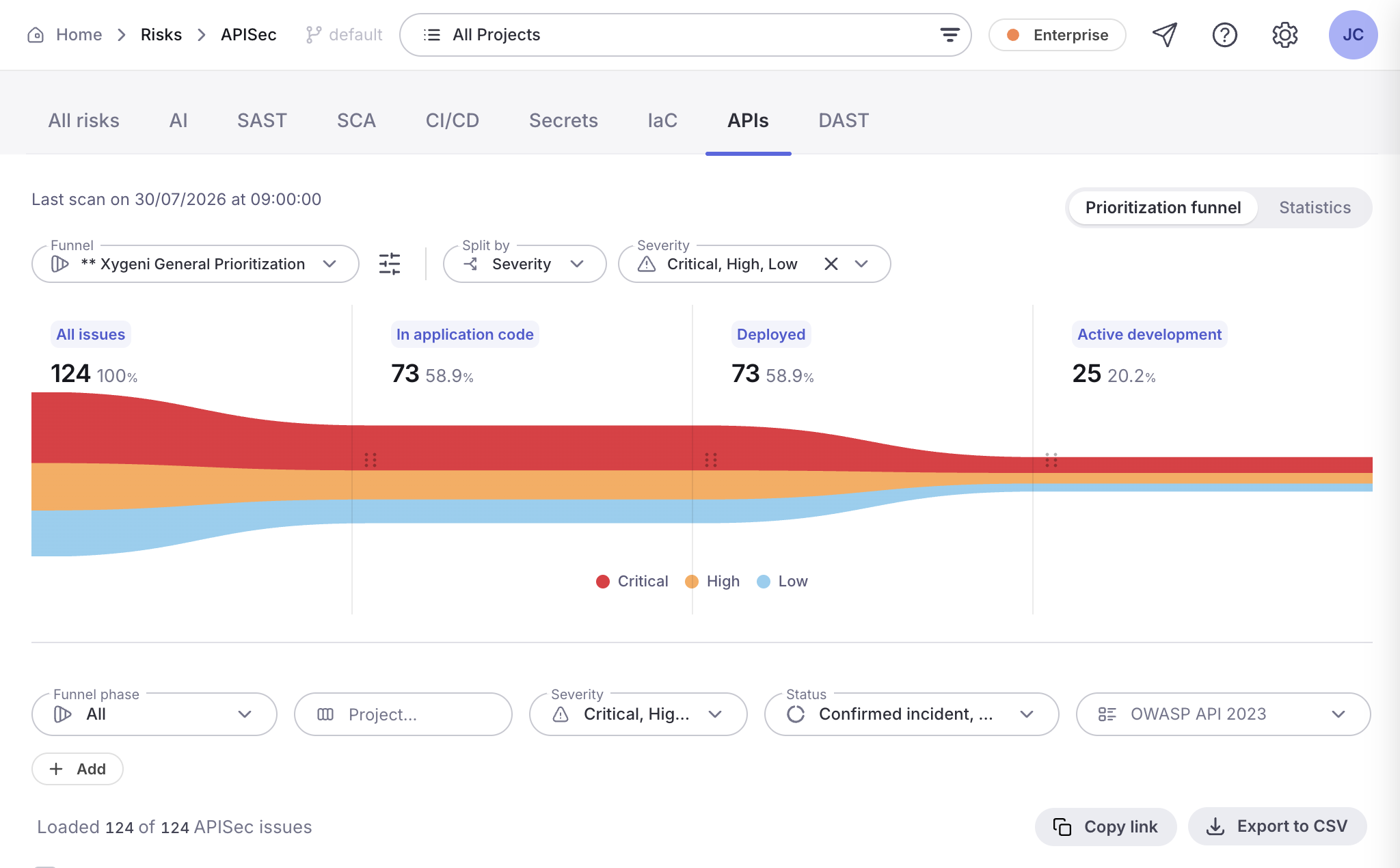
Findings are mapped to the OWASP API Security Top 10 (2023): broken object and function level authorization, unauthenticated endpoints, excessive data exposure, mass assignment, JWT and CORS misconfiguration, missing rate limits, SSRF, and zombie endpoints.
Every finding carries the endpoint’s authentication state and the sensitivity of the data it handles, so teams fix what an attacker can actually reach instead of working an undifferentiated list.
Every Endpoint. Every Risk. Before Production.
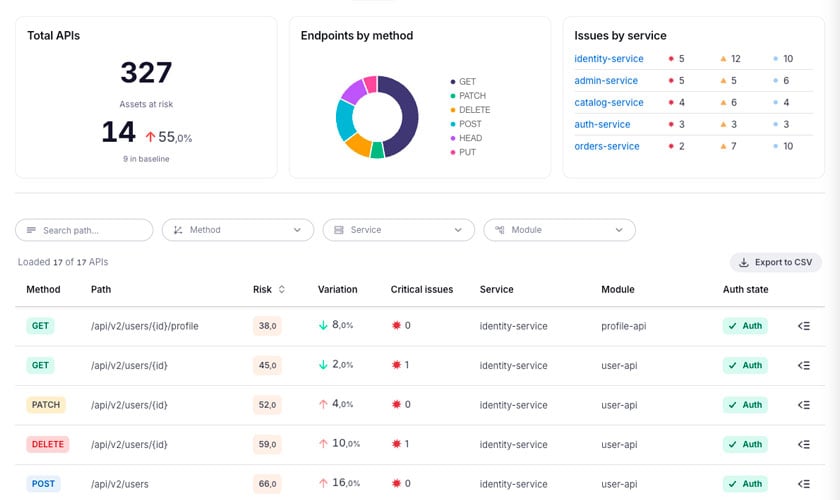
Total APIs, assets at risk against a baseline, endpoints by method, and issues by service. Every endpoint listed with its method, path, service, module, authentication state, and risk score.
Detection across the OWASP API Security Top 10 (2023), so findings speak the framework your security team and your auditors already use.
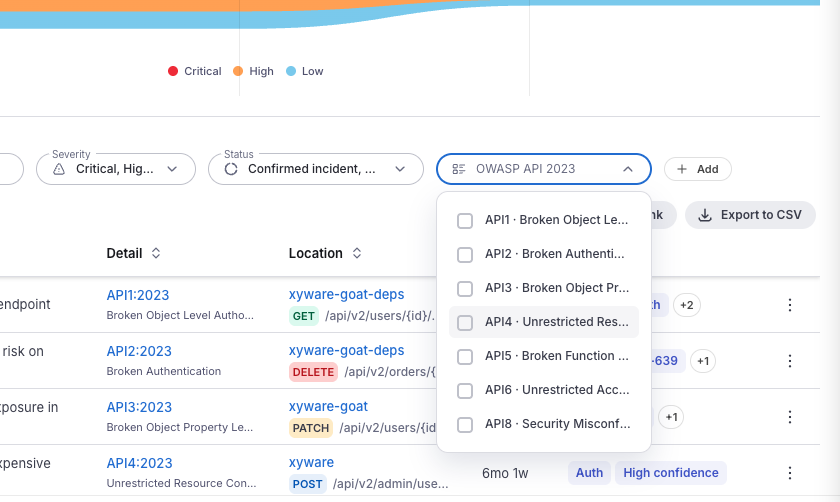
Xygeni classifies the data each endpoint handles, flagging PII, PCI, and PHI in both parameters and responses. An unauthenticated endpoint that returns personal data is not the same problem as a permissive CORS header, and it should not look like one.
Because Xygeni reads both the code and your API specifications, it surfaces the drift between them: endpoints live in code but missing from the spec, deprecated routes still reachable, and orphan endpoints nobody owns.
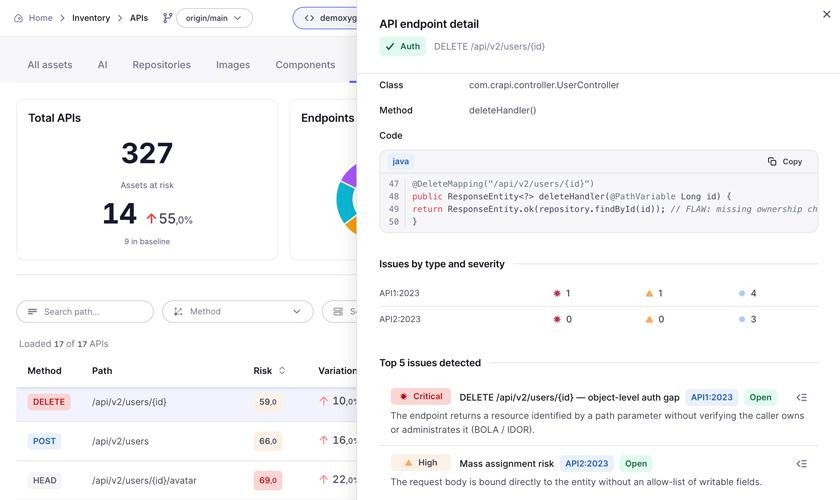
Xygeni correlates findings on the same endpoint and raises severity when they compound. A PII leak in a response is serious. A PII leak on an endpoint that requires no authentication is critical, and Xygeni says so.
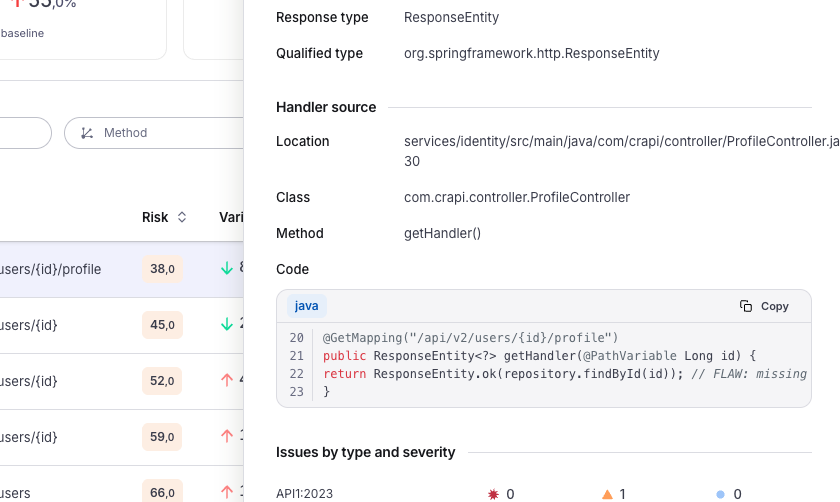
Each finding points at the exact handler: file, class, method, and the code that introduced it, with the flaw on the line. Developers get something they can fix, not a ticket they have to investigate first.
Find and fix API risks in code before they reach production.
Runtime API security tells you an endpoint is exposed once it is already serving traffic. Xygeni finds it in the code, in the pull request, while fixing it still costs one commit.
API security sits next to SAST, SCA, secrets, IaC, and DAST in a single platform, so your API risk lives with the rest of your application risk instead of in a separate tool with its own login.
Static. Xygeni analyses your application code and API specifications to find exposures before deployment. For runtime testing of a running application, Xygeni DAST covers that, and the two work together.
From two sources: your application source code, and your API specifications, including OpenAPI and Swagger. Reading both is what lets Xygeni surface undocumented and orphaned endpoints.
Risks across the OWASP API Security Top 10 (2023), including broken object level authorization (BOLA), broken function level authorization (BFLA), unauthenticated endpoints, excessive data exposure, mass assignment, JWT and CORS misconfiguration, missing rate limiting, SSRF, and zombie endpoints.
Yes. Xygeni flags PII, PCI, and PHI in endpoint parameters and responses, and uses that to rank findings by real exposure.
Yes. Incremental scanning analyses only the endpoints that changed, and the manifest it produces can focus a subsequent DAST scan on those same endpoints.
No. Scans run in your own infrastructure. Only results are uploaded, protected in transit and at rest.
It is available as an Enterprise add-on. Talk to us and we will scope it with you.
with the Xygeni All-In-One AppSec Platform
with the Xygeni All-In-One AppSec Platform