

Most organizations aren’t struggling to adopt AI. They’re struggling to govern it well. 88% of organizations are actively using AI across business functions, but only 8% have a comprehensive AI governance framework in place, and closing that gap, not adding more model capability, is quickly becoming the defining challenge of enterprise AI in 2026.
This post breaks down what AI governance actually means, the specific failures driving most incidents today, why AI governance monitoring has to be continuous rather than periodic, and how contextual governance provides the strategic visibility that policy documents alone never will.
What Is AI Governance?
AI governance is the combination of policies, controls, and technical infrastructure that determines what AI systems can access, what actions they can take, and whether those actions are logged and auditable. It’s not a single document or a one-time review; it’s an operating capability that has to keep pace with how fast AI adoption itself is moving.
That pace is the core problem. 85% of organizations have integrated AI into core operations or deployed it across multiple functions, but only 25% report comprehensive visibility into how it’s actually being used. Claiming governance and running governance are two entirely different things, and the distance between them is exactly where most AI governance failures originate.
The Most Common Governance Failures in 2026
AI governance failures rarely start with the model itself. They start with visibility, ownership, and access, the parts of governance that don’t show up in a demo.
- Governance frameworks exist on paper but aren’t implemented. As above, the gap between organizations running AI at scale (85%) and those with real visibility into that usage (25%) is one of the starkest AI governance failures on record, and it means most “governed” AI is running with far less oversight than leadership assumes.
- Shadow AI proliferates faster than anyone can track it. 85% of organizations have integrated AI into core operations or deployed it across multiple functions, but only 25% report comprehensive visibility into employee AI use. Custom GPTs, no-code agents, and vendor LLMs spread across teams without going through any formal review, and by the time governance teams find out, the tools are already embedded in daily workflows.
- Agentic AI is outrunning the governance built for it. 74% of organizations plan to adopt agentic AI within two years, but only 21% have a mature governance model for it. A Cloud Security Alliance and Token Security study found that 63% of organizations cannot enforce purpose limitations on their AI agents, and 60% cannot terminate a misbehaving agent once it’s running. That’s not a hypothetical gap: by April 2026, 65% of enterprises with deployed AI agents had experienced a confirmed security incident.
- Uniform governance fails because not all AI carries the same risk. Gartner warns that enterprises applying uniform governance across all AI agents, regardless of autonomy level or scope, are heading toward widespread deployment failures, predicting that by 2027, 40% of enterprises will demote or decommission autonomous agents due to governance gaps identified only after production incidents occur. Treating a document-summarization agent the same as one that modifies production records isn’t caution; it’s a governance design flaw that produces exactly the outcome it was meant to prevent.
- When AI governance fails, it’s usually a visibility failure, not a model failure. 63% of organizations that experienced AI-related breaches either had no AI governance policy or were still developing one. The recurring pattern across nearly every documented incident is the same: an AI system had access nobody was tracking, took an action nobody reviewed, and the failure surfaced only after the fact.
Why AI Governance Monitoring Has to Be Continuous
A governance policy that’s reviewed quarterly is, functionally, a governance policy that doesn’t exist for the other eleven weeks. AI governance monitoring is the practice of continuously tracking what AI systems are doing, not just what they were approved to do, and the data makes clear why the distinction matters.
Gartner projects the average large enterprise will run more than 150,000 AI agents by 2028. Every one of those agents is a potential access vector, a potential data exfiltration path, a potential unlogged action on a production system with no audit trail. A policy document can’t watch 150,000 agents. Only continuous monitoring can.
The shift in AI governance monitoring requires is structural shift: governance needs to move from static policy to continuous oversight, monitoring agent behavior, detecting deviations, and adjusting controls as systems evolve. That’s a fundamentally different discipline than writing an acceptable-use policy once a year. It means:
- Tracking behavior, not just access grants. Knowing an agent has permission to modify a database is not the same as knowing what it actually did with that permission, on which record, and why.
- Detecting deviation from expected patterns, the same behavioral logic used in traditional threat detection, is applied specifically to what “normal” looks like for a given AI agent or model.
- Maintaining an audit trail by default, not reconstructing one after an incident has already happened.
The cost of skipping this is measurable. Organizations without dedicated AI governance monitoring are discovering problems the same way most operational failures get discovered: after something has already gone wrong. In March 2026, an in-house agent at Meta posted incorrect technical information publicly without human approval and triggered two hours of unauthorized data exposure, accessible to employees not cleared to view it, the second agent control failure at the company within weeks.
AI Contextual Governance and Strategic Visibility
Blanket rules fail because AI risk isn’t uniform, and this is where AI contextual governance earns its place: applying the level of oversight that matches what a specific model, agent, or integration can actually do, not a single policy stretched across every use case.
A document summarization tool that only reads internal knowledge base articles carries a fundamentally different risk than an agent that can approve invoices, send client-facing emails, or modify records in a live CRM. Treating them identically produces exactly the failure rate Gartner is warning about. Contextual governance means calibrating controls to capability: lighter oversight for an agent that only observes, explicit approval workflows and audit logging proportional to risk for one that acts.
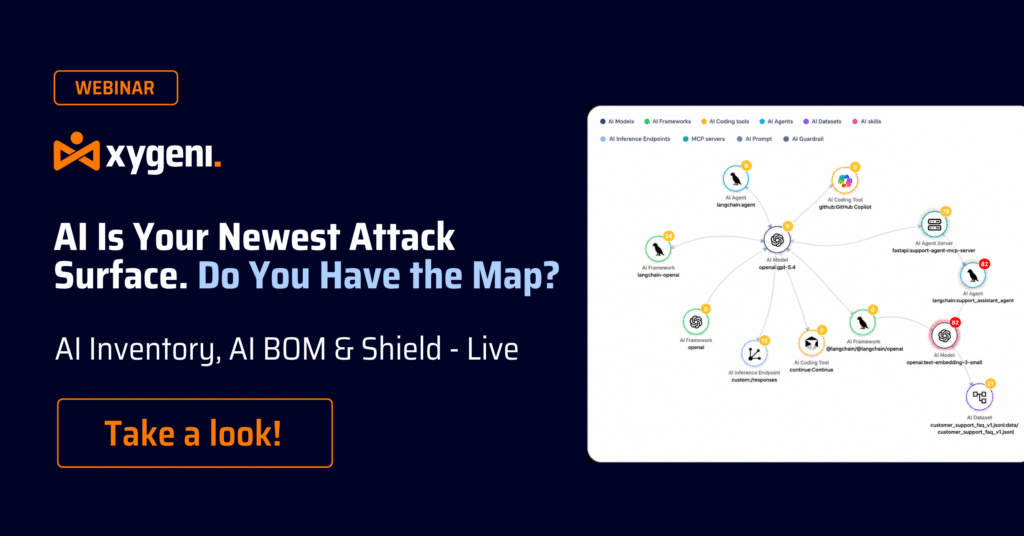
That calibration is only possible with genuine strategic visibility, an accurate, continuously updated picture of every AI asset in the organization, what it can access, and what it’s actually doing with that access. Without it, contextual governance is just a theory; with it, governance teams can make risk-proportionate decisions instead of either over-restricting useful tools or leaving high-risk agents unsupervised.
The attack surface is shifting away from infrastructure and toward identity-driven access paths. AI governance failures increasingly emerge through integrations and permissions rather than direct system compromise. Strategic visibility into those access relationships, not just into the models themselves, is what turns AI contextual governance from an aspiration into something a security or compliance team can actually operate day to day.
Why the Stakes Are Rising Fast
362 AI-related incidents were recorded in 2025, up from 233 in 2024, a 55% year-on-year rise. Regulatory pressure is compounding that trend rather than easing it: the EU AI Act’s full enforcement provisions for high-risk AI systems take effect on August 2, 2026, covering credit scoring, employment, insurance underwriting, and other regulated domains, with fines reaching €15 million or 3% of global annual turnover for non-compliance. 78% of enterprises remain unprepared for those obligations.
The organizations pulling ahead are treating this as infrastructure rather than paperwork. Organizations that deploy dedicated AI governance platforms are 3.4x more likely to achieve high effectiveness in their governance programs than those that do not, and organizations with fully integrated AI (not just piloting it) are nearly four times more likely to report revenue growth, 58% versus 15%, and the same maturity gap almost certainly applies to how well that AI is governed along the way.
For software and security teams specifically, this same governance gap extends well beyond a chatbot policy: AI coding assistants, autonomous agents, and MCP connections are already running across the SDLC, often with none of the visibility or contextual oversight described above applied to them at all. Xygeni approaches this as an extension of the same problem, mapping every AI model, agent, and MCP server across the development lifecycle and correlating what each one can access with the risk it actually represents, so contextual governance and continuous monitoring apply to AI-generated code and AI-introduced dependencies with the same rigor as any other AI asset.
Start free. Xygeni‘s Developer plan is €0: 10 repositories, 200 scans a month, up to 5 contributors, no credit card. Sign up with GitHub, GitLab, or Google and see your own AI footprint mapped in under 10 minutes.

FAQ
What is the difference between AI governance and AI governance monitoring?
AI governance is the set of policies, controls, and infrastructure defining what AI can do and who’s accountable for it. AI governance monitoring is the continuous, operational practice of tracking whether AI systems are actually behaving within those boundaries, in real time, rather than relying on periodic reviews.
What causes most AI governance failures?
Most AI governance failures trace back to visibility and access, not model behavior: shadow AI tools nobody reviewed, agents with broader permissions than anyone tracked, and uniform policies applied to systems with very different risk levels. Incidents are usually discovered after the fact because monitoring wasn’t continuous.
What does AI contextual governance mean in practice?
It means calibrating oversight to what a specific AI system can actually do, rather than applying one policy to every model or agent. An agent that only reads internal documents needs far lighter governance than one that can modify production data or send communications on a company’s behalf.
Why does AI governance need strategic visibility rather than just a policy document?
Because AI governance failures increasingly happen through integrations, permissions, and access paths that a policy document doesn’t monitor. Strategic visibility, a real, continuously updated inventory of what AI exists and what it can access, is what makes contextual, risk-proportionate governance possible instead of theoretical.