
What Is Crackhash and Why Developers Should Care?
Crackhash is a command-line utility often exploited by attackers to crack passwords from leaked hashes. It supports various hash algorithms (MD5, SHA-1, SHA-256, bcrypt, etc.) and works seamlessly with popular wordlists like rockyou.txt. Its simplicity and automation capabilities make it especially attractive for adversaries conducting rapid credential attacks using well-established hash cracking techniques.
The risk is real and growing. Tools like Hashcat can test 100 billion password combinations per second using GPU acceleration, meaning a weak password behind even a “strong” hash algorithm can fall in minutes. Crackhash brings that same automation to anyone with a terminal and a wordlist.
This article is focused on prevention. If you’re a developer or part of a DevSecOps team, your job is to make sure tools like Crackhash never get used against your systems. A leaked hash in a Git commit, CI log, or Dockerfile is all it takes for an attacker to launch a password cracking attempt. Crackhash can turn that into a breach in minutes using common hash cracking techniques.
Example scenario: A developer commits a SHA-1 hash to a Git repo. It gets discovered, cracked using an automated tool, and the recovered password is used for unauthorized access.
From Leak to Breach: How Password Cracking Happens
Hash-based attacks don’t require sophisticated actors, just a leaked secret and no defenses in place. These attacks rely on well-documented password cracking methods and are shockingly effective when basic security practices are ignored. Here’s how a real-world breach might unfold:
Step 1: The Leak
A developer accidentally commits a bcrypt-hashed password to a CI log. The log is stored without masking or access controls.
Step 2: Detection by an Attacker
Attackers monitoring public repositories, CI artifacts, and package registries scan for high-entropy strings and known hash patterns. In 2026, this is increasingly automated, bots continuously scrape GitHub commits, npm packages, and CI logs looking for exactly these patterns. The Xygeni Malicious Code Digest regularly identifies packages where secrets and hashes are exposed this way.
Step 3: Cracking Attempt
Using Crackhash with a known wordlist, the attacker initiates a password cracking operation. Since the original password was weak, it was cracked in minutes using standard hash cracking techniques.

For more syntax options, refer to the Crackhash documentation.
Step 4: Exploitation
The attacker reuses the cracked credentials to authenticate into a Docker registry. There, they download a sensitive internal image, inject a crypto miner, and redeploy it, compromising the supply chain.
Key lesson: No matter the hash type, bcrypt, SHA-1, or MD5, if it leaks and the underlying password is weak, Crackhash can turn that leak into a full breach through well-practiced password cracking techniques.
Real-World Secret Exposure Points Developers Miss
Hardcoded Credentials in Code Repositories
Example:
Prevention:
Use Git hooks and Xygeni Secrets Security to detect and auto-revoke exposed secrets before they leave your environment.
Secrets Leaked in CI/CD Logs
Example:
Prevention:
Use::add-mask:: in GitHub Actions to mask secrets.
Redirect sensitive outputs to secure artifacts.
Insecure Storage in Configuration Files or Dockerfiles
Example:
Prevention:
Use .env files excluded from Git.
Inject secrets via Docker secrets or runtime environment variables from a vault.
Supply Chain Leaks via Third-Party Dependencies
Example:
Prevention:
Validate published artifacts using CI-integrated security checks.
Use Xygeni SCA to monitor transitive dependencies for leaked files, secrets, and malicious packages — including early detection via the Malicious Code Digest.
Each of these exposure points represents a direct risk vector. DevSecOps practices must start with detection and prevention at the developer level to avoid password cracking exposure.
Xygeni’s Role: Preventing Secret Leaks Before Attackers Reach Crackhash
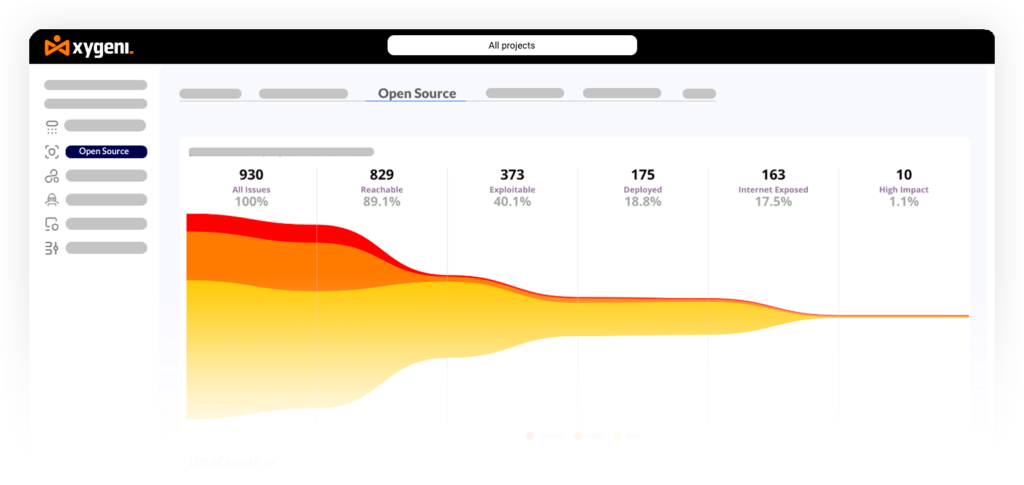
Xygeni provides automatic, real-time, and contextual protection against leaked hashes and secrets throughout the software development lifecycle. It continuously scans code, .env files, Dockerfiles, CI/CD logs, and published packages to detect credential exposures early.
Xygeni provides automatic, real-time, and contextual protection against leaked hashes and secrets throughout the software development lifecycle. Its Secrets Security module scans files, pipelines, containers, repositories, and Git history — with auto-revocation triggered the moment a secret is detected, minimizing the window between exposure and exploitation. Its SAST engine identifies hardcoded hashes and credentials in proprietary code before they reach a commit. And its Anomaly Detection module watches for unusual CI/CD activity that may indicate a hash has already been extracted and is being used for unauthorized access.
When a hash is identified, Xygeni generates detailed alerts that include the affected file and line number, hash type and value, the associated commit or artifact, and a severity score. These insights are used to block builds, merges, and releases automatically. During CI/CD runs, it masks secrets live and can instantly trigger alerts through Slack, Jira, or SIEM integrations. Xygeni also tracks exposures across repositories and teams through a centralized dashboard, enabling organizations to spot patterns and reduce attack surfaces proactively.
By combining precision detection with automated, developer-friendly responses, Xygeni stops hash-cracking threats before they escalate. While detecting leaks is vital, the industry is increasingly moving toward more secure authentication methods like passkeys to eliminate the vulnerability of passwords altogether. Its focus on stopping password cracking attempts makes it a critical layer of defense for any modern development pipeline.
Conclusion: Attackers Exploit Simple Mistakes. Don’t Let Them!
Developers own the attack surface: code, configs, and pipelines. Every leaked hash is a potential compromise waiting to be exploited by Crackhash.
Checklist to prevent password cracking and hash exposure:
- Detect and auto-revoke secrets early with Xygeni Secrets Security
- Use defensive CI/CD practices (masking, redaction, secure storage)
- Educate dev teams on risky patterns (hardcoded hashes, unsafe logs)
Stopping password cracking attacks starts by denying them the raw material: hashes and secrets. Effective defenses require understanding hash cracking techniques and eliminating the exposures that fuel them.
Frequently Asked Questions
What is Crackhash?
Crackhash is a command-line utility used to crack password hashes. It supports common algorithms including MD5, SHA-1, SHA-256, and bcrypt, and works with popular wordlists like rockyou.txt. Its simplicity makes it a common tool in both security testing and malicious credential attacks.
How do attackers find leaked hashes?
Attackers scan public repositories, CI/CD logs, npm packages, and Docker images for high-entropy strings matching known hash formats. This scanning is increasingly automated, bots continuously monitor GitHub commits and package registries for credential exposures.
Can bcrypt hashes be cracked?
bcrypt is significantly harder to crack than MD5 or SHA-1 due to its computational cost. However, if the underlying password is weak or common, even bcrypt can be cracked using dictionary attacks with tools like Crackhash or Hashcat, especially with GPU acceleration.
Where do developers most commonly leak password hashes?
The most common exposure points are: hardcoded credentials in source code, secrets printed in CI/CD logs, credentials stored in Dockerfiles or docker-compose files, and .env files accidentally published with npm packages.
How do I prevent hash exposure in my CI/CD pipeline?
Use ::add-mask:: in GitHub Actions to mask secrets in logs. Never echo environment variables containing credentials. Store secrets in a vault and inject them at runtime. Run automated secrets scanning on every commit and build artifact — with auto-revocation enabled.
How does Xygeni stop hash cracking attacks?
Xygeni’s Secrets Security module detects exposed hashes and credentials across code, pipelines, containers, and Git history — triggering auto-revocation the moment a secret is found. Its SAST engine catches hardcoded values before commit, and its Anomaly Detection module identifies unusual access patterns that may indicate a credential has already been compromised.