This question has become a recurring question as security teams encounter threats that no longer follow traditional malware patterns. AI-powered malware detection refers to the use of machine learning and artificial intelligence techniques to identify malicious software by analyzing behavior, execution patterns, and contextual signals instead of relying exclusively on known signatures. Unlike traditional antivirus engines, It does not assume that malware is static, reusable, or publicly disclosed. Modern malware is frequently modified, conditionally executed, or embedded inside otherwise legitimate software artifacts. In these scenarios, signature-based detection fails by design. AI-based systems are built to operate under this uncertainty by identifying malicious intent rather than matching known indicators. Understanding what is AI-based malware detection requires abandoning the assumption that malware can be reliably detected after the fact. Malware today is adaptive, polymorphic, and environment-aware. Detection mechanisms must account for how software behaves across different execution contexts, not just how it appears in isolation.
Why AI-Powered Malware Detection Exists? #
Traditional malware detection techniques were designed for a threat model that assumed reuse. Malware authors reused payloads, signatures propagated quickly, and detection relied on prior disclosure. That model no longer reflects reality. Modern malware attacks increasingly rely on previously unseen malware, minimal code changes designed to evade signatures, and malicious behavior embedded in trusted components. Execution is often delayed or gated behind environmental checks, such as the presence of CI credentials, cloud metadata services, or developer tooling. In many cases, the malicious behavior is never triggered during conventional scanning.
These conditions explain why AI-based malware detection has become necessary. AI models can generalize from known malicious behaviors and identify anomalies that indicate malicious intent, even when the underlying code has never been observed before. This distinction is central to what is AI-powered malware detection in practice. The objective is not perfect detection. The objective is to reduce exposure windows and identify threats before they execute in production environments.
How AI-Powered Malware Detection Works? #
At a fundamental level, AI-powered malware detection relies on machine learning models trained on large datasets containing both benign and malicious samples. These datasets typically include binaries, scripts, execution traces, logs, network activity, and metadata collected from real environments. AI-based detection applies different learning approaches depending on the detection goal. Supervised models classify known patterns, while unsupervised models identify deviations from expected behavior. Behavioral modeling focuses on runtime actions rather than static structure, and feature extraction enables models to evaluate correlated signals instead of isolated indicators. This is why what is AI-powered malware detection cannot be reduced to “AI replacing antivirus.” The detection logic is fundamentally different. Instead of matching known bad artifacts, AI systems infer malicious intent from how software interacts with its environment.
Static, Dynamic, and Behavioral AI Detection #
AI is applied across multiple malware analysis techniques, each contributing evidence to AI-powered malware detection.
Static analysis with AI evaluates source code or binaries without execution. Models look for indicators such as obfuscation, anomalous imports, or suspicious control flow. While this contributes to AI-based malware detection, static analysis alone is insufficient against threats that activate only under specific conditions.
Dynamic analysis allows AI systems to observe execution behavior, including file system access, network communication, process spawning, and system calls. Many examples of AI-powered malware rely on dynamic signals because the malicious logic remains dormant until runtime.
Behavioral correlation is where AI-powered malware detection becomes decisive. By correlating actions across time, versions, and environments, AI systems can identify malicious intent even when individual actions appear legitimate. This layered approach explains why this detection is best understood as a combination of techniques rather than a single detection method.
AI-Based Malware Detection vs Traditional Detection #
The distinction between AI-based detection and traditional detection approaches is operational, not theoretical. Traditional detection relies on known signatures and prior disclosure, creating an unavoidable exposure window between exploitation and detection. By contrast, AI-powered malware detection is designed to identify unknown threats by analyzing behavioral anomalies and adapting to new attack techniques. This capability explains why it has become increasingly relevant for DevSecOps teams operating at scale. That said, it is not infallible. False positives occur, and automated classification does not replace expert judgment. AI improves speed and coverage, but final validation still requires human analysis.
Where AI-Powered Malware Detection Is Used? #
Today, it is deployed across multiple layers of the stack, including endpoint security, cloud workloads, CI/CD pipelines, software supply chain monitoring, and network traffic analysis. In DevSecOps environments, AI-based malware detection is most effective when applied before deployment. By analyzing behavior during dependency ingestion, installation, and build execution, AI-based systems reduce the risk of malicious code reaching production.
This positioning reinforces what is AI-powered malware detection as a preventive control rather than a reactive response mechanism.
Industry Application and Practical Implementation #
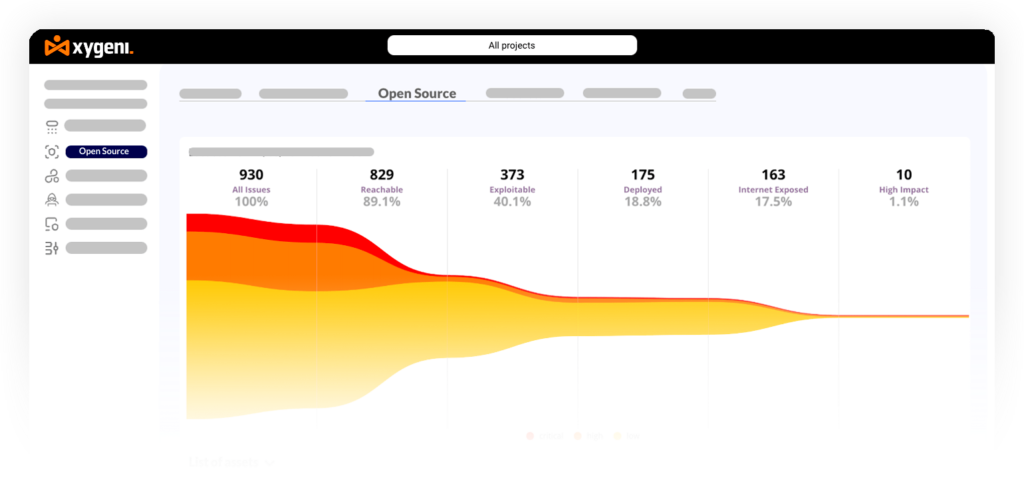
In practice, AI-powered malware detection is increasingly applied to software supply chain security, where malicious behavior may be introduced through dependencies, build scripts, or automated pipelines. Some platforms, such as Xygeni, apply AI-assisted behavioral analysis directly to dependency ingestion and build execution. This model illustrates how AI-based malware detection can be used preventively, identifying malicious behavior before software reaches production rather than reacting after deployment.
This approach underscores that AI-powered malware detection extends beyond endpoints and runtime monitoring into earlier stages of the software lifecycle.
Why It Matters for DevSecOps? #
For DevSecOps teams, AI-based detection aligns with operational requirements for automation, scalability, and early feedback. It enables detection of malicious behavior without slowing development or relying exclusively on post-incident response. Integrating this detection into pipelines reduces risk while preserving delivery velocity. This is why what is AI-powered malware detection is no longer an abstract concept. It is a practical requirement for modern software delivery.
To sum up: Defining AI-Powered Malware Detection Clearly #
In summary, what is AI-Powered malware detection? It can be defined as a method of identifying malicious software using AI models that analyze behavior, patterns, and context. AI-based malware detection focuses on unknown and evolving threats, while it complements rather than replaces traditional tools. Real-world examples of AI-powered malware examples demonstrate why signature-based detection alone is insufficient.
AI-powered detection is not a silver bullet. It is, however, a critical component of modern application security and software supply chain defense. Understanding it enables security teams to reduce exposure windows and defend environments where traditional assumptions no longer apply.