


A security threat is any potential event, actor, or condition that could compromise the confidentiality, integrity, or availability of a system. That definition hasn’t changed in decades. What has changed is where threats originate, how fast they move, and, most importantly, how many of them now hide in assets no one knew existed.
Most security teams don’t lose to sophisticated, novel attacks. They lose to the asset nobody was watching: a forgotten staging server, an undocumented API, an AI agent a developer wired in last week, a dependency pulled from an open-source registry with a name that only looks legitimate. The gap between what you think you’re running and what’s actually exposed is where the majority of modern security threats take root.
This guide covers the main types of security threats, how threats differ from vulnerabilities and risk, and why attack surface discovery (continuously finding and cataloging everything you own) has become the foundational control for closing that gap before an attacker finds it first.
What Are the Main Types of Security Threats?
Security threats fall into a handful of recurring categories. Most real-world incidents are a combination of several.
- Malware: malicious software including viruses, worms, trojans, and spyware designed to damage, disrupt, or gain unauthorized access to systems.
- Ransomware: a malware subtype that encrypts data and demands payment. Modern variants use double and triple extortion, exfiltrating data before encryption and threatening public release.
- Phishing and social engineering: manipulating people into revealing credentials or granting access. Still one of the top three initial-access vectors year after year.
- Credential abuse: use of stolen, leaked, or weak credentials to gain access. The single most common initial-access vector in breach data.
- Vulnerability exploitation: attacking an unpatched flaw in software or infrastructure. The fastest-growing initial-access vector, and the focus of much of this guide.
- Supply chain attacks: compromising an organization through a trusted third party, dependency, or build pipeline rather than attacking it directly.
- Insider threats: risk originating from employees, contractors, or partners, whether malicious or accidental.
- Zero-day attacks: exploitation of a vulnerability before a patch exists, leaving no window to remediate in advance.
- DDoS attacks: overwhelming a system with traffic to render it unavailable.
- API and AI-layer threats: attacks against exposed APIs, AI agents, and machine-to-machine traffic, the fastest-emerging category, and the one most organizations have the least visibility into.
The uncomfortable truth running through all ten: a threat can only be defended against if the asset it targets is known. Everything below is about making the unknown visible.
Security Threat vs. Vulnerability vs. Risk
These three terms get used interchangeably and shouldn’t be. The distinction drives how you prioritize.
| Concept | What It Is | Example |
|---|---|---|
| Threat | A potential event or actor that could exploit a weakness | A ransomware group targeting your sector |
| Vulnerability | A weakness that could be exploited | An unpatched CVE in an internet-facing server |
| Risk | The likelihood a threat exploits a vulnerability, times the impact | A 90% chance that exposed server is hit, causing €2M in downtime |
Attack surface discovery maps the assets and vulnerabilities so that threats can be assessed against a complete picture, and so risk can be calculated on real exposure instead of guesswork.
Why Blind Spots Drive Modern Security Threats
Threats are exploited faster than ever, and the assets they target are increasingly invisible. Three data points frame the shift.
Vulnerability exploitation reached 20% of breaches in 2025, a 34% year-over-year increase, closing in on credential abuse (22%) as the top initial-access vector (Verizon 2025 DBIR). More entry points are being exploited, and they’re being exploited sooner: Mandiant’s M-Trends 2026 reports that the average time-to-exploit has effectively gone negative, roughly −7 days, meaning exploitation now often begins before a patch is available. Google’s Threat Intelligence Group tracked 90 zero-days exploited in the wild in 2025, nearly half of them targeting enterprise technologies.
More entry points, exploited faster, with less warning: that combination is precisely why blind spots have become the defining risk factor behind modern security threats rather than a secondary concern. When the window between disclosure and exploitation disappears, the only assets you can protect are the ones you already know you have.
And most organizations don’t know. 73% experienced a security incident caused by unknown or unmanaged assets (Trend Micro, 2025), and EY’s 2026 research found 36% of assets sit in a “vulnerability zone” with below-average visibility and coverage. Every asset in that gap (an old environment, a forgotten API, a dependency nobody remembers adding) is a live security threat that no scanner is watching, simply because no one told the scanner it existed.
Why Blind Spots Keep Expanding, Especially in the SDLC
If attack surface visibility were a solved problem, blind spots would shrink. They’re growing instead, for reasons tied directly to how modern software gets built.
Shadow IT and shadow AI outrun governance. 45% of organizations say they lack adequate information about shadow IT (Ivanti, 2026), and the same dynamic now applies to AI: 48.9% of organizations are entirely blind to machine-to-machine traffic and cannot monitor the AI agents already running in their environment (Salt Security, 1H 2026). An AI coding assistant, an autonomous agent, or an MCP server configured in a developer’s local settings is every bit as much a security threat surface as an unpatched server; it’s just far less likely to appear on anyone’s asset list.
APIs expand the surface faster than teams can secure it. Only 19% of CISOs report full visibility into their APIs, and just 27% even among large enterprises (Salt Security, 2025). The consequences are already landing: 87% of organizations were hit by API attacks in 2025 (Akamai SOTI 2026). Shadow APIs and undocumented endpoints are, by definition, invisible to any discovery process that only inventories what’s been formally documented.
The open-source supply chain is part of the external attack surface too. Breaches involving third parties doubled from 15% to 30% in a single year (Verizon 2025 DBIR). Adversaries contribute legitimate-looking code to open-source projects, build trust, and wait, which means every dependency pulled into a codebase is itself a candidate for attack surface discovery, not just infrastructure sitting in a cloud console. This is the logic behind slopsquatting: research presented at USENIX Security 2025 found LLMs recommend non-existent package names roughly 20% of the time, and attackers pre-register those hallucinated names to wait for an AI assistant to suggest them. Named 2025 campaigns like PhantomRaven (126 malicious npm packages, ~86,000 downloads) and the self-propagating Shai-Hulud worm show the pattern in action. The security threat doesn’t arrive through a firewall; it arrives through a pip install.
What Is Attack Surface Discovery?
Attack surface discovery is the practice of continuously finding, cataloging, and monitoring every asset your organization owns or is connected to (known and unknown alike) so that security threats can be assessed against a complete picture instead of a partial one.
It’s the foundation of the broader discipline of attack surface management (ASM), the continuous process of discovering, classifying, and monitoring all potential entry points an attacker could exploit. The distinction matters: discovery answers “what do we actually have?” Management is what you do with that answer: prioritizing, validating, and closing the gaps.
Two things separate real discovery from a one-time asset inventory:
- It doesn’t wait to be told what to look for. The critical differentiator between tools is whether discovery finds assets you don’t already know about. Some platforms only scan what you seed into them; others use active reconnaissance to find infrastructure, shadow IT, orphaned services, and unmanaged dependencies without an initial list. A process that only checks what’s already on a spreadsheet isn’t discovery; it’s confirmation.
- It runs continuously, not periodically. Cloud resources spin up and down, services deploy, and developers push code multiple times a day. A point-in-time assessment is outdated the moment a new deployment happens, which is exactly the moment most new security threats appear. If discovery can’t keep pace with that rate of change, newly introduced risk stays invisible until it’s exploited.
How Attack Surface Discovery Reduces Risk Across the SDLC
Applied to software development, attack surface discovery isn’t a perimeter exercise; it’s a code-to-cloud one. Here’s what that looks like, stage by stage.
At the code and dependency level. Every model, agent, MCP server, and open-source package pulled into a project is a new asset the moment it’s added, and it should be discoverable the moment that happens, not weeks later during a scheduled audit. Treating AI-introduced dependencies as first-class assets, the same way you’d treat a new cloud instance, closes the exact blind spot attackers exploit through slopsquatting and dependency confusion. (Wallarm’s 2026 research recorded a 398% surge in AI-related vulnerabilities and a 270% jump in MCP-related flaws in a single quarter; this surface is moving fast.)
Across CI/CD pipelines. Fragmented tooling across on-premises, cloud, SaaS, and remote environments creates blind spots and duplicated effort. Integration lets teams correlate findings and understand how risks connect: a newly discovered dependency mapped to what it can actually reach (a secret it might expose, a permission it inherits) rather than treated as an isolated alert.
Across cloud and runtime environments. Cloud footprints often expand faster than security teams can track, and that leads to breaches caused not by sophisticated attacks but by misconfigurations and forgotten assets: the low-hanging fruit discovery is specifically designed to catch before it becomes an incident report. Speed matters here: CrowdStrike’s 2026 research puts the average adversary breakout time at just 29 minutes.
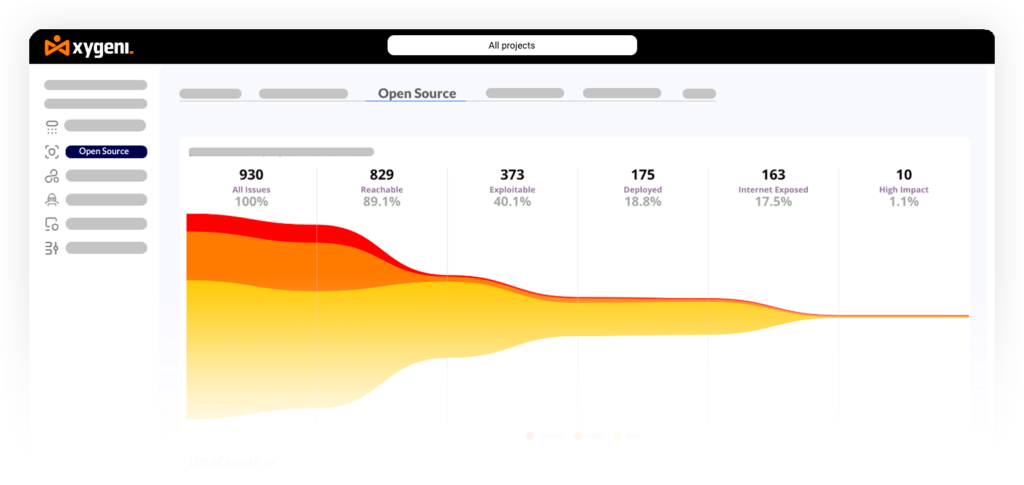
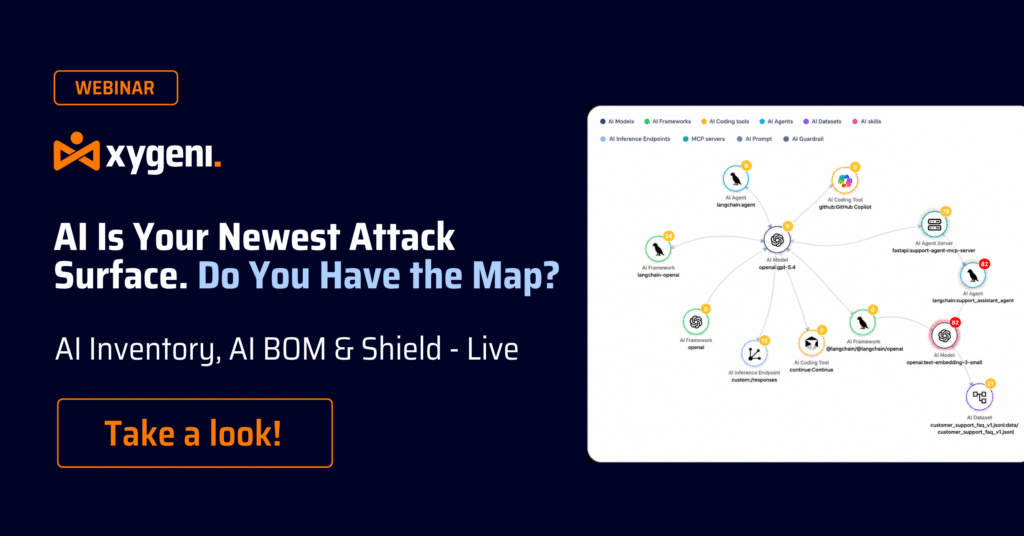
Prioritized by what actually matters. Effective ASM links technical findings to business context (ownership, application purpose, data sensitivity) so security, IT, and development teams work from a shared understanding of risk instead of an undifferentiated list. This is where AI Inventory and ASPM practices earn their place: mapping every asset across the SDLC, correlating it with exposure and business impact, and surfacing the fraction of security threats that represent genuine, exploitable risk rather than theoretical ones.
Why This Matters More Than Ever Right Now
Gartner predicts that by 2026, organizations that prioritize security investments based on a continuous threat exposure management (CTEM) program will be three times less likely to suffer a breach. The market is responding: the attack surface management sector is projected to grow from roughly $1.25 billion in 2026 to $5 billion by 2034 (Fortune Business Insights), a reflection of how central this problem has become.
You can’t protect what you can’t see, and that principle applies as much to a hallucinated npm package as it does to an exposed cloud bucket. Security threats aren’t slowing down, and the organizations closing the gap fastest are the ones treating attack surface discovery as a continuous, code-to-cloud practice, not a quarterly checklist item.
This is exactly the gap Xygeni is built to close for software teams. Instead of treating attack surface discovery as a separate exercise from application security, Xygeni maps AI models, agents, MCP servers, and open-source dependencies across the SDLC alongside code-level and infrastructure risk, so blind spots get surfaced and prioritized in the same place development and security teams already work, not in a separate dashboard nobody checks.

FAQ
What are the main types of security threats?
The most common categories are malware, ransomware, phishing and social engineering, credential abuse, vulnerability exploitation, supply chain attacks, insider threats, zero-day attacks, DDoS attacks, and the fast-emerging category of API and AI-layer threats. Most real incidents combine several at once.
What’s the difference between a security threat, a vulnerability, and a risk?
A threat is a potential event or actor that could exploit a weakness. A vulnerability is the weakness itself. Risk is the likelihood a threat exploits that vulnerability multiplied by the impact if it does. Attack surface discovery maps assets and vulnerabilities so threats can be assessed and risk calculated on real exposure.
What’s the difference between attack surface discovery and attack surface management?
Discovery answers “what do we actually have?”: continuously finding and cataloging every asset, known and unknown. Management is what you do with that answer: classifying, prioritizing, validating, and closing the gaps discovery surfaces. Discovery is the foundation management is built on.
Why do blind spots increase security threats rather than just being an inconvenience?
An asset security teams don’t know about never gets patched, monitored, or included in incident response. Being unmanaged doesn’t reduce risk; it just delays discovery, usually until an attacker finds it first. With time-to-exploit now effectively negative, that delay is often fatal.
Does attack surface discovery apply to AI tools and the software supply chain, or just infrastructure?
Both, increasingly. AI models, agents, MCP servers, and open-source dependencies are assets in the same sense as a cloud server or an API endpoint, and they need to be discovered and monitored continuously rather than assumed safe because they’re “just code.”
How does attack surface discovery reduce risk during the SDLC specifically?
By treating every AI-introduced dependency, agent, and pipeline component as a discoverable asset the moment it appears, then correlating that asset with what it can access and how exposed it is, so security threats get caught and prioritized before code reaches production, not after an incident.