



Welcome to the October edition of the Xygeni Malicious Code Digest. This month, our security research team confirmed more than 90 malicious packages across npm, PyPI, and Composer, tracked across five weekly digests.
Two things defined October. Operators kept coming back: the same campaigns returned week after week, often dressed in new names. And dependency confusion kept escalating, with version numbers climbing from 99.x to 100.0.0, 100.100.x and 999.x, all built to outrank private, internal packages.
Among the most notable campaigns documented this month:
- Baileys became a family. Baileys is the WhatsApp Web API library already abused in earlier forks.
cloud-baileysreached1.1.42, its third consecutive month, while copycats multiplied across new scopes:@dcloude/baileys(four versions),@xmiybi/baileys,@ungke/baileys,@kimmcloude/baileys, and variants like@corexium/xbailsand@kxafunc/xbails. - A burst of
100.0.0packages on October 4. It came with internal-sounding names such asai-workshop-radio-lambda,figma-to-aplandokra-cloud-cdk, followed bykmf-bootstrapanddeposit-limit-feat100.100.xon October 10. - Scoped namespaces impersonated private packages all month. These included
@inpeek/odata,@galicia-toolkit/*at999.x, and, in the last week,@eforms/forms-apiand@capsense/*. One@eformsversion even mimicked an internal build tag:2.0.0-SNAPSHOT. pyyiwas the most persistent PyPI operator of the month, with nine versions published between October 12 and October 27.minecraftaccfindershipped six versions in a single day (October 12).- Names built to look like AI developer tooling kept appearing, such as
checkmate-remediation-assistantandalexa-cybertron-team-code-review-agent. The AI layer of the toolchain is now a standard disguise.
The defining pattern of October: attackers are not giving up after takedowns. They are republishing, renaming, and rescoping the same payloads, and betting that inflated version numbers will win against internal packages before anyone notices.
Below is a summary of what we found. You can see all five weeks’ data disclosed in full detail at the Malicious Code Digest index.
Week 5: 14 Packages Discovered
| Ecosystem | Package | Date |
|---|---|---|
| pypi | pyyi:2.5.1 | October 27, 2026 |
| pypi | pyyi:2.5.2 | October 27, 2026 |
| pypi | pyyi:2.5.3 | October 27, 2026 |
| pypi | pyyi:2.5.4 | October 27, 2026 |
| pypi | pyyi:2.5.5 | October 27, 2026 |
| npm | @eforms/forms-api:2.0.99 | October 29, 2026 |
| npm | @eforms/forms-api:2.0.0-SNAPSHOT | October 29, 2026 |
| npm | @eforms/forms-api:1.99.1 | October 29, 2026 |
| npm | @eforms/forms-api:2.99.1 | October 29, 2026 |
| npm | @capsense/ccx-welcome-page:99.99.99 | October 29, 2026 |
| npm | @capsense/ccx-welcome-page:99.99.100 | October 29, 2026 |
| npm | @capsense/core-ui:99.99.99 | October 29, 2026 |
| npm | @capsense/core-ui:99.99.100 | October 29, 2026 |
Week 4: Over 10 Packages Discovered
| Ecosystem | Package | Date |
|---|---|---|
| npm | rootaccessxvv-bbmarker:1.0.2 | October 18, 2026 |
| npm | @kimmcloude/baileys:1.0.0 | October 18, 2026 |
| pypi | leakdeep:3.0.0 | October 19, 2026 |
| pypi | pyyi:2.5.0 | October 19, 2026 |
| npm | memories-core-web:99.0.0 | October 20, 2026 |
| pypi | pyyi:2.5.1 | October 21, 2026 |
| pypi | pyyi:2.5.2 | October 21, 2026 |
| pypi | pyyi:2.5.3 | October 21, 2026 |
| pypi | pyyi:2.5.4 | October 21, 2026 |
| pypi | pyyi:2.5.5 | October 21, 2026 |
Week 3: Over 27 Packages Discovered
| Ecosystem | Package | Date |
|---|---|---|
| npm | kmf-bootstrap:100.100.100 | October 10, 2026 |
| npm | @dcloude/baileys:0.0.5 | October 10, 2026 |
| npm | @bellachann/techxatz:0.1.2 | October 10, 2026 |
| npm | @corexium/xbails:0.0.7 | October 10, 2026 |
| npm | @ungke/baileys:0.0.1 | October 10, 2026 |
| npm | deposit-limit-fe:100.100.106 | October 10, 2026 |
| pypi | py2ops:2.3.1 | October 10, 2026 |
| npm | @xmiybi/baileys:5.0.0 | October 11, 2026 |
| npm | react-dropzone-v4:99.0.0 | October 11, 2026 |
| pypi | minecraftaccfinder:3.0.0 | October 12, 2026 |
| pypi | pyyi:2.4.2 | October 15, 2026 |
Week 2: 35 Packages Discovered
| Ecosystem | Package | Date |
|---|---|---|
| npm | eslint-plugin-skywagon-web:100.0.0 | October 4, 2026 |
| npm | @rutxploit-sec/waves-button-poc:1.0.0 | October 4, 2026 |
| npm | ai-workshop-radio-lambda:100.0.0 | October 4, 2026 |
| npm | alexa-cybertron-team-code-review-agent:100.0.0 | October 4, 2026 |
| composer | slimfit/formbase:1.3 | October 4, 2026 |
| pypi | voxeval:0.4.2 | October 4, 2026 |
| npm | cloud-baileys:1.1.42 | October 4, 2026 |
| npm | @inpeek/odata:99.99.99 | October 5, 2026 |
| npm | @inpeek/odata-angular:99.99.99 | October 5, 2026 |
| npm | checkmate-remediation-assistant:1.0.0 | October 6, 2026 |
| npm | @galicia-toolkit/tag-manager:999.0.5 | October 9, 2026 |
| npm | @tunstock/remact-dom:19.2.0 | October 9, 2026 |
Week 1: 4 Packages Discovered
| Ecosystem | Package | Date |
|---|---|---|
| npm | @alphaspace/core:99.0.1 | September 26, 2026 |
| npm | @alphaspace/core:99.0.2 | September 26, 2026 |
| npm | @alphaspace/core:99.0.3 | September 26, 2026 |
| npm | cma-self-hosted-sandbox-cf:1.0.0 | September 26, 2026 |
From Baileys to 100.0.0: What October’s Supply Chain Attacks Reveal
The campaigns above show that a takedown is no longer the end of an attack, just a pause before the next name. A WhatsApp library impersonation now spans three months and a growing family of scopes. Dependency-confusion packages keep raising their version numbers to outrank internal namespaces. And PyPI operators republish the same package again and again until something gets through. All of it lands in real SDLCs every week, often pulled in by automated tooling before any human reads the package name.
Xygeni’s malware detection and CI/CD and supply chain security give organizations the visibility to catch malicious dependencies before they execute on a developer machine, enter a build system, or reach production. MEW, Xygeni’s malware engine, detects malicious packages before a signature exists, across npm, PyPI, OpenVSX, and beyond, monitoring for suspicious publishing patterns, namespace abuse, typosquatting, and AI-native attack techniques as they emerge.
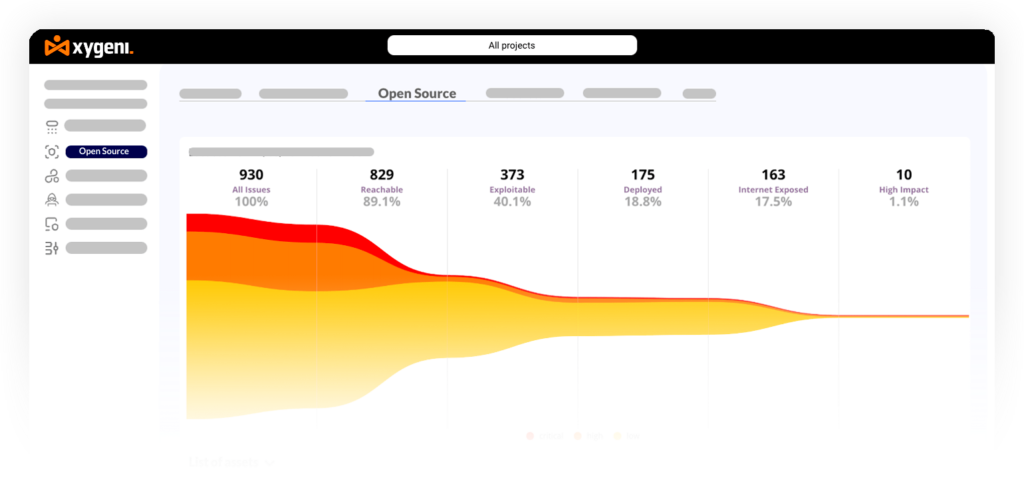
Every finding is automatically prioritized by exploitability, reachability, and business impact, so your team focuses on what actually needs fixing, not noise.
Explore every malicious package and campaign validated by the Xygeni Security Team in the Malicious Code Digest.
Stay secure. Stay fast. Stay in control with Xygeni.