





If you’re managing vulnerabilities in your DevOps workflows, understanding the difference between CWE and CVE isn’t just theoretical (it’s the foundation of effective prioritization. Over 23,000 CVEs were disclosed in the first half of 2025 alone) a 16% increase year-over-year- and the gap between a catalogued weakness and an actively exploited vulnerability is closing faster than ever. This guide explains how CWE and CVE relate, how scoring systems like CVSS and EPSS help you prioritize, and how to use both in your pipeline to fix what actually matters.
The Basics: What Are CWE and CVE?
What Is CWE?
CWE (Common Weakness Enumeration) is a structured list of software weaknesses—think of it as a catalog of coding and design flaws. Managed by MITRE, CWE helps identify patterns that, if unaddressed, could lead to security vulnerabilities.
- Purpose: Prevent weaknesses from entering code during development.
- Example: CWE-89 refers to SQL Injection—a design flaw that opens the door to database exploits.
- Audience: Primarily developers, security architects, and trainers.
What Is CVE?
On the other hand, CVE (Common Vulnerabilities and Exposures) identifies specific vulnerabilities in software that are already in use. Each vulnerability is assigned a unique CVE ID for easy tracking and remediation.
- Purpose: Manage and remediate existing security issues.
- Example: CVE-2023-12345 might describe a buffer overflow in a widely used library.
- Audience: DevOps engineers, SOC teams, and security analysts.
CVE vs CWE: Understanding the Difference
The debate around CVE vs CWE often arises because the two are closely related yet serve distinct purposes. While CWE (Common Weakness Enumeration) catalogs potential flaws in code design, CVE focuses on specific vulnerabilities identified in real-world software. Understanding Common Weakness Enumeration and Common Vulnerabilities and Exposures helps bridge the gap between development and operations, ensuring both proactive and reactive security measures are in place.
| CWE | CVE | |
|---|---|---|
| What it is | A type of software weakness | A specific vulnerability instance |
| Maintained by | MITRE | MITRE / CVE Numbering Authorities |
| Purpose | Prevent flaws during development | Track and remediate known vulnerabilities |
| Example | CWE-89: SQL Injection (the weakness type) | CVE-2021-44228: Log4Shell (a specific exploit) |
| Audience | Developers, architects, trainers | DevOps, SOC teams, security analysts |
| Relationship | One CWE can be root cause of thousands of CVEs | Each CVE maps to one primary CWE |
| When to use | Shift-left, code reviews, SAST | Patch management, SCA, incident response |
The Role of Scoring: Prioritizing What Matters
Once you’ve identified weaknesses (CWE) or vulnerabilities (CVE), prioritization becomes the next challenge. Engineers often juggle multiple scoring systems—like CVSS and EPSS—without a clear roadmap. Accordingly, understanding how these scores work is crucial.
The CVSS Score
The Common Vulnerability Scoring System (CVSS) evaluates vulnerabilities based on their severity, using metrics like exploitability and impact. As a result, scores range from 0 (low risk) to 10 (critical).
- Strength: Universally recognized and detailed.
- Weakness: Lacks real-time context, leading to over-prioritization.
The EPSS Score
The Exploit Prediction Scoring System (EPSS) predicts the likelihood of exploitation in the real world, helping you focus on vulnerabilities most likely to be used by attackers.
- Strength: Context-aware and dynamic.
- Weakness: Complements CVSS but isn’t a standalone replacement.
In 2026, leading platforms combine CVSS and EPSS together with reachability analysis, filtering findings not just by severity or likelihood, but by whether the vulnerable code is actually called in your application. This three-layer approach is now the industry standard for cutting vulnerability noise in large codebases.
Mapping CWE to CVE
Common Weakness Enumeration entries are often linked to CVEs, bridging the gap between potential weaknesses and their real-world manifestations. For example:
- CWE-79 (XSS) → CVE-2023-56789 (XSS exploit in a web application).
Thus, understanding CVE vs CWE allows engineers to trace vulnerabilities back to their root causes and implement better design safeguards.
Find the Right Tools for CWE and CVE Management
1. Explore CWE Catalogs and Tools
The CWE catalog is a structured list of software weaknesses. In addition, it’s invaluable for preventing vulnerabilities early in development.
- Visit the CWE Site: Explore CWE weaknesses by category or relevance to your stack.
- CWE Mapping to CVE: Use MITRE’s tools to link common weaknesses to specific CVEs, bridging design flaws with exploitable vulnerabilities.
Pro Tip: Use CWE as a benchmark for code reviews or pair it with CI/CD tools like Xygeni for automatic detection and prevention of coding flaws.
2. Search and Track CVEs in Real-Time
CVE databases list vulnerabilities already present in software, enabling faster remediation. Furthermore, automating this process can save significant time.
- Search CVEs by Product or Vendor: Use the NVD CVE Database to locate known vulnerabilities.
- Automate Alerts: Tools like Xygeni integrate CVE tracking into your CI/CD pipelines, ensuring immediate alerts for critical vulnerabilities.
How Xygeni’s Prioritization Funnels Work
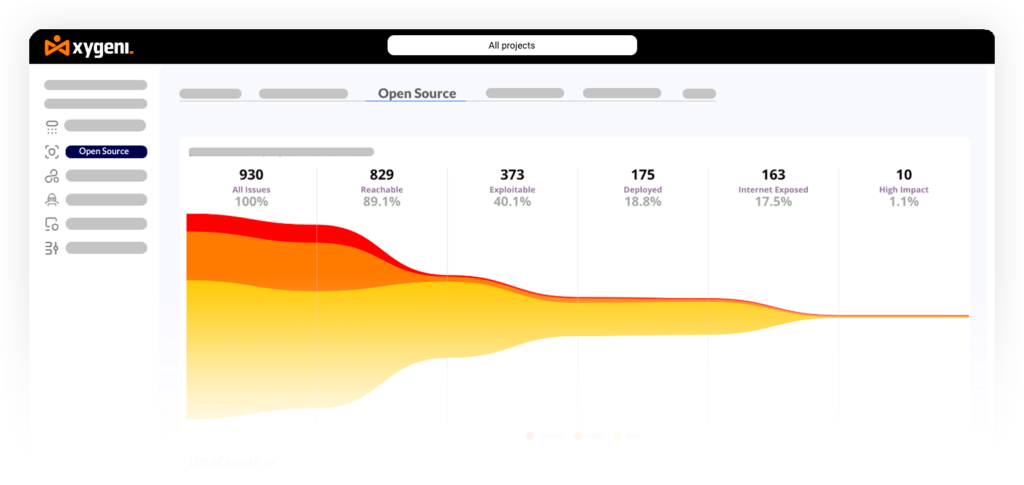
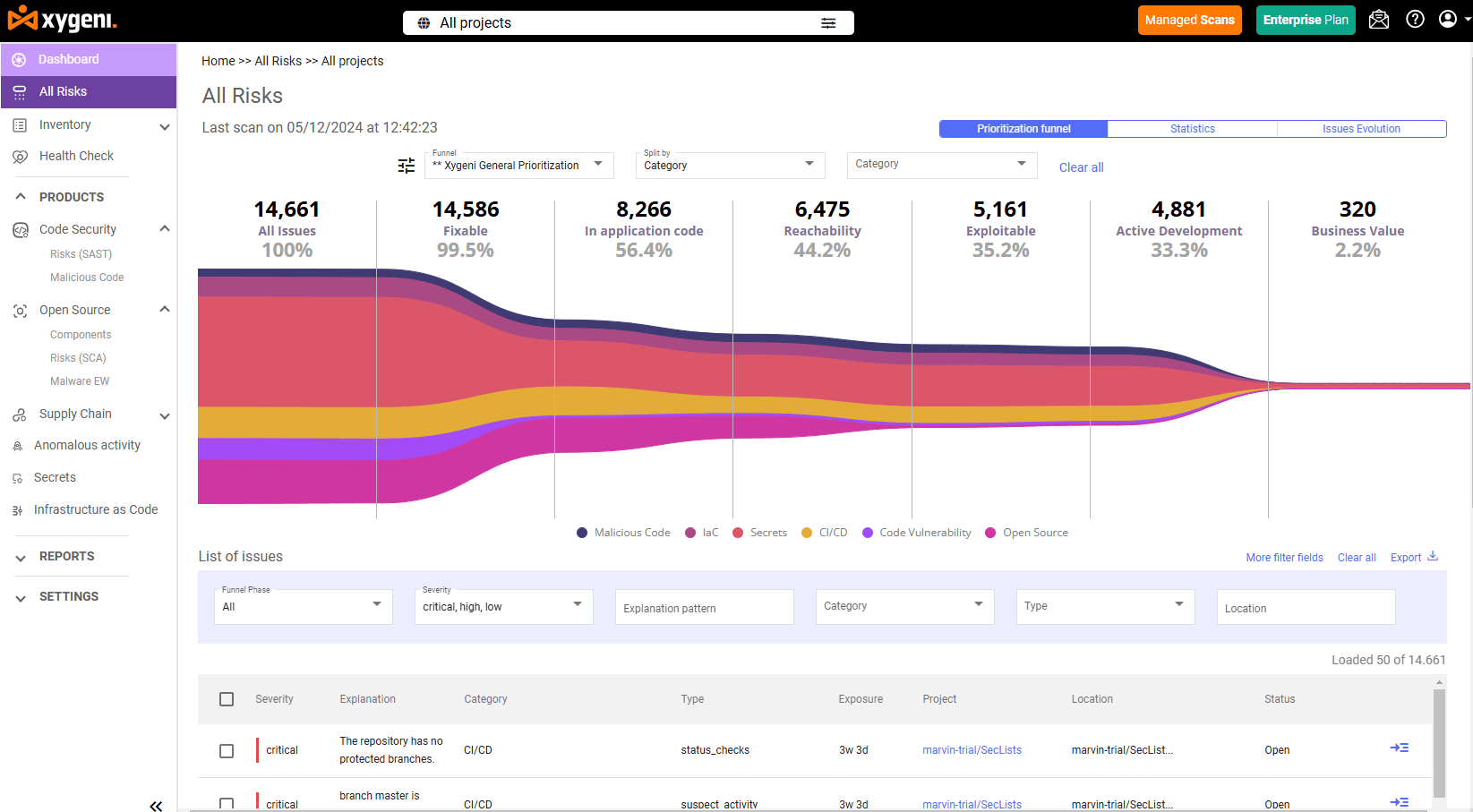
Xygeni simplifies the management of CVE vs CWE by offering Prioritization Funnels that focus your efforts on actionable risks. By analyzing Common Weakness Enumeration entries alongside CVE vulnerabilities, Xygeni ensures your team concentrates on fixing what matters most.
Key Features:
- Out-of-the-Box Funnels
Xygeni provides predefined funnels, such as “Xygeni Prioritization” and “Xygeni Reachability.”- Example: Filter out low-priority issues, reducing 28,000 vulnerabilities to a handful of actionable ones by combining EPSS, reachability, business impact, and internet exposure. Xygeni’s ASPM platform correlates CWE and CVE findings from SAST, SCA, DAST, and third-party scanners into a single prioritized risk view, so your team fixes the vulnerabilities that matter, not just the ones with the highest CVSS score.
- Custom Funnels for Granular Control
Build custom funnels tailored to your organization. For instance:- Reachability: Is the vulnerable code actually called in your application?
- Exploitability: What’s the likelihood of the vulnerability being exploited?
- Integrated CWE and CVE Context
- CWE mappings help identify root causes, like coding weaknesses (e.g., CWE-89: SQL Injection).
- CVE insights, enriched with EPSS and CVSS scores, prioritize vulnerabilities based on real-world risk.
Why This Matters for DevOps and Security Teams
Managing CVE vs CWE isn’t just about fixing vulnerabilities—it’s about fixing the right vulnerabilities. Consequently, Xygeni’s tools allow you to:
- Focus on reachable weaknesses from the Common Weakness Enumeration list.
- Prioritize CVEs by real-world impact.
- Align fixes with business priorities.
Streamline CVE and CWE Management Today
Managing CVE vs CWE at scale means more than tracking identifiers, it means correlating weaknesses, scoring real-world exploitability, and fixing what actually matters in your environment. Xygeni’s All-In-One AppSec Platform combines SAST, SCA, ASPM, and AI-powered prioritization to cut through vulnerability noise, so your team spends less time triaging and more time shipping secure code.
FAQ
What is the difference between CWE and CVE?
A CWE (Common Weakness Enumeration) describes a type of software weakness, the root-cause category behind vulnerabilities. A CVE (Common Vulnerabilities and Exposures) identifies a specific vulnerability instance in a specific product. One CWE can be the root cause of thousands of CVEs.
What is an example of CWE vs CVE?
CWE-89 describes SQL Injection as a weakness type. CVE-2021-44228 (Log4Shell) is a specific exploitable vulnerability in Apache Log4j. Log4Shell maps to a CWE root cause, but it is a distinct, trackable CVE with its own patch and severity score.
Which is more important: CWE or CVE?
Both serve different purposes and work best together. CWEs help prevent weaknesses during development. CVEs help remediate known vulnerabilities in production. Mature security programs use CWE during code review and SAST scanning, and CVE tracking during SCA and patch management.
What is CVSS and how does it relate to CVE?
CVSS (Common Vulnerability Scoring System) is the severity scoring framework used to rate CVEs on a scale of 0–10. It helps prioritize which CVEs to remediate first — but it lacks real-time exploitability context, which is why most teams now combine it with EPSS scores.
What is EPSS and why does it matter?
EPSS (Exploit Prediction Scoring System) predicts the likelihood that a CVE will be exploited in the real world within the next 30 days. Combined with CVSS severity and reachability analysis, EPSS is now the most effective way to cut vulnerability noise and focus remediation on what attackers are actually targeting.
How does Xygeni help manage CWE and CVE?
Xygeni’s Prioritization Funnel combines CVSS, EPSS, reachability, internet exposure, and business impact to reduce thousands of raw CVE findings to a handful of genuinely actionable risks. CWE mappings identify root causes so teams can fix the underlying weakness — not just patch individual instances.