




Cyber risk management used to mean patching what an audit found. That approach does not hold up anymore. As software pipelines grow more complex and now include AI-generated code and AI coding agents, cybersecurity risk management has to move earlier in the lifecycle rather than later. DevSecOps, the practice of embedding development, security, and operations into one workflow, is what makes DevSecOps best practices for proactive risk management possible.
This guide covers the DevSecOps best practices that make proactive cyber risk management and cyber security risk management work together in 2026: tailoring risk by SDLC stage, automating detection and prioritization, accounting for AI-generated code, and keeping the human side of the process accountable. Much of this builds on the discussion in our SafeDev Talk episode on proactive risk management in DevSecOps.
Start Free
Get started for free.
No credit card required.
Get started with one click:
- Your source code is never uploaded – your privacy stays in your hands
- Up to 15 repos and 150 scans per month included.
This information will be securely saved as per the Terms of Service and Privacy Policy
Why Is Proactive Cyber Security Risk Management Essential?
Fixing a vulnerability after deployment can cost far more than catching it earlier in the lifecycle, a gap that widens every year as pipelines add more moving parts: more dependencies, more pipeline automation, and now more AI-assisted and AI-generated code. Proactive cyber risk management addresses vulnerabilities before they reach production, which lowers both the security risk and the cost of fixing it. That is the whole premise of cyber security risk management done well: catch it early, or pay more for it later.
Security in the DevOps pipeline is no longer optional. It is a baseline requirement for sustainable, secure software delivery, and increasingly a regulatory one as well. Any DevSecOps best practices worth adopting start from this premise.
Tailoring Cyber Risk Management at Every Stage
Risk is not the same at every point in the SDLC. Effective cyber risk management, and effective cyber security risk management more broadly, treats each stage differently:
- Development: secrets exposure and insecure coding practices, including patterns introduced by AI coding assistants.
- Integration: vulnerabilities in dependencies, configurations, and third-party components.
- Deployment: misconfigurations in Infrastructure as Code (Terraform, Kubernetes, Helm).
- Production: runtime exploitation and lateral movement risk.
Each stage needs its own controls, from threat modeling at the design stage through runtime monitoring in production, aligned with zero trust principles throughout. This stage-by-stage view is one of the most consistently cited DevSecOps best practices, because a single, one-size-fits-all control misses most of what is actually at risk.
Threat modeling remains the cornerstone. It works best during requirements and design, but it still has value applied later, at integration or even post-deployment. Risk can always be mitigated later. It just gets more expensive the longer you wait, which is exactly the cost curve cyber security risk management is meant to flatten.

Automation: The Backbone of Proactive Cyber Security Risk Management
Modern scanners surface far more findings than any team can triage by hand, which makes automation the difference between proactive cyber risk management and a permanently backlogged one. This is where DevSecOps best practices and cyber security risk management overlap most directly, and it’s the thinking behind the Xygeni product suite.
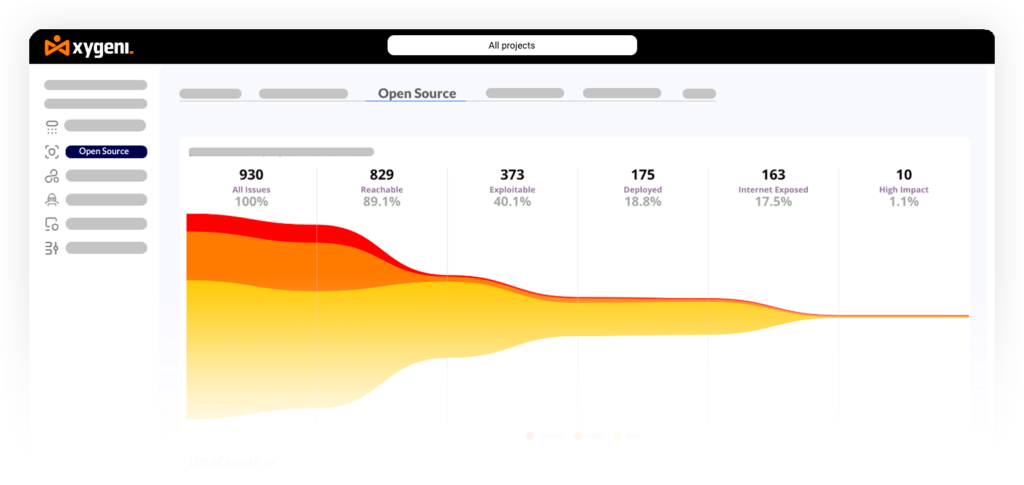
- Detection and prioritization: Software Composition Analysis (SCA) combined with reachability analysis and EPSS (Exploit Prediction Scoring System) turns a raw vulnerability count into a ranked, actionable list. Reachability analysis alone can cut false positives significantly by confirming whether a vulnerable function is actually called in your code, not just present in a dependency.
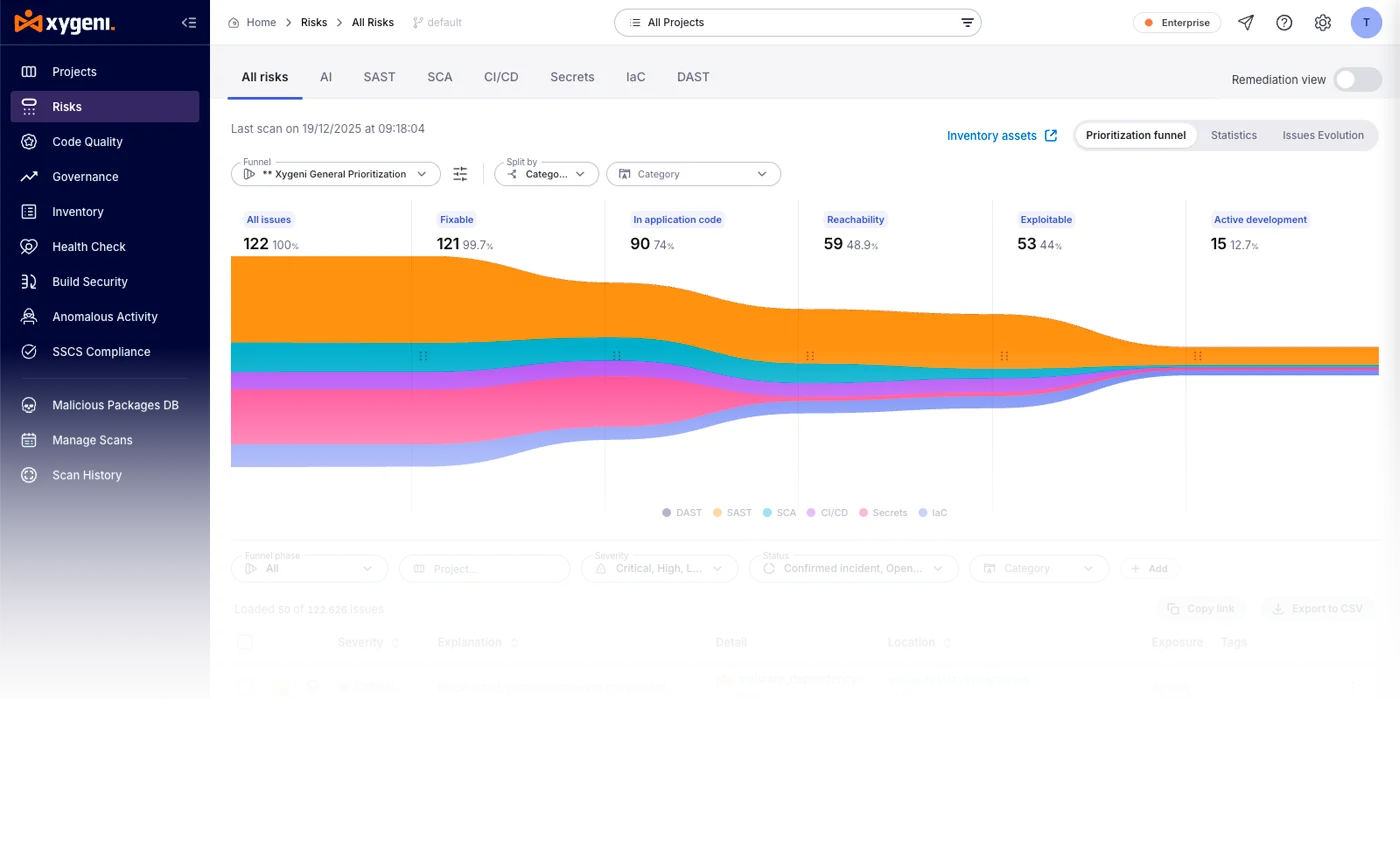
- Unified prioritization across tools: an ASPM (Application Security Posture Management) layer applies the same AI-powered triage funnel, reachability, exploitability, EPSS, and business impact, across findings from native scanners and any other AppSec tool already in your stack, so prioritization does not reset every time a new scanner gets added.
- Integration and reporting: security insights need to reach developers where they already work, whether that is an IDE plugin, Jira, or Slack. Contextual, accessible alerts matter as much as accurate detection.
- Automated remediation: for some findings, automated dependency upgrades and AI-generated pull requests neutralize risk without waiting on a human to write the fix, provided the system also checks whether the fix introduces breaking changes.
The New Variable: AI-Generated Code and Agentic Risk
AI coding assistants have changed what “proactive” needs to cover in any cyber risk management program. Independent benchmarking, including Veracode’s GenAI Code Security Report, has found that a substantial share of AI-generated code samples introduce common OWASP Top 10 vulnerabilities, with failure rates varying significantly by language and vulnerability class. That risk sits upstream of any later scan, which means cyber security risk management now needs visibility into AI-generated code at the point it is written, not just at the point it is committed.
The same logic extends to AI coding agents themselves: agents that install dependencies or modify pipeline configuration need the same reachability, exploitability, and provenance checks as a human developer would, and ideally inside the same prioritization funnel rather than a separate one. This is also where malware risk and cyber risk management start to overlap directly: AI coding assistants sometimes recommend packages that do not exist, and attackers register those names in advance, a technique covered in more depth in how to avoid malware in AI-assisted development. Treating AI-assisted development as a new SDLC stage, rather than folding it silently into “development,” is quickly becoming one of the newer DevSecOps best practices.
Human Factors: Collaboration and Accountability
Tooling closes most of the gap, but the human element remains essential to cyber risk management and to cyber security risk management alike:
- Education: developers need training in secure coding and design, not just in how to use security tools. As one panelist put it on Xygeni’s SafeDev Talk episode on proactive risk management in DevSecOps, a developer who does not understand secure design cannot build a secure system.
- Accountability: automated scanners generate long vulnerability lists. Prioritization only works if teams understand the business impact behind each finding. Agile teams commonly allocate 5 to 10 percent of sprint time to security work, folded into their existing bug-fixing process rather than treated as a separate track.
DevSecOps Best practices for effective Cyber Risk Management
| Practice | What It Means | Why It Matters |
|---|---|---|
| Embed security early | Make security part of every SDLC stage, from design to deployment | Catching risk earlier is consistently cheaper than fixing it post-deployment |
| Leverage automation | Use tooling for detection, prioritization, reporting, and remediation, not detection alone | Manual triage cannot keep pace with modern scan volume |
| Unify findings across tools | Apply one AI-powered prioritization layer across native and third-party scanners | Fragmented views hide the risks that span more than one tool |
| Account for AI-generated code | Apply the same reachability and exploitability checks to AI-assisted code and AI agent actions | AI-generated code introduces vulnerabilities at a measurable, non-trivial rate |
| Adopt dynamic prioritization | Rank findings using reachability, exploitability, EPSS, and business impact together | Severity alone does not tell you what is actually exploitable |
| Educate and empower teams | Train developers on secure design and coding, not just tool usage | Tooling reduces risk; informed developers reduce how often it appears |
Want to Dive Deeper into Proactive Risk Management in DevSecOps?
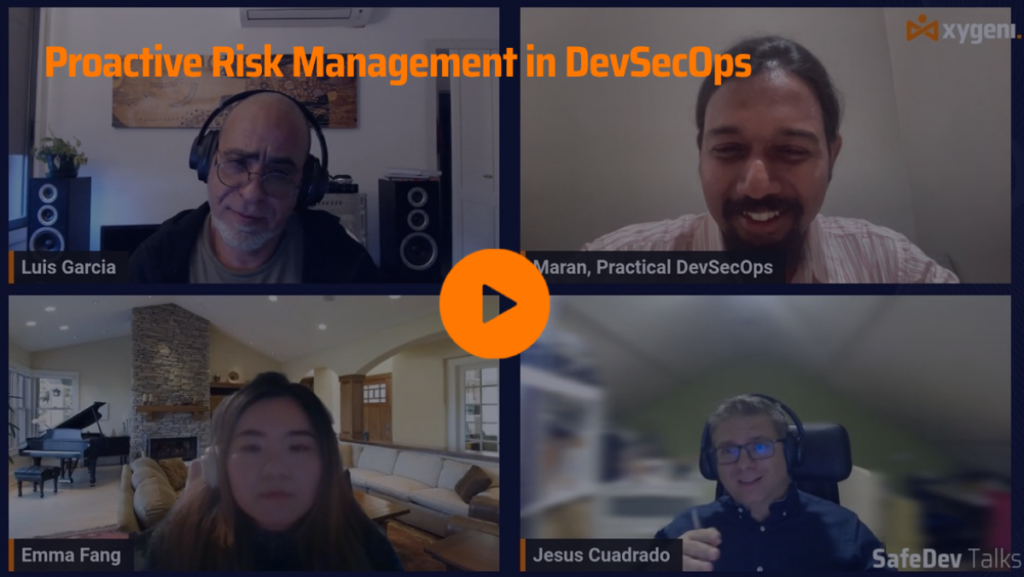
The insights that helped to shape this article were inspired by a discussion in our SafeDev Talk webinar. Join experts Emma Fang, Marudhamaran Gunasekaran, Luis García, and Jesús Cuadrado as they share their experiences, challenges, and strategies for integrating DevSecOps best practices into your development lifecycle.
Watch our SafeDev Talk Episode on Proactive Risk Management in DevSecOps and take the next step in securing your DevOps pipeline with expert advice and actionable takeaways!
Regulation Is Becoming a Forcing Function
NIS2, DORA, and the EU AI Act are pushing proactive cyber security risk management from a best practice into a compliance expectation, particularly around third-party software, vulnerability disclosure, and continuous monitoring. Programs that already run on reachability-based prioritization and unified findings are better positioned to produce the audit trail these frameworks expect, since the evidence is a byproduct of the process rather than a separate reporting exercise.
The Future of Proactive Cyber Risk Management
Proactive cyber risk management, and cyber security risk management more broadly, is not just a set of tools. It is technology, people, and practice working together to keep security from becoming a bottleneck. As pipelines add AI-generated code, AI coding agents, and more third-party tooling into the mix, the programs that hold up are the ones that unify findings into one prioritization model instead of maintaining a separate process for every new source of risk. That, ultimately, is what DevSecOps best practices are for.

FAQ
What is proactive cyber risk management?
Proactive risk management means addressing vulnerabilities and misconfigurations before they reach production, using threat modeling, automated detection, and prioritization throughout the SDLC, rather than relying on post-deployment audits to find problems.
What is the difference between cyber risk management and cyber security risk management?
The two terms are largely used interchangeably in practice. Cyber risk management is sometimes used as the broader business term, covering any risk tied to technology, while cyber security risk management specifically emphasizes the security controls, threat detection, and prioritization work that reduces that risk within the software lifecycle.
What is the difference between cyber risk management and DevSecOps?
Cyber risk management is the broader discipline of identifying, prioritizing, and reducing security risk. DevSecOps is the operating model, embedding security into development and operations workflows, that makes proactive risk management practical at the speed modern pipelines require. DevSecOps best practices are how that model gets implemented day to day.
How does EPSS help with cyber security risk management?
EPSS (Exploit Prediction Scoring System) scores vulnerabilities by the likelihood they will actually be exploited. Combined with reachability analysis, which checks whether a vulnerable function is actually called in your code, it lets teams prioritize by real-world risk instead of severity score alone.
Does AI-generated code change how cyber risk management should work?
Yes. Benchmarking from vendors like Veracode has found AI-generated code introduces OWASP Top 10 vulnerabilities at a meaningful rate. Programs that apply reachability and exploitability checks only to human-written code are missing a growing share of where risk now originates, which is why AI-aware checks are becoming part of standard DevSecOps best practices.