
When securing your open-source software, you need more than just a basic vulnerability scan. You need to find vulnerabilities, fix them quickly, and keep your development pipeline moving. That’s where Xygeni’s open-source vulnerability remediator shines. It’s more than just an open-source vulnerability scanner—it’s a full solution that helps you prioritize, fix, and stay compliant in real time.
Whether you’re managing a small dev team or handling complex enterprise software, Xygeni integrates seamlessly into your CI/CD pipeline to protect your open-source components from the moment code is written. No delays. No extra manual work. Just secure, compliant code every time.
Why Xygeni is a Must-Have in Your DevOps Pipeline
Security threats are growing every day, but your development speed can’t slow down. Xygeni Open Source Vulnerability Remediator fits effortlessly into your DevOps workflow, making sure your code is secure from commit to deployment.
- Catch issues early: Xygeni runs a vulnerability scan before code is committed, blocking risks before they ever enter your repository.
- Seamless integration: Whether you use Jenkins, GitHub Actions, or GitLab, Xygeni fits right into your CI/CD pipeline. It scans all your open-source components without adding extra steps.
- Real-time protection: If vulnerabilities arise later, Xygeni will flag them and create pull requests to fix them in real-time—so you stay secure without slowing down.
With Xygeni, you get continuous security built into every step of your development process.
Focus on What Really Matters
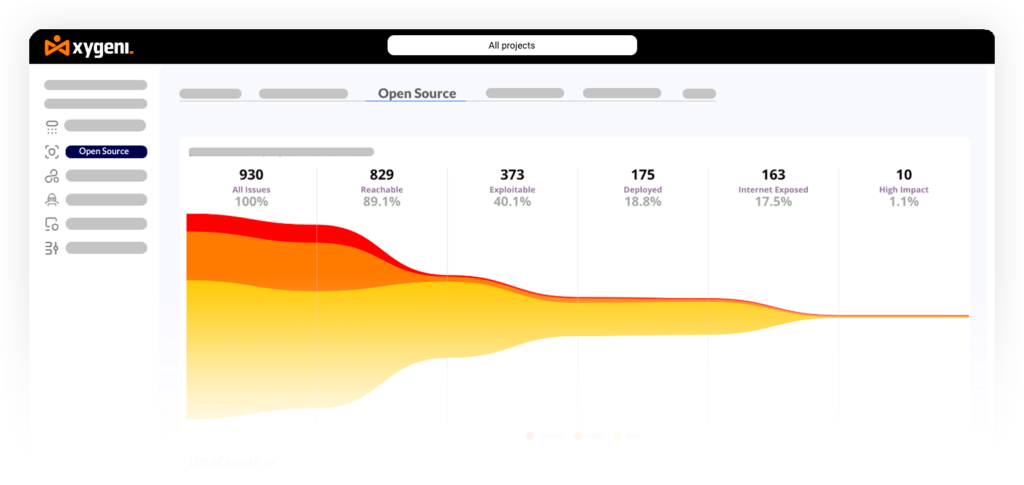
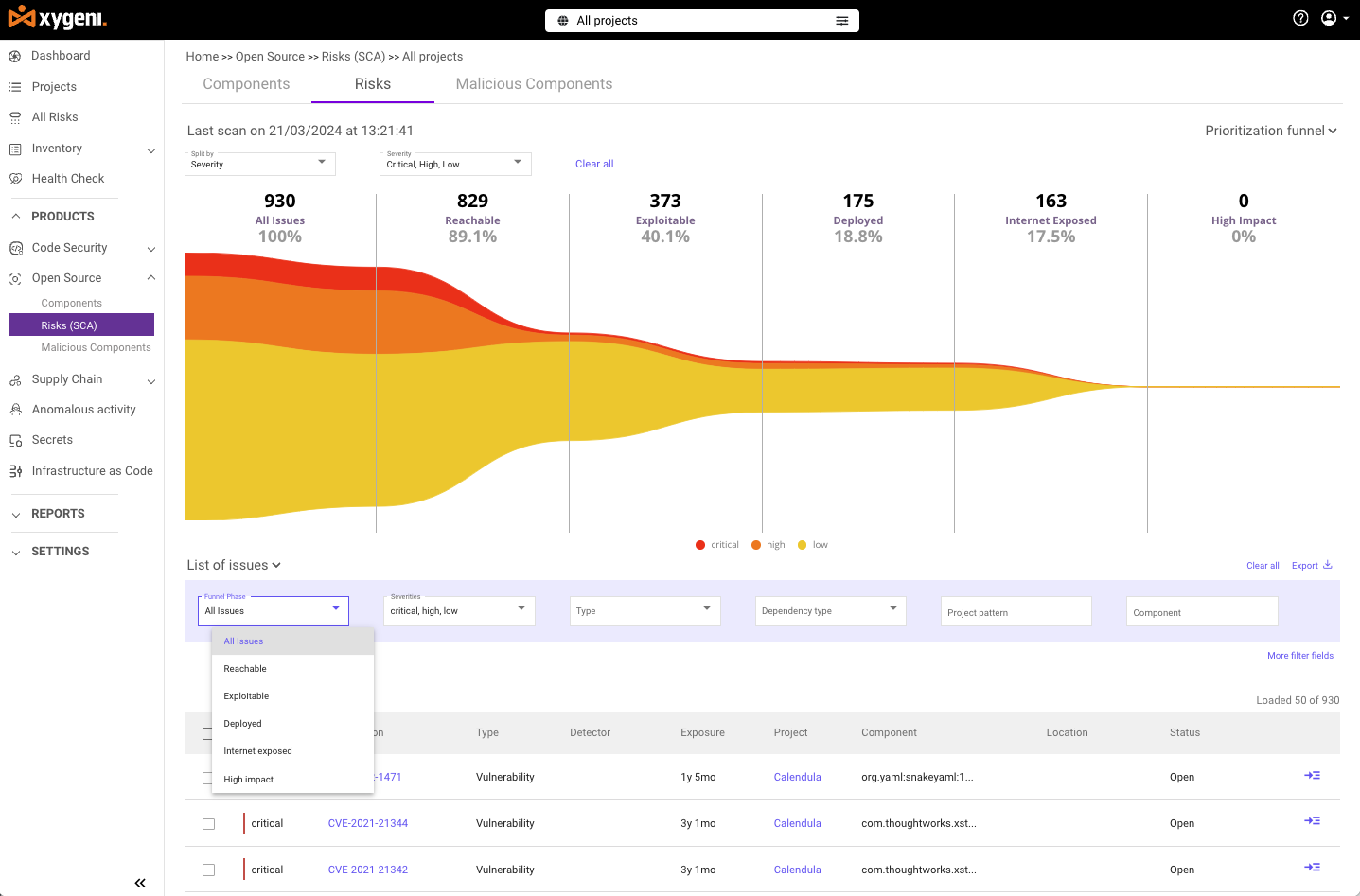
Not every vulnerability poses an immediate risk. That’s why Xygeni’s open source vulnerability scanner goes beyond just vulnerability scans. It helps you focus on what matters most.
- Complete Dependency Discovery: Xygeni automatically finds every dependency in your project—both direct and transitive. You get full visibility into your software’s structure.
- Multi-Database Scanning: Xygeni checks every open-source component against multiple vulnerability databases, such as NVD, OSV, and other public and proprietary sources, to ensure nothing slips through.
- License and Obsolescence Management: Update outdated components to stay compliant with licensing requirements and keep your software secure. Xygeni flags these risks automatically, so you never miss an issue.
With Xygeni, you stay in control of your open source dependencies—knowing exactly what’s in your code and how secure it is.
Stay Protected from Dependency Confusion and Typosquatting
Dependency confusion and typosquatting are serious and rapidly growing, risks for open-source users. Malicious npm packages surged from just 38 reports in 2018 to over 2,168 in 2024, and by 2025, attackers had published 454,648 malicious npm packages in a single year, with npm now the target of over 99% of all open source malware. Xygeni’s own 2025 threat recap confirmed 3,180 malicious packages across the year, with attacks becoming persistent, scalable, and industrialized rather than opportunistic.
The tactics keep evolving too. Beyond classic typosquatting, 2025 saw a sharp rise in npm account takeovers, with 1,241 confirmed malicious packages tied to compromised legitimate accounts, a 15.3x increase from 2024, including high-profile incidents affecting foundational packages with billions of weekly downloads. Attackers often mimic legitimate naming conventions closely: research shows 71.2% of malicious packages use names over 10 characters long, and 67.3% include dashes to blend in.
We’ve tracked this shift firsthand. forge-jsxy is an npm infostealer that’s rebranded at least four times in two months to evade detection, while GhostTracker republished the same trojan under new names just 74 minutes after takedown, keeping the same C2 infrastructure both times. DeviceDoor shows the same pattern from a different angle: a public npm package quietly shipping a Microsoft 365 phishing framework.
But with Xygeni, you’re covered. Our platform actively scans for dependency confusion, typosquatting, and account-takeover patterns, blocking any suspicious packages before they infiltrate your system, so you stay protected regardless of which technique attackers use to slip through.
Auto-Remediation: Fix Issues Before They Become Problems
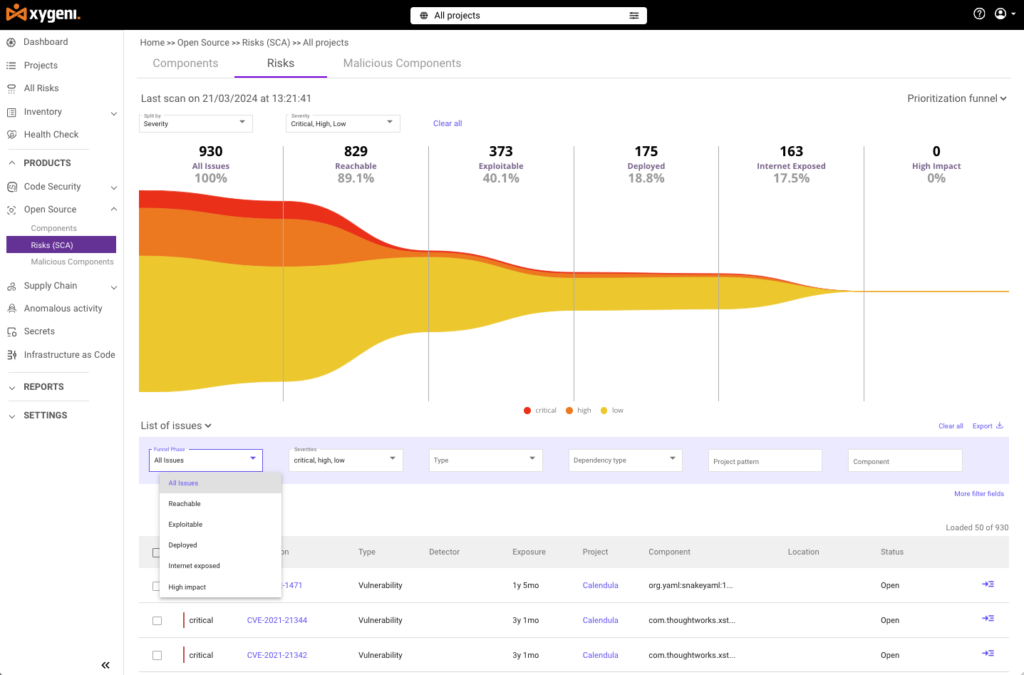
Finding vulnerabilities isn’t enough. It would help if you fixed them fast. With Xygeni’s open source vulnerability remediator, you don’t have to wait for manual fixes. Our platform generates pull requests that automatically update your vulnerable dependencies.
- Auto-Generated Pull Requests: As soon as Xygeni finds a vulnerability that can be fixed, let the customer launch a pull request manually or automatically to update the component to a secure version. Your development team can review and merge the fix without slowing down development.
- Keep Moving Fast: With auto-remediation, you can get protection without the manual work. Xygeni keeps your code secure while your team stays productive.
Save your team hours of manual work while staying ahead of security threats.
Tailored to Your Infrastructure
No two organizations are the same, and neither are their infrastructures. Xygeni adapts to the way you work, whether you’re using on-premise servers, cloud infrastructure, or a hybrid setup.
- Private Infrastructure Support: Xygeni fits into any environment, whether it’s a private or public infrastructure. The platform provides full support for custom configurations based on your unique security requirements.
- Tailored Security: Every company’s workflows are different. Xygeni’s flexibility ensures your security is aligned with your way of working—without forcing changes to your processes.
Wherever your software runs, Xygeni makes sure it’s fully protected.
Focus on Reachable and Exploitable Threats
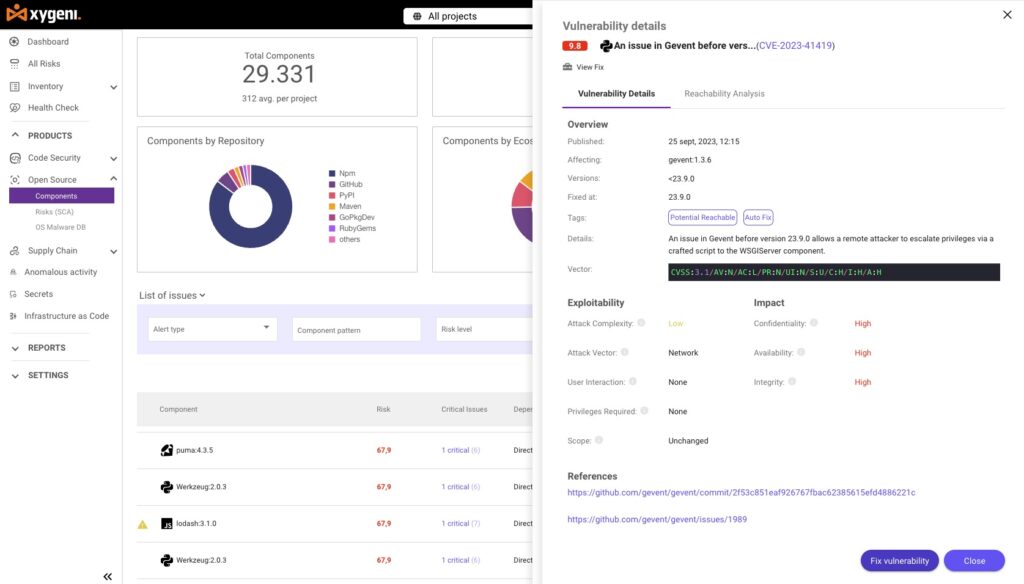
Not every vulnerability is urgent. Xygeni open-source vulnerability scanner helps you prioritize what’s truly dangerous with reachability analysis and exploitability scoring.
- Reachability Analysis: Xygeni identifies whether a vulnerability is actually reachable in your codebase. This helps your team focus only on the risks that pose a real threat to your applications.
- Exploitability Scoring: With real-world data, Xygeni predicts how likely a vulnerability is to be exploited. This lets you prioritize the most urgent issues and fix them first.
By focusing on real risks, Xygeni reduces noise and helps your team stay efficient.
Stay Ahead of Compliance with Xygeni Open-Source Vulnerability Scanner
Staying compliant with regulations like GDPR, HIPAA, PCI-DSS, and DORA doesn’t have to be hard. Xygeni’s open source vulnerability scanner makes compliance easy by automating the processes that keep your software secure.
- License Checks: Xygeni flags any open-source license violations in your components, helping you avoid legal risks.
- SBOM Generation: Xygeni automatically creates Software Bills of Materials (SBOMs), giving you full visibility into every component in your software.
- Audit-Ready Reports: Whether you need reports for audits or internal checks, Xygeni provides detailed vulnerability and remediation reports, ensuring you’re always ready to prove compliance.
Stay compliant, stay secure, and let Xygeni handle the heavy lifting.
Why Choose Xygeni Open-Source Vulnerability Remediator?
Xygeni isn’t just another vulnerability scanner. It’s a complete solution designed to help you find, prioritize, and fix vulnerabilities across your entire open-source supply chain. By integrating directly into your CI/CD pipeline, offering real-time auto-remediation, and ensuring compliance, Xygeni lets you stay ahead of security threats without slowing down.
Ready to take your open-source vulnerability management to the next level? Get started with Xygeni today and protect your code from committing to deployment.
Need more info? Check out our 2026 Top List for Scanning Tools!

FAQs
How common are malicious open-source packages today?
Attackers published 454,648 malicious npm packages in 2025 alone, and npm now accounts for over 99% of all open-source malware detected. This isn’t a niche risk; it’s the dominant attack vector in the open-source ecosystem today.
Can registries like npm fully prevent typosquatting on their own?
No. While npm and PyPI block some obvious lookalike names at registration, a 2025 detection study (ConfuGuard) confirmed 630 real package-confusion attacks that made it into production registries, and even strong detection tools still carry a meaningful false-positive rate because distinguishing a malicious lookalike from a legitimate similarly-named package is genuinely hard. Registry-level protection alone isn’t sufficient.
Are account takeovers a bigger risk now than typosquatting?
Typosquatting and dependency confusion remained the dominant attack types in 2025, but account takeovers grew 15.3x year over year and are especially dangerous because they compromise packages developers already trust, with millions of downloads, bypassing the scrutiny a brand-new or unfamiliar package name would normally get.
Does AI make this problem worse?
Yes, in two ways. Attackers now use AI to generate large volumes of typosquatted names and obfuscated payloads at scale. Separately, AI coding assistants themselves sometimes hallucinate package names that don’t exist, a related technique called slopsquatting, which attackers can pre-register with malware.
How does Xygeni protect against these threats?
Xygeni combines multi-database vulnerability scanning, dependency confusion and typosquatting detection, and reachability-based prioritization directly in your CI/CD pipeline, then auto-generates pull requests to remediate confirmed issues, so malicious or vulnerable packages are caught and fixed before they reach production.