
Many organizations rely on ISO27001 to build and maintain secure software development practices. Annex A of the standard outlines specific controls designed to strengthen the Software Development Lifecycle (SDLC). This document shows how Xygeni helps organizations apply these controls and demonstrate compliance from an Application Security (AppSec) perspective. It also maps typical audit evidence to Xygeni's capabilities, noting where additional tools or processes may be needed.
Overview of ISO27001 Annex A Controls for AppSec
ISO27001 Annex A defines specific controls for software development and application security. These controls require organizations to integrate security measures throughout the development lifecycle to protect systems against vulnerabilities and threats. Below is a summary of the Annex A controls most relevant to Application Security:
- A.8.25 Secure Development Lifecycle (SDLC): Ensuring all phases of software development embed security practices, from initial design to release.
- A.8.26 Application Security Requirements: Clearly define and embed security requirements within software development processes.
- A.8.27 Secure System Architecture and Engineering: Implementing security by design in the architecture and system engineering practices.
- A.8.28 Secure Coding: Adopting secure coding guidelines and systematically identifying and mitigating insecure coding practices.
- A.8.29 Security Testing and Acceptance: Perform security testing throughout development and before release to find and fix vulnerabilities early.
- A.8.30 Outsourced Development: Oversee and control security risks when working with outsourced teams or third-party developers.
- A.8.31 Separation of Development, Test, and Production: Isolate the different SDLC environments to protect system integrity.
- A.8.32 Secure Coding Guidelines: Develop secure coding standards and ensure the development teams apply them consistently.
- A.8.33 Security in the Software Supply Chain: Manage security risks for third-party software components and dependencies.
- A.8.34 Source Code Access Control: Apply “Least Privilege” to restrict unauthorized change or leak.
- A.8.35 Secure Release of Software: Only tested and secure software versions go to production.
- A.8.36 Information Security During Testing: Protecting sensitive data during software testing activities.
Mapping of ISO27001 Controls to Xygeni Capabilities
| ISO27001 Annex A Control | Description | Xygeni Support for AppSec |
|---|---|---|
| A.8.25 Secure Development Lifecycle (SDLC) | Implement a structured SDLC, ensuring all stages address security. | ✅ Full coverage: SAST, SCA, Secrets Detection, Anomaly Detection, IaC Security integrated across SDLC. |
| A.8.26 Application Security Requirements | Define and embed security requirements into applications. | ✅ Supported: SAST and IaC security scans validate security requirements; SBOM ensures third-party compliance. |
| A.8.27 Secure System Architecture and Engineering | Apply security principles in system design and engineering. | ✅ Supported: Secure code guidelines through SAST, IaC misconfiguration detection, and Anomaly Detection for design validation. |
| A.8.28 Secure Coding | Implement secure coding practices and validate code quality. | ✅ Supported: SAST detects insecure coding practices and vulnerabilities early; AI-driven auto-remediation accelerates secure code fixes. |
| A.8.29 Security Testing and Acceptance | Conduct security testing during the development and acceptance stages. | ✅ Supported: Integrated SAST, SCA, Secrets Scanning, Malware Detection, and Anomaly Detection for CI/CD pipelines. |
| A.8.30 Outsourced Development | Address security in outsourced development and third-party contracts. | ✅ Partial: SCA verifies third-party components; SBOM and VDR support third-party risk visibility but not contract management. |
| A.8.31 Separation of Dev, Test, and Pro | Separate development, test, and production environments to reduce risks. | ❌ Not directly: Environment separation is a process/infra responsibility outside AppSec tooling. |
| A.8.32 Secure Coding Guidelines | Define and implement secure coding guidelines for development teams. | ✅ Supported: SAST rules and policy enforcement; Secrets Detection integrates best practices. |
| A.8.33 Security in the Software Supply Chain | Protect software supply chains from vulnerabilities and malicious code. | ✅ Full coverage: SCA, Early Malware Detection, SBOM generation, Dependency Firewalling, and Anomaly Detection. |
| A.8.34 Source Code Access Control | Control and restrict access to source code repositories. | ✅ Partial: Anomaly Detection monitors repository access anomalies, but complete access control is outside the scope. |
| A.8.35 Secure Release of Software | Ensure that only securely developed and tested software is released. | ✅ Supported: Build Integrity with guardrails enforcing policy compliance; automated vulnerability blocking and build-breaking capabilities prevent insecure releases. |
| A.8.36 Information Security During Testing | Protect sensitive data during testing activities. | ❌ Not directly: Sensitive data masking during testing is outside Xygeni AppSec features. |
Typical Audit Evidence vs. Xygeni-Supported Evidence for Application Security
| ISO27001 Annex A Control | Typical Audit Evidence | Xygeni-Supported Evidence |
|---|---|---|
| A.8.25 Secure Development Lifecycle (SDLC) |
|
|
| A.8.26 Application Security Requirements |
|
|
| A.8.27 Secure System Architecture and Engineering |
|
|
| A.8.28 Secure Coding |
|
|
| A.8.29 Security Testing and Acceptance |
|
|
| A.8.30 Outsourced Development |
|
|
| A.8.31 Separation of Dev, Test, and Pro |
| ❌ Not supported: Requires external infrastructure and process evidence. |
| A.8.32 Secure Coding Guidelines |
|
|
| A.8.33 Security in the Software Supply Chain |
|
|
| A.8.34 Source Code Access Control |
|
|
| A.8.35 Secure Release of Software |
|
|
| A.8.36 Information Security During Testing |
| Partial Support: Protection against secret leakage in application code and configuration. Detectors could be customized for other information. |
Detailed Explanation of Xygeni Capabilities
Xygeni’s platform integrates a comprehensive suite of Application Security capabilities that align tightly with ISO27001 controls for secure SDLC implementation, ensuring full compliance and peace of mind.
- Static Application Security Testing (SAST): Xygeni embeds SAST into development workflows to detect code-level vulnerabilities early. This proactive approach ensures that developers are in control, addressing insecure coding practices before they become major issues.
- Software Composition Analysis (SCA): Continuous monitoring of open-source components ensures vulnerabilities and license risks are detected and mitigated, supporting SBOM generation and compliance with supply chain security requirements.
- Secrets Detection: Xygeni automatically scans repositories and pipelines to prevent several types of sensitive information such as API keys and credentials, from being leaked.
- Infrastructure as Code (IaC) Security: Find and fix misconfigurations early in IaC templates like Terraform, Kubernetes, and CloudFormation to strengthen infrastructure from the start.
- Anomaly Detection: Monitor CI/CD pipelines and repositories in real time to spot suspicious activity or unauthorized changes, giving teams better visibility and protecting source code.
- Policy Enforcement and Guardrails: Apply security policies directly in the pipeline to automatically block or flag builds that don’t meet security standards, keeping releases secure.
- Early Malware Detection: To prevent compromised dependencies, scan open-source components for malware as soon as they are added to the project.
- SBOM and VDR Generation: Automatically generate Software Bill of Materials (SBOMs) and Vulnerability Disclosure Reports (VDRs) to maintain visibility and manage third-party risks.
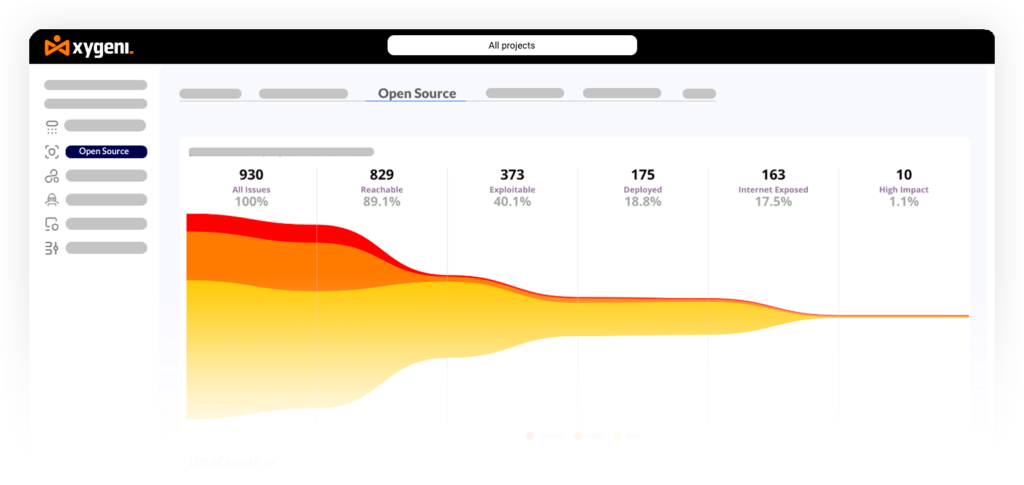
- Prioritization Funnels: Sort and prioritize security issues based on reachability and exploitability, helping teams focus on the risks that matter most.
These capabilities, integrated into CI/CD pipelines and development workflows, provide the evidence and assurance organizations need to meet ISO27001 AppSec requirements.
Conclusion and Next Steps
Xygeni helps organizations meet ISO27001 requirements by strengthening security at every Software Development Lifecycle (SDLC) stage. With Xygeni, teams can identify, prioritize, and fix application security risks before they escalate.
Key Benefits of Xygeni for ISO27001 Compliance:
- Streamlined security testing and vulnerability management through SAST, SCA, and Secrets Detection.
- Early risk detection in open-source dependencies with malware scanning and SBOM generation.
- Automated policy enforcement to block non-compliant builds, ensuring secure release processes.
- Continuous monitoring of CI/CD environments to detect and respond to anomalies.
- Enhanced visibility and traceability through detailed audit logs and security reports.
- Integration with existing development workflows minimizes disruption and promotes secure development practices.
Recommendations for Initiating or Enhancing an AppSec Compliance Program with Xygeni:
- Assess Current Maturity: Evaluate your secure SDLC practices and identify gaps against ISO27001 Annex A controls.
- Deploy Xygeni Across the SDLC: Integrate Xygeni’s platform early in the development lifecycle to maximize security coverage and auditability.
- Define Security Policies: Establish clear security policies aligned with ISO27001 controls and enforce them using Xygeni’s guardrails.
- Monitor and Review: Xygeni’s real-time monitoring and anomaly detection capabilities continuously assess security posture.
- Prioritize and Remediate: Xygeni’s prioritization funnels focus remediation efforts on the most critical risks.
- Prepare for Audits: Maintain and regularly review audit trails, SBOMs, and security reports generated by Xygeni to demonstrate ongoing compliance.