AI SecOps is a term with two meanings. The first is AI for security operations: using AI to detect, triage and respond to threats faster than people can alone. The second is security operations for AI: protecting the models, agents and AI tools your organization now builds and runs.
Most articles pick one meaning and ignore the other. That’s a problem, because in 2027 most security teams face both at once. They want AI to cut through the alert backlog, and they need to secure the AI that developers and business teams keep adding.
AI SecOps in one sentence: AI SecOps is either AI that works for your security team, or security work that protects your AI, and a complete program needs both.
Meaning 1: AI for security operations #
AI for security operations means using AI to do the repetitive work that buries security teams. Scanners, SIEMs and cloud tools produce more findings and alerts than any team can review by hand. Most of them are noise, and the few that matter get lost.
In AI SecOps, AI takes on the first pass:
- Triage: deciding whether a finding is real, exploitable and worth a developer’s time.
- Prioritization: ordering what’s left by real risk, not by theoretical severity.
- Explanation: showing in plain language why something is dangerous and how an attacker would use it.
- Remediation: proposing the fix, often as a ready-to-review pull request.
- Investigation and response: summarizing alerts, correlating events and suggesting next steps.
The goal isn’t to replace analysts. It’s to give them back the hours they spend sorting lists, so they can focus on the decisions that need a human.
Meaning 2: securing AI in operations #
Securing AI in operations means treating the AI your organization runs as part of the attack surface. Models, prompts, AI agents, plugins, skills and MCP servers now live inside your applications and developer tools. Each one can be attacked, misused or simply misconfigured.
In this sense, AI SecOps covers:
- Inventory: knowing which models, agents, prompts and AI tools exist across your code and environments, often called an AI-BOM.
- Risk detection: finding prompt injection paths, agents without guardrails, leaked API keys for AI services and over-privileged tool access.
- AI supply chain: checking models, packages, skills and MCP servers before they are installed or loaded.
- Monitoring and testing: watching what AI systems do in production and testing them the way an attacker would.
The OWASP Top 10 for LLM Applications is the most common reference for these risks, from prompt injection (LLM01) to excessive agency (LLM06).
The two meanings meet in one place: the AI you use for security is itself an AI system. If it reads untrusted code or alerts, it can be targeted too.The two meanings meet in one place: the AI you use for security is itself an AI system. If it reads untrusted code or alerts, it can be targeted too.
Why AI SecOps matters in 2027 #
AAI SecOps matters because AI is changing both sides of the security equation at once. AI coding assistants write more code, faster, which means more findings for the same security team. At the same time, the applications themselves now contain models, agents and MCP servers that traditional scanners were never built to understand.
The common challenges look different for each meaning:
Securing AI: speed. Developers install AI skills, plugins and MCP servers in minutes, and a malicious instruction can be plain text that no traditional scanner flags.
AI for SecOps: trusting the AI’s verdicts. A triage model that hides a real vulnerability is worse than no model at all, so teams need to see why a finding was dismissed and keep the final say.
AI for SecOps: keeping data in place. Many organizations can’t send source code or alerts to an external model, so the choice of LLM, and where it runs, matters.
Securing AI: visibility. Teams often don’t know which models, agents or AI tools developers have added, so they can’t secure them.
AI SecOps best practices #
- Decide which meaning you’re solving first. Faster triage and securing your AI need different owners, tools and metrics. Name both in your plan.
- Keep humans in the loop. Let AI sort, explain and propose, but keep the final decision on dismissing findings and merging fixes with your team.
- Make AI decisions auditable. Every automated verdict should show its reasoning, so analysts can check it and auditors can trace it.
- Control where the model runs. Choose AI that can run with your own or a self-hosted LLM when code and data have to stay inside your environment.
- Inventory your AI before you secure it. List the models, agents, prompts, skills and MCP servers across your repositories first.
- Shift AI security left. Catch missing guardrails, risky prompts and over-privileged agents in code, before they reach production.
- Map to a framework. Use the OWASP Top 10 for LLM Applications and the NIST AI Risk Management Framework to cover and report on AI risks consistently.
AI SecOps, both ways #
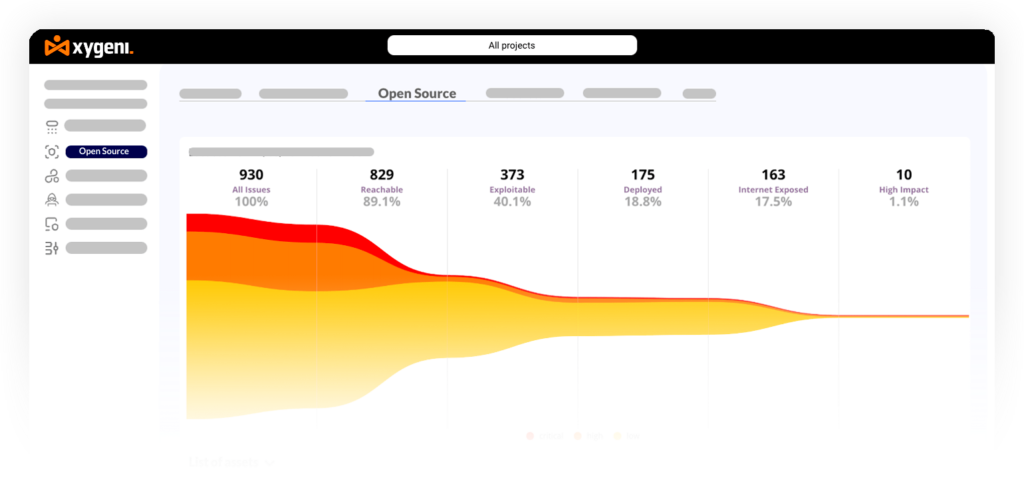
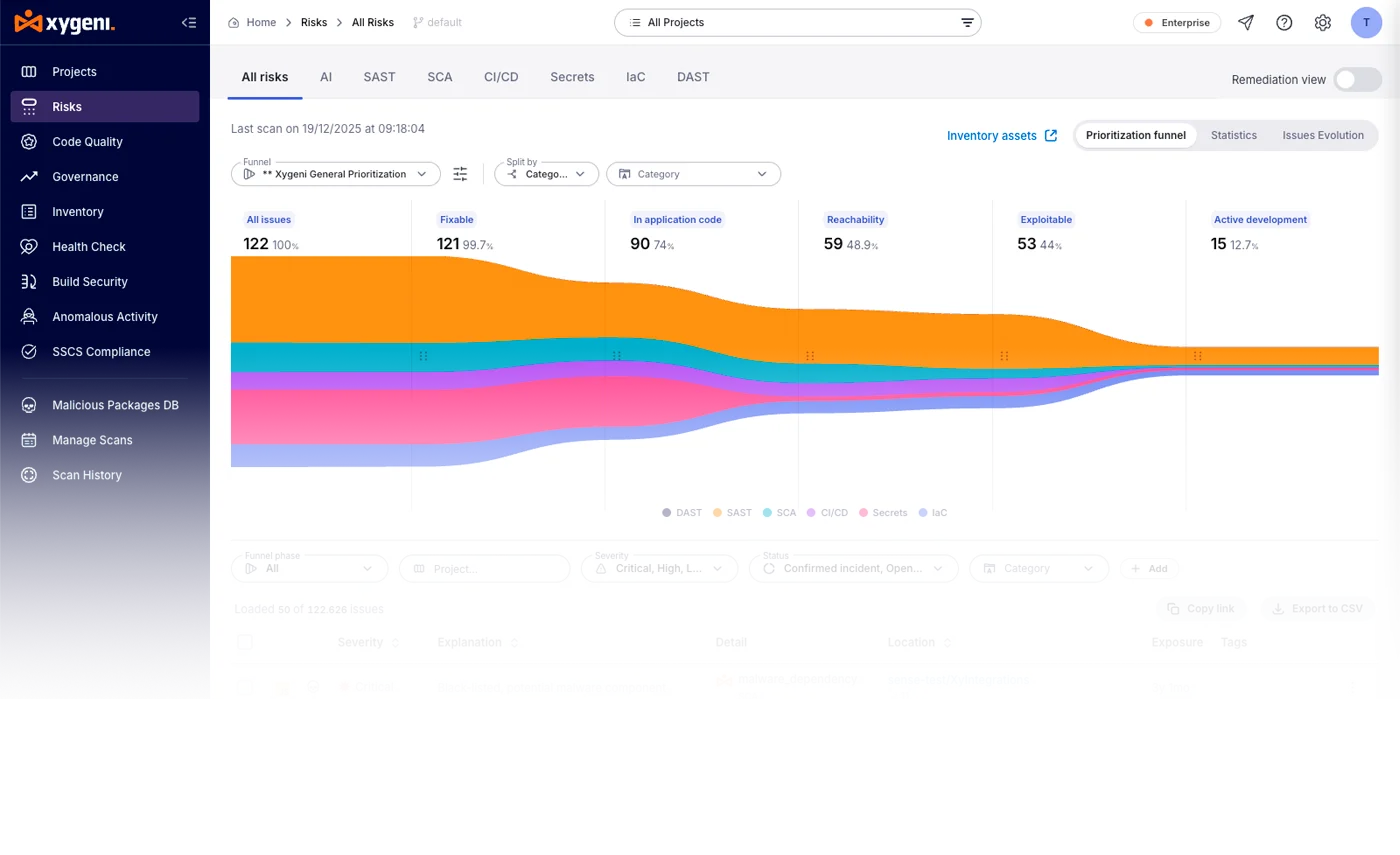
Xygeni covers both meanings of AI SecOps. For security operations, AI Triage validates and prioritizes findings, from Xygeni’s own scanners and from third-party tools, so teams start with what’s exploitable, and it can run with your own or a self-hosted LLM. For securing AI, AI Security builds an inventory of the models, agents, prompts and MCP servers in your code and flags their risks, mapped to the OWASP Top 10 for LLM Applications.
FAQ #
AI SecOps means either using AI to run security operations (triage, prioritization, response) or running security operations for AI systems (models, agents, prompts and AI tools). The term is used for both, so check which one a vendor or article means.
Is AI SecOps the same as AI security?
The AI guardrails meaning is a set of policies, filters and technical controls that keep AI output and AI Not exactly. AI security usually refers to protecting AI systems, which is the second meaning of AI SecOps. AI SecOps also covers the first meaning: using AI to make security teams faster.
The main risks are wrong verdicts that hide real threats, sensitive code or data sent to an external model, and AI tools that can themselves be manipulated by malicious input.
MLOps security focuses on the pipeline that trains and deploys models. AI SecOps is broader: it covers the AI used by security teams and every AI system in production, including agents, prompts and third-party AI tools.