- What is CTEM? Continuous threat exposure management (CTEM) is a security program that continuously finds, prioritizes, validates and fixes the exposures an attacker could actually use, instead of chasing every vulnerability.
- Where it comes from: Gartner introduced the CTEM framework in 2022 as a response to vulnerability backlogs that grow faster than teams can fix them.
- How it works: CTEM runs in five repeating stages: scoping, discovery, prioritization, validation and mobilization.
- Why it matters: CTEM shifts the question from “how many vulnerabilities do we have?” to “which exposures could an attacker exploit right now, and are we fixing those first?”
- Where AppSec fits: applications, APIs, pipelines and AI components are a large part of the attack surface, so a CTEM program needs application-level discovery, prioritization and validation.
Continuous Threat Exposure Management explained #
CTEM, or continuous threat exposure management, is a structured, ongoing program for reducing the exposures attackers can exploit across an organization’s attack surface. An exposure is broader than a CVE: it can be a vulnerable dependency, a misconfigured cloud resource, an exposed API, a leaked credential or an unprotected AI endpoint.
The key idea behind CTEM is continuity. Traditional vulnerability management works in cycles: scan, report, patch, repeat. Continuous threat exposure management replaces that with a loop that keeps running as the environment changes, and that always asks whether an exposure is reachable and exploitable before deciding what to fix first.
Gartner introduced the term in 2022 and predicted that organizations prioritizing their security investments through a CTEM program would be three times less likely to suffer a breach by 2026. Since then, CTEM has become a common way for security leaders to organize exposure work across teams and tools, and Gartner has published a strategic roadmap for CTEM to help them move beyond traditional vulnerability management.
Why continuous threat exposure management matters #
Most security teams don’t lack findings. They lack a way to decide which findings matter. Scanners report thousands of issues, severity scores rarely reflect real risk, and the attack surface changes every day as teams ship code, add cloud services and connect AI tools. The result is alert fatigue.
Continuous threat exposure management addresses three problems:
- Backlogs that never shrink. Patching by severity alone treats an unreachable library the same as an internet-facing flaw.
- Blind spots. You can’t protect assets you don’t know exist, such as shadow APIs, forgotten repositories or unlisted AI endpoints.
- No proof. Without validation, teams argue about whether a finding is real instead of fixing it.
CTEM turns exposure management into a business conversation, close to cyber risk management: which exposures put critical assets at risk, and what are we doing about them this cycle?
1. Scoping #
Scoping defines what the CTEM program covers in this cycle. Many organizations start with a high-value area, such as customer-facing applications or the software supply chain, and expand from there.
2. Discovery #
Discovery builds the inventory: assets, their owners and their exposures. In continuous threat exposure management, discovery goes beyond servers and endpoints to include code repositories, dependencies, CI/CD pipelines, APIs, cloud resources and AI components.
3. Prioritization #
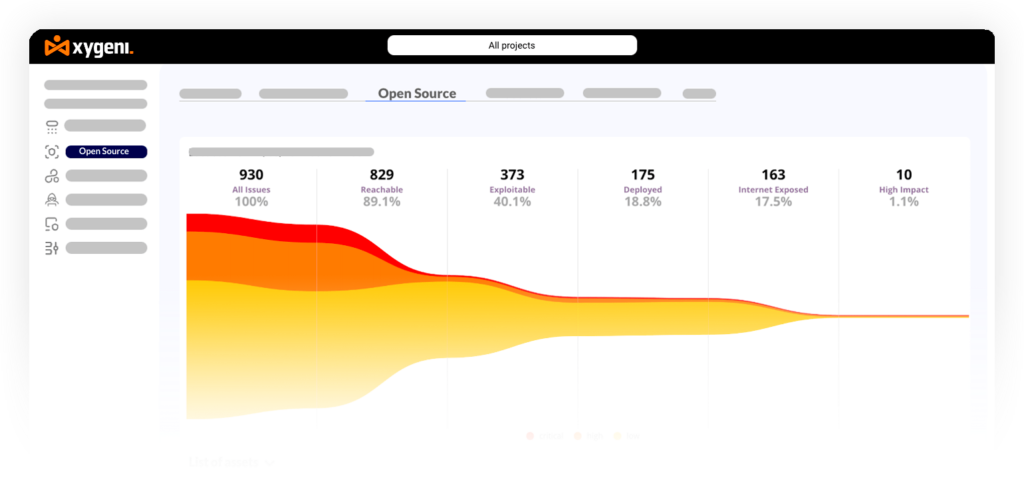
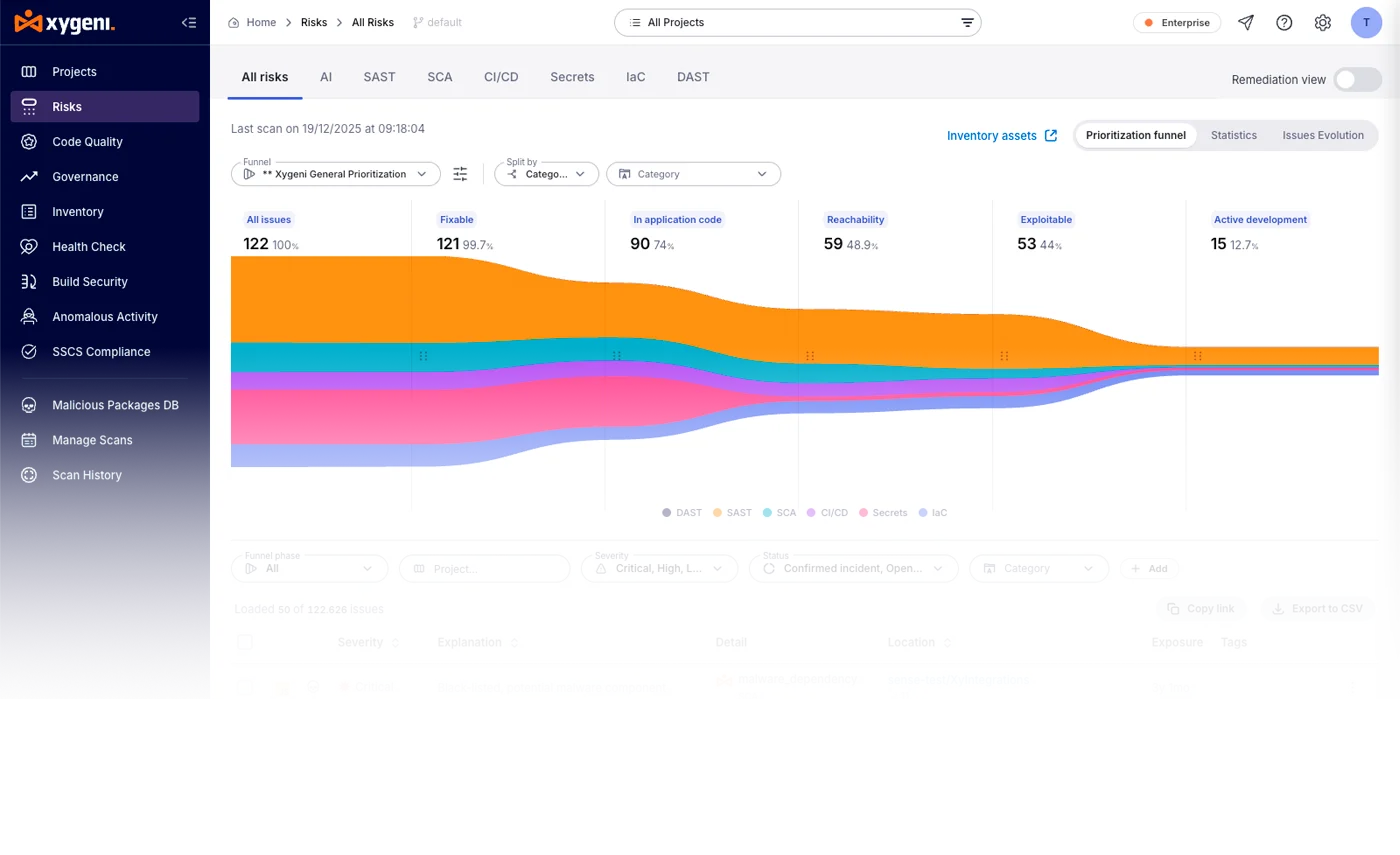
Prioritization ranks exposures by real risk, not raw severity, an approach known as risk-based vulnerability prioritization. Useful signals include reachability (is the vulnerable code actually called?), exploit likelihood (for example, EPSS), exposure to the internet and the value of the asset affected. Severity scores such as CVSS and data from the National Vulnerability Database are inputs, not the final answer.
4. Validation #
Validation tests whether a prioritized exposure can really be exploited, and what an attacker could reach from it. Methods include penetration testing, attack path analysis, breach and attack simulation, and dynamic testing of running applications. Frameworks like MITRE ATT&CK help model which techniques an attacker would use.
5. Mobilization #
Mobilization makes sure fixes actually happen. It assigns owners, routes work into the tools teams already use, and sets expectations for remediation. Without mobilization, CTEM produces reports instead of reduced risk.
CTEM doesn’t replace vulnerability management. It wraps it in a program that decides what to fix first and proves the fix mattered. If you’re comparing scanners for the discovery stage, see our list of top vulnerability scanning tools.
Where application security fits in CTEM #
Applications are one of the largest and fastest-changing parts of the attack surface. Every commit can add a dependency, an API or an AI component. That makes application security a core input to any CTEM program:
- Discovery: inventories of repositories, pipelines, open source components, APIs and AI assets show what the application layer actually exposes. For AI, that includes the risks mapped in the OWASP Top 10 for LLM Applications.
- Prioritization: reachability analysis, exploitability signals and AI triage reduce thousands of code findings to the few worth fixing first.
- Validation: dynamic testing and automated pentesting prove which application weaknesses are exploitable in the running system.
- Mobilization: fix pull requests and tickets put remediation directly into the developer workflow.
Xygeni supports these application-level stages from one platform. Its ASPM consolidates findings from native scanners and third-party tools into one inventory and risk model, CoreAI triage and reachability prioritize them, DAST and AI Pentesting validate exploitability, and AI Remediation opens fix pull requests where developers work.
FAQ #
CTEM, or continuous threat exposure management, is a way of running security as a continuous loop: find what you have, decide which exposures matter most, prove they can be exploited, and make sure they get fixed. It focuses effort on the exposures an attacker could actually use.
CTEM is a framework, not a single product. Organizations implement continuous threat exposure management by combining processes and tools for discovery, prioritization, validation and remediation.
The five stages of CTEM are scoping, discovery, prioritization, validation and mobilization. They repeat continuously, so each cycle reflects the current attack surface.
Vulnerability management finds and patches known vulnerabilities, usually by severity. CTEM covers all types of exposure, prioritizes by business impact and exploitability, and adds validation to prove which exposures are real.